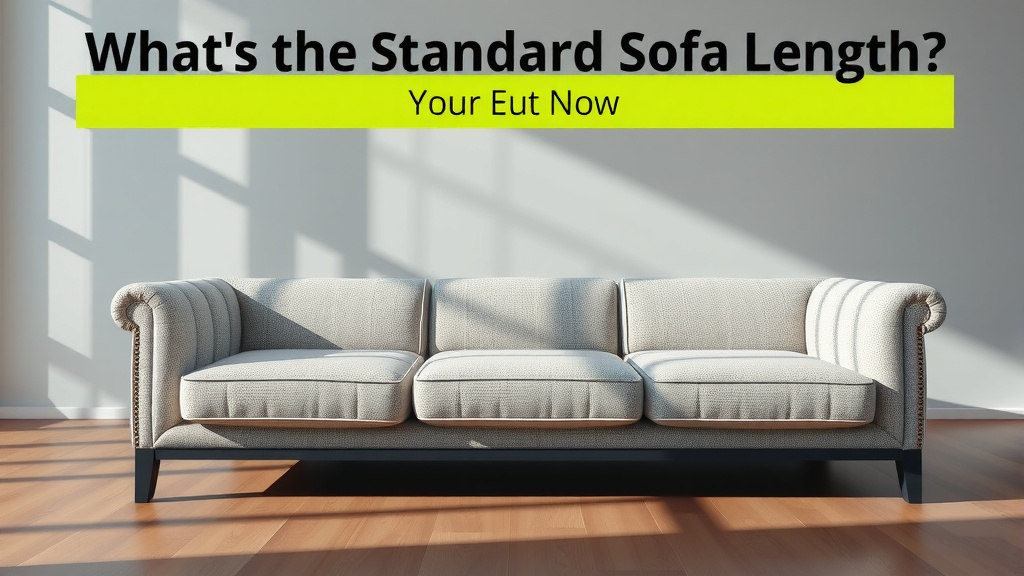
What’s the Standard Sofa Length? Find Out Now
A regular sofa is typically around 7 to 8 feet long. This length comfortably seats three people. It’s the most common size you’ll find in furniture stores. Many factors influence exact sofa dimensions, but this is a good general guideline.
When we talk about sofa length, it’s usually the overall width. This measurement runs from one armrest to the other. Smaller loveseats are shorter, while sectionals can be much longer. Considering your room size is important.
- A standard sofa is about 7-8 feet wide.
- This usually seats three adults comfortably.
- Sofa dimensions can vary significantly.
- Always measure your space before buying.
Let’s walk through exactly how to figure out the right sofa size for your home.
Understanding Standard Sofa Dimensions
So, you’re wondering about the typical length of a regular sofa? It’s a common question, and thankfully, there’s a pretty standard answer. Most of the sofas you’ll see advertised as “standard” or “regular” fall within a specific range. This size is designed to fit comfortably in most living rooms while still offering enough seating for a small family or a few friends.
When furniture makers talk about sofa length, they’re generally referring to the overall width. This is measured from the outside of one armrest to the outside of the other armrest. It’s the most important dimension to consider when you’re trying to figure out if a sofa will fit in your space. We found that this consistent measurement helps shoppers compare different models.
The Average Sofa Width Explained
The sweet spot for a regular sofa is typically between 7 and 8 feet long. To be a bit more precise, many common sofas measure around 84 to 96 inches in width. This range offers a good balance. It’s large enough to seat three adults comfortably without feeling too cramped.
Think of it this way: if you were to sit three of your average-sized friends side-by-side, a sofa in this length range should accommodate them nicely. It’s not so large that it overwhelms a smaller room, but it’s substantial enough for a larger living area. This makes it a versatile choice for many homes.
What Exactly Does “Seating for Three” Mean?
When we say a sofa seats three, it’s usually based on an average seating width of about 22 to 24 inches per person. So, a sofa that’s 72 inches wide (6 feet) might technically seat three, but it could feel a little cozy. A sofa around 84 inches (7 feet) is generally considered a more comfortable three-seater. Anything over 90 inches is definitely generous for three.
Of course, people vary in size! If you often host larger individuals or have very young children who might snuggle up, you might lean towards the longer end of the spectrum. Conversely, if you’re looking for something that feels more intimate, a slightly shorter sofa might be perfect. We found that considering your typical guests is key.
Factors That Can Change Sofa Length
While 7 to 8 feet is the common range, sofas are not one-size-fits-all. Several factors can influence the exact dimensions you’ll find when shopping. Understanding these variables can help you make a more informed decision about what will work best for your home. You don’t want to bring home a sofa that’s too big or too small!
Style of the Sofa
The design and style of a sofa play a big role. For example, a modern, minimalist sofa with sleek, thin arms might be longer than a traditional sofa with plush, rolled arms, even if they offer the same amount of seating space. The arms themselves can add several inches to the overall width. Sofas with wide, overstuffed arms can easily add an extra 10-15 inches compared to a sofa with slim track arms.
Type of Sofa Construction
The internal construction can also affect the exterior dimensions. A sofa with a solid, robust frame might have slightly different proportions than one with a more flexible frame. Some designs also feature deeper seats or higher backs, which can sometimes influence the overall footprint. We found that deeper seats can sometimes make a sofa feel longer, even if the arm-to-arm measurement is the same.
Customization and Bespoke Options
If you’re looking at custom-made sofas or high-end designer pieces, you’ll likely have more flexibility. Many companies allow you to specify exact lengths or choose from a wider range of sizes. This is fantastic if you have very specific spatial requirements or a particular vision for your living room. However, these options often come with a higher price tag.

Beyond the Regular Sofa: Other Seating Options
It’s helpful to know that not all seating options are considered “regular” sofas. Understanding these differences can prevent confusion when you’re browsing. Let’s quickly look at a few common alternatives you might encounter.
Loveseats: The Smaller Cousin
A loveseat is designed specifically for two people. They are noticeably shorter than standard sofas, typically measuring around 50 to 72 inches in width. They’re perfect for smaller apartments, bedrooms, or as an addition to a larger living room arrangement. If a 7-foot sofa seems too big, a loveseat is a great alternative.
Sectionals: The Extended Family
Sectionals are modular sofas made up of multiple pieces that can be arranged in various configurations, often forming an L or U shape. They are significantly longer and wider than regular sofas, offering ample seating. The total length of a sectional can vary wildly, from 90 inches to well over 150 inches, depending on the number of pieces and their layout. We found that measuring each component and the intended arrangement is crucial for sectionals.
| Type of Seating | Typical Width Range (Inches) | Typical Seating Capacity |
|---|---|---|
| Loveseat | 50 – 72 inches | 2 people |
| Regular Sofa | 72 – 96 inches | 3 people |
| Large Sofa / Sofa-Plus | 96+ inches | 3-4+ people |
| Sectional (Varies Greatly) | 90 – 150+ inches | 4+ people |
Tips for Choosing the Right Sofa Size
Now that you know the typical lengths, how do you pick the perfect one for your home? It all comes down to a little planning and understanding your own space. Don’t just guess – measure! Your living room will thank you for it.
- Measure your room: Use a tape measure to get the exact dimensions of the wall or area where the sofa will go.
- Consider traffic flow: Leave enough space for people to walk around the sofa comfortably. Experts often recommend at least 30-36 inches of clearance for walkways (National Association of Home Builders).
- Account for other furniture: Think about coffee tables, end tables, and any other pieces you plan to include.
- Visualize the scale: Use painter’s tape on your floor to outline the potential sofa dimensions. This helps you see how it will look and feel in the space.
- Don’t forget doorways: Make sure the sofa can actually fit through your front door, hallways, and staircases! We found this is a common oversight.
Conclusion
You’ve learned that a regular sofa typically measures between 7 and 8 feet long, comfortably seating three people. We saw how factors like sofa style and construction can alter these dimensions. Remember, understanding your room’s layout and traffic flow is just as important as the sofa’s size itself. Before you commit, measure your space and use painter’s tape to visualize the sofa’s footprint. This preparation ensures you’ll choose a sofa that fits perfectly and enhances your living area.
Frequently Asked Questions
What’s the difference between a regular sofa and a couch?
In the US, the terms “sofa” and “couch” are generally used interchangeably. Both refer to a long, upholstered seat with a back and arms. The length we discussed—around 7 to 8 feet—applies to what most people would call either a sofa or a couch.
Can a sofa be longer than 8 feet?
Absolutely! Sofas can come in longer sizes, often referred to as “sofa-plus” or extra-long sofas. These can exceed 96 inches (8 feet) and are designed for larger living spaces or for those who prefer more seating room. Sectionals, of course, can be much longer depending on their configuration.
How much space should I leave around a sofa?
It’s best to leave at least 30 to 36 inches of clearance around your sofa for comfortable traffic flow. This space allows people to walk by without feeling cramped. Always account for the placement of other furniture like coffee tables and end tables when planning this clearance.
Does the arm style affect the overall sofa length?
Yes, the arm style can significantly impact the overall length. Sofas with wide, plush, or rolled arms will appear and measure longer than sofas with slim, track, or armless designs, even if they offer the same seating width. We found that bulky arms can add 5-15 inches easily.
Is a 6-foot sofa considered a regular sofa?
A 6-foot sofa (around 72 inches) is generally considered a loveseat or a compact sofa. While it can seat three people, it might feel a bit cozy for adults. A regular sofa, seating three comfortably, typically starts around 72 inches and goes up to 96 inches.
![10 Best Budget Modular Sofa [2026]](https://hometopaccesories.com/wp-content/uploads/2026/08/10-best-budget-modular-sofa-2026-featured-768x432.jpg)


![10 Best Bench Cushion Sofas [2026]](https://hometopaccesories.com/wp-content/uploads/2026/08/10-best-bench-cushion-sofas-2026-featured-768x432.jpg)