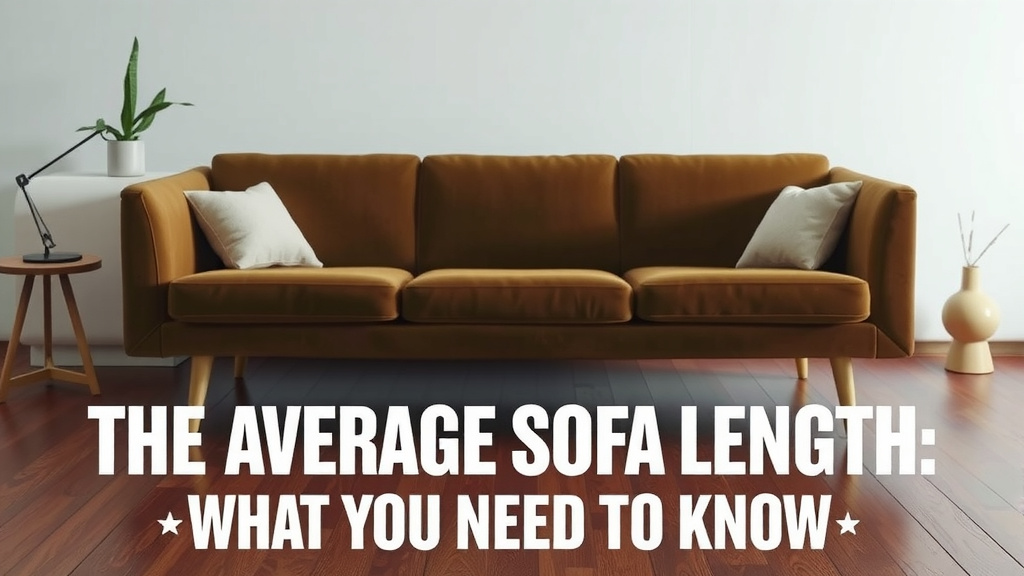
Average Sofa Length: What You Need to Know
The average sofa length is typically between 70 and 96 inches, which is about 6 to 8 feet long. This range covers most standard three-seater sofas. Keep in mind that sofa dimensions can vary widely based on style and brand, so it’s always wise to check the exact measurements before you buy.
Finding the right sofa size is more than just picking a number. You need to consider your room’s layout and how much space you actually have. Factors like traffic flow, other furniture, and even door frames play a big role in what fits best. We found that understanding these practical considerations helps make your sofa choice much easier.
- Most average sofas are 70-96 inches long.
- This is about 6-8 feet for a standard three-seater.
- Sofa sizes vary greatly by style and manufacturer.
- Always measure your space and the sofa before purchasing.
Ready to get a clearer picture of sofa sizes and what might work for your home? Let’s break down the different types and how to measure effectively.
So, you’re looking to find out just how long an average sofa tends to be, right? It’s a super common question when you’re sofa shopping. You don’t want to end up with a couch that looks like it’s swallowed your living room, or one that’s just a little too cramped for comfort.
Understanding Standard Sofa Dimensions
When we talk about the “average” sofa, we’re usually referring to a standard three-seater model. These are the workhorses of living rooms everywhere.
Most commonly, you’ll find these sofas measuring between 70 and 96 inches in length. That’s roughly 6 to 8 feet from one armrest to the other. This range accounts for the vast majority of sofas you’ll see in furniture stores.
What Makes a Sofa “Standard”?
The standard size is largely determined by its ability to comfortably seat three adults. Think of a typical family movie night, or a cozy chat with friends. The dimensions are designed for that kind of relaxed, shared seating.
Many design experts agree that a three-seater sofa is the most versatile piece of living room furniture. Its size is manageable for most rooms without feeling overwhelming.
Beyond the Three-Seater: Other Sofa Sizes
But what if your needs are different? You might be surprised at the variety out there.
Loveseats: The Cozy Option
A loveseat is essentially a smaller sofa. It’s designed for two people, making it perfect for smaller apartments or as an accent piece. Loveseats typically range from 50 to 70 inches long. So, if a 70-inch sofa feels a bit too big, a loveseat might be your sweet spot.
Sectionals: For Sprawling Comfort
Sectionals are a different beast entirely. They are modular and can be configured in many ways. Their length is hard to pin down because they are made of multiple pieces. A common L-shaped sectional might span 100 inches on one side and 80 inches on the other, but this can vary wildly. We found that sectionals are great for larger spaces or open-plan living areas.
Oversized and Apartment-Sized Sofas
Some sofas are deliberately designed to be larger for maximum lounging. These “oversized” or “grand” sofas can easily reach 100 inches or more. On the flip side, apartment sofas are designed for smaller spaces. They often fall on the shorter end of the average, around 60 to 75 inches, sometimes with slimmer arms to maximize seating.
Factors That Influence Sofa Length
The length of a sofa isn’t just about arbitrary numbers. Several factors contribute to its final dimensions.
Style and Design Trends
Different sofa styles have different typical lengths. A sleek, modern sofa might be longer and leaner. A more traditional, plush sofa might have a slightly shorter, squatter profile.
We’ve seen that design trends play a role too. For example, mid-century modern sofas often have clean lines and can be quite long. Chesterfield sofas, with their deep cushions, might appear shorter but take up more depth.
Arm Style and Cushioning
Don’t forget the arms! The style of the sofa arms can add significant inches to the overall length. Rolled arms or track arms are usually wider than slim, flared arms. This can add 4 to 10 inches to the total measurement.
Similarly, the type and depth of the cushions can affect how a sofa “looks” in terms of size. Deep, plush cushions can make a sofa feel larger, even if its external length is average.
Manufacturer Differences
It’s important to remember that brands measure and build sofas differently. What one brand calls a “three-seater” might be slightly longer or shorter than another’s. We found that checking the manufacturer’s specifications is always your best bet. Don’t just rely on the general “average” figure.
Measuring Your Space: The Golden Rule
Knowing the average sofa length is helpful, but it’s only half the battle. The other, more critical, half is measuring your own space. A gorgeous sofa is no good if it doesn’t fit!
The Importance of a Floor Plan
Before you even look at sofas online or in-store, grab a tape measure and your room’s dimensions. Sketch out a rough floor plan. Mark where your doors, windows, and other furniture are. This visual guide is incredibly useful.
Think about how you move through the room. Is there enough space to walk comfortably around the sofa? Experts at the National Retail Federation often suggest leaving at least 30-36 inches for main walkways.
Considering Traffic Flow
Traffic flow is key. You don’t want your new sofa to become a roadblock. Imagine people walking from the entrance to the kitchen, or from the couch to the TV. Does the sofa interrupt these paths?
We found that a sofa that’s too long can make a room feel cramped and awkward. It disrupts the natural flow of movement. Always measure the space where the sofa will actually sit, and then measure the sofa itself.
Don’t Forget Doorways!
This is a classic furniture-buying mistake. Did you measure the sofa’s length, but forget to measure if it can actually get *into* your house and *into* your living room? You need to measure doorways, stairwells, and tight corners.
Many delivery teams have seen it all. A sofa that’s just an inch too wide for a hallway can mean a very frustrating delivery day. We advise checking the sofa’s dimensions against all potential entry points.
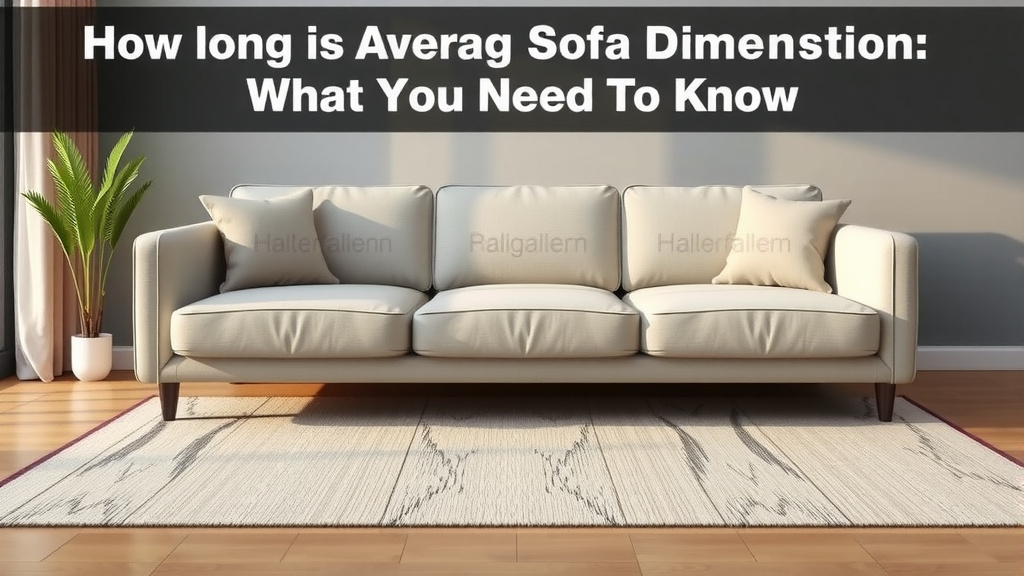
Quick Checklist for Choosing Your Sofa Size
Ready to make a confident sofa choice? Keep these points in mind:
- Measure your living room’s available space accurately.
- Note down the dimensions of your doorways and hallways.
- Consider the traffic flow around where the sofa will be placed.
- Think about the sofa’s style and how arms affect length.
- Always check the specific dimensions provided by the manufacturer.
- Imagine yourself using the sofa – will it feel comfortable and proportionate?
Conclusion
So, you’ve learned that the average sofa length hovers around 70 to 96 inches, perfect for most three-seater needs. But remember, this is just a guideline. Your room’s unique layout and your personal style are the real decision-makers. We found that measuring your space thoroughly and considering traffic flow is just as important as the sofa’s dimensions themselves. Don’t let a beautiful sofa become a furniture puzzle!
Your next step is to grab that tape measure. Visualize your room, sketch it out, and then confidently shop for a sofa that fits not just your space, but your life too.
Frequently Asked Questions
What’s the minimum length for a sofa to seat three people?
Generally, a sofa needs to be at least 70 inches long to comfortably seat three adults. Sofas shorter than this, often under 60 inches, are typically considered loveseats. We found that this 70-inch mark is a good starting point for your search.
Can a very long sofa make a small room look even smaller?
Yes, absolutely. A sofa that’s too long can overwhelm a small space and make it feel cramped. It can also block natural walkways, disrupting the room’s flow. We recommend sticking to sofas on the shorter end of the average, around 70-80 inches, for smaller rooms.
How much extra space do sofa arms add to the length?
Sofa arms can add a surprising amount of length, usually between 4 to 10 inches total. Wide, rolled arms take up more space than slim, track arms. Always check the overall external dimensions to account for these additions.
Are apartment-sized sofas significantly shorter than average sofas?
Yes, apartment-sized sofas are designed for smaller living areas and are typically on the shorter side. You’ll often find them measuring between 60 to 75 inches long. They might also feature slimmer arms to maximize seating within their compact frame.
If I buy a sectional, how do I determine its “length”?
Sectionals are modular, so they don’t have a single length. You’ll need to look at the dimensions of each piece and how they fit together. Measure each “side” or “chaise” section separately to understand the total footprint it will occupy in your room.

![10 Best Cushion For Sofa [2026]](https://hometopaccesories.com/wp-content/uploads/2026/09/10-best-cushion-for-sofa-2026-featured-768x432.jpg)
![10 Seater Sofa [2026]](https://hometopaccesories.com/wp-content/uploads/2026/08/10-seater-sofa-2026-featured-2-768x432.jpg)

![10 Best Apartment Sleeper Sofa [2026]](https://hometopaccesories.com/wp-content/uploads/2026/08/10-best-apartment-sleeper-sofa-2026-featured-768x432.jpg)