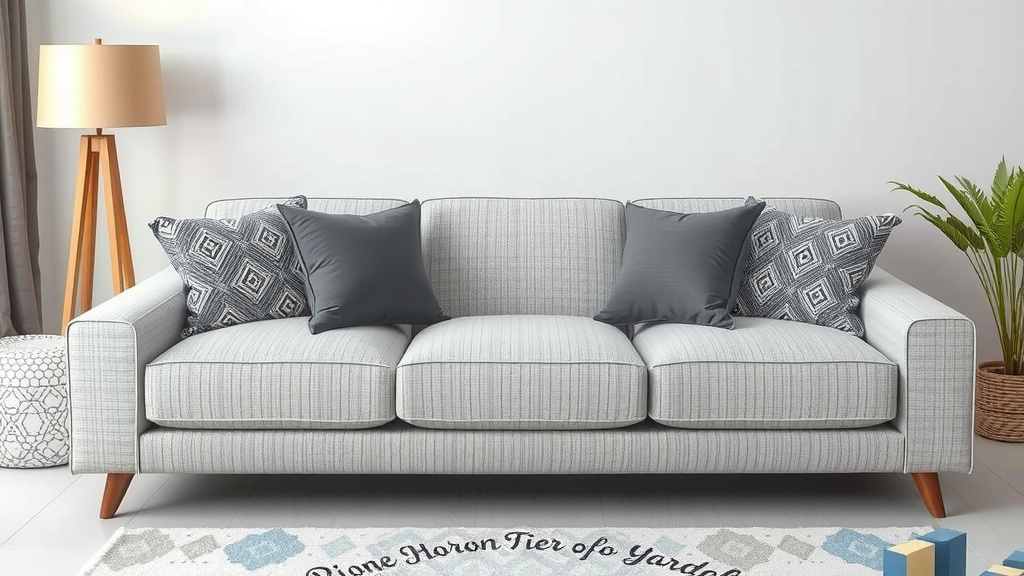
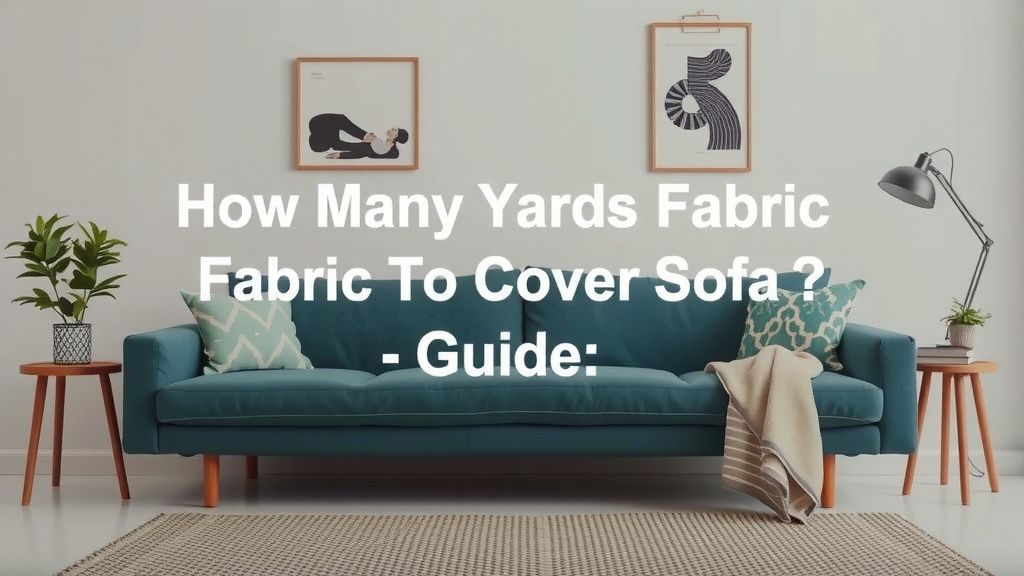
How Many Yards Fabric to Cover Sofa: A Guide
Determining how many yards of fabric you need to cover a sofa can seem tricky, but the general rule of thumb is 7 to 10 yards for a standard sofa. This range accounts for fabric width, sofa size, and potential pattern matching, ensuring you have enough without excessive waste. It’s always better to have a little extra fabric than not enough!
The exact amount of fabric your sofa project requires depends on several factors. We found that the sofa’s dimensions, the fabric’s width, and whether your fabric has a specific pattern repeat are the most influential elements. Understanding these will help you nail down the precise yardage needed for a successful reupholstery.
- Most standard sofas need 7-10 yards of fabric.
- Sofa size and fabric width are key factors.
- Patterned fabrics might require more material.
- Always double-check measurements for best results.
Let’s walk through how to calculate your specific fabric needs to get your sofa looking brand new.
So, you’re ready to give your sofa a fresh new look with some stylish fabric? That’s fantastic! Reupholstering can completely transform a room. But before you get lost in a sea of beautiful patterns and textures, you need to figure out the yardage. It’s a common question, and getting it right saves you both money and headaches.
Calculating Your Sofa Fabric Needs
Estimating fabric yardage for your sofa isn’t an exact science, but it’s not rocket science either. We’ve found that a bit of planning goes a long way.
Start with Your Sofa’s Measurements
The first and most important step is to get a good handle on your sofa’s size. You’ll need a measuring tape and a little patience.
Measuring the Key Dimensions
Here’s what to measure:
- Width: Measure the widest point from armrest to armrest, usually across the front.
- Depth: Measure from the front of the sofa to the back, typically from the edge of the seat cushion to the backrest.
- Height: Measure from the floor to the top of the sofa back.
- Arm Height/Width/Depth: Measure the height of the arms from the seat, their width, and how deep they are.
- Seat Cushion Dimensions: Measure the length and width of your seat cushions.
Don’t forget to measure the back cushions too, and any other large sections you’ll be covering.
A Simple Estimation Method
Many reupholstery guides suggest a straightforward calculation. You’ll essentially be “unfolding” your sofa into flat pieces. A common method is to take the width plus the depth, then multiply that by two. Then, add the height of the sofa to that number. This gives you a rough idea of the total length needed. For example, if your sofa is 80 inches wide and 36 inches deep, you might calculate (80 + 36) * 2 + 72 (for height) = 232 inches. But remember, this is just a starting point. If your sofa has an unusual shape, our guide on how to measure a corner sofa can help.
Understanding Fabric Width: It Matters A Lot!
Fabric doesn’t just come in one width. Standard upholstery fabric often comes in widths of 54 inches or 60 inches. Wider fabric means you can cover more area with each cut, potentially reducing your overall yardage. If you’re eyeing a fabric that’s only 45 inches wide, you’ll likely need more than if you chose a 54-inch width.
Why Fabric Width is Your Friend (or Foe)
Imagine trying to cover a wide sofa seat with a narrow fabric. You’ll have to piece together multiple strips, which uses more fabric and can create seams where you don’t want them. Wider fabrics allow you to cut larger sections, minimizing seams and waste. Always check the fabric specifications before you buy.
The Pattern Repeat Factor: Don’t Get Caught Short!
This is where things can get a little tricky, especially with patterned fabrics. A pattern repeat is the distance on the fabric before the pattern starts to look exactly the same again. If your fabric has a large repeat, you’ll need extra fabric to ensure the pattern matches up on all the different parts of your sofa. We found that for fabrics with a large pattern repeat, you might need to add an extra 1 to 3 yards.
Matching Patterns: The Extra Yardage You Need
Think of it like piecing together a quilt. If you have a big floral design, you want the flowers to line up nicely on the arms, the back, and the seat. This matching process requires careful cutting and often means sacrificing some fabric to get the alignment just right. It’s frustrating to finish and realize a key element of the pattern is cut off or misaligned. Many designers recommend adding about 10-20% extra yardage for pattern matching.
Putting It All Together: Your Calculation Checklist
Here’s a simplified way to think about your needs. Once you have your measurements, you can start to estimate.
A Practical Calculation Example
Let’s say you have a standard three-seater sofa that’s 80 inches wide, 38 inches deep, and 35 inches high. You’re using a fabric that is 54 inches wide with no pattern repeat. For the main body (width + depth x 2), that’s (80 + 38) x 2 = 236 inches, or about 6.6 yards. For the back and skirt, you might need another 2-3 yards. So, for a plain fabric, you might be looking at around 9-10 yards. But if that fabric had a 20-inch pattern repeat, you’d need to add more for matching. You might add an extra 1.5 yards to ensure those patterns align beautifully.
When to Call a Professional (or Their Calculator)
If your sofa has a very unusual shape, or if you’re tackling a complex reupholstery project, don’t hesitate to consult a professional upholsterer. Many fabric stores also have online calculators or staff who can help you determine the exact amount of fabric needed. We found that their experience can save you from costly mistakes. They’ve seen it all!
Extra Fabric: The Upholsterer’s Best Friend
It’s almost always better to have a little fabric left over than to run short. Leftover fabric can be useful for making throw pillows, a small ottoman, or even for future repairs. Many experts suggest adding at least half a yard to a full yard to your final calculation, just to be safe. This buffer accounts for any small errors, stretching, or if you decide to add extra details.
Smart Buying Habits for Your Project
When you’re buying fabric, make sure you’re looking at the correct unit of measure. Most upholstery fabric is sold by the yard, but always double-check. You’ll be ordering this in whole or half yards, so precision is key. Take your time, measure twice, and order once!
Quick Fabric Yardage Checklist
Here’s a quick recap to help you:
- Measure your sofa’s key dimensions carefully.
- Note the width of your chosen upholstery fabric.
- Check for any pattern repeat and its size.
- Use a formula or online calculator for an estimate.
- Add extra yardage for pattern matching if needed.
- Always buy a little extra just in case.
Conclusion
You’ve got the tools and knowledge to tackle your sofa reupholstery project! Remember, accurately measuring your sofa, understanding your fabric’s width, and accounting for any pattern repeat are your keys to success. It’s always wise to have a little extra fabric on hand for peace of mind and potential future needs. Don’t hesitate to use online calculators or consult fabric store staff for extra help.
Your next step is to grab your measuring tape, sketch out your sofa’s dimensions, and start shopping for that perfect fabric. With careful planning, you’ll give your sofa a beautiful, lasting makeover!
Frequently Asked Questions
What if my sofa has a unique or curved shape?
For sofas with unusual shapes, traditional measurement methods might not be enough. We found it’s best to create paper templates for each section you plan to cover. This ensures a more accurate fabric estimate and helps visualize how the fabric will lay. Consulting with a professional upholsterer is also a great option for complex designs.
How do I calculate fabric needs for seat and back cushions separately?
You’ll measure the dimensions of each cushion (length, width, height) as if they were separate pieces. Then, calculate the fabric needed for each, remembering to account for seams and wrap-around. Many people find it easiest to treat each cushion as a small, rectangular box and sum up the yardage needed for all of them.
Is there a difference in fabric yardage for slipcovers versus full reupholstery?
Yes, slipcovers often require more fabric than a traditional reupholstery. This is because slipcovers are designed to be removable and often have extra fabric for a looser, draped fit. You’ll need to account for generous allowances for seams, hems, and the overall drape. We’ve seen that slipcovers can add an extra 2-3 yards to your estimate.
Can I use different fabrics for different parts of the sofa?
Absolutely! Many people choose to mix and match fabrics for a unique look, perhaps using a durable fabric for the seating areas and a complementary fabric for the back and arms. If you do this, calculate the yardage needed for each fabric type separately based on the dimensions of the sections they will cover.
How much extra fabric should I buy if I’m new to upholstery?
If you’re new to this, we recommend adding at least 1 to 2 extra yards to your calculated total. This buffer accounts for potential beginner mistakes, learning curves with cutting, and the possibility of slight fabric shrinkage during cleaning or use. Having a little extra ensures you won’t be caught short mid-project.

![10 Best Cheap Sofas Online [2026]](https://hometopaccesories.com/wp-content/uploads/2026/09/10-best-cheap-sofas-online-2026-featured-768x432.jpg)

![10 Best Colors For Sofa Sets [2026]](https://hometopaccesories.com/wp-content/uploads/2026/09/10-best-colors-for-sofa-sets-2026-featured-768x432.jpg)