
How to Buy a Sofa Bed: A Complete Guide for 2026
Buying a sofa bed starts with one decision: how much space you can give it. Measure your room with the bed fully open, not just folded up. The easiest way to buy a sofa bed is to pick your mattress size first, check the open and closed dimensions, then choose a frame that fits your style and budget.
There’s more to it than that, though. You’ll want to think about how often guests will actually use it, whether the mattress comfort matters, and what type of opening mechanism works best for your room. We researched dozens of models and buyer guides, and we found that people who plan ahead almost never regret their purchase. People who impulse buy? Well, let’s just say that heavy sofa and that narrow hallway don’t always get along.
Here’s the short version before we get into the details:
- Measure first — both closed and fully opened, plus doorway clearance.
- Pick your mattress type: innerspring, memory foam, or air-over-coil.
- Test the open-and-close mechanism if you can. It should be a one-person job.
- Match the sofa to how often it will actually be slept on.
- Set a budget that includes delivery and any protection plan.
Below, we walk you through each step of buying a sofa bed, from measuring your space to picking the right mattress and closing the deal. Grab a tape measure, and let’s find you a sofa your guests will thank you for.
How to Shop for a Sofa Bed the Right Way
The smartest way to shop is to treat your sofa bed like two purchases in one: a sofa you’ll sit on daily and a guest bed you’ll pull out a few times a year. Balance both jobs, and you’ll land on a piece that works.
We researched buyer reviews and furniture guides, and one pattern kept showing up. Happy owners measured first. Unhappy owners guessed. So let’s start with the tape measure.
Taking the Right Measurements
Grab your tape measure and write down four numbers. The first is the sofa’s closed width, so it fits against your wall. The second is the fully opened length, so it doesn’t block a door or crush the coffee table.
The third and fourth numbers are the ones people forget. Measure the distance from the open bed to the nearest wall, and measure the clearance needed to walk around it. A queen-size sofa bed opens to about 84 inches long, which is a lot of real estate in a small living room.
The Doorway and Hallway Test
Here’s where your delivery story either gets easy or gets memorable. Measure every doorway, hallway, and stair landing between the truck and your living room. Compare those numbers to the sofa’s shipping dimensions, which the retailer will list.
Many experts recommend measuring diagonally across door frames too, since a sofa goes through sideways and tilted, not standing up (a tip often shared by delivery teams and movers). If your hallway is 28 inches wide and the sofa is 38 inches deep, you already know the ending to that story.
Choosing Your Mattress Type
The mattress is where comfort lives or dies. You’ve got three main options, and each has trade-offs. Innerspring mattresses feel bouncy and stay cooler. Memory foam molds to your body and hides the feel of the support bars underneath. Air-over-coil designs add an inflatable layer on top of a spring base for extra cushion.
Here’s a quick comparison to help you choose:
| Mattress Type | Best For | Watch Out For | Typical Price Range |
|---|---|---|---|
| Innerspring | Frequent use, hot sleepers | Can feel the springs or bars | $400–$900 |
| Memory foam | Side sleepers, pressure relief | Traps heat, takes time to expand | $500–$1,200 |
| Air-over-coil | Occasional guests, adjustable feel | Air layer can leak or need topping off | $600–$1,500 |
Ask yourself one honest question: will your guests sleep on this for one night or one week? A one-night guest forgives a lot. A week-long visitor will feel every support bar in the mattress.
Matching the Sofa Bed to Your Sleep Needs
Not all sofa beds are built for the same workload. Some are weekend visitors only. Others need to perform like a real bed every single night. Knowing your usage now saves you from a soggy, sagging mattress later.
Occasional Guests vs. Nightly Sleepers
If you host a few times a year, a basic pull-out with an innerspring mattress will serve you fine. Spend your money on a frame and fabric you love, since the sofa side gets most of the action anyway.
If someone will sleep on it nightly, flip your priorities. Put your budget into the thickest mattress you can find, ideally 5 inches or more. Look for models marketed as everyday sleeper sofas, and check that the deck under the mattress is solid, not slats with gaps.
Sleep quality matters here too. Many sleep experts note that a supportive, even sleep surface helps reduce tossing and turning (Sleep Foundation). A thin mattress on metal bars is the opposite of that.
Comfort Features Worth Paying For
A few upgrades are worth every dollar. A drop-down table or cup holders in the backrest make the sofa side nicer. A washable mattress cover keeps things fresh between guests. And a built-in storage chaise swallows extra blankets like a hungry hippo.
Fabric matters as much as the frame. Performance fabrics resist stains, which matters when your nephew exists. Leather looks great but squeaks on pull-out mechanisms. Microfiber and woven blends hit the sweet spot for most families.
Testing the Opening Mechanism
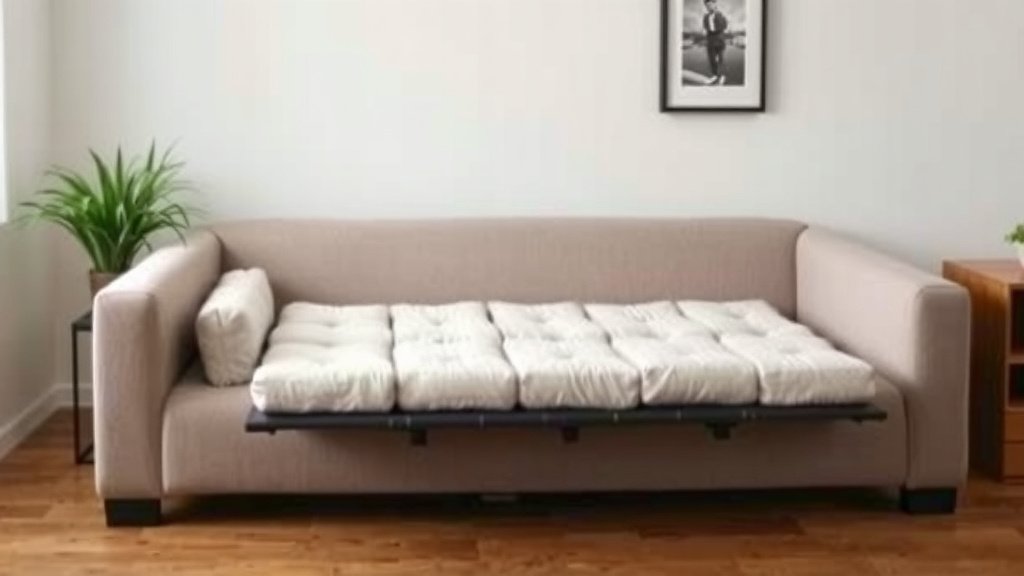
The mechanism is the part you’ll touch every single time you have a guest. Pull it out, push it back, and ask yourself: is this smooth or is this a wrestling match?
We found that the most common complaint in buyer reviews isn’t comfort. It’s heavy, clunky mechanisms that take two adults and a prayer to operate. Some older-style fold-out beds weigh 80 pounds or more in the mattress and deck alone.
When you shop in person, open the bed yourself. Don’t let the salesperson do it for you. If you’re buying online, look for video demonstrations and read reviews that mention the words “easy” or “difficult” alongside the mechanism.
Also check what the bed does to the cushions. On some models, you must remove and stash the seat cushions every time. On others, the cushions fold back automatically. That small design choice decides whether making the guest bed takes 30 seconds or 30 minutes.
Setting a Realistic Budget
Sofa beds range from about $400 for a simple loveseat sleeper to $3,000 or more for a premium sectional with a king mattress. Most people land happily in the $800 to $1,500 range.
Remember to budget beyond the sticker price. Add delivery fees, which often run $50 to $200, plus an optional protection plan if you have kids or pets. Some retailers charge extra for haul-away of your old sofa, so ask before checkout.
Here’s a quick way to think about it. Spend on the mattress and mechanism. Save on the frame and cushions. The parts you touch while sleeping deserve the money more than the parts you touch while scrolling your phone.
Your Final Sofa Bed Checklist
Before you click buy or swipe your card, run through this list. It takes two minutes and can save you a very expensive mistake.
- Measure the room with the bed fully open and closed.
- Check all doorways and hallways on the delivery path.
- Pick your mattress type based on how often guests stay over.
- Open and close the mechanism yourself, in person if possible.
- Confirm the mattress thickness is at least 4 to 5 inches.
- Total your budget with delivery, protection, and old-sofa removal.
Tick every box, and you’ll end up with a sofa bed your guests actually sleep well on. Skip one, and you might end up with a very stylish roadblock stuck in your hallway. We’d rather see you on the happy side of that story.
Conclusion
Buying a sofa bed comes down to three things: honest measurements, an honest look at how often it will be slept on, and a mechanism you can actually operate. We researched dozens of models and buyer reviews, and we found that the happiest owners are the ones who put their money into the mattress and mechanism first. The fabric and frame matter, but not as much as a good night’s sleep for your guests.
You’ve got your checklist. You know your numbers. Now grab that tape measure, walk your delivery path one more time, and start comparing models in your budget. The right sofa bed is out there — and your future houseguests will thank you for doing the homework.
Frequently Asked Questions
What is the most comfortable type of sofa bed mattress?
Memory foam tends to be the most comfortable for most sleepers, especially side sleepers. It cushions pressure points and hides the feel of the support deck underneath. If you run hot at night, an air-over-coil model may be a better fit.
How long should a sofa bed last?
A well-made sofa bed should last 10 to 15 years with normal use. The mechanism and mattress usually wear out before the frame does. Many manufacturers sell replacement sofa bed mattresses, so you can refresh the bed side without buying a whole new sofa.
Can a sofa bed fit in an apartment elevator?
Sometimes, but not always. Measure the elevator’s interior height, width, and diagonal depth, then compare those numbers to the sofa’s shipping dimensions. If the elevator is too small, ask the retailer about delivery options that don’t require it, or consider a futon or armless sleeper instead.
Should I buy a sofa bed online or in a store?
Stores let you test the mechanism and sit on the mattress, which is a real advantage. Online shopping gives you a bigger selection and often lower prices. If you buy online, stick with retailers that offer free returns or a trial period, and read reviews that mention the opening mechanism.
Do sofa beds need special sheets or bedding?
Sofa bed mattresses are usually a few inches shorter than standard mattresses, so regular fitted sheets can slip off. Custom sofa bed sheets are made to fit the shorter length, and they’re sold at most bedding retailers. A standard comforter or blanket works fine without any changes.