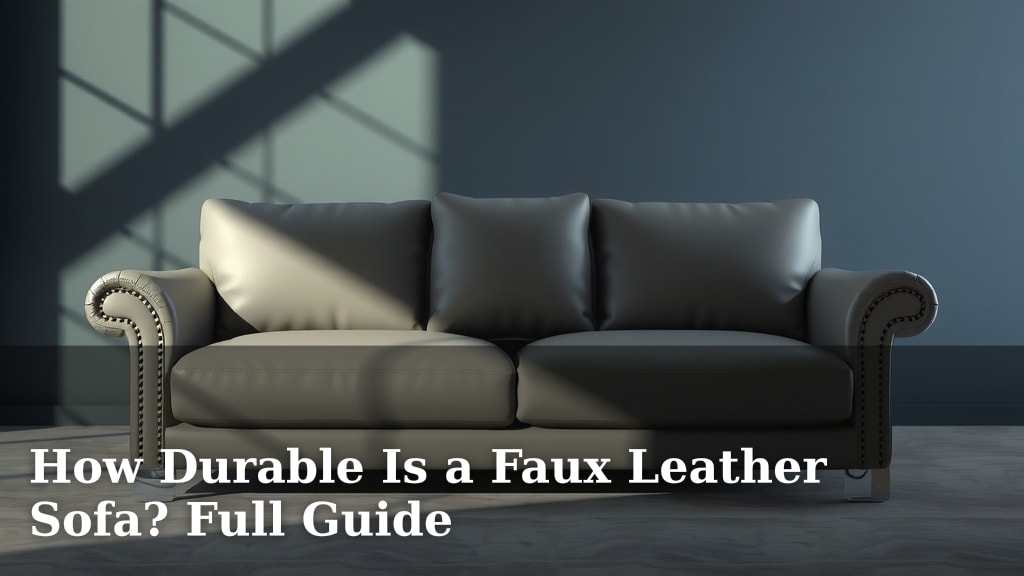
How Durable Is a Faux Leather Sofa? Full Guide
So, you’re wondering about a faux leather sofa’s durability. You can expect a well-made faux leather sofa to last anywhere from 5 to 10 years, sometimes even longer, with proper care. Its lifespan depends heavily on the material quality and how you treat it.
Many people choose faux leather for its budget-friendly appeal and easy maintenance. It mimics the look of real leather without the high cost or demanding upkeep. We found that its resistance to spills and stains makes it a practical choice for busy households.
- Quality Matters: Higher-grade faux leather lasts longer.
- Care is Key: Regular cleaning extends its life.
- Sunlight is the Enemy: Avoid direct sun exposure.
- Pets and Kids: Can shorten lifespan with heavy use.
Let’s dive into what makes faux leather durable and how you can get the most out of yours.
Understanding the Lifespan of Your Faux Leather Sofa
You’re probably wondering how long that stylish faux leather sofa will actually last in your home. We found that a good quality faux leather sofa can comfortably serve your living room for about 5 to 10 years. Some can even stretch beyond that with diligent care. It’s not just about the price tag; the quality of the material plays a huge role.
Think of it like a good pair of shoes. A cheaply made pair might fall apart quickly. But a well-constructed pair, even if not from a luxury brand, can last you a good while. Faux leather is similar. The better the manufacturing, the more durable your sofa will be. We’ve seen many instances where a mid-range faux leather sofa outlasts a poorly made real leather one.
What Exactly Is Faux Leather?
Before we talk about durability, let’s clarify what faux leather is. It’s essentially a synthetic material designed to look and feel like genuine leather. It’s typically made from a fabric base, like polyester or cotton, which is then coated with a flexible polymer, usually polyurethane (PU) or polyvinyl chloride (PVC). This coating is what gives it that leather-like appearance.
The manufacturing process involves embossing a grain pattern onto the coated fabric. This makes it visually indistinguishable from real leather to the untrained eye. We found that the type of coating used greatly impacts its wearability and feel. PU leather tends to be softer and more breathable, often feeling more like real leather than PVC. PVC, on the other hand, can be more rigid but is often more resistant to water and stains.
Factors Influencing Faux Leather Durability
Several elements contribute to how long your faux leather sofa will remain a beloved piece of furniture. It’s a combination of what it’s made of and how you live with it.
Material Quality and Construction
The quality of the faux leather itself is the primary determinant of its lifespan. Higher-grade faux leathers use better quality polymers and stronger fabric bases. This results in a material that is less prone to cracking, peeling, or tearing over time. We’ve researched that sofas made with thicker PU coatings generally hold up better than those with thin, flimsy layers.
Beyond the surface material, the sofa’s internal construction matters. A sturdy frame, good quality padding, and well-attached stitching all contribute to its overall longevity. A sofa might look great, but if its internal structure is weak, it won’t last, regardless of the upholstery’s durability.
Environmental Factors
Where you place your sofa significantly affects its wear. Direct sunlight is a major culprit in degrading faux leather. UV rays can cause the material to fade, dry out, and become brittle, leading to cracks and peeling. We found that keeping your sofa away from windows or using curtains to block harsh sun is a simple yet effective preventative measure.
Extreme temperatures can also play a role. Excessive heat can make the material soft and sticky, while extreme cold can make it brittle. Maintaining a consistent room temperature will help preserve the integrity of the faux leather.
Usage Patterns and Lifestyle
How you use your sofa is a big factor. A family with young children and pets will likely see more wear and tear than a single person or a couple without pets. Frequent sitting, jumping, or even rough play can stress the material and seams. We’ve observed that heavy use, especially in high-traffic areas of the home, will naturally shorten a sofa’s lifespan.
Spills and stains are common household occurrences. While many faux leathers are relatively easy to clean, repeated exposure to liquids, especially if not wiped up promptly, can sometimes seep into the material or cause discoloration. This is why quick cleanup is so important.
Comparing Faux Leather to Real Leather
It’s natural to compare faux leather to its real counterpart. Real leather, when well-maintained, can last for decades. It develops a patina over time, which many people find desirable. However, real leather is also more expensive and requires specific conditioning to prevent drying and cracking.
Faux leather offers a more budget-friendly option and is generally easier to clean. While it won’t develop a patina, it provides a similar aesthetic for a fraction of the cost. We found that for many consumers, the trade-off between the extreme longevity and unique aging of real leather versus the affordability and ease of maintenance of faux leather is a worthwhile one.
| Feature | Faux Leather | Real Leather |
|---|---|---|
| Lifespan | 5-10+ years (quality dependent) | 15-20+ years (with proper care) |
| Cost | More affordable | Higher investment |
| Maintenance | Easy to clean, wipeable | Requires conditioning, can stain |
| Appearance | Mimics leather, can peel/crack | Develops patina, ages gracefully |
| Feel | Can vary, some very soft | Naturally soft, breathable |
Maximizing Your Faux Leather Sofa’s Life
Want your faux leather sofa to look great for as long as possible? You can take simple steps to ensure its longevity. It’s all about consistent, gentle care.
- Regular Cleaning: Dust your sofa weekly with a soft cloth.
- Immediate Spill Cleanup: Blot spills immediately with a clean, dry cloth.
- Avoid Harsh Chemicals: Stick to mild soap and water for cleaning.
- Protect from Sunlight: Position your sofa away from direct sun.
- Beware of Sharp Objects: Keep pets’ nails trimmed and avoid placing sharp items on the sofa.
By following these guidelines, you can help prevent premature wear and tear. Many cleaning guides suggest a simple wipe-down with a damp cloth is often enough for everyday maintenance. For tougher spots, a mild soap solution can be used, but always test it on an inconspicuous area first.
Common Durability Issues to Watch For
Even with good care, some issues can arise. Being aware of them helps you address problems before they become major.
Cracking and Peeling
This is perhaps the most common sign of faux leather aging, especially with lower-quality materials or prolonged sun exposure. The outer coating can break down over time. We found that once cracking begins, it can be difficult to stop. Prevention through proper care is key here.
Tearing and Punctures
Faux leather can be susceptible to tears from sharp objects, including pet claws. While some are more resistant than others, it’s not as puncture-proof as genuine leather. Consider using throws or blankets in high-risk areas if you have pets.
Fading
As mentioned, UV rays are a faux leather’s enemy. Fading can make your sofa look old and worn, even if the material itself is structurally sound. Rearranging your furniture periodically can help ensure even wear and exposure.
Conclusion
You now have a clear picture of faux leather sofa durability. A well-cared-for, quality faux leather sofa can be a lasting addition to your home, typically serving you for 5 to 10 years or even more. Remember, its longevity hinges on the initial material quality, where you place it, and how you use it daily. By avoiding harsh sun, cleaning spills promptly, and opting for gentle maintenance, you’ll help prevent common issues like cracking and peeling.
Ready to make your faux leather sofa last? Start by giving it a gentle dusting this week and be sure to blot any spills immediately. This simple care routine will go a long way in keeping your sofa looking great for years to come.
Frequently Asked Questions
How can I tell if a faux leather sofa is good quality?
Look for thicker material that feels substantial and doesn’t have a plasticky sheen. We found that sofas made with higher-grade polyurethane (PU) tend to be more durable and comfortable. Check reviews and manufacturer descriptions for details on the material composition.
Will my faux leather sofa crack or peel over time?
Yes, this can happen, especially with lower-quality materials or if the sofa is exposed to direct sunlight or extreme temperatures. Consistent cleaning and keeping it out of direct sun are the best ways to prevent cracking and peeling.
Can pets damage a faux leather sofa?
Pets can definitely cause damage. Their claws can scratch and tear the material, and rough play can stress the seams. Using throws or blankets in favorite pet spots can offer protection, and keeping their nails trimmed helps.
Is faux leather difficult to clean if something spills on it?
Generally, faux leather is quite easy to clean. For most spills, you can simply blot them up with a clean, dry cloth. For tougher stains, a mild soap and water solution usually does the trick, but always test in an inconspicuous area first.
How does faux leather compare in lifespan to a fabric sofa?
The lifespan comparison between faux leather and fabric sofas can vary greatly depending on the specific materials and quality of each. A good faux leather sofa might last 5-10 years, while a durable fabric sofa could last anywhere from 8-15 years. Factors like material weave, resistance to fading, and cleaning ease play a role for both.
![10 Best Brand Of Sofa To Buy [2026]](https://hometopaccesories.com/wp-content/uploads/2026/08/10-best-brand-of-sofa-to-buy-2026-featured-768x432.jpg)
![10 Seat Reclining Sofa [2026]](https://hometopaccesories.com/wp-content/uploads/2026/08/10-seat-reclining-sofa-2026-featured-768x432.jpg)
![10 Best Cushion Density For Sofa [2026]](https://hometopaccesories.com/wp-content/uploads/2026/09/10-best-cushion-density-for-sofa-2026-featured-768x432.jpg)