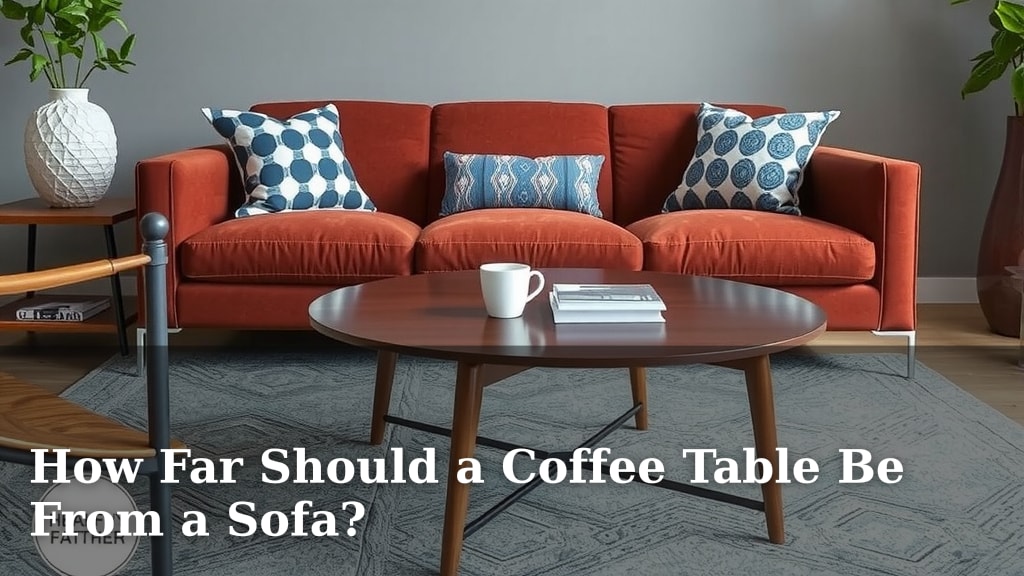
How Far Should a Coffee Table Be From a Sofa?
The ideal distance for your coffee table from your sofa is typically 14 to 18 inches. This range offers enough legroom for comfortable seating and easy access to your drinks or books. Getting this measurement right ensures your living room feels both functional and inviting.
When arranging your furniture, consider the flow of your space. A coffee table that’s too far away makes reaching for items difficult. One that’s too close can feel cramped and hinder movement. Finding that sweet spot creates a harmonious balance for everyday use and entertaining guests.
- Aim for 14-18 inches between your sofa and coffee table.
- This space allows for comfortable legroom.
- It also ensures easy access to table items.
- Proper spacing enhances room flow and usability.
- Consider your sofa’s depth and table height.
Let’s walk through exactly how to find that perfect coffee table distance for your unique living room setup.
Finding the Right Coffee Table Clearance
The perfect distance between your sofa and coffee table is key. It affects both comfort and accessibility. We found that a gap of 14 to 18 inches is generally recommended.
Understanding the Space Calculation
This measurement isn’t just a random number. It’s based on creating a functional and inviting living area. Think about how you use your space daily. You want to be able to reach for your mug or book without stretching awkwardly.
Legroom is Essential
That 14-18 inch zone provides ample legroom. It stops you from feeling cramped when sitting on the sofa. Research suggests this distance is enough for most people to comfortably extend their legs slightly (Cleveland Clinic).
Ease of Access Matters
Consider the coffee table’s purpose. It’s for resting drinks, remotes, and maybe a few decor items. Too far, and you’ll constantly be leaning over. Too close, and it becomes a tripping hazard.
Factors Influencing the Ideal Distance
While 14-18 inches is a great starting point, a few things can tweak this ideal. Your sofa’s depth and your coffee table’s height play a role.
Sofa Depth Considerations
Deeper sofas might call for a slightly larger gap. This ensures you don’t feel like you’re sitting right on top of the table. A standard sofa depth is around 36-40 inches. If yours is significantly deeper, aim for the higher end of the 14-18 inch range, or even a bit more.
Coffee Table Height Adjustments
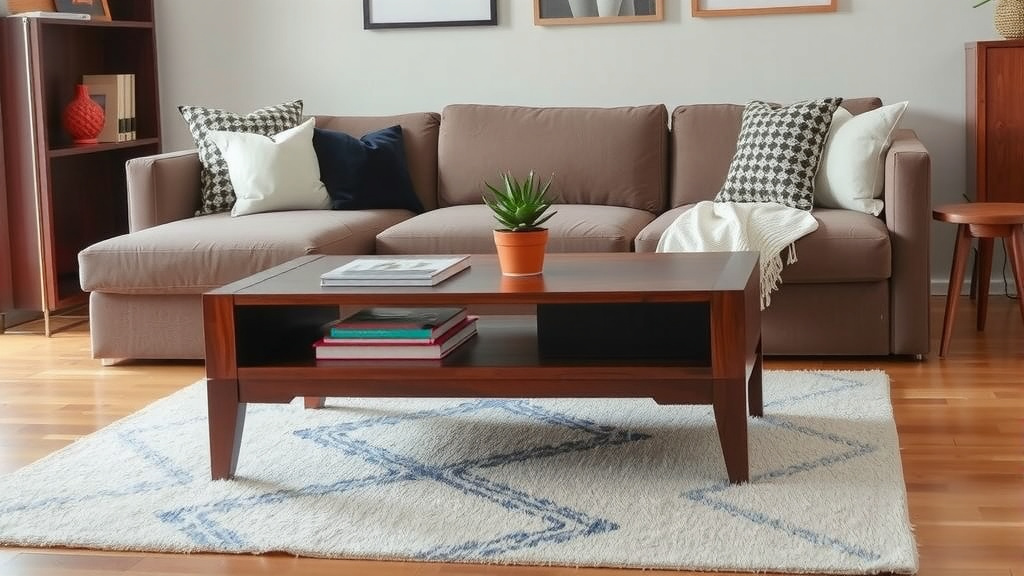
The height of your coffee table should be roughly the same height as your sofa cushions. Ideally, it shouldn’t be more than 2 inches taller or shorter (National Association of Furniture Manufacturers). A table that’s too tall can feel imposing. A table that’s too short might be hard to reach comfortably.
What If Your Living Room is Small?
Living rooms come in all shapes and sizes. If yours is on the cozier side, don’t despair. You can still achieve good flow and functionality.
Embrace Smaller Scale Furniture
Opt for a smaller, more streamlined coffee table. Round tables are often great for small spaces as they have no sharp corners to bump into. They also allow for easier movement around them. You might even get away with a slightly smaller gap, perhaps closer to 12-14 inches, if the table is narrow.
Consider Alternatives to Traditional Coffee Tables
Sometimes, a traditional coffee table just won’t fit. Think about nesting tables or ottomans with trays. Nesting tables can be pulled out when needed. Ottomans offer multi-functionality as seating or a footrest, with a tray providing a stable surface.
What If Your Living Room is Large?
A large living room offers more flexibility, but don’t let the space overwhelm your furniture. You still want to create an intimate seating area.
Maintain a Sense of Proximity
Even with ample space, you don’t want your coffee table to feel miles away. Stick to the 14-18 inch rule for the main seating group. This keeps the conversation area feeling connected. If you have a very large room, you might use multiple seating areas, each with its own appropriately distanced coffee table.
Scale Your Coffee Table Appropriately
A tiny coffee table in a vast room will look out of place. Choose a coffee table that is about two-thirds the length of your sofa. This creates a balanced visual relationship. Ensure the table is substantial enough to anchor the space without feeling lost.
The Layout: It’s More Than Just Distance
The distance is just one piece of the puzzle. How you arrange your furniture matters greatly. Consider traffic flow and the overall balance of your room.
Traffic Flow is Key
Ensure there’s a clear path around your coffee table. People should be able to walk from one side of the room to the other without squeezing past furniture. We found that at least 30 inches of clearance for main walkways is ideal (Interior Design Institute).
Creating Zones in Open Concept Spaces
In open-concept homes, the coffee table helps define the living area. Place it centered in front of the sofa, leaving space behind it to connect to other areas like the dining room. The 14-18 inch rule still applies to the sofa-to-table distance within that zone.
| Room Size | Recommended Sofa-to-Table Distance | Additional Tips |
|---|---|---|
| Small | 12-16 inches | Consider round or narrow tables. Use ottomans with trays. |
| Medium | 14-18 inches | Standard guidelines usually work well. Ensure easy legroom. |
| Large | 16-20 inches (or more if needed) | Use a proportionally sized table. Maintain visual connection. |
A Quick Checklist for Your Perfect Placement
Ready to measure? Here’s a quick rundown to help you get it right:
- Measure 14-18 inches from your sofa’s front edge.
- Check if you have comfortable legroom.
- Can you easily reach items on the table?
- Is there a clear walkway around the table?
- Does the table’s height match your sofa cushions?
- Does the table’s size feel balanced with your sofa?
Conclusion
Finding the right distance for your coffee table is about creating a balanced and functional living space. You’ve learned that the sweet spot is typically 14 to 18 inches from your sofa. This range provides essential legroom and easy access to your essentials. Remember to consider your sofa’s depth and your coffee table’s height for the perfect fit. For smaller rooms, think streamlined furniture, and for larger ones, ensure your table is scaled appropriately. Now, grab your tape measure and make that final adjustment to perfect your living room’s flow!
Frequently Asked Questions
What if my coffee table is much taller than my sofa?
If your coffee table is significantly taller than your sofa cushions, you might need to increase the distance slightly. Research suggests a height difference of more than 2 inches can feel awkward. Aiming for closer to 18-20 inches could improve comfort and accessibility.
Can I use a coffee table that’s longer than my sofa?
While a common guideline is for the coffee table to be about two-thirds the length of your sofa, it’s not a strict rule. If your coffee table is longer, ensure it doesn’t impede traffic flow. You may need to adjust the sofa-to-table distance to maintain comfortable legroom and passage.
How does the shape of the coffee table affect the distance?
Round or oval coffee tables can sometimes allow for a slightly closer placement than rectangular ones, especially in smaller spaces. Their lack of sharp corners makes them easier to navigate around. However, you should still maintain enough space for comfortable seating and to avoid feeling cramped.
What’s the minimum distance I can have between my sofa and coffee table?
While 14-18 inches is ideal, in very small living rooms, you might find yourself with less space. Aim for a minimum of 12 inches. Any less than this can make it difficult for people to sit comfortably or move around the table.
Should I use the same distance for all seating around a sectional?
Yes, when using a coffee table with a sectional, you’ll want to maintain that 14-18 inch distance from the primary seating area facing the table. If you have additional seating that isn’t directly facing the table, you might need to consider smaller side tables or adjust the main table’s placement slightly for better overall flow.