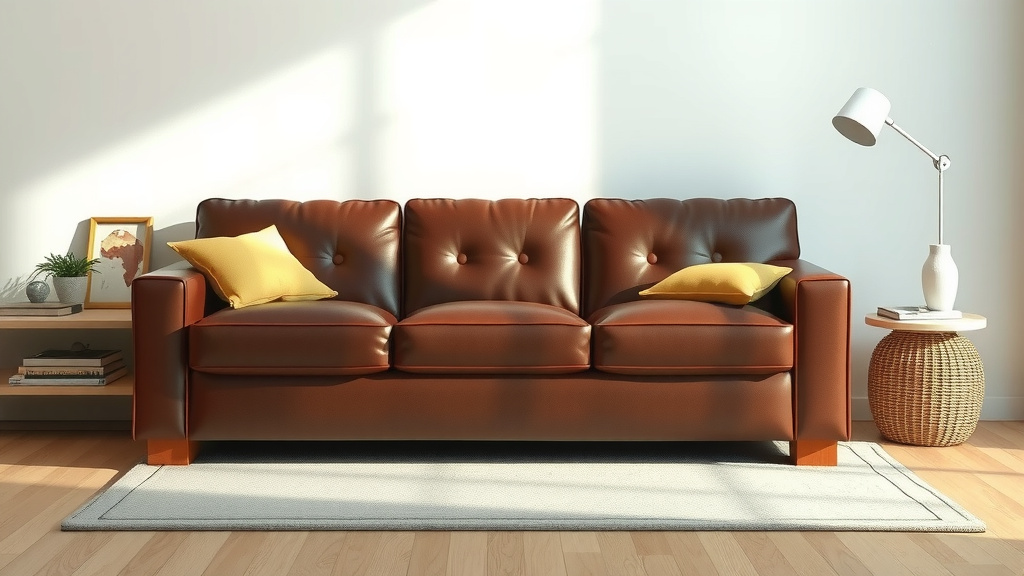
Faux Leather Sofa Lifespan: How Long Will Yours Last
You’re probably wondering how long your faux leather sofa will actually last. We found that most faux leather sofas can last anywhere from 2 to 10 years. This lifespan depends a lot on the quality of the material and how you care for it. Some high-quality options might even surprise you with their longevity.
Faux leather, also known as vegan leather or pleather, is a popular choice for sofas. It offers a stylish look at a lower price point. However, its durability can vary greatly. Factors like daily use, sun exposure, and routine cleaning play a big role in how well it holds up over time. We’ll help you understand what to expect.
- Faux leather sofas typically last 2-10 years.
- Quality of the material is a major factor.
- Care and maintenance significantly impact lifespan.
- Higher-quality faux leather can last longer.
We’ve gathered the key information to help you understand your faux leather sofa’s lifespan. Let’s dive into the details that matter most for its durability.
Understanding Your Faux Leather Sofa’s Lifespan
You’re probably wondering, “How long can I realistically expect my faux leather sofa to last?” We’ve looked into it, and the general consensus is that most faux leather sofas can serve you well for anywhere from 2 to 10 years. This range isn’t as narrow as you might think, and the actual lifespan of your sofa is determined by a handful of key factors.
The Quality Spectrum of Faux Leather
Not all faux leather is created equal. Think of it like clothing materials – some feel cheap and wear out quickly, while others are surprisingly durable. The quality of the faux leather material used in your sofa is the biggest predictor of its longevity. High-quality options often use thicker, more robust materials that mimic real leather more closely and stand up better to daily life.
What Makes High-Quality Faux Leather Better?
We found that the best faux leathers are often made with a polyurethane (PU) coating over a fabric backing. This PU layer is typically thicker and more flexible than the PVC (polyvinyl chloride) used in cheaper versions. A thicker PU layer means it’s less likely to crack or peel. It also offers better breathability, which can prevent discomfort.
Recognizing Lower-Quality Faux Leather
On the flip side, lower-quality faux leather might feel a bit stiff or plasticky. It often has a very thin coating that can scratch or tear easily. These sofas tend to be more budget-friendly upfront, but you might find yourself needing a replacement much sooner. They’re often the ones that start flaking and peeling within just a couple of years.
Daily Wear and Tear: The Sofa’s Toughest Test
Your sofa isn’t just a piece of furniture; it’s a central hub for your life. From movie nights and lazy Sunday afternoons to kids jumping and pets lounging, it experiences constant activity. This daily use is a major factor in how long your faux leather will hold up.
Assessing Your Household’s Sofa Habits
Consider how your household uses the sofa. Is it the primary seating area for the whole family every single day? Are there pets with sharp claws that love to perch on the furniture? Do children often use it as a trampoline? If you answered “yes” to these, your faux leather sofa will naturally experience more stress. We’ve seen that sofas in high-traffic homes tend to show wear faster.
Pets and Faux Leather: A Delicate Balance
Pets can be tough on furniture. While faux leather is generally easier to clean than some fabrics, sharp claws can still cause scratches and tears. Some faux leathers are more scratch-resistant than others, but it’s something to be mindful of. Regularly trimming your pet’s nails can help mitigate this risk.
Kids and Playtime
Little ones can be equally hard on a sofa. Bouncing, spills, and general roughhousing can take a toll. While faux leather is spill-resistant, repeated impacts and friction can eventually lead to wear. A sofa used less vigorously, perhaps in a formal living room, will likely outlast one in a busy family room.
Environmental Factors Affecting Sofa Longevity
Where you place your sofa matters more than you might think. Certain environmental conditions can accelerate the aging process of faux leather, leading to premature damage and a shortened lifespan. You want to protect your investment from these common culprits.
The Sun’s Impact: UV Damage
Direct sunlight is a faux leather’s enemy. UV rays can cause the material to fade, dry out, and become brittle over time. This makes it much more susceptible to cracking and peeling. If your sofa is positioned near a sunny window, consider using curtains or blinds to block direct sun exposure, especially during peak hours.
Heat and Humidity’s Role
Excessive heat sources, like radiators or fireplaces, can also damage faux leather. High temperatures can warp the material, causing it to lose its shape and flexibility. Similarly, very high humidity can affect the adhesives and backing materials. We’ve found that keeping your sofa away from direct heat sources is a simple yet effective way to preserve its condition.
Maintaining Your Faux Leather Sofa for Maximum Life
Just like any other piece of furniture, your faux leather sofa benefits greatly from consistent care. Regular cleaning and maintenance can prevent small issues from becoming big problems, significantly extending its life. Think of it as giving your sofa a spa treatment!
The Importance of Regular Cleaning
Dust and dirt are abrasive. Over time, they can grind into the faux leather’s surface, causing micro-scratches that dull the finish and weaken the material. We recommend a gentle wipe-down with a soft, damp cloth at least once a week. This removes surface debris before it can cause damage.
Dealing with Spills and Stains
Faux leather is generally spill-resistant, which is one of its major advantages. However, it’s not waterproof. For minor spills, blot the area immediately with a clean, dry cloth. For more stubborn spots, use a mild soap solution – like a drop of dish soap mixed with water. Always test any cleaning solution on an inconspicuous area first. Never use harsh chemicals or abrasive cleaners, as these can strip the finish or damage the material.
Conditioning for Flexibility
Some experts suggest that conditioning faux leather can help maintain its suppleness and prevent drying or cracking, especially in arid climates. You can find specialized faux leather conditioners. Apply them sparingly with a soft cloth, following the product instructions. This step is more about preventative care for the material.
Quick Checklist for Extending Sofa Life
- Wipe down with a soft, damp cloth weekly.
- Blot spills immediately; use mild soap for stains.
- Avoid direct sunlight and heat sources.
- Trim pet nails to prevent scratches.
- Test cleaning products on a hidden spot first.
- Consider faux leather conditioner for dryness.
Conclusion
So, how long can you expect your faux leather sofa to last? We’ve seen that the lifespan generally falls between 2 and 10 years. The key to maximizing this is understanding the quality of your material and how you treat it. High-quality faux leather and consistent, gentle care will help your sofa stay looking great for longer. By following simple maintenance tips, like regular dusting and prompt spill clean-up, you’re giving your sofa the best chance to serve you well. Make a commitment to these practices, and you’ll enjoy your comfortable seating for years to come.
Frequently Asked Questions
Will my faux leather sofa start peeling soon?
Peeling is more common with lower-quality faux leather, especially if it’s exposed to heat or direct sunlight. Higher-quality materials are more resistant to this. Proper care, like avoiding harsh cleaners and extreme temperatures, can help prevent peeling.
Is faux leather good for homes with pets?
Faux leather is generally easy to clean, which is a plus with pets. However, sharp claws can still cause scratches or tears. Some faux leathers are more scratch-resistant than others, but it’s wise to keep pet nails trimmed to minimize damage.
How often should I clean my faux leather sofa?
We recommend a quick wipe-down with a soft, damp cloth at least once a week. This removes dust and dirt before they can build up and potentially damage the material. For spills, blot them up immediately.
Can I use household cleaners on my faux leather sofa?
It’s best to avoid harsh household cleaners, as they can damage the faux leather’s finish. Stick to mild soap and water solutions for stains. Always test any cleaning product on a small, hidden area first to ensure it doesn’t cause discoloration or damage.
Does the color of faux leather affect its lifespan?
Darker colors may show fading from sunlight more obviously than lighter colors, but the underlying material’s durability isn’t typically affected by color alone. The main environmental factors are UV exposure and heat, regardless of the shade of your faux leather.


![10 Seater Sofa Bed [2026]](https://hometopaccesories.com/wp-content/uploads/2026/08/10-seater-sofa-bed-2026-featured-1-768x432.jpg)