Fabric Yards for a 3-Seater Sofa: How Much You Need
You’ll typically need between 10 to 15 yards of fabric to reupholster a standard 3-seater sofa. This amount can vary based on the sofa’s style, the fabric’s pattern repeat, and whether you’re reupholstering cushions too. Getting the right yardage ensures you have enough fabric without excessive waste.
Many factors influence the final fabric amount. Sofas with skirts or multiple decorative trims might require more material. Large, bold patterns often need careful placement, which can increase your fabric needs. We found that understanding these variables is key to an accurate estimate for your project.
- A 3-seater sofa usually needs 10-15 yards of fabric.
- Sofa style, fabric pattern, and trim affect yardage.
- Measure your sofa and check fabric details beforehand.
- Always buy a little extra fabric for mistakes or future repairs.
Let’s break down how to calculate the fabric you’ll need for your sofa and what else to consider.
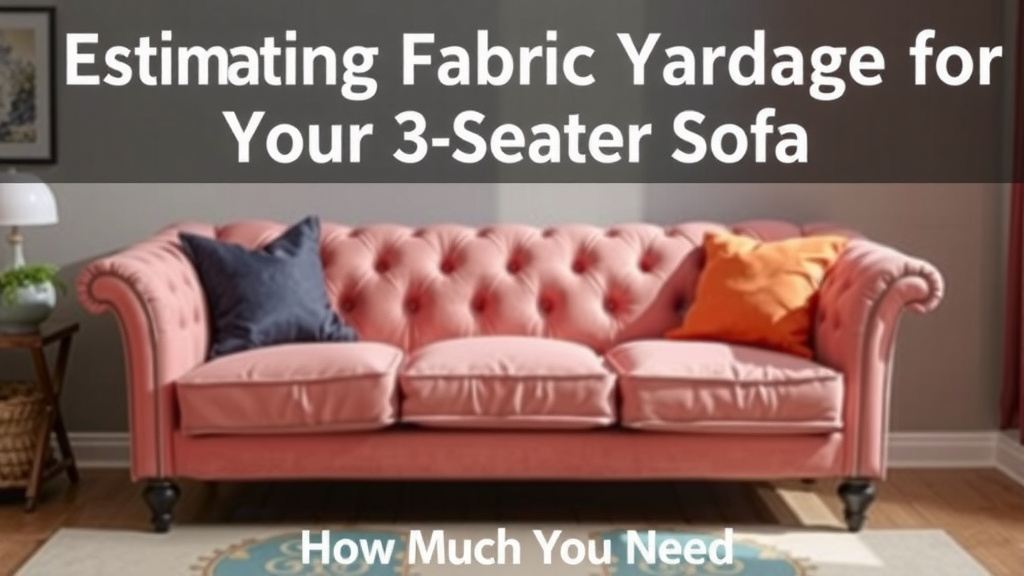
“`htmlEstimating Fabric Yardage for Your Three-Seater Sofa
So, you’re ready to give your trusty three-seater sofa a fresh new look! That’s fantastic. Before you head to the fabric store or start browsing online, let’s talk about how much fabric you’ll actually need. Getting this right can save you a headache and a good chunk of change.
Generally speaking, a standard three-seater sofa requires about 10 to 15 yards of fabric. Think of it like baking a cake; you need enough batter, but too much can make a mess. This range is a good starting point, but several things can nudge that number up or down.
Understanding Your Sofa’s Dimensions and Shape
The size and shape of your sofa are the most obvious factors. A longer, deeper sofa will naturally need more fabric than a more compact one. We found that measuring is your best friend here.
Measuring Your Sofa for Fabric Needs
You don’t need to be a professional upholsterer to get a good estimate. Grab your trusty tape measure. You’ll want to measure a few key areas:
- Length: Measure the longest side of your sofa.
- Height: Measure from the floor to the top of the back cushion or frame.
- Depth: Measure from the front of the sofa to the back.
- Arm Width: Measure the width of each arm.
While these measurements give you a general idea, they don’t account for all the curves and details. Professional upholsterers often use a rule of thumb. They might add a certain percentage based on the sofa’s style. For a typical three-seater, this often lands you in that 10-15 yard ballpark.
How Fabric Type and Pattern Affect Yardage
The fabric you choose plays a huge role. It’s not just about how it looks and feels; it’s about its physical characteristics.
Pattern Repeats: The Hidden Yardage Guzzler
This is a big one that often surprises people. If your fabric has a large, repeating pattern, you’ll need more yardage. Imagine trying to line up a giant floral design on every cushion and panel. You can’t just cut it willy-nilly!
You need to account for the pattern repeat. This is the distance on the fabric before the design starts over. If the repeat is, say, 27 inches, you’ll need to ensure each piece of fabric you cut starts at the same point in the pattern. This often means buying an extra half-yard or even a full yard.
We found that fabrics with small, all-over prints or solids require much less fuss. They are much more forgiving, meaning less waste. Always check the fabric’s specifications for its pattern repeat. You can usually find this information on the manufacturer’s tag or the product listing online.
Directional vs. Non-Directional Fabrics
Does your fabric have a nap, like velvet, or is it printed to look a certain way on top? These are called directional fabrics. If you use a directional fabric, all your pieces must face the same way. This adds complexity to cutting and can increase yardage needs.
Non-directional fabrics are more flexible. You can cut pieces facing different directions, which helps minimize waste. For a sofa, ensuring all the fabric flows the same direction usually looks best. So, even if the fabric isn’t strictly directional, keeping the “grain” consistent is often preferred. This consideration can add to your total yardage.
Considering Sofa Details: Skirts, Welts, and More
Your sofa isn’t just flat surfaces. It has details that add character, but also add to your fabric needs.
Sofa Styles That Require More Fabric
Does your sofa have a skirt that goes all the way around? Or maybe it has lots of decorative piping, also known as welting or cording? These details add up.
A sofa with a floor-length skirt will require a significant amount of extra fabric. The piping alone, especially if it’s on all the cushions and seams, can add several yards to your total. Think about a sofa with a traditional rolled arm – these often have extra fabric to create that plush look.
We found that sofas with very simple, clean lines and no skirts or extra trim are the most fabric-efficient. For an average three-seater, these might lean towards the lower end of our 10-15 yard estimate. Anything more ornate will push you closer to, or even beyond, 15 yards.
A Quick Comparison Table for Fabric Needs
To help visualize how these factors might influence your order, consider this simplified table. Remember, these are general guidelines.
| Sofa Style / Fabric Feature | Estimated Yardage Range (for a 3-Seater) |
|---|---|
| Simple, solid fabric, minimal details | 10 – 12 yards |
| Medium pattern repeat, standard cushioning | 12 – 14 yards |
| Large pattern repeat, with welting/piping | 14 – 16 yards |
| Floor-length skirt, large pattern, many seams | 16+ yards |
The Crucial Step: Checking Your Fabric’s Width
This is a detail that can drastically alter your fabric calculations. Most upholstery fabrics come in standard widths, often around 54 inches. However, some can be narrower or wider.
A wider fabric means you can get more coverage from each strip you cut. A narrower fabric will require more strips and more careful layout to ensure you have enough. Always, always check the width of the fabric you are considering. This information is just as important as the yardage itself.
A Smart Shopper’s Checklist for Buying Fabric
Ready to make your purchase? Here’s a quick checklist to make sure you’re prepared:
- Measure your sofa’s key dimensions.
- Determine if your chosen fabric has a pattern repeat.
- Note the pattern repeat measurement (if applicable).
- Check if the fabric is directional.
- Find out the exact width of the fabric roll.
- Add 1-2 extra yards for unforeseen issues.
Think of that extra yardage as your project’s safety net. It’s there for when you might have measured a piece slightly wrong, or if a cut doesn’t turn out perfectly. Many experts also recommend buying a little extra for future repairs, like fixing a small tear down the line. It’s much easier to have it on hand than to try and find the exact same dye lot later!
“`
Conclusion
You’ve gathered the essential information for your three-seater sofa fabric project. Remember, the 10-15 yard range is a starting point, but factors like pattern repeat, sofa details, and fabric width play a big part. Paying attention to these details helps you avoid frustrating shortages or costly excess fabric. Your next step is to carefully measure your sofa and check the specific details of your chosen fabric. Doing this homework ensures you purchase the right amount of material for a beautiful and successful reupholstery.
Frequently Asked Questions
How can I measure my sofa if it has unusual curves?
For sofas with curves, measure the longest and widest points of each section you need to cover. Add a few extra inches to these measurements to account for the fabric conforming to the shape. It’s better to have a little extra fabric than not enough to cover those elegant curves.
Is 10 yards of fabric always enough for a small 3-seater sofa?
Ten yards can be enough for a very simple, compact three-seater sofa, especially if you’re using a solid fabric with no pattern repeat and minimal trim. However, even small details like piping or a moderate pattern repeat can easily push your needs closer to 12 yards. It’s wise to check your specific fabric and sofa details.
What is the best way to account for a large pattern repeat?
When you have a large pattern repeat, you must ensure each cut piece aligns with the next. Check the pattern repeat measurement on the fabric’s label. You’ll need to add that amount to your measurements for each piece, which often means buying an extra 1-3 yards. It’s all about making sure that beautiful pattern flows perfectly.
Does reupholstering the cushions count towards the total yardage?
Yes, absolutely! The fabric needed for your sofa’s seat cushions, back cushions, and any throw pillows are all included in your total yardage calculation. If your cushions are particularly large or have a lot of welting, they can consume a significant portion of your fabric.
Can I use remnants or smaller pieces of fabric for my sofa?
For a cohesive look on a three-seater sofa, using remnants is generally not recommended. You need continuous pieces of fabric to cover the large surfaces like the back, arms, and seat. While you might use scraps for very small accents, the main upholstery should come from the same fabric roll to ensure color and pattern consistency.
![10 Best Budget Friendly Sectional Sofa [2026]](https://hometopaccesories.com/wp-content/uploads/2026/08/10-best-budget-friendly-sectional-sofa-2026-featured-768x432.jpg)
![10 Best Alternative To Sleeper Sofa [2026]](https://hometopaccesories.com/wp-content/uploads/2026/08/10-best-alternative-to-sleeper-sofa-2026-featured-768x432.jpg)