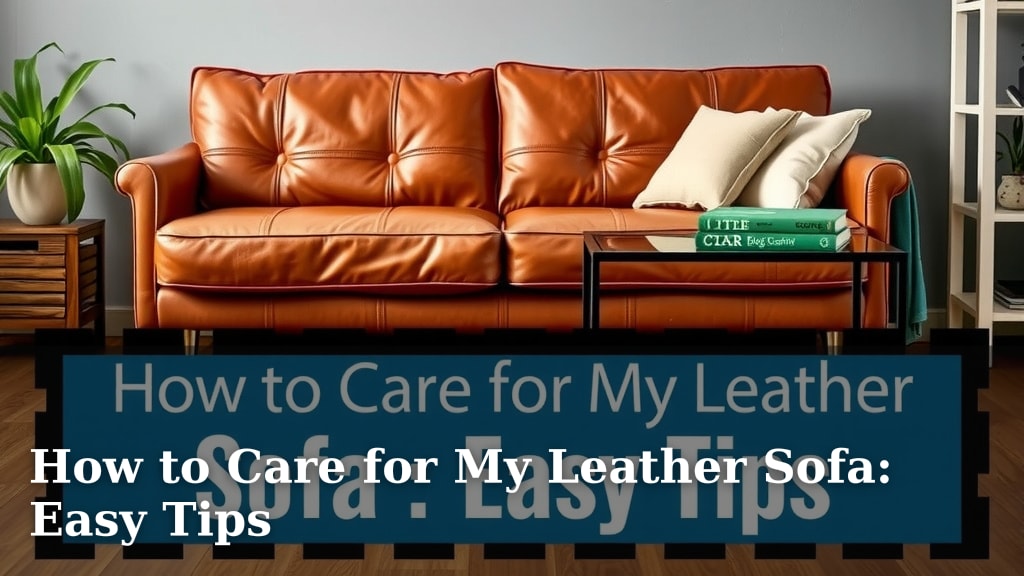
How to Care for My Leather Sofa: Easy Tips
Caring for your leather sofa is easier than you might think. The best way to care for your leather sofa involves regular dusting, occasional conditioning, and promptly dealing with spills. This simple routine will help keep your sofa looking great for years.
Leather is a durable material, but it still needs some attention. Proper care prevents drying, cracking, and staining. Many owners find that a little effort goes a long way in preserving their furniture’s beauty and lifespan. We found that consistent, gentle care is key.
- Dust regularly to prevent grit buildup.
- Clean spills immediately with a soft cloth.
- Condition the leather every 6-12 months.
- Avoid direct sunlight and heat sources.
- Test cleaning products on an inconspicuous spot first.
Let’s walk through the easy steps to keep your leather sofa in top shape.
Keeping Your Leather Sofa Looking Great: Simple Care Strategies
So, you’ve got a gorgeous leather sofa. Isn’t it wonderful? It’s probably a focal point in your living room. But how do you keep it looking that way without a lot of fuss? We’ve done the research, and it turns out, keeping your leather sofa in tip-top shape is quite straightforward. It mostly comes down to a few consistent habits. You can absolutely maintain that luxurious feel and appearance for years.
The Foundation of Leather Sofa Care: Regular Dusting
Think of dusting as your sofa’s daily cleanse. Grit and dust are like tiny little saboteurs. They can scratch the leather surface over time. You want to get rid of them gently. This prevents them from grinding into the material.
Why Dusting Matters So Much
Regular dusting prevents a buildup of abrasive particles. These particles can dull your sofa’s sheen. They can also lead to micro-scratches you might not even see at first. Imagine tiny sandpaper working away; that’s what dust can do. Many cleaning experts recommend this as the very first step in any leather care routine.
How to Dust Effectively
Grab a soft, dry microfiber cloth. Gently wipe down all surfaces of your sofa. Don’t forget the arms, back, and cushions. Make this a weekly habit. It takes just a couple of minutes. You’ll see a difference in how the light reflects off the leather.
Immediate Action: Tackling Spills and Stains
Life happens, and spills are inevitable. The good news is that leather is relatively forgiving if you act fast. The key is speed and the right method. Don’t let a little spill turn into a permanent mark!
What to Do the Moment a Spill Occurs
If something spills on your sofa, don’t panic. Reach for a clean, dry, absorbent cloth immediately. Blot the spill gently. Don’t rub. Rubbing can spread the liquid. It can also push it deeper into the leather. Blotting lifts the liquid away.
Dealing with Different Types of Spills
For water-based spills, blotting is usually enough. For greasy or oily stains, you might need a different approach. Sprinkle a little cornstarch or talcum powder on the spot. Let it sit for a few hours to absorb the oil. Then, gently brush it off. Many upholstery guides suggest this method for oily stains. Always test any stain removal method on a hidden spot first.
Revitalizing Your Sofa: The Magic of Conditioning
Leather is skin, in a way. Just like your skin, it can dry out. Dry leather can become stiff and eventually crack. Conditioning replenishes essential oils. It keeps the leather supple and protected.
Understanding Leather Conditioners
A good leather conditioner acts like a moisturizer. It keeps the material flexible. It also adds a protective layer. Look for products specifically designed for upholstery leather. Avoid petroleum-based products. They can damage the finish.
When and How to Condition
How often should you condition? It depends on your climate and usage. In dry climates, you might need to do it every 6 months. In more humid areas, every 12 months might be enough. We found that many experts suggest a schedule of every 6 to 12 months. Apply a small amount of conditioner to a soft cloth. Gently rub it into the leather in a circular motion. Let it absorb for the time recommended on the product. Then, buff off any excess with a clean cloth.
Protecting Your Investment: Avoiding Damage
Prevention is key when it comes to maintaining your leather sofa. A little care in placement can save you a lot of trouble later.
The Danger of Direct Sunlight
Sunlight is a leather sofa’s enemy. Direct UV rays can fade the color. They can also dry out the leather prematurely. Try to position your sofa away from windows that get direct sun. If that’s not possible, consider using blinds or curtains. This shields your sofa from harsh rays.
Heat Sources and Your Sofa
Similarly, keep your leather sofa away from heat sources. Radiators, fireplaces, and heating vents can dry out the leather. This can lead to cracking. Aim for a consistent, moderate temperature. Avoid placing your sofa too close to these heat producers.
Deep Cleaning Your Leather Sofa
While daily dusting and spot cleaning are essential, sometimes a deeper clean is needed. This is not something you’ll do often. It’s more about a gentle overall refresh.
Choosing the Right Cleaning Solution
For a general cleaning, a mild soap and water solution is often recommended. Mix a few drops of mild, pH-neutral soap with distilled water. Dampen a soft cloth with the solution. Wring it out well so it’s just damp, not wet. Gently wipe down the sofa. Follow up immediately with a clean, damp cloth (water only) to remove any soap residue. Then, dry thoroughly with a soft, dry cloth.
Testing Before You Clean
Before applying any cleaner to the entire sofa, always test it on an inconspicuous area. This is usually the back or underside. Let it dry completely. Check for any discoloration or damage. This simple step can save your sofa from a cleaning mishap.
A Quick Checklist for Leather Sofa Care
Here’s a handy summary to keep your leather sofa looking its best:
- Dust weekly with a soft microfiber cloth.
- Blot spills immediately; never rub.
- Condition every 6-12 months to keep leather supple.
- Avoid direct sunlight and heat sources.
- Test all cleaners in a hidden spot first.
- Address stains promptly; use mild solutions if needed.
Conclusion
You’ve learned that caring for your leather sofa doesn’t require expert skills or a lot of time. By incorporating simple habits like regular dusting and prompt spill cleanup, you actively protect your furniture. Conditioning your sofa every few months keeps it supple and prevents dryness.
Remembering to keep it away from direct sunlight and heat sources is also key. These easy steps work together to maintain your sofa’s beauty and extend its life. Start by dusting your sofa today to begin this simple care routine.
Frequently Asked Questions
How often should I condition my leather sofa?
Most experts recommend conditioning your leather sofa every 6 to 12 months. The exact frequency can depend on your climate and how much you use the sofa. If you live in a very dry area, you might lean towards conditioning it more often.
Can I use regular household cleaners on my leather sofa?
It’s best to avoid regular household cleaners. Many contain harsh chemicals that can damage the leather. For a gentle clean, a solution of mild, pH-neutral soap and distilled water is often recommended. Always test any cleaning solution on an inconspicuous spot first.
What’s the best way to remove a stain from leather?
Act fast! For most spills, gently blot the area with a clean, dry cloth. Don’t rub. For oily stains, try sprinkling cornstarch or talcum powder on the spot to absorb the grease. Let it sit, then brush it off. Always test stain removal methods on a hidden area.
Is it okay to place my leather sofa near a sunny window?
No, you should avoid placing your leather sofa in direct sunlight. Prolonged exposure to UV rays can cause the color to fade and the leather to dry out. If you can’t move it, consider using blinds or curtains to shield your sofa.
What does “conditioning” leather actually do?
Think of conditioning as moisturizing for your sofa. It replenishes the natural oils in the leather, keeping it soft, supple, and preventing it from drying out or cracking. A good conditioner also adds a protective layer to the material.

![10 Best Built Sectional Sofas [2026]](https://hometopaccesories.com/wp-content/uploads/2026/08/10-best-built-sectional-sofas-2026-featured-768x432.jpg)


![10 Best Camping Sofa [2026]](https://hometopaccesories.com/wp-content/uploads/2026/08/10-best-camping-sofa-2026-featured-768x432.jpg)