How to Carry a Sofa Down Stairs Without Damaging Walls
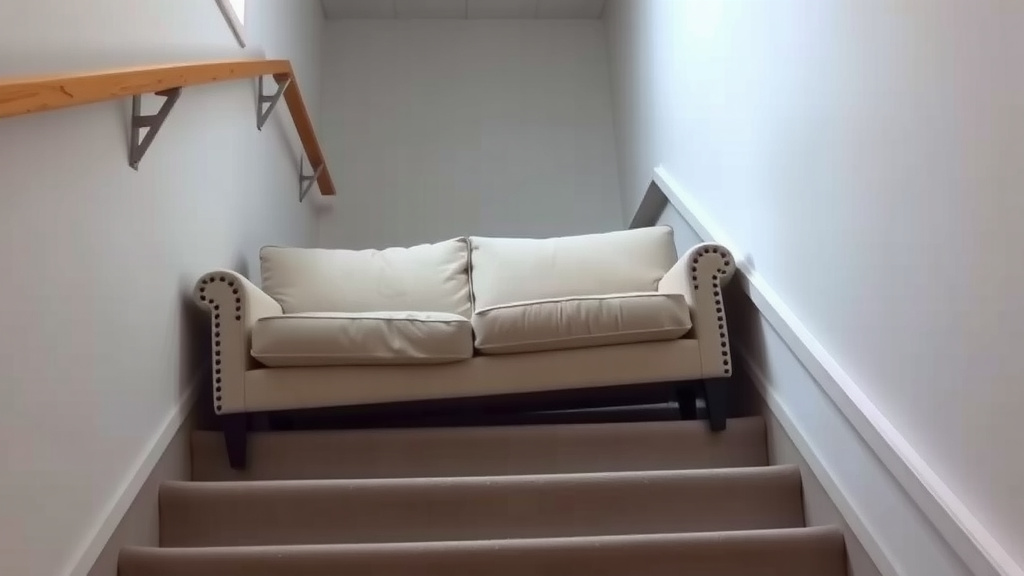
The best way to carry a sofa down stairs is to measure everything first, then move it feet-first with one person guiding from below and one from above. Angling the sofa on its side often helps it clear tight corners and narrow stairwells. If it still won’t fit, don’t force it—many sofas can be safely taken apart instead.
Here’s the thing: most people skip the prep and pay for it later with scratched walls, pinched fingers, or a sofa stuck halfway down the staircase. We researched common moving mistakes and found that a little planning makes a huge difference. Knowing your sofa’s dimensions, your stairway width, and when to remove the legs or cushions can turn a stressful job into a manageable one.
- Measure your sofa, doorways, and stairway before you lift anything.
- Clear a path and remove rugs, cords, and anything that could trip you.
- Use proper lifting form and carry the sofa feet-first down the stairs.
- Take off legs, cushions, or arms if the fit is tight.
- Know when it’s smarter to hire movers or use a hoisting strap.
Below, we walk through everything you need to know to get your sofa down the stairs safely, without the headaches. Grab a friend, and let’s get moving.
Moving a Sofa Down Stairs Without the Drama
The safest method is to carry your sofa feet-first, angled slightly, with one person below and one above. This gives the person on the bottom the best control and keeps the sofa from tipping toward them.
Why feet-first? We found that movers consistently recommend this position because the heavy end stays supported on the upper step. Your arms also stay in a stronger position, which matters more than you’d think by the tenth step.
Measure Before You Muscle
Grab a tape measure before anyone touches the sofa. Write down three numbers: the sofa’s height, width, and diagonal depth. Then measure your stairway width and any doorways along the route.
Here’s a trick pros use: compare the sofa’s height to the width of the stairwell. If your sofa is 36 inches tall and your stairwell opening is 40 inches wide, you have almost no room to tilt. That tells you right away whether you’ll need to rotate the sofa or take it apart.
Know Your Staircase Type
Straight staircases are forgiving. Switchback stairs (with a landing and a turn) are where sofas go to die, at least temporarily. A tight turn often means you’ll need to stand the sofa on end or pivot it vertically.
Spiral staircases are the hardest of all. If your route includes a spiral, be honest with yourself. Many people find that disassembling the sofa is the only realistic option.
Prep the Sofa and the Path
Take five minutes to prep, and you’ll save yourself an hour of cursing. Clear the hallway, prop open doors, and pad corners with old towels or foam.
- Remove all cushions and set them aside.
- Unscrew legs if they’re detachable (most are).
- Wrap the sofa in moving blankets or old sheets.
- Tape the blankets snugly so they don’t slide.
- Remove wall hangings along the stair route.
- Secure pets in another room—trust us on this one.
What to Do About Arms and Recliners
Some sofas have removable arms, and that changes everything. Check underneath the frame for bolt-on brackets before you assume the sofa is one solid piece.
Recliners are trickier. We found that many recliner backs lift right out of the base once you flip the chair and release a locking mechanism. Check your model’s manual or the manufacturer’s website for instructions. Our step-by-step guide to taking the recliner back off shows where the release levers usually hide.
The Right Way to Lift
Bad lifting form sends thousands of people to the emergency room each year, and back injuries top the list (CDC). Your sofa move shouldn’t end in a doctor’s visit.
Bend at your knees, not your waist. Keep the sofa close to your body. Never twist while holding weight—turn with your feet instead.
Positioning Your Team
The stronger lifter goes below, because the downhill side bears more weight. The person above mainly steers and controls the pace. Agree on simple commands: “Stop,” “Tilt,” “Lower.” Yelling “wait!” and meaning “go” is how friendships end.
Tackling Tight Corners and Landings
When you hit a landing or a turn, stop and think before you move. Look at the geometry and decide which way the sofa needs to rotate.
Often the answer is to stand the sofa on one end and pivot it like a revolving door. Go slow. Two inches of clearance can disappear fast when you’re mid-pivot.
Vertical Moves for Narrow Stairwells
If the stairwell is truly narrow, many movers use a shoulder strap or furniture strap system. This raises the sofa off your hands and gives you a better grip angle. Straps are inexpensive and worth owning if you move often.
When to Disassemble the Sofa Instead
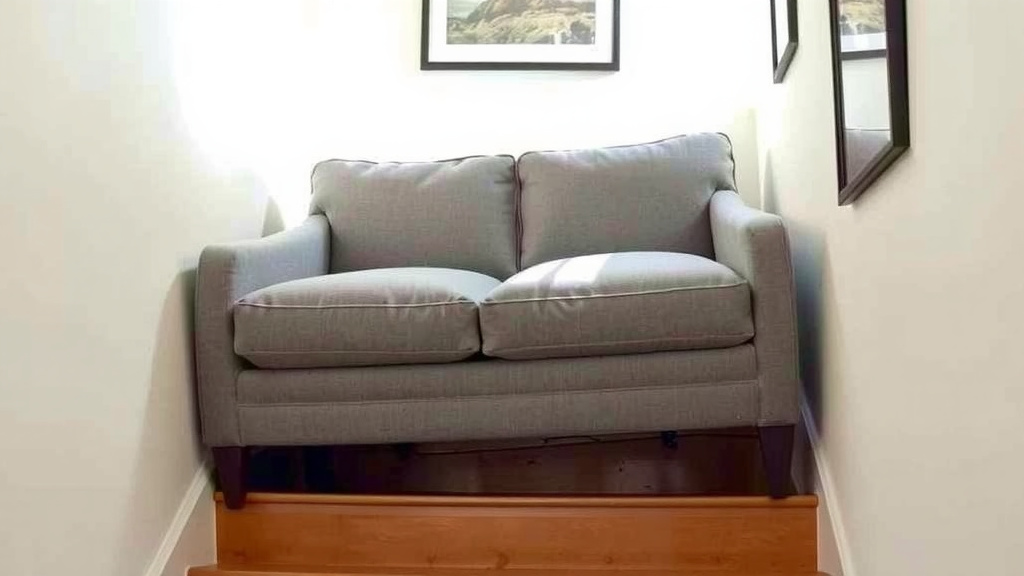
If measurements show less than an inch of spare clearance, don’t fight it. Take the sofa apart. Most sofas survive partial disassembly just fine.
| Part | Difficulty | Tools Needed |
|---|---|---|
| Legs | Easy | Screwdriver or wrench |
| Cushions | Very easy | None |
| Recliner back | Moderate | None or flathead screwdriver |
| Arms | Moderate to hard | Wrench, pliers |
| Cutting fabric (last resort) | Hard | Staple remover, staple gun |
Cutting the fabric backing should always be your last resort, but we found that upholsterers can restaple a bottom panel cheaply if it comes to that.
Protect Yourself While You Work
Wear closed-toe shoes with grip—no socks on hardwood, please. Stairs plus heavy furniture is a slip-and-fall recipe, and falls remain a leading cause of home injuries (CDC).
Wear gloves for grip, and take breaks. Fatigue causes fumbles, and fumbles cause crushed toes. If either of you feels shaky halfway down, set the sofa down safely and rest.
Keep Kids and Pets Out of the Way
Put the dog outside and send the kids to a friend’s room. A curious cat weaving between legs mid-descent is a hazard nobody needs.
Handy Sofa-Moving Checklist
- Measured sofa and stairway? ✔
- Path cleared and doors propped? ✔
- Legs off and sofa wrapped? ✔
- Gloves and grippy shoes on? ✔
- Simple commands agreed on? ✔
- Straps ready for the tricky turns? ✔
Know When to Call in the Pros
Sometimes the smartest move is hiring movers. If your sofa cost more than a few hundred dollars, or your stairwell includes a hairpin turn with less than an inch of clearance, let a professional team handle it. They have straps, dollies, and the experience to make it look easy.
Another option worth knowing: furniture hoisting. If the interior route is impossible, movers can often bring the sofa through a second-story window using a lift or rope system. It sounds dramatic, but it’s a routine service for many moving companies.
Whatever you decide, remember that no sofa is worth a herniated disc or a fractured footboard. Plan well, lift smart, and know your limits. You’ve got this.
Conclusion
Getting your sofa down the stairs comes down to three things: measure first, prep well, and lift with a plan. Carry it feet-first with your strongest person below, use straps for the tricky turns, and never force a tight fit when taking off the legs or arms would solve the problem. And if the numbers say it won’t fit, there’s no shame in calling movers or asking about hoisting through a window.
Here’s your next step: grab a tape measure and write down your sofa’s dimensions and your stairway width today. That one number will tell you whether this is a two-person job or a job for the pros. A few minutes with a pencil beats an afternoon stuck on a landing.
Frequently Asked Questions
Can two people safely carry a heavy sofa down stairs?
Yes, as long as the sofa isn’t too heavy for either of you to handle alone. Two people is actually the ideal number for stairs, because one steers from above while the other controls the weight from below. If the sofa weighs more than about 100 pounds or requires twisting through tight turns, consider a third person or a professional crew.
What should I do if my sofa gets stuck halfway down the stairs?
Stop moving immediately and don’t push harder—forcing it usually damages the sofa, the wall, or both. Set the sofa down safely, step back, and look at where it’s pinched. Often you can tilt it slightly or rotate it on end to free it. If there’s no give at all, you may need to remove a leg or arm on the spot.
Will moving companies disassemble my sofa for me?
Most professional movers will handle basic disassembly like legs, cushions, and recliner backs as part of the job. Some charge a small extra fee for taking apart arms or complex frames. Ask before booking so there are no surprises on moving day, and mention any tight stairwells when you get your quote.
How do I protect my walls and banister when moving a sofa?
Wrap the sofa in moving blankets or old sheets and tape them snugly so nothing slides. Pad the banister and any sharp corners with foam, towels, or cardboard. We also suggest removing framed photos and mirrors from the stairway walls—they’re the first things to crack when a corner swings wide.
Is it easier to move a sofa down stairs before or after removing the cushions?
Always before. Cushions add bulk, weight, and slipperiness, and they can shift mid-move and throw off your grip. Set them aside and carry them down separately, or pass them hand to hand. You’ll get a lower center of gravity and a much better view of your footing.