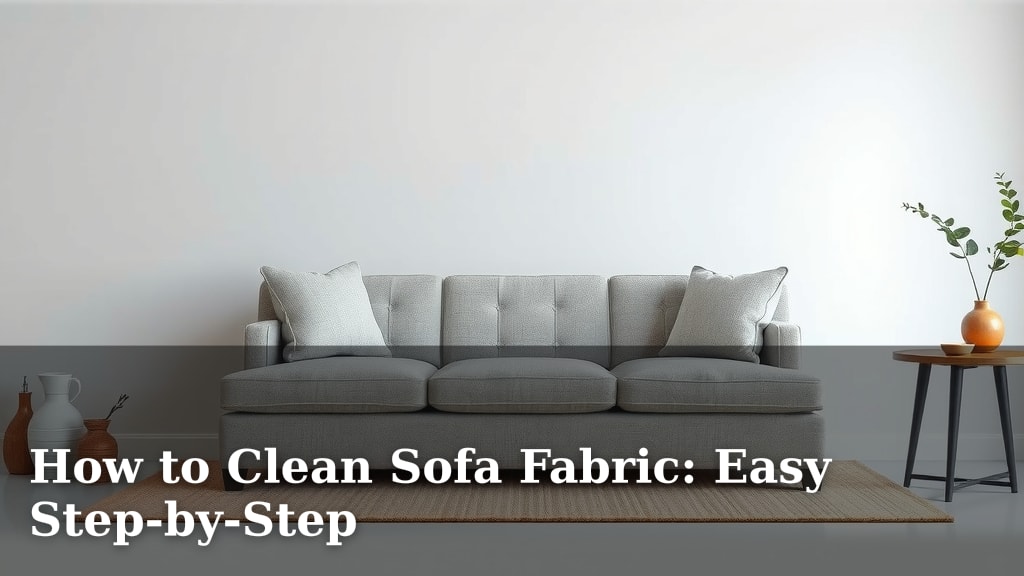
How to Clean Sofa Fabric: Easy Step-by-Step
The easiest way to clean sofa fabric is to start with a vacuum cleaner and then spot-treat stains using a gentle cleaning solution recommended by the manufacturer. Always check your sofa’s care tag for specific cleaning codes to avoid damage. You can often restore dingy fabric with a bit of patience and the right technique, bringing your sofa back to life.
Keeping your sofa clean not only makes it look better but also helps it last longer. Different fabric types require different approaches, so understanding your sofa’s material is the first important step. We’ve researched and found that a regular cleaning routine can prevent deep-set stains and keep your furniture looking its best.
- Check your sofa’s fabric care tag first.
- Vacuum regularly to remove dust and debris.
- Spot-treat stains promptly with the right cleaner.
- Test cleaning solutions in an inconspicuous area.
- Consider professional cleaning for tough stains.
Below, we break down the simple steps to tackle common sofa fabric messes, helping you achieve a cleaner, fresher living space.
Getting Your Sofa Fabric Clean: A Simple Plan
So, you’re ready to give your sofa a good clean. That’s fantastic! A fresh sofa can really transform a room. We’ve researched and found that tackling sofa fabric cleaning doesn’t have to be a huge chore. With a few basic steps and the right approach, you can make your couch look and feel much better. Let’s get started on this simple plan.
Understanding Your Sofa’s Fabric Type
Before you grab any cleaning supplies, it’s super important to know what your sofa is made of. Different fabrics need different care. This is often the biggest key to cleaning without causing damage. You wouldn’t use the same soap on silk as you would on denim, right? Your sofa is no different.
Finding the Care Tag
Most sofas have a hidden care tag. Look for it under cushions or along the seams. This tag is your cleaning roadmap. It will have a code that tells you exactly how to clean it safely. Many experts say this is the most critical step to avoid ruining your upholstery.
Decoding the Cleaning Codes
These codes might seem like a secret language at first. Here’s a quick rundown of what they mean:
| Code | Meaning | What You Can Do |
|---|---|---|
| W | Water-based cleaner is okay. | You can use water and water-based cleaning solutions. |
| S | Solvent-based cleaner only. | Use a dry cleaning solvent. No water! |
| WS | Either water-based or solvent-based cleaner can be used. | You have options! |
| X | Vacuum only. | No liquids or solvents. Just a good vacuuming. |
We found that understanding these codes helps you choose the right cleaning product. This prevents water stains or color fading.
Your Step-by-Step Sofa Cleaning Guide
Now that you know your fabric type, let’s get cleaning! Remember, the goal is to be gentle and methodical. You want to refresh your sofa, not stress it out.
Step 1: The Thorough Vacuum
This is your first line of defense. Grab your vacuum cleaner. Use the brush attachment for upholstery. Get into all the nooks and crannies. We recommend vacuuming at least once a week. This removes dust, crumbs, pet hair, and loose dirt. Think of it as dusting for your furniture!
Don’t Forget the Crevices
Those hard-to-reach spots between cushions and under the frame can hide a lot of gunk. Use the crevice tool on your vacuum. It’s amazing what you can pull out! This step alone can make your sofa look noticeably cleaner.
Step 2: Spot Cleaning Stains
Accidents happen! When a spill occurs, act fast. The longer a stain sits, the harder it is to remove. Always test your cleaning solution on a hidden spot first. This is usually on the back or underside of the sofa. Wait for it to dry to ensure it doesn’t cause discoloration.
Prepping Your Cleaning Solution
For code ‘W’ or ‘WS’ fabrics, a simple solution often works wonders. Mix a few drops of mild dish soap with distilled water. A 1:1 ratio of white vinegar and water is also a common recommendation. For code ‘S’ fabrics, you’ll need a specific upholstery dry cleaning solvent. Always follow the product’s instructions carefully.
The Spot Cleaning Technique
Dampen a clean, white cloth with your chosen solution. Do not oversaturate the fabric. Gently blot the stain from the outside in. Rubbing can spread the stain or damage the fibers. Many cleaning guides suggest blotting to avoid pushing the stain deeper into the sofa.
Step 3: Rinsing and Drying
After treating a stain, you need to rinse the area. Use a clean cloth dampened with plain distilled water. Blot the area again to remove any soap residue. Then, let the spot air dry completely. You can use a fan to speed up the process. Avoid using heat, as it can set stains or damage the fabric.
Step 4: General Freshening (Optional)
If your whole sofa looks a bit dull, but there are no specific stains, you can do a general refresh. For ‘W’ or ‘WS’ fabrics, you can use a slightly damp cloth with a very mild cleaning solution. Work in small sections, blotting gently. Always follow up with a clean, damp cloth to rinse. Again, test this in an inconspicuous area first.
Step 5: When to Call the Pros
Sometimes, a stain is just too tough, or your sofa is very delicate. If you’re unsure, or if you have large, set-in stains, don’t hesitate to call a professional upholstery cleaner. They have the specialized tools and knowledge to handle difficult situations. Many experts say that for valuable or antique furniture, professional cleaning is often the safest bet.
Your Quick Sofa Cleaning Checklist
- Check the care tag for cleaning codes.
- Vacuum thoroughly with brush and crevice tools.
- Test cleaning solutions in a hidden spot.
- Blot stains gently, don’t rub.
- Rinse spot-cleaned areas with plain water.
- Let the sofa air dry completely.
Conclusion
You’ve now got a clear path to a cleaner sofa! Remember, the key is always to start by checking your sofa’s care tag. Vacuuming regularly is your first defense against dust and dirt. For spills, act fast and blot gently after testing your chosen cleaner. If you’re ever unsure or facing a stubborn stain, don’t hesitate to call a professional. Your next step is to grab that vacuum cleaner and give your sofa the refresh it deserves!
Frequently Asked Questions
What if my sofa doesn’t have a care tag?
If you can’t find a care tag, assume the fabric is delicate. It’s safest to try vacuuming first. For any cleaning, use a very mild soap and water solution and test it thoroughly in an hidden spot. Avoid harsh chemicals or excessive moisture to prevent damage.
Can I use a steam cleaner on my sofa?
Steam cleaning can be effective for some fabrics, especially those marked ‘W’. However, it’s not suitable for all materials and can set stains or damage fibers if used incorrectly. Always check your care tag and research steam cleaner use for your specific fabric type before proceeding.
How often should I clean my sofa?
We recommend vacuuming your sofa at least once a week to remove surface debris. For deeper cleaning or spot treatments, address stains as they happen. A light overall refresh can be done every few months, depending on use and how quickly it appears to get dirty.
What’s the best way to remove pet hair?
Regular vacuuming with an upholstery attachment is your best bet for pet hair. You can also try using a damp rubber glove or a lint roller. Gently wipe the fabric with the glove; the hair should cling to it. We found this method very effective for stubborn fur.
Is baking soda safe for cleaning sofas?
Baking soda can help neutralize odors and lift some stains on compatible fabrics (usually ‘W’ codes). Sprinkle it on, let it sit for 15-30 minutes, then vacuum it up thoroughly. Always test it in an inconspicuous area first to ensure it doesn’t affect the fabric color.

![10 Seater Sofa [2026]](https://hometopaccesories.com/wp-content/uploads/2026/08/10-seater-sofa-2026-featured-2-768x432.jpg)
![10 Best Cheap Sofa Reddit [2026]](https://hometopaccesories.com/wp-content/uploads/2026/08/10-best-cheap-sofa-reddit-2026-featured-768x432.jpg)
![10 Best Compact Sleeper Sofa [2026]](https://hometopaccesories.com/wp-content/uploads/2026/09/10-best-compact-sleeper-sofa-2026-featured-768x432.jpg)