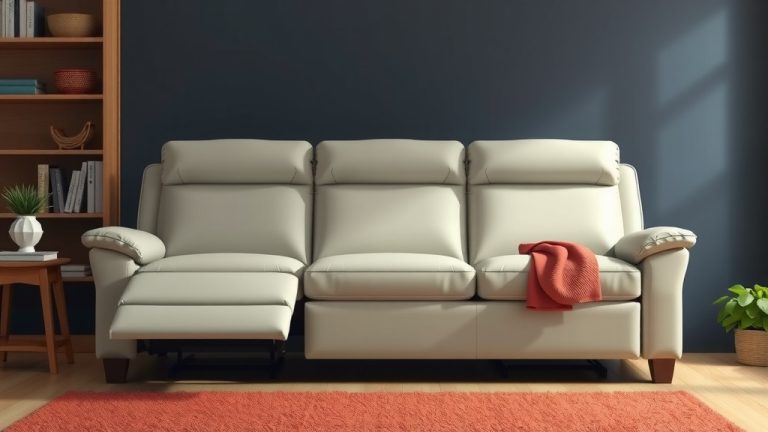
How Do Sofas With USB Ports Work? Full Guide
Sofas with USB ports work by harnessing your home’s electrical power to charge your devices. They contain a small power adapter that converts the electricity from your wall outlet into a usable current for USB devices. You simply plug the sofa into the wall, and then plug your phone or tablet into the USB port on the sofa. It’s a convenient way to keep gadgets charged without needing extra adapters or searching for an outlet.
This clever integration means you can power up your electronics right from your comfy seat. Many models also include standard electrical outlets, giving you even more charging options. We found that this feature is especially handy for reducing clutter and making sure your devices are always within reach and ready to go. It’s about blending functionality with your relaxation space.
- Sofas with USB ports use your home’s electricity to charge devices.
- A built-in adapter converts wall power for USB charging.
- Just plug the sofa into the wall and your device into the sofa.
- Many also offer standard electrical outlets for added versatility.
- This makes charging gadgets easy and keeps them close by.
Ready to learn exactly how this modern convenience is powered and what you need to know before buying? Let’s break down how sofas with USB ports work.
So, you’ve seen these sofas with built-in USB ports and wondered, “How on earth does that work?” It’s a pretty neat trick, isn’t it? You’re not alone in being curious about this modern living room upgrade. Let’s get right into how these fantastic pieces of furniture keep your gadgets powered up while you relax.
Understanding How Sofas With USB Ports Get Power
At its core, a sofa with a USB port is a piece of furniture that has been enhanced with electronics. It doesn’t magically create electricity. Instead, it cleverly taps into your home’s existing power supply. This means you’ll need to plug the sofa itself into a wall outlet. Think of it like plugging in a lamp or a TV. The sofa then becomes a power hub.
The Power Adapter: The Sofa’s Secret Weapon
Inside the sofa’s frame, there’s a small but mighty power adapter. This component is key to the whole operation. Its job is to take the standard household electricity from your wall outlet. This is usually AC power, which is not directly compatible with most of your electronic devices like phones and tablets. The adapter then converts this into the lower voltage DC power that USB devices need to charge safely.
We found that this conversion process is quite efficient. It’s similar to the charging brick you use for your phone, just integrated into the sofa. This makes it incredibly convenient. You get a dedicated charging spot without needing bulky adapters scattered around your living room.
From Wall to Sofa: The Wiring Process
The wiring within the sofa is designed for safety and accessibility. A power cord extends from the sofa, usually discreetly placed along the back or side, ready to be plugged into your nearest wall socket. Once plugged in, the electricity flows to the internal adapter. From there, it travels through internal wiring to the USB ports.
These ports are strategically located for your convenience. You might find them on the armrest, the back of the sofa, or even in a hidden compartment. This thoughtful placement means your charging cables can stay neat and tidy. It’s a small detail that makes a big difference in keeping your space organized.
Beyond USB: Sofas with Integrated Outlets
Many modern sofas with USB ports go a step further. They often include standard electrical outlets as well. This dual functionality offers even more charging flexibility. You can charge multiple devices at once, catering to different needs.
Why Add Electrical Outlets to a Sofa?
Think about your daily routine. You might have a phone charging via USB. But what about your laptop, a floor lamp, or even a small fan? Having standard outlets built right into your sofa means you don’t have to stretch cords across the room or search for an available plug. It’s about creating a complete charging and power solution where you spend most of your relaxation time.
Research suggests that integrated home features can enhance user experience. Sofas with outlets and USB ports are a prime example. They address a common modern need: keeping our many electronic devices powered up. This feature can reduce clutter and improve the overall functionality of your living space.
How the Integrated Outlets Work
Similar to the USB ports, the integrated electrical outlets are also powered by the main adapter. The adapter is designed to handle both types of outputs. It safely provides the correct voltage and amperage for both USB devices and standard AC-powered appliances. The wiring is robust and designed to meet safety standards.
Manufacturers ensure these outlets are properly grounded and protected against surges. This is essential for appliance safety. You can feel confident plugging in your electronics. It’s a testament to the careful engineering that goes into these furniture pieces.
Understanding Power Output and Charging Speeds
Not all USB ports are created equal. This is a common point of confusion, and it’s important to understand. The power output, measured in amps (A) or watts (W), determines how quickly your devices will charge.
Standard USB Ports vs. Fast Charging Ports
Most sofas will have standard USB ports. These typically offer around 1A to 2.4A of power. This is perfectly fine for overnight charging or for devices that don’t require rapid power boosts. However, if you’re used to fast charging your smartphone, you might notice it takes longer when plugged into a standard sofa port.
Some higher-end sofas now include USB ports that support fast charging technologies, like USB Power Delivery (USB-PD) or Qualcomm Quick Charge. These ports can deliver much higher wattage, significantly reducing charging times. We found that devices compatible with these technologies will charge noticeably faster.
What to Look For in Charging Specifications
When shopping for a sofa with USB ports, always check the specifications. Look for the amperage (A) or wattage (W) rating of the USB ports. A port rated at 2.4A is better than one rated at 1A. For fast charging, you’ll want to see ratings that align with your device’s fast-charging capabilities.
Also, consider the number of ports available. If you have multiple devices, ensure the sofa has enough ports to meet your needs. Some sofas offer a mix of standard and fast-charging ports, giving you the best of both worlds.
The Importance of Wattage and Device Compatibility
Your device’s charging needs are also a factor. A simple e-reader might only need 5W to charge, while a tablet or a laptop could require 30W or more. The sofa’s USB port needs to supply enough wattage to meet these demands.
We found that even with fast-charging ports, your device will only charge as fast as its own charging circuitry allows. If your phone only supports 18W charging, it won’t suddenly start charging at 65W just because the port can provide it. However, using a port that meets or exceeds your device’s needs is always best for optimal charging speed.
Safety Features and Considerations
Safety is a top priority when dealing with electricity, even in your furniture. Reputable manufacturers build several safety features into their sofas with USB ports and outlets.
Built-in Circuit Protection
These integrated power systems usually include overcurrent protection. This prevents too much electricity from flowing through the ports, which could damage your devices or the sofa’s electronics. They also often have short-circuit protection. This safeguards against electrical faults.
Many units are designed with surge protection as well. This is vital, especially if you live in an area prone to power fluctuations. It helps shield your connected devices from damaging voltage spikes.
Adhering to Electrical Standards
Manufacturers are required to meet certain electrical safety standards for products sold in regions like the United States. Look for certifications like UL (Underwriters Laboratories) or ETL. These indicate that the electrical components have been tested and meet safety requirements.
When considering a sofa, it’s wise to check if these certifications are mentioned. This gives you peace of mind that the electrical system is designed with your safety in mind. We found that products with recognized safety marks tend to be more reliable.
A Quick Checklist for Your Powered Sofa
Thinking about getting a sofa with charging capabilities? Here’s a quick rundown of what to keep in mind:
- Confirm the sofa needs to be plugged into a wall outlet.
- Check the amperage or wattage of the USB ports.
- Look for fast-charging capabilities if that’s important to you.
- See if standard electrical outlets are also included.
- Verify safety certifications (like UL or ETL).
- Ensure enough ports are available for your devices.
Conclusion
You’ve learned that sofas with USB ports are a smart blend of comfort and tech. They tap into your home’s power via a simple wall plug, using an internal adapter to safely charge your devices. Many even offer standard outlets, making them a true power hub right in your living room. Remember to check the charging speeds and safety certifications when you shop.
Ready to upgrade your relaxation spot? Consider a powered sofa to keep your gadgets topped up effortlessly. Your next step is to measure your space and browse models that fit your style and charging needs.
Frequently Asked Questions
Do sofa USB ports charge devices as fast as wall chargers?
It depends. Standard USB ports on sofas typically offer around 1A to 2.4A, which is slower than many modern fast wall chargers. Some higher-end sofas include USB ports that support fast-charging technologies, delivering power much more quickly.
Can I plug a power strip into the outlet on my sofa?
While many sofas with integrated outlets allow this, we recommend checking the manufacturer’s specifications. Ensure the sofa’s electrical system can safely handle the combined load of multiple devices plugged into a power strip to avoid overloading.
What happens if the USB port on my sofa stops working?
If the USB ports stop working, first check that the sofa is securely plugged into a working wall outlet. If that doesn’t solve the issue, there might be an internal wiring problem or a blown fuse within the sofa’s power adapter system. Contacting the manufacturer for support or a qualified technician is usually the next best step.
Do I need to worry about electricity being unsafe in my sofa?
Reputable manufacturers incorporate safety features like overcurrent and short-circuit protection. Always look for safety certifications like UL or ETL. When used as intended, these powered sofas are designed to be just as safe as any other home electronic appliance.
Can I use my laptop charger in the sofa’s outlet?
Yes, you can generally plug your laptop’s AC adapter into the standard electrical outlets found on a sofa. Just ensure the outlet’s wattage rating can support your laptop charger, which is usually not an issue for typical laptop power bricks.
![10 Best Apartment Sleeper Sofa [2026]](https://hometopaccesories.com/wp-content/uploads/2026/08/10-best-apartment-sleeper-sofa-2026-featured-768x432.jpg)



![10 Best Corner Sofa Bed With Storage [2026]](https://hometopaccesories.com/wp-content/uploads/2026/09/10-best-corner-sofa-bed-with-storage-2026-featured-768x432.jpg)