
How Do Modular Sofas Connect? Step-by-Step
Modular sofas connect using a simple interlocking system, often featuring metal brackets or hooks. This design makes it easy to assemble and reconfigure your seating arrangement. You can transform your living space quickly without special tools.
We found that most modular sofas use either a clamp-and-hook or a bayonet-style connector. These mechanisms are designed for durability and ease of use. Understanding these connection types helps you set up your sofa with confidence.
- Modular sofas connect via brackets and hooks.
- The process is tool-free and quick.
- Common systems include clamp-and-hook or bayonet connectors.
- Easy assembly and reconfiguration are key benefits.
Let’s walk through exactly how these pieces come together, step by step, so you can get your new sofa set up and looking great in no time.
Putting Your Modular Sofa Together: A Step-by-Step Guide
Connecting your modular sofa pieces might seem daunting, but it’s usually quite simple. We found that most systems are designed for easy, tool-free assembly. You’ll typically connect the sofa sections from underneath. This keeps the visible hardware hidden. Let’s break down the common methods.
Understanding Your Sofa’s Connector Types
Before you start, it’s helpful to know what kind of connectors your sofa uses. This makes the process much smoother. We’ve seen two main types become popular.
1. The Clamp-and-Hook System
This is a very common and straightforward connection method. It relies on sturdy metal brackets. One piece usually has a hook, and the adjoining piece has a corresponding clamp. You simply bring the two sofa sections together. The hook slides into the clamp. It’s designed to be a secure and stable connection. Think of it like connecting two puzzle pieces. Many furniture manufacturers use this design because it’s reliable.
How to Connect with Clamps and Hooks
First, position the two sofa modules you want to join. Make sure they are close enough to reach. Look underneath each module where they will meet. You should see the metal brackets. One module will have a projecting hook. The other will have an opening or receiver. Gently slide the module with the hook towards the other one. The hook should slide into the opening. You might feel a slight click or resistance as they lock together. Ensure there’s no gap between the two pieces. A tight fit means they are connected properly. Test the connection by giving the modules a gentle tug. They shouldn’t separate easily.
2. The Bayonet-Style Connector
This system is also very effective. It often involves two interlocking metal pieces. One piece typically has a slot or channel. The other piece has a corresponding tab or projection. These are often shaped somewhat like a bayonet mount on a light bulb. You align the two pieces and then slide them together. Often, a slight turn or push is needed to fully secure them. This method provides a strong mechanical lock. It’s designed to prevent the modules from drifting apart.
Connecting Using Bayonet Connectors
Start by placing your sofa sections next to each other. Examine the underside of the adjoining edges. You’ll find the bayonet connectors. Identify which piece has the male part (the tab) and which has the female part (the slot). Align the tab with the slot. Slide the modules together firmly. You may need to push them until they are flush. Some bayonet systems require a slight twist to lock. Check your sofa’s manual if you’re unsure. Once connected, they should feel solid. Again, give them a gentle push to confirm they are secure.
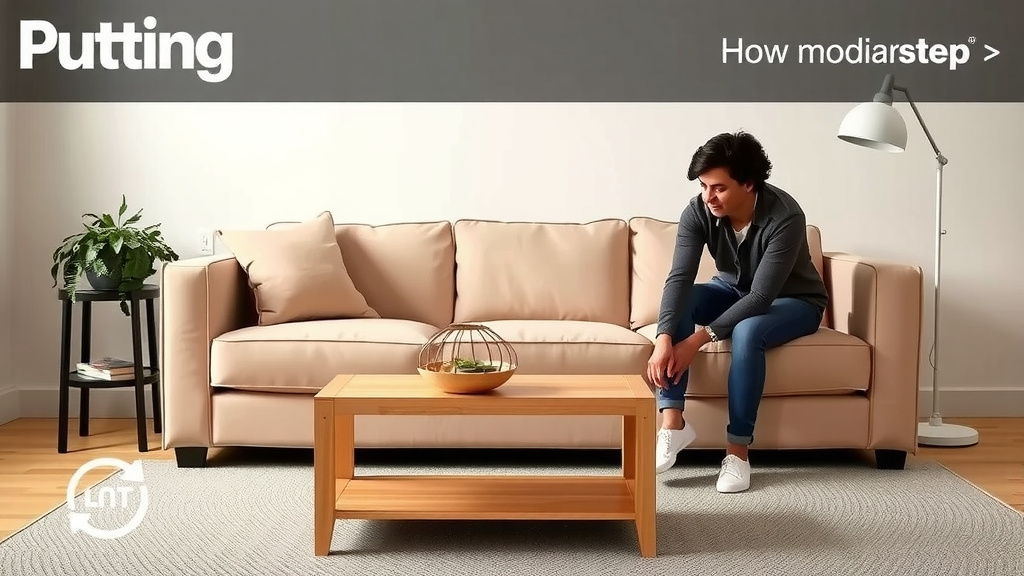
General Steps for Assembling Your Modular Sofa
Regardless of the specific connector type, the general assembly process is quite similar. Following these steps will help ensure a smooth setup. We found that preparation is key!
1. Unpack and Identify Your Modules
Carefully unpack all the sections of your sofa. Lay them out in the general area where you want to place them. Check for any damage that may have occurred during shipping. Make sure you have all the pieces. Sometimes, a connecting bracket might be attached to one piece. Other times, they might be in a separate hardware bag. Refer to your assembly manual if you have one.
2. Position the First Two Modules
Decide which modules you want to connect first. Place them side-by-side. Leave a small gap between them for easy access to the connectors. It’s helpful to have someone assist you, especially with heavier sections. You want to align them as they would appear in the final configuration. This makes the connection process much more intuitive.
3. Connect the Modules
Now, get down to the underside of the sofa. Locate the connectors on each module. Gently guide the connector on one module into the corresponding connector on the other. Push them together until they are flush and secure. You should feel or hear them lock into place. If you’re using clamps and hooks, ensure the hook is fully seated in the clamp. For bayonet connectors, make sure they are slid in completely, and perhaps twisted if required.
4. Check the Connection
Once connected, give the two modules a gentle wiggle or push. They should feel firmly attached and not move independently. There should be no significant gap between them. If they feel loose, disconnect them and try again. Realigning the connectors carefully usually solves the issue. A secure connection is vital for the sofa’s stability and longevity. Many manufacturers recommend this check as a standard step (IKEA).
5. Repeat for Remaining Modules
Continue this process for all the remaining sofa sections. Work your way across the sofa, connecting each new module to the existing structure. Think of it like building with large, comfortable blocks. Keep checking each connection as you go. Once all sections are joined, step back and admire your work. You’ve just assembled your custom sofa!
A Quick Checklist for Assembly
- Unpack all sofa modules carefully.
- Identify the type of connectors used.
- Position two modules with a small gap.
- Align and push connectors together until secured.
- Gently test each connection for stability.
- Repeat until all modules are joined.
| Connector Type | How It Works | Pros | Cons |
|---|---|---|---|
| Clamp-and-Hook | Metal brackets with a hook on one piece and a clamp on another. Slide together to interlock. | Simple, intuitive, often tool-free. Very common. | Can sometimes loosen if not fully engaged. |
| Bayonet-Style | Interlocking metal tabs and slots. Often requires a push and sometimes a twist to lock. | Very secure and stable connection. Less prone to separation. | May require a slight twist, less intuitive than basic clamps for some. |
Conclusion
Connecting your modular sofa sections is a straightforward process. You’ve learned about the common clamp-and-hook and bayonet-style connectors. These systems are designed for quick, tool-free assembly. By following the general steps—unpacking, positioning, connecting, and checking—you can easily build your custom seating. Now you’re ready to enjoy your beautifully assembled modular sofa. Take a moment to admire your work and arrange your cushions!
Frequently Asked Questions
Can I connect different brands of modular sofa pieces?
Generally, you cannot connect modular sofa pieces from different brands. Each manufacturer uses proprietary connector systems. These connectors are designed to be specific to their own sofa modules. Always use pieces from the same brand and collection for a secure fit.
Do I need any tools to connect modular sofa pieces?
Most modular sofas are designed for tool-free assembly. The connectors, whether clamps, hooks, or bayonet style, are meant to interlock by hand. You usually won’t need screwdrivers or wrenches. Always check your sofa’s manual, but manual connection is the standard.
How do I make sure the connection is secure?
After pushing the modules together, gently test the connection. Give the pieces a light tug or a gentle wiggle. They should feel firmly attached and not move independently. Ensure there’s no visible gap between the modules. A solid feel indicates a secure lock.
What if the connectors don’t seem to line up?
If connectors aren’t lining up, double-check that you have the correct modules positioned next to each other. Ensure they are perfectly aligned side-by-side. Sometimes, lifting one module slightly can help the connectors engage. Realigning them carefully often solves the issue.
Can modular sofa pieces come apart on their own?
When properly connected using their designed interlocking systems, modular sofa pieces are very unlikely to come apart on their own. The clamp-and-hook and bayonet-style connectors create a strong mechanical bond. Accidental separation is rare unless the connectors are not fully engaged or have been damaged.
![10 Best Cleaning Products For Fabric Sofa [2026]](https://hometopaccesories.com/wp-content/uploads/2026/09/10-best-cleaning-products-for-fabric-sofa-2026-featured-768x432.jpg)

![10 Best Classic Sofas [2026]](https://hometopaccesories.com/wp-content/uploads/2026/09/10-best-classic-sofas-2026-featured-768x432.jpg)
![10 Best Cheap Sofa Reddit [2026]](https://hometopaccesories.com/wp-content/uploads/2026/08/10-best-cheap-sofa-reddit-2026-featured-768x432.jpg)