How to Keep My Cat From Scratching My Sofa
You can stop your cat from scratching your sofa by providing attractive alternatives and making your furniture less appealing. This involves setting up scratching posts and using deterrents. Addressing your cat’s natural scratching behavior is key.
Many cat owners struggle with sofa destruction. It’s a common issue, but thankfully, there are effective solutions. We found that a combination of providing proper outlets and making your sofa less interesting works wonders. It’s all about understanding your cat’s needs.
- Provide plenty of scratching posts.
- Make your sofa less appealing.
- Trim your cat’s nails regularly.
- Consider training aids.
- Understand why cats scratch.
Let’s walk through exactly how to save your sofa and keep your feline friend happy. We’ll cover the best strategies to redirect that scratching instinct.
Saving Your Sofa: Strategies to Redirect Cat Scratching
You’re not alone if your cat sees your sofa as a prime scratching target. It’s a natural behavior for felines. But don’t worry, you can absolutely redirect this instinct. We found that a strategic approach works best. It involves understanding why they scratch and offering better options.
Understanding Your Cat’s Scratching Needs
Cats scratch for several very important reasons. It’s more than just a way to destroy your furniture. Understanding these reasons is the first step to finding a solution. You can then tackle the problem effectively.
Why Do Cats Scratch?
Scratching is deeply ingrained in cat behavior. It serves multiple purposes. Your cat isn’t trying to be naughty. They are simply fulfilling instinctual needs. We found that knowing these needs makes redirection much easier.
Marking Territory
Cats have scent glands in their paws. When they scratch, they leave both a visual mark and a scent mark. This helps them communicate their presence. It’s like leaving a message for other cats. This is a primary reason for scratching, especially on prominent furniture items.
Claw Maintenance
Scratching helps cats remove the dead outer layer of their claws. This keeps their claws sharp and healthy. It’s akin to a nail trim for your cat. Without scratching, their claws can become overgrown and uncomfortable.
Stretching and Exercise
When cats stretch their claws, they also stretch their bodies. It’s a full-body workout for them. They extend their back, legs, and shoulders. This keeps their muscles limber and healthy.
Stress Relief and Excitement
Sometimes, cats scratch when they are excited or feeling stressed. It can be a way for them to release pent-up energy or emotions. You might notice more scratching after playtime or during thunderstorms.
Providing Attractive Scratching Alternatives
The key to stopping sofa scratching is offering your cat something they love even more. It needs to be appealing and accessible. We found that variety is often the spice of a happy cat’s life. Having multiple options ensures they find something they like.
Types of Scratching Posts
Not all scratching posts are created equal. Different cats have different preferences. Research and expert recommendations suggest offering a variety of textures and orientations. This increases the chances your cat will use them.
Material Matters
Cats often prefer rougher textures. Common and successful materials include sisal rope, cardboard, and carpet. Some cats also enjoy wood or even rough upholstery fabric. Observe your cat to see what they are drawn to.
Vertical vs. Horizontal
Some cats love to stretch upwards while scratching. Others prefer to scratch on a flat surface. A good strategy is to offer both vertical posts and horizontal scratchers. This caters to all scratching styles. Many experts recommend having at least one of each.
Stability is Key
A wobbly scratching post is no fun for a cat. They need something sturdy that won’t tip over. Ensure the post is heavy at the base or can be secured. A tall, stable post can even double as a climbing toy.
Placement of Scratching Posts
Where you put the scratching posts is just as important as what they are made of. Think like your cat. Where do they like to hang out? Where do they currently scratch?
Near Their Favorite Spots
Place scratching posts near areas where your cat already likes to relax or sleep. This makes the post easily accessible when they wake up or feel the urge to stretch. We found that putting one near their favorite napping spot is very effective.
By the Sofa
Initially, placing a scratching post right next to the sofa can be a great deterrent. It offers an immediate alternative. Once your cat is consistently using the post, you can gradually move it to a more desirable location.
High-Traffic Areas
Cats often scratch to mark their territory. They tend to do this in visible, well-trafficked areas of your home. Placing posts in these locations can help redirect their marking behavior away from your furniture.
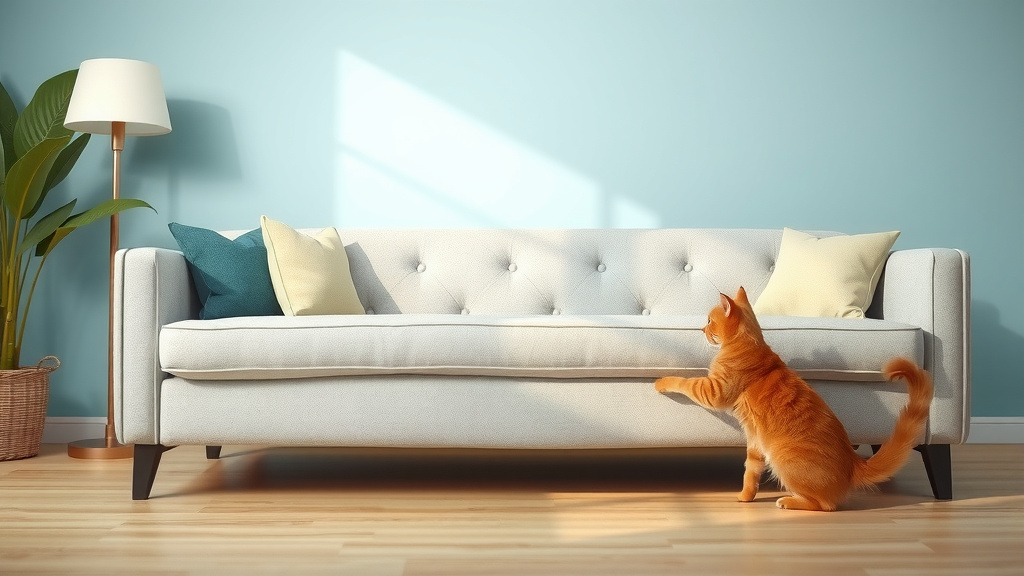
Making Your Sofa Less Appealing
While providing good alternatives, you also need to make your sofa less inviting for scratching. This makes the transition smoother for your cat. It’s about sending a clear message: this is not a scratching zone.
Deterrent Options
There are several ways to make your sofa less attractive to your cat’s claws. Many of these are simple and non-harmful. We found that combining a few methods can be highly effective.
Double-Sided Sticky Tape
Cats generally dislike sticky surfaces. Applying double-sided tape to the areas your cat scratches can be a powerful deterrent. They’ll likely avoid the sticky sensation. This is a widely recommended tactic by veterinarians.
Foil or Plastic Covers
Some cats dislike the feel or sound of aluminum foil. Covering the scratched areas with foil can discourage them. Similarly, plastic couch protectors or even a thin plastic sheet can be used. This creates an unpleasant texture.
Citrus Scents
Many cats dislike the smell of citrus. You can try placing orange or lemon peels near the sofa. Alternatively, a diluted citrus spray can be lightly misted. Be sure to test any spray on an inconspicuous area first.
Commercial Deterrents
There are many sprays and products available designed to deter cats from scratching furniture. These often contain scents or tastes that cats find unpleasant. Always ensure the product is safe for pets and follow instructions carefully.
Nail Care and Training Aids
Regular nail trims and the use of training aids can also play a significant role. These methods help manage your cat’s claws and encourage good behavior.
Regular Nail Trims
Keeping your cat’s nails trimmed reduces the damage they can do. It also helps maintain claw health. Start by getting your cat used to having their paws handled from a young age. Use sharp, cat-specific nail clippers.
If you’re nervous about trimming nails, ask your veterinarian or a groomer to show you how. They can also trim them for you. Many guidelines suggest trimming nails every 2-3 weeks (ASPCA).
Training Aids
Interactive toys can help redirect your cat’s energy and focus. When your cat is engaged in play, they are less likely to think about scratching the sofa. Consider using wand toys or laser pointers to encourage active play sessions.
Positive reinforcement is also key. When you see your cat using their scratching post, offer praise or a small treat. This helps them associate the post with positive experiences. We found this makes training much more effective.
Consider Soft Paws
Soft Paws are vinyl caps that are glued onto your cat’s claws. They blunt the nails, preventing damage when your cat scratches. They are a humane alternative to declawing and need to be replaced as the nails grow. They are generally safe and well-tolerated by most cats.
Here’s a quick checklist to get you started:
- Offer at least two scratching posts with different textures.
- Place posts near your cat’s favorite resting and current scratching spots.
- Use double-sided tape or other deterrents on the sofa.
- Trim your cat’s nails regularly.
- Reward your cat when they use the scratching post.
- Make playtime a daily activity to burn energy.
Conclusion
You’ve learned that stopping your cat from scratching the sofa is entirely possible. It boils down to understanding their natural instincts and redirecting them. By providing attractive scratching alternatives and making your sofa less appealing, you can achieve harmony. Remember to be patient with your feline friend. Consistent effort with varied strategies will lead to a scratch-free sofa and a happy cat. Start by setting up their new scratching posts today and you’ll see a difference!
Frequently Asked Questions
How quickly can I expect to see results?
Results vary, but many owners notice a decrease in sofa scratching within a few weeks. Consistency is key. Keep offering attractive scratching alternatives and consistently deterring sofa use.
What if my cat ignores the new scratching posts?
Try different types of posts with varied materials and orientations. Placement is also critical; ensure posts are near their favorite nap spots or current scratching areas. Entice them with catnip or toys on the posts.
Are there any natural deterrents that actually work?
Yes, many cats dislike citrus scents. Placing orange or lemon peels near the sofa can help. You can also use diluted citrus sprays, but always test on an inconspicuous area first.
Is it okay to use sprays on my sofa?
Use commercial deterrent sprays with caution. Always choose pet-safe products and follow instructions carefully. Test any spray on a small, hidden spot of your sofa first to ensure it doesn’t cause damage or discoloration.
How often should I trim my cat’s nails?
Most cats benefit from nail trims every 2 to 3 weeks. This helps reduce potential damage and keeps their claws healthy. If you’re unsure, ask your vet or a groomer to demonstrate the proper technique.
![10 Best Air Mattress For Rv Sofa Bed [2026]](https://hometopaccesories.com/wp-content/uploads/2026/08/10-best-air-mattress-for-rv-sofa-bed-2026-featured-768x432.jpg)