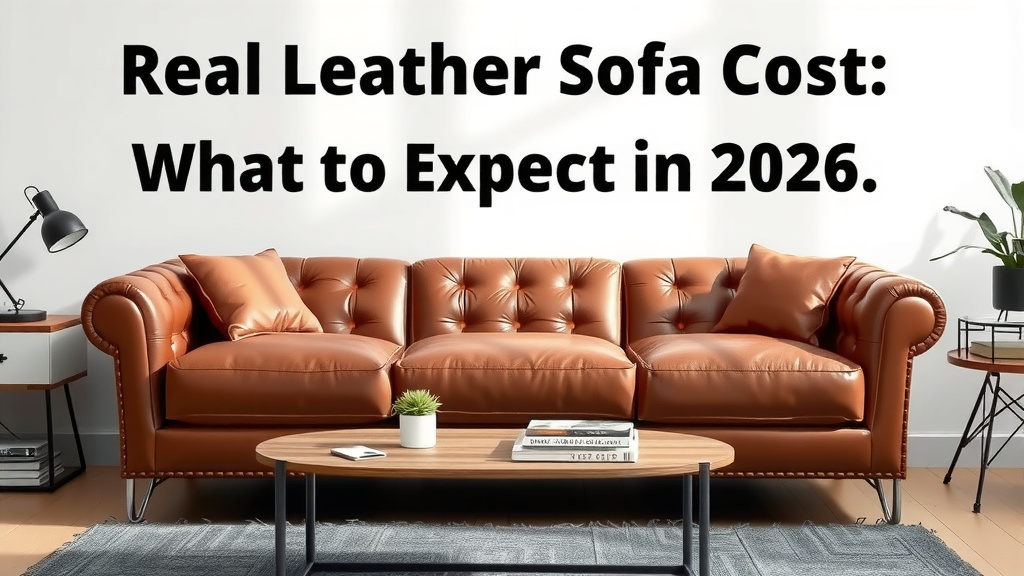
Real Leather Sofa Cost: What to Expect in 2026
You’re probably wondering, “How much does a real leather sofa cost?” We found that real leather sofas typically range from $1,500 to $8,000, with most falling between $2,500 and $5,000. The exact price depends heavily on the type of leather and the sofa’s size and design.
Choosing a real leather sofa is a big decision, and the investment can vary widely. Factors like the grain of the leather, the brand, and where you buy it all play a role. We’ve researched common price points to help you budget for this durable and stylish piece of furniture.
- Leather type (full-grain vs. top-grain vs. bonded) is a big price driver.
- Sofa size, construction quality, and brand name also impact cost.
- Expect to pay more for premium features and ethical sourcing.
- You can find decent options on sale or from less mainstream brands.
Ready to dive deeper? Below, we’ll break down the factors that influence leather sofa prices so you can find the perfect one for your home and budget.
Understanding Leather Sofa Pricing
So, you’re eyeing a real leather sofa? That’s fantastic! Leather offers a luxurious feel and incredible durability. But let’s get down to brass tacks: the cost. You’ve likely seen a wide range of prices, and it can be confusing. We found that most real leather sofas fall between $2,500 and $5,000. However, the actual price tag can stretch anywhere from $1,500 to $8,000 or even more. This wide range means understanding what you’re paying for is key to finding the right sofa for your home and your wallet.
Key Factors Influencing Leather Sofa Cost
Several factors contribute to the final price of a leather sofa. Think of it like buying a car; the model, the engine, and the trim all affect the price. For sofas, it’s about the type of leather, the quality of construction, and the brand. Let’s break down these elements so you know where your money is going.
The Leather Itself: More Than Just Cowhide
This is perhaps the biggest driver of cost. Not all leather is created equal. The way the hide is processed and what part of the hide it comes from significantly impacts its price and quality. We’ve found that the terms used can be a bit tricky, but they’re important to know.
Full-Grain Leather: The Top Tier
When you see “full-grain” leather, you’re looking at the highest quality. This leather uses the entire grain of the hide. It’s strong, durable, and develops a beautiful patina over time. Because it requires fewer processing steps to mask imperfections, it retains the hide’s natural beauty. This makes it the most expensive option, often commanding prices that start at the higher end of our typical range.
Top-Grain Leather: A Popular Middle Ground
Top-grain leather is the second-highest quality. The top layer of the hide is used, but it’s sanded or buffed to remove imperfections. This gives it a more uniform appearance. While still very durable and luxurious, it’s not as naturally unique as full-grain. Many experts say it offers a great balance of quality and price, making it a popular choice for many homeowners. You’ll often find top-grain leather sofas in the mid-to-high price range.
Split Leather and Bonded Leather: Budget-Friendly Options
Split leather is what’s left after the top grain is removed. It can be used to create suede or, in some cases, faux leather finishes. Bonded leather is a bit different. It’s made by grinding up leather scraps and binding them together with a polyurethane or polyester coating. We found that bonded leather is the least expensive option, but it’s also the least durable. It may look like real leather initially, but it tends to peel and crack over time. If you’re on a tight budget, it’s an option, but be prepared for a shorter lifespan.
Sofa Construction and Design Matter
Beyond the leather itself, how the sofa is built plays a huge role in its cost. A well-made frame and quality internal components contribute to longevity and comfort, and manufacturers charge accordingly.
Frame Strength: The Backbone of Your Sofa
A good leather sofa needs a strong frame. Hardwood frames, like kiln-dried oak or maple, are the gold standard. They offer superior strength and stability. Cheaper sofas might use particleboard or even plastic frames. We found that sofas with hardwood frames will naturally cost more, but they are built to last for decades.
Cushion Fillings: Comfort Comes at a Price
What’s inside those cushions affects both comfort and cost. High-density foam provides good support and bounces back well. Down-filled or feather-blend cushions offer a softer, sink-in feel but require more maintenance (like fluffing) and are usually more expensive. Some sofas combine foam cores with down wraps for the best of both worlds. The type and amount of filling you choose will influence the price.
Design and Features: Style and Extras Add Up
A simple, classic design will generally be less expensive than a sofa with intricate details, tufting, or unique leg styles. Think about features like built-in recliners, power headrests, or USB ports. These additions add convenience but also increase the overall cost. Customization options, like choosing specific colors or stitching, can also add to the price tag.
Brand Reputation and Where You Shop
Just like with clothing or electronics, brand name matters in the furniture world. High-end designers or brands known for exceptional craftsmanship often come with a premium price tag. Their reputation is built on years of quality and customer satisfaction. You might pay more for the name, but you’re often investing in guaranteed quality and excellent customer service.
Where you buy your sofa also plays a role. Buying directly from a manufacturer might offer better value than purchasing from a high-end department store. Online retailers can sometimes offer competitive pricing, but it’s harder to assess the leather quality firsthand. We found that sales events, holiday promotions, and outlet stores can be great places to snag a real leather sofa at a discounted price.
Size of the Sofa
It might seem obvious, but a larger sofa will naturally cost more than a smaller one. A sprawling sectional designed for a large living room will require more leather, more frame materials, and more labor to produce than a compact loveseat. When budgeting, consider the dimensions you need and how that translates into material costs. A standard three-seater sofa is your baseline, while sectionals or sofas with extra-long chaise lounges will push the price higher.
Ethical Sourcing and Sustainability
For some consumers, knowing the origin of their materials is important. Leather that is ethically sourced or tanned using more sustainable, eco-friendly methods may come at a higher price. This is because these processes can be more labor-intensive and require specialized facilities. If environmental responsibility is a top priority for you, be prepared to invest a bit more.
Finding the Right Balance for Your Budget
When you’re looking at prices, remember this breakdown. You can find a decent, durable real leather sofa if you shop smart. Here’s a quick checklist to keep in mind:
- Prioritize top-grain or full-grain leather if your budget allows.
- Look for sofas with hardwood frames.
- Check the cushion filling for comfort and longevity.
- Consider mid-range brands for good value.
- Shop during sales events for potential savings.
- Don’t be afraid to ask questions about the leather type and construction.
By understanding these different elements, you can better navigate the market and make an informed decision that balances quality, style, and cost. You want a sofa that not only looks good but feels great and lasts for years to come!
Conclusion
You’ve learned that a real leather sofa is a significant investment, with prices typically ranging from $1,500 to $8,000. Understanding the type of leather, from luxurious full-grain to budget-friendly bonded, is key. We also saw how construction quality, brand reputation, and even the sofa’s size play a big part in the final cost. Don’t forget to consider ethical sourcing if that’s important to you. Now that you’re armed with this knowledge, your next step is to visit a showroom or browse online, keeping these factors in mind to find that perfect leather sofa that fits both your style and your budget.
Frequently Asked Questions
What’s the biggest factor affecting leather sofa price?
We found that the type of leather used is the primary driver of cost. Full-grain leather, being the highest quality, will always be more expensive than top-grain or bonded leather options. The quality and processing of the hide directly impact how much you’ll pay. The type of leather used is the primary driver of cost.
Can I find a quality real leather sofa for under $2,000?
It’s possible, but you’ll need to be strategic. Look for sales events, consider slightly smaller sizes, or opt for top-grain leather rather than full-grain. You might also find good deals from mid-range brands during promotions. Be wary of bonded leather if you want durability.
Is full-grain leather worth the extra cost?
For many, yes. Full-grain leather offers unparalleled durability and develops a beautiful patina over time, essentially aging like fine wine. If you’re looking for a sofa that will last for generations and improve with age, the higher price point for full-grain can be a worthwhile investment.
Does the frame material impact the price of a leather sofa?
Absolutely. We found that sofas constructed with solid hardwood frames, especially kiln-dried hardwoods, are more expensive than those using particleboard or engineered wood. A strong frame is essential for longevity, and manufacturers charge more for this superior construction.
How much more does a sectional leather sofa cost than a standard sofa?
Sectionals generally cost more due to their larger size and increased material requirements. You’re using more leather, more frame materials, and more labor to construct a bigger piece of furniture. Expect a sectional to be at least 30-50% more expensive than a comparable three-seater sofa.

![10 Best Brand For Sectional Sofa [2026]](https://hometopaccesories.com/wp-content/uploads/2026/08/10-best-brand-for-sectional-sofa-2026-featured-768x432.jpg)
![10 Best Corner Sleeper Sofa [2026]](https://hometopaccesories.com/wp-content/uploads/2026/09/10-best-corner-sleeper-sofa-2026-featured-768x432.jpg)