Rug Size Guide: How Much Rug Under Your Sofa
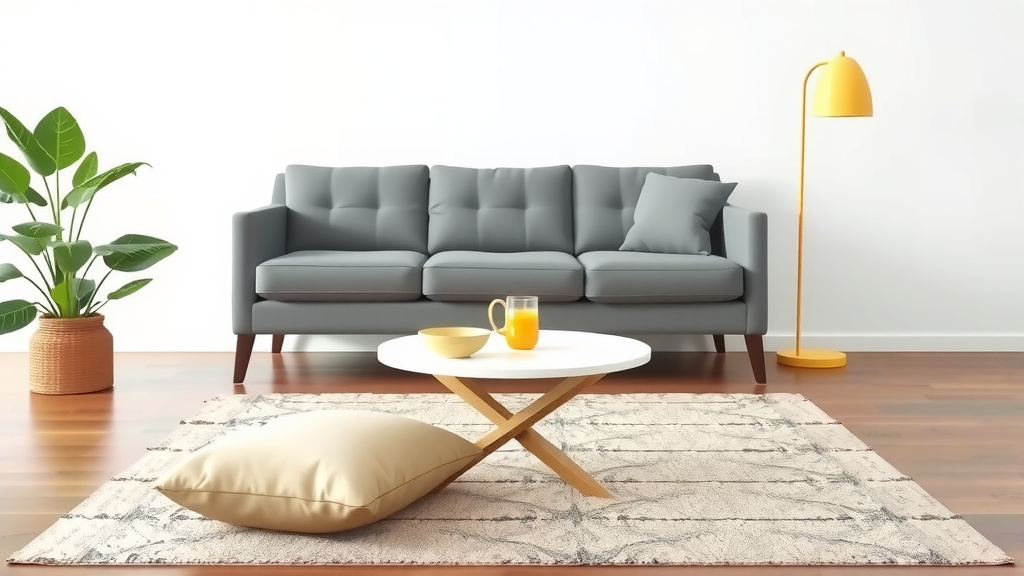
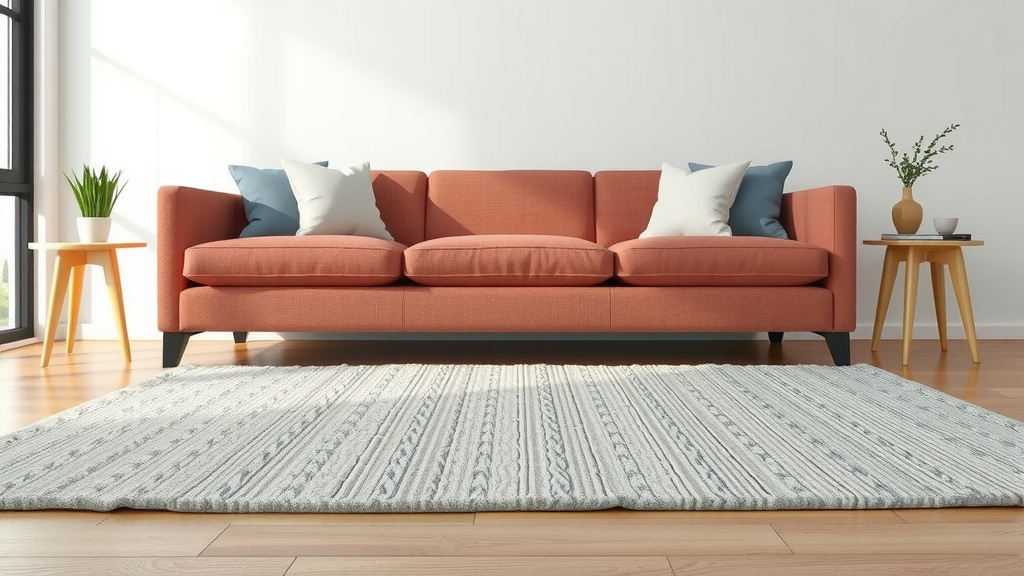
When placing a rug under your sofa, the general rule is to have at least the front legs of your sofa resting on the rug. Ideally, the rug should be large enough to extend a few inches beyond the sofa on all sides. This creates a cohesive and grounded look for your living space.
Getting the rug size right makes a huge difference. A rug that’s too small can make your furniture look like it’s floating awkwardly. We found that a rug that’s too large can overwhelm the room. The goal is to create a balanced and inviting seating area.
- Front legs on rug: This is the minimum for a pulled-together look.
- Extend beyond sofa: Aim for a few inches on each side.
- Cohesive feel: Proper sizing anchors your furniture grouping.
- Avoid floating furniture: Don’t let your sofa sit off the rug entirely.
- Balance the space: A well-sized rug makes the room feel intentional.
Let’s walk through how to figure out the best rug size for your sofa and your unique living room layout.
Figuring Out the Right Rug Size for Your Sofa
You’ve picked out the perfect rug, but now comes the big question: how much of it should actually be under your sofa? Getting this right is key to making your living room feel pulled together. We’ve looked at a lot of design advice, and the consensus is clear: the rug needs to do more than just sit there. It needs to anchor your seating area.
Think of your rug as the foundation of your furniture arrangement. If it’s too small, your sofa and chairs might look like they’re just casually placed without a real connection. This can make a room feel a bit unfinished or even cramped. We found that the most stylish spaces use rugs to define the main seating zone.
The “Front Legs On” Rule: A Great Starting Point
Many designers recommend having at least the front legs of your sofa resting on the rug. This is a fantastic rule of thumb that works in most situations. It visually connects the sofa to the rug, making it feel like a unified piece.
Why just the front legs? It provides enough grounding without overwhelming the rug. If only the very back legs touch, or if the rug is too far away, the sofa will appear to be floating. This creates a disconnect that can make the whole room feel a little off-balance. We’ve seen this happen, and it’s a common mistake.
Expanding Beyond the Minimum: The Ideal Scenario
While the front legs on the rug is a good minimum, we found that many designers aim for a bit more. Ideally, your rug should extend a few inches beyond the sofa on all sides. This creates a more luxurious and intentional look.
Imagine a rug that perfectly frames your sofa and any accompanying chairs. This creates a clear “zone” for conversation and lounging. It makes the area feel spacious and well-defined, even in a smaller room. This approach signals that you’ve put thought into your layout.
What Does “A Few Inches” Mean?
When we say “a few inches,” we mean roughly 6 to 12 inches extending past the sofa on each side. This isn’t an exact science, of course. The overall size of your room and your furniture will play a role. But this range provides a good visual balance. It ensures the rug doesn’t feel too small or too dominant.
The Floating Furniture Syndrome
No one wants their furniture to feel like it’s adrift! If your rug is too small, so small that it only fits one or two pieces of furniture entirely, it can create this effect. Your sofa might be on the rug, but the coffee table and end chairs are left out. This makes the arrangement feel disconnected and can make the room look smaller than it is. We found that a rug that’s too small is a common pitfall.
Rug Placement for Different Sofa Arrangements
Your sofa isn’t always alone in the living room, is it? Often, it’s part of a larger seating group. How your rug interacts with other furniture is just as important as its relationship with the sofa itself. This is where things can get a little more detailed.
The Classic Sofa and Chairs Setup
In a typical living room, you might have a sofa facing a couple of armchairs, perhaps with a coffee table in the center. For this arrangement, many experts suggest a rug large enough to encompass all the main seating pieces. This means the front legs of the sofa and the front legs of the chairs should all be on the rug.
The coffee table should also comfortably sit on the rug. This creates a unified conversation area. If the rug is too small, the chairs might end up looking isolated. This can break the flow of the room. We found this layout often requires a larger rug size.
Sectional Sofas: A Special Case
Sectionals can be tricky because they have multiple pieces. For a sectional, you generally want a rug that’s large enough to connect the main sections. This usually means the rug should extend beyond the arms and the chaise lounge.
A good rule of thumb is to have the rug extend at least a foot on either side of the sectional’s main body. The coffee table or ottoman should also sit on the rug. If your sectional is very large, you might need an extra-large rug or even consider layering rugs. We found that sectionals often dictate a bigger rug requirement.
When Space is Limited: The Mini Setup
What if you have a smaller living room? Or perhaps just a sofa and a small side table? In these cases, you can get away with a rug that is primarily under the sofa. The front legs on the rug rule is essential here.
You might not have room for chairs or a large coffee table. Even so, ensuring the rug extends a bit beyond the sofa on each side will make the area feel more intentional. It still helps to anchor the space. We found that even a small rug can make a big difference if sized correctly.
Quick Guide: Common Rug Size Scenarios
To help you visualize, let’s break down some common rug sizes and how they typically work with sofas. These are general guidelines, and your specific room dimensions will matter most. We’ve compiled these based on common design practices.
| Rug Size | Best For | Placement Example |
|---|---|---|
| 5×8 ft | Small apartments, studios, or very small seating areas. | Front legs of a loveseat or small sofa on the rug. |
| 8×10 ft | Standard living rooms, seating areas with sofa and chairs. | Front legs of sofa and chairs on the rug, coffee table centered. |
| 9×12 ft | Larger living rooms, spacious seating areas, sectionals. | All furniture legs on the rug, creating a fully defined zone. |
| 10×14 ft and larger | Very large rooms, oversized sectionals, open-plan living spaces. | Can accommodate all furniture with significant border around the arrangement. |
Remember, these are just starting points. Always measure your space and your furniture before buying. Many interior designers suggest using painter’s tape to mark out rug dimensions on your floor. This helps you visualize the scale in your actual room. We found this trick to be incredibly helpful.
Your Rug Placement Checklist
Ready to make some decisions? Here’s a quick rundown to help you get your rug placement just right:
- Measure your sofa and seating area.
- Consider how many furniture pieces need to be on the rug.
- Aim for at least the front legs of your sofa to touch the rug.
- Ideally, have the rug extend a few inches past the sofa on all sides.
- For conversation areas, ensure chairs and coffee tables are also grounded.
- Don’t let the rug look like a postage stamp in the middle of the room!
Conclusion
You’ve learned that the right rug size anchors your living space. Remember, the minimum is having your sofa’s front legs on the rug. For a more polished look, aim for the rug to extend a few inches beyond your sofa and any accompanying seating. This creates a cohesive zone and prevents that “floating furniture” feel. Measure your space carefully and use painter’s tape to visualize before you buy. Taking these steps will help you create a beautifully grounded and inviting living room you’ll love. You’ve learned that the right rug size anchors your living space; understanding standard sofa size helps with proportions.
Frequently Asked Questions
What if my sofa is against a wall? Does the “front legs on” rule still apply?
Yes, absolutely! Even if your sofa is pushed against a wall, placing its front legs on the rug is still the best practice. It visually connects the sofa to the floor and makes the seating area feel more intentional. Without it, the sofa might look disconnected from the rest of the room.
My living room is small. How can I make a rug look right under my sofa without overwhelming the space?
For smaller rooms, focus on the “front legs on” rule. A rug that’s too large can indeed make a small room feel cramped. Aim for a rug that frames your sofa nicely, perhaps extending 6 to 12 inches past its front and sides. This still anchors the space without dominating it.
Can I use a rug that only fits my coffee table?
Generally, no. A rug that only fits your coffee table will likely look too small. This often leads to the “floating furniture syndrome” where your sofa and chairs are left off the rug. It’s better to have at least the front legs of your main seating on the rug.
What’s the difference between needing a rug for a sofa and needing one for a sectional?
Sectionals have multiple pieces and often wrap around a corner or have a chaise. You’ll typically need a larger rug to connect these sections visually. For a standard sofa, the front legs rule often suffices, but a sectional usually requires the rug to extend further on multiple sides to feel balanced.
How do I know if my rug is too big for my sofa?
A rug is too big if it overwhelms the seating area or the entire room. If the rug extends too far beyond all your furniture, making the furniture seem lost on the rug, it might be too large. You want the rug to define the seating zone, not swallow it whole. The furniture should look intentionally placed on the rug, not just sitting on a vast expanse of fabric.

![10 Piece Sectional Sofa [2026]](https://hometopaccesories.com/wp-content/uploads/2026/08/10-piece-sectional-sofa-2026-featured-1-768x432.jpg)