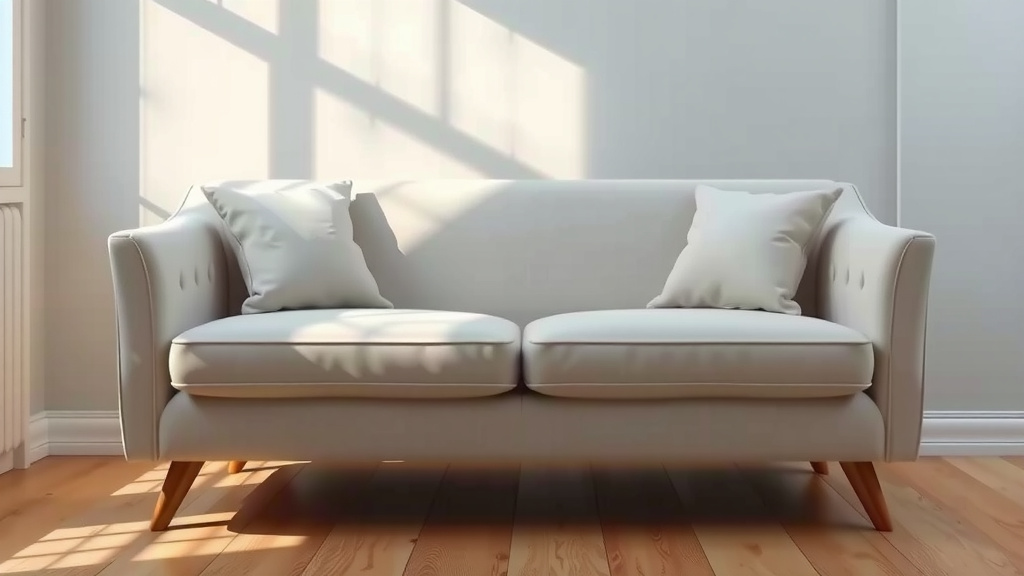
How Much Fabric to Cover a 2 Seater Sofa
You’re wondering how much fabric you need to cover a 2-seater sofa, and the answer is usually between 5 to 8 yards. This range accounts for standard sofa sizes and patterns. Getting the right amount ensures you won’t run short and keeps your project on track.
The exact amount can change based on your sofa’s shape and the fabric’s width. Unique designs or large repeating patterns might require a bit more material. We’ve gathered information to help you figure out the perfect amount of fabric for your reupholstery needs.
- A 2-seater sofa typically needs 5-8 yards of fabric.
- Sofa shape and fabric width are key factors.
- Large patterns might need extra fabric for matching.
- Always check your fabric’s width before buying.
- It’s better to have a little extra than not enough.
Let’s walk through the factors that influence fabric quantity so you can confidently buy the right amount for your 2-seater sofa.
Figuring Out Your 2-Seater Sofa Fabric Needs
So, you’re ready to give your beloved 2-seater sofa a fresh new look. That’s fantastic! But before you fall in love with a gorgeous fabric, you need to know exactly how much to buy. It’s a common question, and the truth is, there isn’t one single magic number for every sofa. However, we’ve done the research to help you nail it down.
Most standard 2-seater sofas will require between 5 and 8 yards of fabric. This is a good starting point. Think of it like buying paint; you need enough to cover the walls, but not so much that you have a dozen gallons left over. We’ll break down the factors that can shift that number up or down.
Understanding Fabric Width: The Unsung Hero
One of the biggest influencers on how much fabric you need is its width. Fabrics come in different widths, and this changes everything. Standard upholstery fabric is often 54 inches wide. This is a pretty common and convenient size.
Standard Fabric Widths
You’ll commonly see fabrics sold in widths of:
- 54 inches (137 cm): This is the most prevalent for upholstery.
- 45 inches (114 cm): Less common for furniture but can be found.
- 60 inches (152 cm) or wider: These are great for larger pieces or if you want fewer seams.
Why does this matter so much? Well, the narrower the fabric, the more strips you’ll need to piece together to cover your sofa. This means you’ll end up using more yardage overall. It’s like trying to tile a floor with small tiles versus large ones; you need more of the small ones.
How Width Affects Yardage
Let’s say you have a sofa and a fabric that’s only 45 inches wide. You’ll need to cut more pieces and potentially use more fabric than if you were using a 54-inch-wide fabric. You might need to rearrange your cuts to be more efficient. Many online calculators assume a 54-inch width, so always double-check the product details.
Sofa Shape and Size: More Than Just “Two Seats”
While we’re talking about a 2-seater, sofas aren’t all built to the same mold. Some are sleek and modern, while others are plush and overstuffed. These differences impact how much fabric your project will gobble up.
The Impact of Design and Style
A sofa with clean lines, like a mid-century modern design, often uses less fabric. These tend to have flatter surfaces and fewer curves. On the other hand, a rolled-arm, skirted sofa with deep cushions can be a real fabric hog. Think of it this way: more curves, tufting, and decorative elements mean more fabric needed to cover them smoothly.
Understanding Seat and Back Cushions
You’ll need fabric for the base of the sofa, the back, the arms, and all the cushions. The size and number of seat and back cushions play a big role. If your sofa has two large, plush seat cushions and two equally substantial back cushions, you’re looking at a higher fabric requirement than a sofa with smaller, firmer cushions.
Arm Style Matters
Are your sofa’s arms slim and square, or are they big, rolled, and overstuffed? Rolled or padded arms require significantly more fabric. They have more surface area and often need a bit of extra fabric to achieve that plump, finished look without pulling too tight.
Pattern Matching: The Fabric Eater
This is where things can get tricky and where you can easily underestimate your needs. If your fabric has a large, repeating pattern, you’ll need to account for pattern matching. This means you want the pattern to align seamlessly from one piece of fabric to the next.
Large vs. Small Patterns
A small, solid-colored fabric or a subtle texture requires minimal extra yardage. You can often cut pieces close together. However, a bold floral, a geometric design, or a large-scale motif can add 1 to 3 yards (or even more!) to your total requirement. This is because you have to buy enough repeat to ensure the pattern matches up across seams.
Calculating Extra Yardage for Patterns
The general rule of thumb for large patterns is to add the length of one pattern repeat to your total yardage. Some experts suggest adding an extra 10-20% to be safe, especially if the pattern is complex or has a directional element. It’s always wise to get a sample and lay it out on a piece of paper the size of your sofa section to visualize.
A Simple Way to Estimate Your Needs
While professional upholsterers have detailed patterns, you can get a good estimate. Take a tape measure and measure your sofa’s key dimensions.
Essential Measurements
You’ll want to measure:
- Length of the sofa (arm to arm).
- Height of the sofa (from floor to top of the back).
- Depth of the sofa (front to back).
- Width of the seat area.
- Height of the back and seat cushions.
Imagine unfolding your sofa and laying it flat. This isn’t exact, but it gives you a rough idea. Many online resources provide charts based on sofa type (like 2-seater, 3-seater, armchair), which can be very helpful. For a standard 2-seater, these charts often fall within that 5-8 yard range.

The Calculator vs. The Real World
Online fabric calculators are handy tools. They usually ask for your sofa type and the width of your fabric. They’ll spit out a number. However, they often assume a very basic sofa shape and don’t always account for intricate details or challenging patterns.
When to Trust and When to Be Skeptical
If you have a very simple, armless sofa and a solid fabric, a calculator might be spot-on. But if your sofa has rolled arms, skirts, or a busy pattern, you should add a bit more to the calculated amount. Many seasoned DIYers and professionals will always recommend buying a bit extra.
Your Fabric Shopping Checklist
Before you head to the store or click “add to cart,” run through this quick checklist:
- Know Your Sofa: Is it standard or unusually shaped?
- Check Fabric Width: Is it 54″, 45″, or wider?
- Assess Your Pattern: Is it small, large, or directional?
- Measure Twice, Buy Once: Have your sofa dimensions handy.
- Factor in Extras: Add yardage for patterns and tricky shapes.
- When in Doubt, Get More: A little extra is always better than running short!
A Pro Tip: The “Extra Yard” Rule
A common piece of advice from upholsterers is to buy one extra yard beyond your initial estimate, especially if you’re new to this. This buffer covers mistakes, helps with matching complex patterns, and ensures you can finish the project without a stressful dash to find more fabric. Finding an exact dye lot match later can be very difficult, if not impossible. Therefore, it’s often recommended to have your fabric on hand before you start cutting.
The exact amount can vary, but keeping these points in mind will help you get the right amount of fabric for your 2-seater sofa. Happy reupholstering!
Conclusion
You’re now equipped to confidently tackle your 2-seater sofa reupholstery project! We’ve seen that while 5 to 8 yards is a common starting point, factors like fabric width, your sofa’s unique shape, and whether you’re working with a large pattern can all influence your final yardage. Remember to measure carefully and always consider adding a little extra, especially if you’re new to upholstery. Your best next step is to grab your tape measure, assess your sofa and chosen fabric, and add that buffer yardage to your cart to avoid any last-minute fabric store runs!
Frequently Asked Questions
Do I need more fabric if my sofa has a large floral pattern?
Yes, absolutely. Large, repeating patterns require extra fabric for careful alignment. You’ll want to buy enough yardage to ensure the pattern matches up across all seams without any awkward breaks. It’s often recommended to add at least one full pattern repeat, or even 10-20% more, just to be safe.
What’s the difference in fabric needs for a modern sofa versus a traditional one?
Modern sofas often have cleaner lines and fewer curves, typically requiring less fabric. Traditional sofas, especially those with rolled arms, skirts, or tufting, have more surface area and shaping, meaning they’ll usually need more yardage to cover them smoothly.
Should I buy extra fabric for mistakes if I’m a beginner?
Definitely. If you’re new to upholstery, it’s wise to purchase an extra yard beyond your initial estimate. This buffer can cover accidental cuts, provide peace of mind for pattern matching, and ensure you have enough material if your first attempt isn’t perfect. It’s much harder to find an exact dye lot match later on.
How does the width of the fabric impact how much I need to buy?
The wider the fabric, the fewer strips you’ll need to cut and piece together to cover your sofa. For example, if you’re using a narrower 45-inch fabric instead of a standard 54-inch width, you’ll likely need to buy more total yardage to achieve the same coverage.
Can I use an online fabric calculator to get an accurate estimate?
Online calculators are a great starting point, especially for basic sofas and solid fabrics. However, they often don’t account for complex shapes, bulky arms, skirts, or intricate patterns. Always use their estimates as a guideline and be prepared to add extra yardage if your sofa has any unique design elements.

![10 Best Buy Sectional Sofa [2026]](https://hometopaccesories.com/wp-content/uploads/2026/08/10-best-buy-sectional-sofa-2026-featured-768x432.jpg)