How to Break Down a Sofa for Easy Moving: A Step-by-Step Guide
The easiest way to break a sofa down is to remove the cushions, detach the legs, and take apart the frame section by section. Most sofas come apart with just a screwdriver and a wrench. No fancy tools required.
Why bother? Because a full-size couch won’t fit through most doorways, stairwells, or moving trucks without a little surgery. We researched what professional movers do and found that disassembling a sofa can save you serious money, sweat, and possibly a scratched-up hallway. Many experts say it’s the smartest move before any big relocation.
TL;DR — Quick breakdown:
- Remove all cushions and pillows first
- Flip the sofa over to access the legs and base
- Unscrew the legs and remove the bottom dust cover
- Detach the arms and back if they’re bolted on
- Label your parts and bag the screws so nothing goes missing
Sounds doable, right? Below, we walk you through exactly how to break down a sofa step by step, so your couch fits wherever it needs to go. Let’s grab those tools and get started.
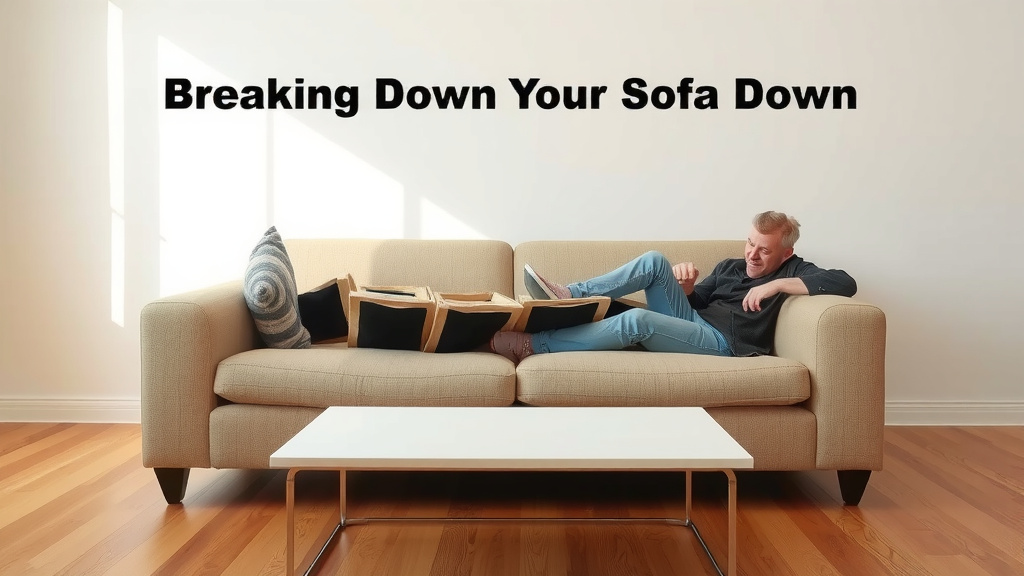
Breaking Down Your Sofa the Right Way
The best approach is to work from the outside in: cushions first, then legs, then the base, then the frame. Go slow, keep every screw in a labeled bag, and take photos as you go. Your future self will thank you.
Think of it like reversing a recipe. The sofa was built in a certain order, and you’re simply undoing each step in reverse. Rushing is where door frames and tempers get damaged.
Getting Ready: Prep Work That Saves You Pain
Before you touch a single screw, clear a workspace. You’ll want enough room to flip the sofa over and lay parts out flat. We found that most DIY frustration comes from working in a cramped corner.
Tools You’ll Actually Need
Good news: the list is short. Most sofas use standard hardware you already own.
- Flathead and Phillips screwdrivers
- Adjustable wrench or socket set
- Allen (hex) keys, often included with flat-pack sofas
- Zipper storage bags for screws and bolts
- Masking tape and a marker for labeling
- A furniture blanket or old sheet to protect the fabric
Measure Doors and Pathways First
Here’s a question worth asking before you lift a finger: will the disassembled pieces even fit? Grab a tape measure and check your narrowest doorway, hallway turns, and stair railings. Write the numbers down.
Measure the sofa too, including its depth. Many experts say skipping this step is the number one reason movers end up removing door hinges mid-job. A two-minute measurement beats a two-hour headache.
Your Pre-Demolition Checklist
- Empty all pockets, cushions, and under-seat storage
- Photograph the sofa from every angle
- Clear a flat, open workspace
- Bag and label hardware as you remove it
- Recruit a helper for heavy sections
Step-by-Step: Taking the Sofa Apart
Now for the main event. Work in this order and you’ll avoid most common mistakes. Each step builds on the last, so don’t skip ahead.
Step 1: Remove Cushions and Fabric Layers
Start with the obvious stuff. Pull off every cushion, pillow, and loose cover. If your sofa has a detachable skirt or Velcro panels, take those off too.
Some sofas also have a zippered fabric panel on the bottom. Unzip it and peek inside. You’ll often find the frame’s secret handshake: bolts, brackets, and sometimes a stapled-on dust cover.
Step 2: Take Off the Legs
Flip the sofa gently onto its back or side. Use a blanket underneath to protect the fabric. Most legs either unscrew by hand or attach with a bolt you can loosen with a wrench.
Stuck leg? Try a little penetrating oil and patience, not brute force. We found that snapped legs are one of the most common DIY casualties.
Step 3: Remove the Dust Cover and Inspect the Frame
With the sofa still flipped, pull out the staples or screws holding the black fabric dust cover on the bottom. A flathead screwdriver and pliers work fine here.
Once it’s off, you can see the skeleton: the frame rails, springs, and attachment points for arms and backrest. This is your roadmap for the next steps.
Step 4: Detach the Arms and Back
Not every sofa lets you do this. On sectional-style or bolt-together designs, the arms and back come off with a socket wrench. On cheaper builds, they’re stapled and glued to the frame, so removal gets more aggressive. If your couch reclines, our guide to how to dismantle a recliner sofa covers the mechanism-specific steps.
How to Tell If Yours Comes Apart
Look for visible bolts or brackets where the arm meets the base. If you see hardware, celebrate — it comes apart. If you see only staples and seams, it likely doesn’t, and forcing it will damage the frame.
Safety First: Protect Your Body and Your Home
Sofas are heavier than they look. A typical three-seat couch can weigh well over 100 pounds, and awkward lifting is how backs get hurt. The CDC notes that safe lifting means keeping the load close to your body and lifting with your legs, not your back.
Wear gloves to guard against staples and splinters. And here’s a pro move we found in moving forums: slide heavy sections on a blanket instead of carrying them. Your floor and your spine both benefit.
Sectional Sofas: A Special Case
If you own a sectional, you’re in luck. These are designed to come apart. Look underneath for metal connectors or interlocking brackets that join each section.
Most connectors release with a firm lift-and-pull or by flipping a lever. Label which corner goes where, though — reassembling a jigsaw puzzle blind is nobody’s idea of fun.
Keep Every Part Accounted For
Hardware is the great vanishing act of furniture assembly. One stray bolt can stall your reassembly for days. Our favorite system: one labeled zip bag per sofa section, taped directly to that piece.
| Part | Label Example | Store Hardware Where? |
|---|---|---|
| Left arm | “ARM-L” | Bag taped to arm |
| Right arm | “ARM-R” | Bag taped to arm |
| Backrest | “BACK” | Bag taped to back |
| Legs (x4) | “LEGS” | Bag inside a cushion cover |
Pair this with your phone photos and reassembly becomes almost foolproof. Almost.
What If Your Sofa Won’t Come Apart?
Some couches simply refuse. Frames glued and stapled at the factory often can’t be separated without real carpentry skills. In that case, don’t force it.
Your options narrow to three: carry it out whole by removing a door from its hinges, hire professional movers with the right equipment, or measure to confirm it truly doesn’t fit. Many experts say removing an interior door takes ten minutes and solves more “impossible” doorways than any saw ever will.
And if the sofa is cheap, worn out, or heading to the curb anyway? Cutting the frame with a saw becomes a reasonable last resort. Just wear eye protection — springs under tension can snap free unexpectedly.
Common Mistakes to Avoid
We researched the most frequent DIY regrets so you can sidestep them:
- Forcing bolts instead of checking for hidden screws or clips
- Skipping photos, then guessing during reassembly
- Letting hardware roll under the couch (they hide well)
- Dragging pieces across floors and scuffing them
- Working solo on sections that clearly need two people
Take your time, label everything, and remember: the sofa came apart in someone’s factory once. With patience, it’ll come apart in your living room too.
Conclusion
Breaking down a sofa comes down to patience, the right order, and keeping your hardware organized. You now know how to prep your space, measure your doorways, remove cushions, legs, and dust covers, and detach arms and backs when the design allows it. You also know when to stop — because forcing a glued frame only ends in splinters and regret.
The smartest thing you can do right now? Grab a tape measure and check your narrowest doorway. That two-minute step tells you exactly how far you need to go. Then lay out your tools, snap some photos, and start from the cushions. You’ve got this.
Frequently Asked Questions
How long does it take to disassemble a sofa?
Most standard sofas take 30 to 60 minutes with a helper and basic tools. Sectionals often come apart faster since they’re built to separate. Add extra time if you’re photographing and labeling parts for reassembly.
Can I take apart a recliner sofa the same way?
Recliners need extra caution because of the metal mechanism underneath. Detach the back first — many release with clips you press while lifting. Then disconnect the mechanism from the frame before moving anything heavy. When in doubt, check the manufacturer’s manual. Our step-by-step recliner sofa disassembly guide shows where every connection hides.
Will disassembling my couch void its warranty?
It can, depending on the brand. Some manufacturers only cover warranties if the sofa stays assembled or is moved by their approved movers. We recommend checking your warranty paperwork or calling the retailer before you start unscrewing anything.
Can a disassembled sofa be put back together just as sturdy?
Yes, if you follow the original attachment points and tighten every bolt fully. Take photos before and during teardown so each bracket lands back where it belongs. Avoid stripping screws — snug and secure beats over-tightened and stripped every time.
What should I do if a bolt is stripped or rusted stuck?
Try penetrating oil and let it sit for 15 minutes before trying again. If that fails, use a rubber band between the screwdriver and the stripped head for extra grip. A screw extractor kit from any hardware store costs a few dollars and saves a lot of cursing.