
How to Build a Murphy Bed with Sofa: Step-by-Step Guide
The easiest way to build a murphy bed with sofa is to install a side-tilting murphy bed kit, attach the bed frame inside a wall cabinet, and mount a sofa on the outside panel. This way, the sofa stays upright and usable while the bed folds down over it when you need to sleep. Most DIYers finish the project in a weekend with basic tools.
We researched plans, hardware kits, and builder forums, and we found that a sofa murphy combo is one of the smartest space savers for small homes and guest rooms. Why give a room one job when it can do two? Many experts say the key is getting the weight and hinge placement right, so the bed folds smoothly without pinching your couch cushions.
- Use a murphy bed kit with a side-folding design so the sofa sits in front of the bed panel.
- Build or buy a cabinet box to house the folded bed and keep everything looking tidy.
- Pick a low-profile sofa or futon so the bed can close fully without pressure on the cushions. Picking the couch matters too, so our guide to finding the right sofa size walks you through measuring your room.
- Anchor the whole unit to wall studs — this is a safety must, not a suggestion.
- Most builds take 1 to 2 weekends and cost far less than a store-bought wall bed.
Ready to grab your drill? Below, we walk you through every step of building a murphy bed with sofa, from picking your kit to the final fold-down test.
Building a Murphy Bed With an Attached Sofa the Right Way
The smartest approach is to treat the sofa and bed as one unit, not two separate projects. The sofa mounts to the face of the bed cabinet. When the bed folds down, it clears the couch and lands in front of it.
Get the sequence wrong, and you’ll be redoing work. We found that builders who plan the whole layout first save hours of frustration later.
Step 1: Measure Your Room and Choose Bed Size
Start with a tape measure, not a shopping cart. You need floor space for the bed when it’s open, plus walking room around it.
- A queen murphy bed needs about 90 inches of clear floor depth when folded down.
- Leave at least 30 inches of walkway around the open bed for comfort and safety.
- Check ceiling height. Most vertical wall beds need 80 to 85 inches of clearance.
- Side-tilting beds need less ceiling height but more wall length. Know which one you’re building.
Many experts say measuring twice here prevents the classic DIY heartbreak: a bed that folds down into your coffee table. Ouch.
Step 2: Pick the Right Hardware Kit
Your hardware kit is the heart of this build. Skip it, and you’re essentially building a very heavy door that swings at your face. No thanks.
Side-Tilt vs. Vertical-Fold Kits
For a sofa combo, a side-tilt kit is usually the winner. The bed pivots along a horizontal axis on the wall, and the sofa sits below the folded panel. Vertical kits work too, but the sofa placement gets trickier.
What to Look For
- Gas pistons or spring mechanisms rated for your mattress weight, plus 50 pounds extra.
- A weight capacity of at least 1,000 pounds for the closed panel. The sofa adds real heft.
- Legs or feet that support the open bed, since folding legs can catch on sofa cushions.
Step 3: Build the Cabinet Box
The cabinet is basically a big wooden book lying flat against your wall. Build it from 3/4-inch plywood for strength, and add a face frame so it looks like furniture instead of a plywood sandwich.
We found that pre-cut plywood sheets from big-box stores keep costs down. Many builders spend $300 to $700 total on materials, compared to $2,000 or more for store-bought wall beds.
Choosing and Mounting Your Sofa
Not every couch can handle this job. You need something low and firm, so the folding bed panel can close fully without squishing the cushions.
| Sofa Type | Works Well? | Why |
|---|---|---|
| Armless loveseat | Yes | Low profile, clears the folding panel easily |
| Futon | Yes | Firm, flat, and often sofa-bed rated |
| Deep cushion sofa | Risky | Soft cushions compress and block the panel |
| Sectional | No | Too wide and heavy for most panels |
Mount the sofa to the cabinet face using heavy-duty lag bolts into the cabinet frame, not just the panel skin. The cabinet then transfers that weight to the wall studs.
Cushion and Clearance Tips
Leave at least one inch of gap between the folded bed panel and the sofa’s tallest point. If your cushions compress more than that, swap them for firmer foam. Curious how cushions hold up under repeated folding? Our guide to sofa foam lifespan covers what affects durability.
Think of it like closing a laptop on a pencil. It works, but something’s going to bend.
Anchoring and Safety: The Step You Can’t Skip
A murphy bed with a sofa attached is a heavy, tipping hazard if it’s not anchored. The Consumer Product Safety Commission has reported injuries and deaths from unanchored furniture tip-overs, so this is serious business.
- Locate wall studs with a stud finder and mark them before you lift anything.
- Use at least three-inch structural screws through the cabinet’s back rail into every stud.
- Never rely on drywall anchors alone for a project this heavy.
- Add a tip-over restraint strap as a backup, similar to those recommended for dressers and bookcases.
One builder we read about skipped the stud check on a plaster wall. The cabinet held — until it didn’t. Don’t be that builder.
Testing Before You Trust It
Test the fold slowly, ten times, with no mattress installed. Listen for scraping, binding, or uneven movement. Then add the mattress and test again.
Springs and pistons often need tension adjustments after the first few folds. That’s normal, not a flaw.
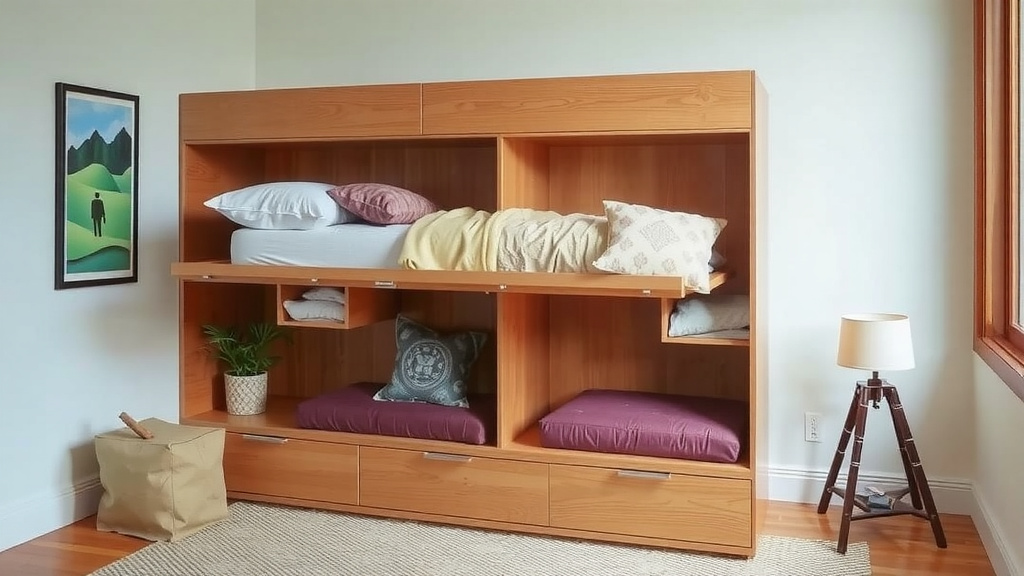
Finishing Touches That Make It Look Built-In
The difference between “DIY project” and “custom furniture” is usually just trim and paint. We found that a few small upgrades go a long way.
- Add crown molding and base trim to match your existing room style.
- Paint or stain the cabinet the same color as your walls for a built-in look.
- Install puck lights or LED strips inside the cabinet face for a soft glow at night.
- Choose handles or finger pulls that sit flush so they don’t snag bedding.
- Add a pillow pocket or strap inside the panel so pillows stay put when folding.
That last one matters more than you’d think. Nothing kills the magic of a fold-away bed like chasing pillows across the room at midnight.
Mattress Selection Matters Too
Use a mattress between 8 and 12 inches thick, unless your kit specifies otherwise. Memory foam works better than thick innerspring models because it’s lighter and flexes without damage. Check your kit’s weight rating before buying, and remember that heavier mattresses strain the lifting mechanism over time.
Your Final Pre-Fold Checklist
- Cabinet anchored into at least two wall studs with structural screws
- Sofa bolted to the cabinet frame, not the panel skin
- One-inch clearance between sofa and folded panel confirmed
- Spring or piston tension adjusted for mattress weight
- Ten slow fold cycles completed without binding or scraping
- Bedding and pillows secured or removed before each fold
Take your time with the anchor step and the tension adjustments. Everything else is fixable with wood filler and paint. A bed that drops on your guest? That’s a different kind of problem entirely.
Conclusion
Building a murphy bed with a sofa is one of those projects that sounds harder than it is. With a side-tilt kit, a sturdy plywood cabinet, and a low-profile couch, you can turn one room into a guest bedroom and a living space in a weekend or two. We found the two steps that matter most are anchoring the cabinet into wall studs and dialing in your spring or piston tension before adding bedding. Get those right, and everything else is just trim and paint. Start this week by measuring your room and ordering a hardware kit rated for your mattress weight. Your future guests will thank you.
Frequently Asked Questions
Can you put a regular couch in front of a murphy bed?
You can, but it needs to be low and firm. A standard sofa with tall arms or deep, soft cushions will block the folding panel and compress under its weight. Armless loveseats and futons work best for this setup.
How much weight can a DIY murphy bed with sofa hold?
It depends on your hardware kit and how well you anchor the cabinet. Most quality kits support 1,000 pounds or more on the closed panel, but the real limit is your wall. Structural screws into multiple studs carry the load, not the cabinet itself.
Do you need a special mattress for a sofa murphy bed combo?
You don’t need a “murphy bed mattress” by name, but you do need the right specs. Look for something 8 to 12 inches thick and on the lighter side, like memory foam. Always check your kit’s weight rating before you buy.
Can I build a murphy bed with sofa in an apartment?
It’s risky unless you own the place or have written permission. Anchoring a unit this heavy into studs means large holes and permanent mounting. If you’re renting, a freestanding fold-down bed frame is a safer bet.
How long does a murphy bed spring mechanism last?
With normal use, a good gas piston or spring kit should last many years. We found that most issues come from poor tension adjustment or overloading the panel, not from worn hardware. Re-test the fold every few months and adjust tension if it starts feeling heavy.