How to Cat Proof Your Sofa: 7 Simple Steps That Work
You can cat proof your sofa by covering it with throws or blankets, using deterrent sprays, trimming your cat’s nails regularly, and giving them a better scratching option nearby. Cats scratch furniture because it feels good and marks their territory, so the goal is to redirect that behavior, not punish it. With a few simple changes, your couch can survive life with a cat.
We researched what actually works, and we found that the most effective approach combines protection for the sofa with appealing alternatives for your cat. Many experts say cats ignore scratchers that are boring or badly placed. Location and texture matter more than you might think.
- Cover high-risk spots with washable throws or a fitted sofa protector.
- Place a sturdy scratching post right next to the couch, not in a corner.
- Try citrus-scented deterrent sprays or double-sided tape on favorite spots.
- Trim your cat’s nails every few weeks to reduce damage.
- Reward your cat when they scratch the right things.
Below, we break down everything you need to know about protecting your sofa from cats, step by step, so you can stop wincing every time your cat hops up with their claws out.
Protecting Your Couch From Cat Claws
The fastest way to protect your couch is to block access to favorite spots while giving your cat a better option. Cover the arms and corners with blankets, add double-sided tape, and set a scratching post right beside the sofa. Most cats redirect within a few weeks when the post is more appealing than the fabric.
Think of it like this: you’re not fighting your cat. You’re negotiating with them. And the good news is, cats respond surprisingly well to a fair deal.
Why Cats Target Your Sofa in the First Place
Cats scratch to maintain their nails, stretch their bodies, and leave both a visual and scent mark. Your sofa’s corner posts happen to be perfect for all three. It’s not spite. It’s instinct.
We found that many owners misread scratching as bad behavior, when it’s actually a healthy need (ASPCA). Once you accept that your cat will scratch something, the problem becomes a redirect challenge instead of a battle.
Choosing the Right Sofa Covers and Throws
Not all covers are equal. Cats love loose, dangly fabric because it shreds easily. Choose tightly fitted protectors made of thick material like canvas or microfiber.
- Pick washable covers so cleanup stays easy.
- Avoid fringed throws your cat can claw loose.
- Focus coverage on arms, corners, and the front edge.
- Tuck covers tightly so there’s nothing to hook claws into.
Using Deterrents Without Scaring Your Cat Off the Couch
Deterrents work best when they make the sofa boring, not terrifying. Double-sided tape is a classic. Cats hate the sticky feeling on their paws, and many experts recommend it as a safe first step (Humane Society).
Sprays with citrus or bitter apple scents can also help. Test any spray on a hidden spot first so you don’t stain the fabric. And skip punishment entirely. Spraying water or yelling teaches your cat one thing: to fear you, not the couch.
Safe Homemade Deterrent Options
You can make a simple deterrent with diluted lemon juice or a citrus essential oil mix. Keep it light. Strong smells can bother your cat’s sensitive nose more than you’d expect.
Giving Your Cat a Better Place to Scratch
The single most important move? A scratching post next to the sofa. Not in the spare room. Not behind the TV. Right there, where your cat already likes to scratch.
Cats often prefer sisal rope or sturdy cardboard over carpet-covered posts. If the post wobbles, your cat will judge it harshly and go back to the couch. Stability matters more than looks.
Matching the Post to Your Cat’s Style
Watch how your cat scratches. That tells you what to buy.
| Cat’s Style | Best Scratcher |
|---|---|
| Vertical scratchers who reach up | Tall sisal post, at least 30 inches |
| Horizontal pawers who go flat | Cardboard scratcher on the floor |
| Angle lovers | Slanted or ramp-style scratcher |
Training Your Cat to Use the New Scratcher
Sprinkle a little catnip on the post or dangle a toy near it. Reward every scratch with a treat or praise within a few seconds. Timing is everything, because cats connect rewards to what just happened.
We found that short, consistent sessions work better than long training attempts. A week or two of small rewards usually does more than a month of scolding.
Nail Care That Actually Reduces Damage
Trimming your cat’s nails every two to three weeks blunts the damage from any accidental scratches. It doesn’t stop the behavior, but it softens the result. Many vets recommend starting slowly, doing one or two nails per session if your cat is wiggly.
If trimming feels impossible, ask your vet or a groomer for help. A scratch board with scratchy material can also file nails naturally as your cat uses it.
Making Nail Trims Less Dramatic
Pick a calm moment, like after a meal or nap. Use treats liberally. Keep sessions under five minutes.
Your Cat Proof Sofa Checklist
Here’s a quick recap you can act on today:
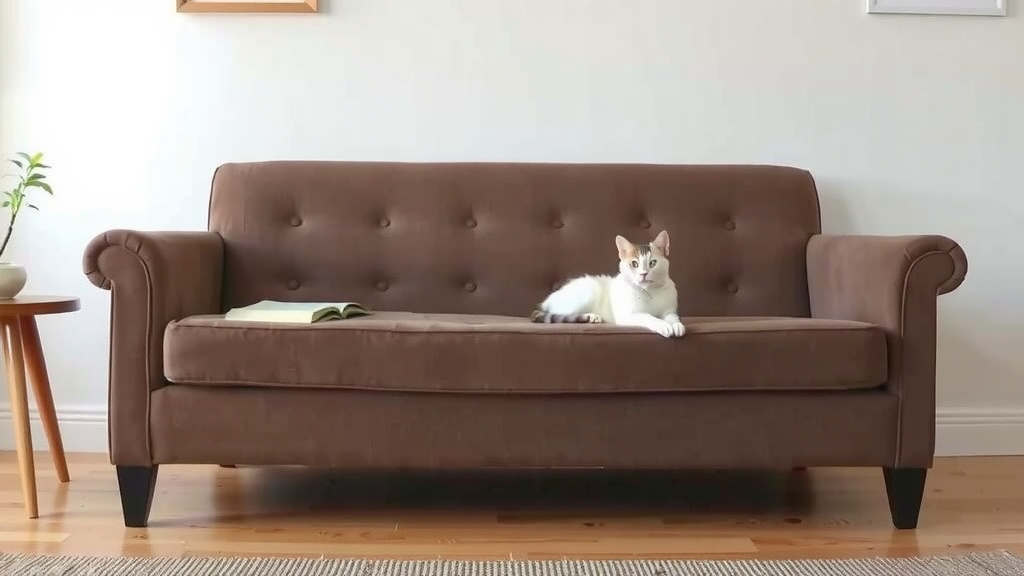
- Cover the arms and corners with fitted protectors.
- Place a stable scratching post beside the couch.
- Apply double-sided tape to favorite claw spots.
- Trim nails every two to three weeks.
- Reward scratching on the post immediately.
- Rotate scratchers so nothing gets boring.
Stick with the setup for at least a month. Cats are creatures of habit, and habits take time to shift. Your patience now saves your upholstery later.
Conclusion
Cat proofing your sofa doesn’t have to feel like a losing battle. The winning combo is simple: protect the fabric, redirect the scratching, and keep those nails trimmed. Put a sturdy scratching post right beside the couch, cover the vulnerable spots, and reward your cat every time they choose the post over your upholstery. We found that consistency beats intensity here. A few small, repeated actions over a month will do more than any single big fix. Start today by moving a scratcher next to the sofa and sprinkling a little catnip on it. Your cat gets a great place to scratch, and you get a couch that still looks like a couch.
Frequently Asked Questions
Will cats eventually stop scratching my couch on their own?
Usually not. Scratching is a lifelong need for cats, so waiting it out rarely works. The behavior stops only when you give them a better option in the same spot they already love.
What sofa fabric holds up best against cats?
Tight-weave fabrics like canvas, denim, and microfiber resist snagging far better than loose weaves. Leather can work too, since claws slide off it, though it may show small puncture marks. Avoid tweed, chenille, and anything with loops. If claws do leave marks anyway, our guide to fixing cat scratches on leather covers the repairs.
Is it too late to train an older cat to stop scratching the sofa?
No, but expect it to take a little longer. Older cats have years of habit behind them, so pair every step with patience and steady rewards. Most senior cats will still switch if the new scratcher is stable, well-placed, and rewarding.
Do scratching deterrent sprays smell bad to humans?
Most are designed to be barely noticeable to people. Citrus sprays fade within hours, while bitter apple sprays may linger a bit longer on fabric. Always test a hidden area first, both for staining and for your own nose.
Can I just get my cat declawed instead?
We’d urge you not to. Declawing removes the last bone of each toe and can cause lasting pain and behavior problems. Many vets now refuse to perform it, and several cities and countries have banned the procedure. Trimming and redirection solve the problem humanely.