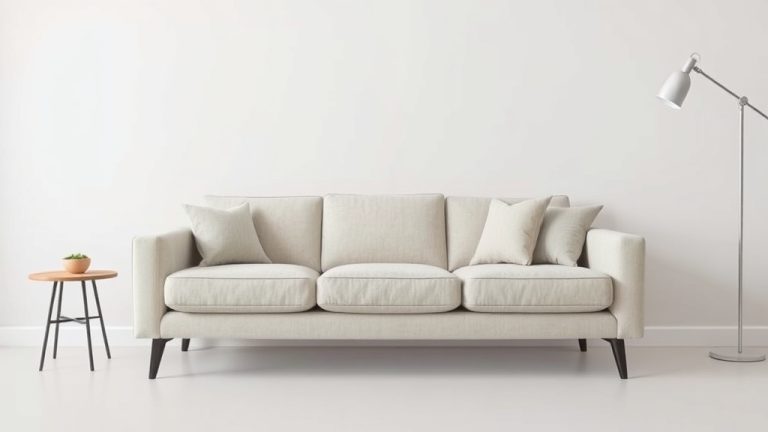
How to Check Sofa Quality Before You Buy: 7 Key Tests
The easiest way to check sofa quality is to lift a front corner and watch how it sits back down. A solid frame won’t twist or creak. Next, press hard on the arm and seat — a good sofa springs back fast with no sag.
But there’s more to it than a few quick tests. We researched what furniture makers and upholsterers actually look for, from frame materials and joinery to cushion fill and fabric weave. Turns out, you can spot a dud in under five minutes — no tools, no expertise, and no awkward moments with a salesperson.
Here’s the short version before we get into the details:
- Test the frame: lift a corner and listen for creaks or wobbles.
- Check the cushions: press down — high-density foam bounces back quickly.
- Sit for a while: five minutes, not five seconds.
- Feel the fabric: tight weaves and strong seams last longer.
- Ask about the warranty: confident makers back their work.
Below, we break down everything you need to know about checking sofa quality, step by step. Grab a coffee and let’s make sure your next sofa isn’t one you’ll regret by next spring.
Checking Sofa Quality Before You Buy
A quality sofa comes down to four things: a sturdy frame, dense cushions, tight fabric, and strong seams. If any one of these fails, the whole couch fails. Think of it like a chain — the weakest link sets the limit.
The good news? You don’t need to be an upholsterer to spot a bad one. We found that most problems reveal themselves with simple hands-on checks you can do right on the showroom floor.
Start With the Frame
The frame is the skeleton. If it’s weak, nothing else matters. Many furniture makers agree that hardwood frames — like oak, ash, or beech — outlast softwood and particleboard by years.
Here’s a quick way to test it. Lift one front corner a few inches off the ground. A solid frame stays quiet and stable. If you hear creaking or feel twisting, walk away.
What’s Inside the Frame?
Ask what the frame is made of. Here’s the general rundown we found from industry sources:
- Kiln-dried hardwood: the gold standard. Resists warping and cracking.
- Engineered wood (plywood): fine if it’s thick, layered plywood. Not great if it’s thin.
- Particleboard: cheapest option. Sags and crumbles under stress.
- Metal frames: common in modern designs. Durable but can squeak over time.
Also check the joints. Look for dowels, wooden corner blocks, or metal brackets. Staples alone? That’s a red flag. Many experts say staples-only construction is like building a house with tape.
Test the Cushions Like a Pro
Cushions are where comfort and durability meet. Press your fist into the seat and hold for a few seconds. High-density foam pushes back quickly. Low-quality foam stays dented, like bread that never rises.
We found that most makers use a density rating to describe foam. Look for cushions around 1.8 to 2.5 pounds per cubic foot. Lower density foam flattens faster — often within a year or two. Our guide to how long sofa foam lasts explains what density means for lifespan.
Down, Foam, or Blend?
Each fill type has trade-offs:
- High-density foam: holds shape best, feels firm.
- Down and feather: soft and luxurious, but needs regular fluffing.
- Foam-and-down blends: a middle ground. Comfortable with decent support.
- Memory foam: body-hugging feel, but can sleep hot in summer.
Can’t decide? Sit for at least five minutes. Your back will tell you more than any label will.
Looking Closely at Upholstery and Seams
Fabric quality shows up in two places: the weave and the stitching. Run your hand over the surface. A tight, even weave feels smooth and dense. Loose weaves snag, pill, and wear out fast.
Check the seams next. Straight, tight stitching with no loose threads is a good sign. Double-stitched seams are even better — they’re the sofa’s version of a seatbelt.
Some fabrics come with a durability rating called a double rub count, measured by a standard abrasion test. Many experts point to a count of 15,000 or higher as suitable for daily home use (a common industry benchmark from fabric testing standards).
Pick the Right Fabric for Your Life
Honest question: do you have kids, pets, or a Netflix-and-snacks habit? Then fabric choice matters more than you think.
- Leather: easy to wipe clean, ages well, costs more upfront.
- Performance fabric: stain-resistant and pet-friendly. Great for busy homes.
- Linen and cotton blends: breathable and soft, but stain more easily.
- Velvet: stylish and surprisingly durable if tightly woven.
The Consumer Product Safety Commission also notes that some upholstered furniture carries flammability standards, so it’s worth asking what treatments or materials were used.
Quick Sofa Quality Checklist
Print this in your head before the next showroom visit:
- Lift the front corner — no creaks, no wobbles.
- Press the seat cushion — it should spring back fast.
- Sit for five full minutes — check your lower back and hips.
- Run hands over the fabric — tight weave, no snags.
- Inspect the seams — straight, double-stitched, no loose threads.
- Check the legs — part of the frame, not just screwed on.

Warranty and Details That Reveal Quality
Here’s a truth we love: a warranty tells you what the company really thinks of its own sofa. A confident maker offers 10 years or more on the frame. A one-year warranty on everything? That’s a company hedging its bets.
Read what’s covered, not just how long. Frame-only coverage is common, but the best warranties include cushions and springs too.
Small Details That Signal Big Quality
The little stuff adds up. We found these telltale signs separate good sofas from forgettable ones:
- Legs attached to the frame, not just screwed into the base.
- Removable, reversible cushions so wear spreads evenly.
- Zippered covers you can clean or replace.
- Smooth, quiet reclining mechanisms with metal parts.
- Even legs on a flat floor — no rocking or shims needed.
Flip a cushion over, too. Quality sofas often show finished undersides and padded edges. Sloppy hidden work usually means sloppy hidden construction. Trust us — you’d be surprised what a quick peek underneath reveals.
When to Splurge and When to Save
Not every sofa needs heirloom-level quality. A guest room or starter apartment couch can be modest. But your everyday main sofa? That one deserves the full inspection. You’ll sit on it thousands of times over the years. Spending a bit more upfront often beats replacing a saggy dud every three springs.
Conclusion
Checking sofa quality comes down to your hands and your ears. Lift the corner and listen. Press the cushions and feel how fast they bounce back. Run your fingers over the weave and peek at the seams.
We found that a solid frame, high-density foam, and a generous warranty tell you more than any price tag ever will. And the five-minute sit test? That’s your secret weapon.
Your next step is simple: take this checklist on your next showroom trip. Sit, lift, press, and ask questions before you spend a dime. A few minutes of honest poking around now can save you years of saggy disappointment later.
Frequently Asked Questions
What is the average lifespan of a good quality sofa?
A well-built sofa with a hardwood frame and dense foam cushions typically lasts 7 to 15 years with regular use. Cheaper models often start sagging within three to five years. If you pick a daily-driver couch, quality pays for itself over time.
Is it rude to sit on a sofa for a long time in a furniture store?
Not at all — salespeople expect it. Most of them would rather you sit for a while than buy the wrong couch. We found that anyone serious about furniture testing sits for at least five minutes, so settle in confidently.
Can I check sofa quality when buying online?
Yes, but you’ll rely on different clues. Look for detailed specs like foam density ratings, frame materials, and warranty length. Read reviews that mention sagging or creaking after a year, and check the return policy before ordering.
How can I tell if a used sofa is still in good shape?
Do the same hands-on tests: lift a corner, press the cushions, and inspect the seams for fraying. Check underneath for stains, odors, or water damage. A used sofa with a slight cushion dip is fine, but a creaky frame is usually a dealbreaker.
Does a heavier sofa always mean better quality?
Often, yes — weight usually points to a solid wood frame and dense foam. But it isn’t foolproof, since cheap particleboard can also be heavy. We found the smartest move is combining weight with hands-on tests, not relying on the scale alone.