How to Choose Sofa Size: A Practical Room-Fit Guide
Choosing the right sofa size starts with measuring your room and leaving about 30 to 36 inches of walkway space around it. The rule we found most designers agree on: your sofa should take up roughly two-thirds of the wall it sits against. Get this right, and your whole room instantly feels balanced.
But size is more than just length. You also need to think about depth, height, and seat width so the sofa actually fits your body and your family. Too big, and you’ll be squeezing past it sideways (we’ve all been there). Too small, and guests end up perching on armrests like birds.
Here’s a quick TL;DR before we get into the details:
- Measure your room, doorways, and hallways before you shop.
- Leave 18 inches between the sofa and coffee table for legroom.
- A standard sofa runs 72 to 96 inches long for most living rooms.
- Match sofa depth to your height, usually 36 to 40 inches deep.
- Always check scale against your rug, TV, and other furniture.
Below, we break down everything you need to know about picking the perfect sofa size, step by step, so you can buy with confidence instead of hope.
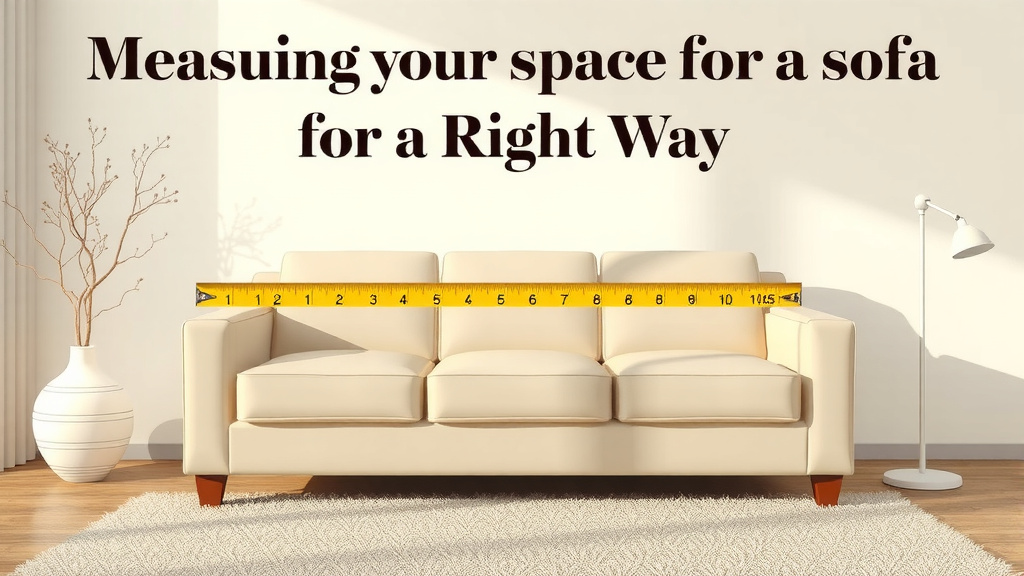
Measuring Your Space for a Sofa the Right Way
Start by measuring the wall where the sofa will live. Then measure the full room, including windows, radiators, and doors that swing open. We found that people who measure twice almost never send a sofa back.
Write everything down. A phone note works fine. Trust us, “it looked smaller in the showroom” is not a memory you want to relive.
Check Your Doorways and Hallways First
This step saves more returns than any other. Measure the width and height of every doorway, hallway, and stairwell the sofa must pass through. Many delivery issues happen because nobody thought about the corner turn at the top of the stairs.
Add a few inches of buffer. A sofa that fits a 32-inch doorway “exactly” usually does not fit at all.
Map Out Walkways and Clearance
You need clear paths to walk around your sofa. Aim for 30 to 36 inches of walkway space on main routes. If someone will walk behind the sofa, give them at least two feet so nobody bumps the cushions mid-sip.
Smaller gaps of 18 inches work between a sofa and coffee table. That’s enough room to stretch your legs without tripping. Our guide to matching coffee table size to your sofa explains that spacing in more detail.
Standard Sofa Dimensions Explained
Most standard sofas run 72 to 96 inches long, 34 to 40 inches deep, and about 30 to 34 inches high. Loveseats sit around 52 inches long. Sectionals can stretch well past 120 inches.
Here’s a quick comparison to help you match size to room:
| Sofa Type | Typical Length | Best Room Size |
|---|---|---|
| Apartment sofa | 60–72 inches | Small studio or den |
| Standard sofa | 72–96 inches | Average living room |
| Loveseat | 48–52 inches | Bedroom or small nook |
| Sectional | 100–130 inches | Large open-plan space |
Sofa Depth: Why It Matters More Than You Think
Depth decides whether you actually sit comfortably. Taller people (over about 5’10”) tend to prefer 40-inch-deep seats. Shorter folks often like 36 inches or less, so their feet reach the floor.
Depth also affects the room. A deep sofa eats floor space fast, even in a big room.
Seat Height and Back Support
Most seat heights land between 17 and 19 inches. That range works for most adults. If you or a family member has knee or hip trouble, a slightly higher seat is easier to get up from, and many ergonomic guidelines back that up (Cleveland Clinic).
Test it in person when you can. Sit for a full five minutes, not a two-second plop.
Sofa Length: Match It to Your Wall and Family
Remember the two-thirds rule from the intro. If your wall is 12 feet long, a sofa around 8 feet keeps things balanced. Going longer crowds the room; going shorter makes the wall feel empty.
Count your seats, too. A family of four usually wants at least three cushion spots plus a chaise or armchair nearby.
Matching Sofa Size to Your Room Layout
Layout matters as much as raw measurements. A 90-inch sofa can feel huge in a cluttered room and perfectly fine in an open one. We found that sketching the room on graph paper (or using a free floor-plan app) settles most debates.
Small Living Rooms
Stick to sofas under 78 inches with visible legs. Legs create open space underneath, which makes the room feel lighter. Lighter colors and lower backs help too.
Large and Open-Plan Spaces
Big rooms can swallow small sofas. A sectional, or a sofa plus two chairs, fills the space better. Float the sofa away from the wall if it helps define zones.
Common Sofa Sizing Mistakes to Avoid
These are the slip-ups we see most often, and every one of them is avoidable:
- Buying for looks instead of measurements.
- Forgetting the delivery path through doors and stairs.
- Blocking windows or heat vents with a too-tall back.
- Ignoring seat depth for shorter or taller family members.
- Picking a sofa bigger than the rug, which throws off scale.
One more: buying a sofa that only fits “perfectly” with zero wiggle room. Rooms change. Give yourself an inch or two of grace.
Your Quick Sofa Size Checklist
Before you click “add to cart,” run through this list:
- Measure the wall, room, and delivery path.
- Confirm the sofa takes up about two-thirds of the wall.
- Leave 30 to 36 inches for main walkways.
- Keep 18 inches between sofa and coffee table.
- Match seat depth and height to the tallest and shortest users.
- Check the sofa’s scale against your rug and TV.
Final Sizing Tips Before You Buy
Tape out the sofa’s footprint on the floor with painter’s tape. It sounds silly. It works better than any measuring tape because you can actually see the space it will occupy.
Many experts suggest waiting a day before ordering after you’ve taped it out. Live with the tape for 24 hours. If nobody complains about tripping over it, you’re ready to buy with real confidence.
Conclusion
Choosing the right sofa size comes down to a few simple habits: measure your wall, your room, and your delivery path, then aim for that two-thirds balance. Match seat depth and height to the people who’ll actually use it, and leave enough clearance so nobody squeezes past sideways. We found that the buyers who tape out the footprint and live with it for a day almost never regret their purchase. A sofa is something you’ll use every single day, so it’s worth the extra hour of measuring. Your next step is easy: grab a tape measure, walk your delivery route, and jot down every number before you fall in love with a sofa online.
Frequently Asked Questions
Should a sofa touch the wall?
It doesn’t have to. Pulling your sofa a few inches off the wall can make a room feel more open and even helps with airflow. In tighter rooms, though, keeping it flush against the wall frees up floor space you may need.
What size sofa fits in a 12×12 living room?
A standard sofa between 72 and 84 inches usually works well in a 12×12 room. You’ll still have room for a coffee table and a walkway if you keep other furniture compact. Tape out the footprint first to be sure it doesn’t crowd your seating area.
Is a sectional a good idea for a small space?
Sometimes, but it depends on the layout. A compact L-shaped sectional can actually seat more people than a sofa and loveseat combo in the same footprint. Just measure carefully, since sectionals are harder to move around once they’re in place.
How do I know if a sofa will fit through my door?
Compare the sofa’s width, height, and diagonal depth to every doorway, hallway, and stairwell on the delivery route. Most retailers list diagonal depth in the product specs, so look for it. If the numbers are close, call the store before ordering rather than gambling on delivery day.
Can I return a sofa if it doesn’t fit my room?
It depends on the retailer’s policy, and many stores charge restocking fees or don’t accept returns on opened furniture. That’s why we always recommend measuring twice and taping out the footprint first. Check the return terms before you buy, not after the truck pulls away.