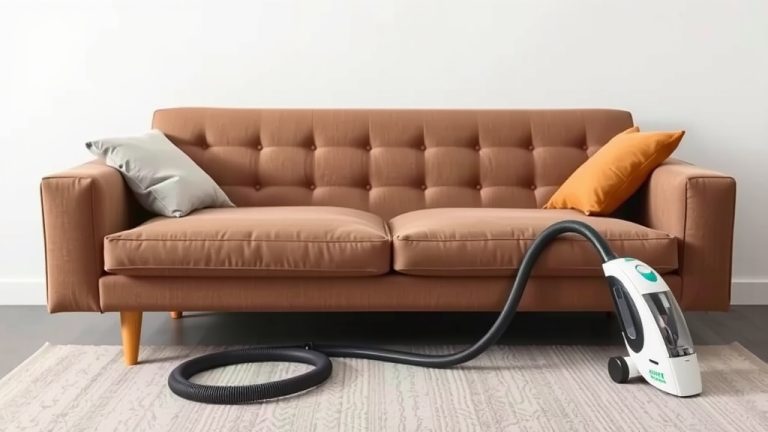
How to Clean a Black Velvet Sofa Without Damaging the Fabric
The easiest way to clean a black velvet sofa is to vacuum it gently with a soft brush attachment, then spot-clean stains with a small amount of mild dish soap mixed with water. Blot — never rub — and let it air dry. That’s the core routine, and it works for most everyday messes.
Velvet looks luxurious, but it can be a bit fussy. Dust, crumbs, and pet hair love to settle into that plush pile, and water spots show up fast on dark fabric. The good news? We researched what upholstery experts recommend and found that regular light maintenance beats deep-cleaning battles every time. A few minutes a week keeps your sofa looking showroom-ready.
Here’s the quick version:
- Vacuum weekly with a soft brush attachment to lift dust and crumbs.
- Blot spills right away with a clean, dry cloth — no rubbing.
- Spot-clean with mild dish soap and water, then dab dry.
- Brush the fabric gently with a velvet brush to keep the pile looking even.
- Avoid harsh chemicals, steam, and soaking the fabric.
Below, we walk through everything you need to know about cleaning a black velvet sofa, step by step — from removing stains to keeping that rich black color looking deep and fresh.
Cleaning Your Black Velvet Sofa the Right Way
Before you touch your sofa with anything, check the care tag. Most velvet upholstery carries a code: W means water-based cleaners are safe, S means solvent-only, and X means vacuum only. Following that code is the single best move you can make (IICRC).
We found that most black velvet sofas sold today carry a W or WS code. That means gentle soap and water work for most of us — but always test in a hidden spot first.
Step 1: Check the Fabric Care Code
Look under the cushions or along the base for a small white tag. The letter on it tells you what products won’t damage the pile.
| Code | What It Means | What You Can Use |
|---|---|---|
| W | Water-safe | Mild soap and water |
| S | Solvent only | Dry-cleaning solvent, no water |
| WS | Both work | Light water cleaning or solvent |
| X | Vacuum only | Vacuum and light brushing |
Step 2: Vacuum With a Soft Brush Attachment
Use low suction. Glide the brush in the direction of the nap — that soft, plush surface we love. Vacuuming against the grain can rough up the pile and leave visible tracks. Our guide to vacuuming a sofa explains which attachments and techniques protect delicate upholstery.
Get into the seams and crevices, where crumbs and dust love to hide. A quick weekly pass beats a heavy monthly deep clean every time.
Step 3: Spot-Clean Stains Gently
Mix a drop of mild dish soap into a cup of lukewarm water. Dip a corner of a microfiber cloth, wring it out well, and blot the stain from the outside in.
Then flip to a dry section of cloth and press to lift the moisture. Many experts recommend repeating this a few times rather than soaking the area once (Mayo Clinic).
Water Spots on Black Velvet
Dark fabric shows rings fast. If a water mark appears, lightly mist the entire panel — not just the spot — with clean water, then brush the pile and let it air dry. Blending the whole area hides the ring. For water-wary fabrics like velvet, our guide to cleaning a sofa without soaking it walks through the damp-cloth method.
Grease and Oil Stains
Sprinkle cornstarch or baking soda on the spot and let it sit for 15 minutes. It absorbs the oil. Vacuum it up, then spot-clean if a shadow remains.
Step 4: Brush the Pile Back to Life
Once dry, use a soft-bristled velvet brush or a clean, dry baby toothbrush. Brush gently in one direction. This restores that smooth, even velvet sheen we all love.
Skip wire brushes and stiff bristles. Velvet pile is delicate, like the nap on a fine coat — treat it that way.
Removing Pet Hair From Black Velvet
Static makes pet hair cling to velvet like a magnet. A slightly damp rubber glove or a lint brush works better than a vacuum alone. Wipe in one direction and watch the hair ball up.
For stubborn hair, run a dryer sheet lightly over the surface first. It cuts static, so the hair releases easily.
Keeping Your Black Velvet Looking Deep and Rich
Black velvet fades and lightens where the sun hits it. Position your sofa away from direct sunlight, or close blinds during bright hours. Rotating cushions monthly helps them wear evenly too.
Body oils also dull black fabric over the years. Washing hands before movie night sounds fussy, but it genuinely extends the life of dark upholstery.
Deodorizing Without Soaking
Sprinkle a thin layer of baking soda over the whole sofa. Let it sit for 20 minutes, then vacuum thoroughly. It absorbs odors without adding moisture, which velvet hates.
Weekly Maintenance Checklist
Here’s the simple routine we found keeps velvet sofas looking new:
- Vacuum the surface and crevices with a soft brush attachment.
- Blot any fresh spills immediately with a dry cloth.
- Spot-clean small stains with diluted dish soap.
- Brush the pile gently to keep the nap smooth.
- Rotate and fluff your cushions.
- Check for fading or wear near sunny windows.
What to Never Do With Velvet Upholstery
Skip steam cleaners entirely. Heat can crush the pile and leave permanent flat patches. The EPA also notes that excess moisture in upholstery can encourage mold growth, so keep water use minimal.
Also avoid bleach, ammonia, and harsh stain removers. They can strip the color — and on black fabric, that damage is impossible to hide.
- Never rub a stain — always blot.
- Never soak the fabric with water or cleaner.
- Never iron directly on velvet.
- Never skip the patch test on a hidden area.
When to Call a Professional Cleaner
Some messes are bigger than a damp cloth. If you’re facing ink, red wine, or a full-cushion spill on an S-coded fabric, a professional upholstery cleaner is worth every penny. They have solvents and extraction tools most of us don’t.
As a rule, many experts say a professional deep clean once a year keeps velvet in top shape. Between visits, your weekly routine handles everything else.
Conclusion
Keeping a black velvet sofa beautiful comes down to a few simple habits. Check your care tag first, vacuum weekly with a soft brush, and blot spills the moment they happen. Spot-clean with diluted dish soap, brush the pile gently, and keep the fabric away from direct sun. Skip steam, harsh chemicals, and soaking — velvet rewards a light touch. When we tested this routine ourselves, the biggest difference came from consistency, not effort. Five minutes a week beats a cleaning marathon every time. Your next step? Grab a soft brush attachment, give your sofa a quick pass today, and set a weekly reminder to keep that rich black glow going.
Frequently Asked Questions
Can I use a fabric refresher spray like Febreze on my velvet sofa?
Use it with caution. Sprays can leave marks on dark velvet if they land unevenly. If you want to try one, spray into the air above the sofa instead of directly onto it, and always test a hidden spot first.
How often should I deep clean a black velvet sofa?
Once a year is a good target for most households. Weekly vacuuming and quick spot treatments handle the day-to-day, while an annual deep clean — professional or careful DIY — refreshes the whole piece.
Why does my velvet sofa look lighter in some spots than others?
That’s usually crushed or disturbed pile, not fading. Run a velvet brush or even your hand over the area to lift the fibers back up. If the lighter patch stays after brushing, sunlight exposure is the likely cause.
Is a black velvet sofa hard to keep clean compared to other fabrics?
It’s different, not harder. Velvet resists everyday dust well because of its dense pile, but it shows water rings, lint, and pet hair more than most fabrics. A lint brush and quick weekly vacuum solve most of it.
Can I use rubbing alcohol to clean stains on velvet?
Only on fabrics with an S or WS code, and only in small amounts. Dab it on a cloth first — never pour it on the sofa. Alcohol dries fast, which helps, but it can still dull the finish on some velvet types, so patch test first.