How Large Should a Picture Be Above a Sofa?
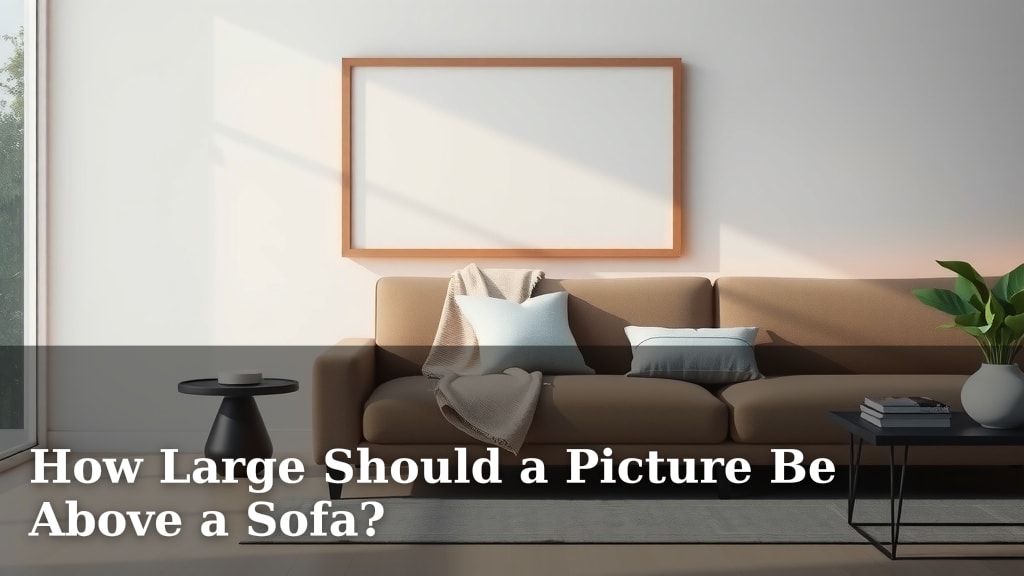
The ideal size for a picture above a sofa is typically about two-thirds the width of your sofa. This rule of thumb helps create a balanced and visually pleasing focal point. So, if your sofa is 6 feet wide, aim for art that’s around 4 feet wide. Getting this right makes a big difference!
Finding the right art size isn’t just about following a rule. It’s about making sure your art feels proportionate to your furniture and the wall space. Too small, and it can look lost. Too large, and it might overwhelm the room. We’ll help you figure out what works best for your unique space.
- Art should be about 2/3 the width of your sofa.
- Height is also important; consider the space between the art and sofa.
- Don’t forget to think about the overall wall space.
- Visual balance is key for a great look.
Let’s walk through exactly how to measure and choose the perfect size for your artwork to make that wall pop!
Figuring Out the Right Art Size for Your Sofa
You’ve picked out the perfect sofa, and now it’s time to adorn that wall above it. But how large should your picture be? It’s a common decorating puzzle. We’ve all seen rooms where the art feels a bit… off. Maybe it’s too tiny, looking like a postage stamp on a giant wall. Or perhaps it’s so big it makes the sofa feel cramped. Getting the size just right makes a huge difference in how your living space feels. It can turn a good room into a great one!
Let’s get this sorted. The most popular and effective guideline is to aim for art that’s about two-thirds the width of your sofa. Think of your sofa as the anchor for the space above it. The artwork should feel like a natural extension of that anchor, not a completely separate entity. If your sofa is 8 feet long, you’d be looking for artwork around 5.3 feet wide (roughly 64 inches). This isn’t a hard and fast law, but it’s a fantastic starting point that works for most situations. It provides a sense of **balance and proportion**.
The Two-Thirds Rule: Your Guiding Principle
Why does this two-thirds rule work so well? Our eyes naturally look for harmony. When art is too small, it can feel insignificant. It gets lost in the expanse of the wall. When it’s too large, it can feel overwhelming. It might even make your sofa appear smaller than it is. The two-thirds ratio strikes a lovely **visual sweet spot**. It allows the artwork to be a prominent feature without dominating the entire wall or sofa.
Applying the Rule to Your Sofa’s Width
So, grab your measuring tape! Measure the entire length of your sofa from armrest to armrest. Let’s say you measure and find your sofa is exactly 72 inches wide. To find your ideal artwork width, you’ll multiply 72 by two-thirds (or 0.67). That gives you about 48 inches. So, aim for a piece of art that’s around 48 inches wide. This could be a single large canvas, a gallery wall that collectively measures 48 inches, or a diptych or triptych where the combined width hits that mark.
What About Multiple Pieces?
The two-thirds rule still applies if you’re thinking about a gallery wall. Instead of measuring one piece, you’ll measure the **total width of all the pieces grouped together**. Imagine you have three frames that, when hung with a little space between them, span 50 inches horizontally. If your sofa is 75 inches wide, then a 50-inch-wide grouping fits nicely within that two-thirds guideline. The key is the overall horizontal footprint of your art arrangement.
Considering Height: It’s Not Just About Width!
While width is often the first thing people think about, height is equally important. There’s a sweet spot for how high the bottom of your artwork should hang above the sofa. Many designers recommend a gap of about 6 to 10 inches between the bottom of the frame and the top of the sofa back. This creates a comfortable visual connection.
The Sofa-to-Art Vertical Spacing
Why this space? Too little space, and the art might look like it’s squashed or touching the sofa. Too much space, and it can feel disconnected, like it’s floating aimlessly. A 6 to 10-inch gap is usually perfect. It allows the artwork to be clearly above the sofa without feeling too distant. Think of it as giving the art enough breathing room. It also means you don’t want the art to be so tall that its top edge is way above eye level for someone seated.
Finding the Right Vertical Balance
Most people sit at a height of around 40-45 inches from the floor. When you add the 6-10 inch gap to the typical sofa back height (around 30-35 inches), the bottom of your art will likely fall around the 40-45 inch mark from the floor. This means the artwork is generally at or just above eye level for a seated person. This makes it comfortable to view. It also helps to create a **visually grounded focal point**.
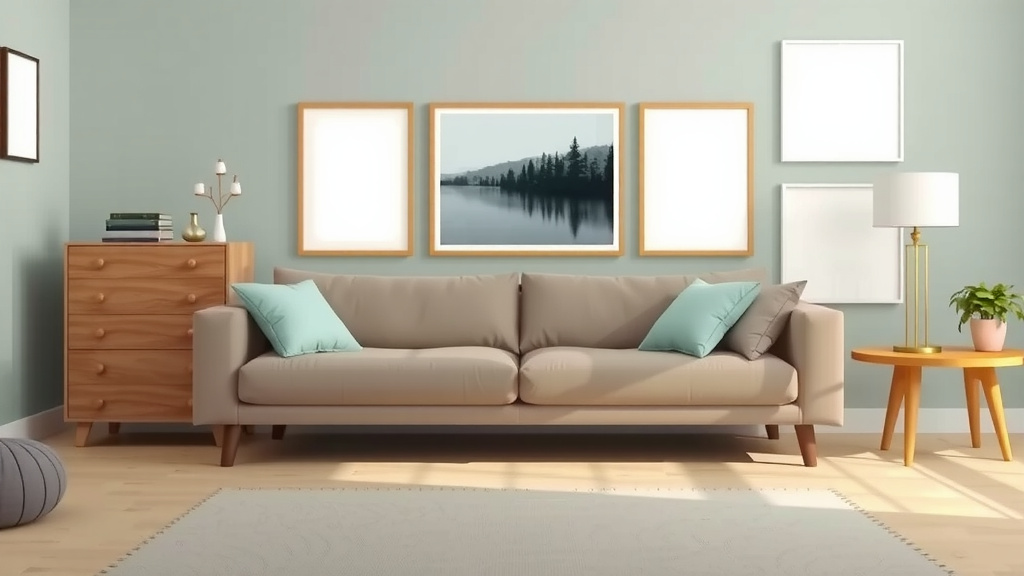
Beyond the Sofa: The Whole Wall Matters
Your sofa isn’t floating in a void. The wall it sits against is also a key player. You need to consider the entire wall space. If you have a very tall ceiling, a piece that’s only 48 inches wide and 10 inches off the sofa might look a bit short. You might need a taller piece or a wider arrangement to fill that vertical space more effectively.
The Ceiling Height Factor
For rooms with higher ceilings, you have more flexibility. You can often go with a slightly larger piece, or a piece with a more dominant vertical presence. If your art is too small in a room with high ceilings, it can make the ceiling feel even higher and the sofa area feel less impactful. We found that art that extends roughly two-thirds of the way up the wall from the sofa can create a good visual balance in taller rooms.
Wall Width and Surrounding Elements
Also, think about what else is on that wall. Are there windows, doors, or other furniture nearby? If the wall space is broken up, you might need to scale down your artwork slightly. You don’t want the art to compete with other architectural features. It should feel like it belongs in the **overall composition of the room**. Sometimes, a grouping of smaller pieces looks better than one large, overwhelming piece on a busy wall.
Other Considerations for Perfect Placement
Beyond the basic measurements, a few other things can help you make the best choice. Think about the style of your room. Is it modern and minimalist, or more traditional and cozy? The scale of your art should match the style. A very delicate, small piece might get lost in a grand, traditional room. Conversely, a massive, bold piece might overwhelm a small, minimalist space.
The Visual Weight of Your Sofa
Consider the visual weight of your sofa itself. A large, overstuffed sectional has more visual weight than a sleek, armless loveseat. You’ll likely need larger artwork to balance the presence of a more substantial sofa. It’s all about creating a sense of harmony and **visual equilibrium**.
A Quick Checklist for Sizing Your Art
Here’s a quick way to check if your art size is just right:
- Measure your sofa’s width.
- Calculate two-thirds of that width for your target art width.
- Measure the gap between the sofa top and the bottom of your art (aim for 6-10 inches).
- Consider your ceiling height and overall wall space.
- Does the art feel balanced and proportionate?
- Step back and see if it creates a pleasing focal point.
| Sofa Width | Ideal Art Width (approx.) | Recommended Vertical Gap |
|---|---|---|
| 5 feet (60 inches) | 40 inches | 6-10 inches |
| 6 feet (72 inches) | 48 inches | 6-10 inches |
| 7 feet (84 inches) | 56 inches | 6-10 inches |
| 8 feet (96 inches) | 64 inches | 6-10 inches |
Using these guidelines can help you avoid common art-hanging mistakes. It ensures your chosen piece becomes a **celebrated focal point** rather than a design afterthought. You’ve got this!
Conclusion
You’ve learned how to size your artwork for that prime spot above your sofa. Remember, the two-thirds rule is your best friend for width, and a 6-10 inch gap ensures perfect vertical spacing. Don’t forget to consider your ceiling height and the overall wall space to achieve true balance. You now have the tools to make your art a standout feature!
Your next step is simple: grab your tape measure and start applying these tips to your own living room. Trust your eye, and don’t be afraid to experiment a little. You’re well on your way to creating a beautifully styled space that feels just right.
Frequently Asked Questions
What if my sofa is an unusual shape or size?
If your sofa has a unique shape, measure its overall longest horizontal dimension from armrest to armrest. Apply the two-thirds rule to this measurement to find your ideal art width. It’s about the general span your sofa occupies on the wall.
Can I hang a group of smaller pictures instead of one large one?
Absolutely! The two-thirds rule applies to the combined width of your gallery wall. Measure the total horizontal space all your frames will take up when hung with their intended spacing.
How do I know if my art is too high or too low above the sofa?
Aim for the bottom of your artwork to be about 6 to 10 inches above the sofa back. If it’s much higher, it can feel disconnected; if it’s too close, it might feel cramped. Your art should be comfortably viewable from a seated position.
Does the style of the art matter for sizing?
While not a strict rule, consider the visual weight of your art. A very delicate, thin frame might need to be larger to have presence, whereas a thick, bold frame can command attention even if it’s slightly smaller. Match the art’s impact to your sofa’s presence.
What if my wall space above the sofa is very wide or very tall?
For very wide walls, you have more freedom to go wider or create a larger gallery wall. If you have high ceilings, consider art that has a stronger vertical presence or extends higher up the wall to fill the space without looking too small.