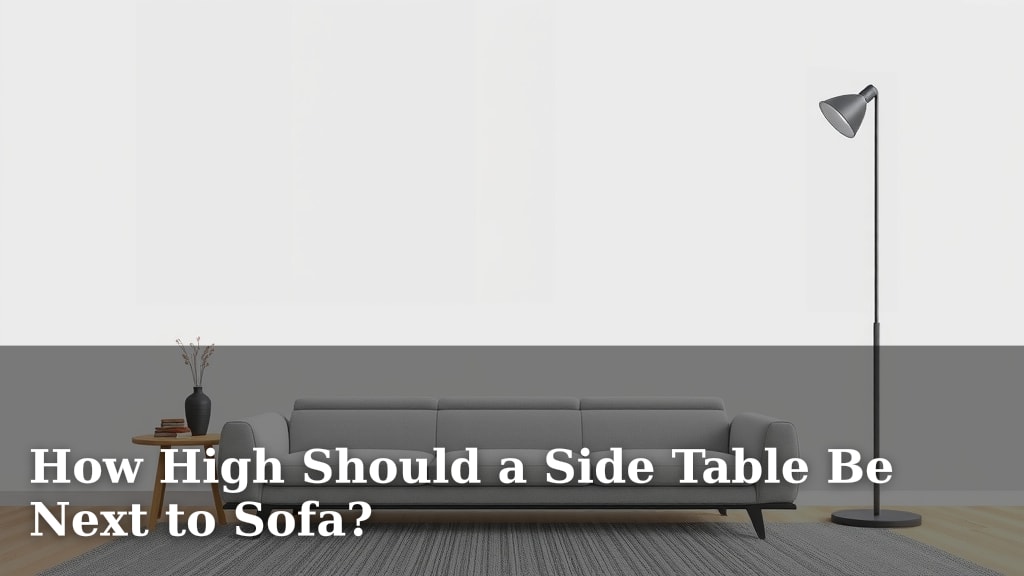
How High Should a Side Table Be Next to Sofa?
The ideal side table height next to your sofa is generally between 1 to 2 inches taller than your sofa’s armrest. This height ensures easy access to drinks, remotes, or books without awkward reaching. Getting this measurement right means your side table will be both functional and visually balanced.
Finding the perfect height for your side table isn’t just about aesthetics; it’s about creating a comfortable and convenient living space. We’ve researched the common recommendations and found that a table that’s too low can feel out of place, while one that’s too high can look top-heavy. The goal is a harmonious and practical setup.
- Table height: 1-2 inches higher than sofa armrest.
- Purpose: Easy access to items like remotes and drinks.
- Visual balance: Prevents tables from looking too tall or too short.
- Comfort: Avoids awkward reaching or straining.
Let’s walk through exactly why this measurement matters and how you can find the perfect height for your own living room.
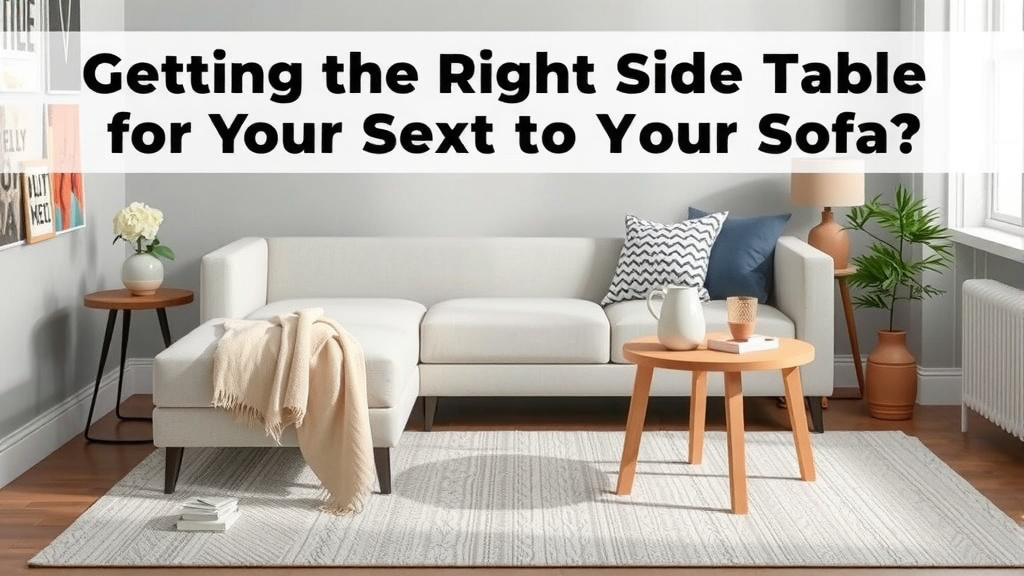
Getting the Right Side Table Height for Your Sofa
Finding the correct height for your side table makes a huge difference in your living room. It’s more than just where you put your mug. The right height ensures easy access and a balanced look. We researched common recommendations to help you find that sweet spot.
Why Sofa Armrest Height is Your Guiding Star
The most common advice you’ll find points to the sofa’s armrest. Many interior designers and furniture experts suggest a side table that aligns with or is slightly taller than your sofa arm. This creates a functional surface that feels like a natural extension of your seating.
Think about it: when you’re relaxing, your hand naturally rests on the armrest. You want your drink or your book to be right there, within easy reach. If the table is too low, you’ll be reaching down awkwardly. If it’s too high, it can feel top-heavy and unstable.
The “1 to 2 Inches Taller” Rule Explained
So, how much taller? The general rule of thumb is 1 to 2 inches. This small difference is often enough to provide a comfortable reach without making the table look disproportionately tall. It keeps the tabletop slightly above the armrest, making it easy to set things down or pick them up.
We found that this height range works well for most standard sofa armrests. It’s a good starting point that offers both practicality and visual harmony. You’re aiming for a surface that feels accessible without being so low it’s a stretch, or so high it looks out of place.
Measuring Your Sofa Armrest: A Simple Process
To get this right, you’ll need a quick measurement. Grab a tape measure and your sofa. You’ll want to measure the height of the sofa armrest from the floor. Make sure you’re measuring the highest point of the armrest where you’d typically rest your arm.
Once you have that measurement, you can use it to shop for side tables. If your armrest is 24 inches high, you’re looking for a side table that’s about 25 to 26 inches high. This straightforward step ensures you’re starting with the correct dimensions.
Beyond the Armrest: Factors Affecting Side Table Height
While the armrest is your primary guide, other elements can influence your final decision. Considering these details ensures your side table truly fits your space and lifestyle.
Sofa Style and Seat Depth Matter
Some sofas have very low, plush arms, while others have higher, more structured ones. If you have a sofa with a deeper seat, you might find yourself sitting a bit further back. In this case, a slightly taller side table could still be within comfortable reach.
Conversely, a sofa with a very narrow seat and high arms might feel a bit cramped. For these, sticking closer to the 1-inch rule or even a flush height might be best. We’ve seen that the overall proportions of your sofa play a role.
Your Personal Comfort and Habits
Think about how you use your living room. Do you often work on a laptop from the sofa? Do you enjoy reading with a cup of tea beside you? If you tend to pile things on your side table, you might prefer one that’s a little more generous in height and surface area.
We found that personal habits can sometimes override general guidelines. If you find yourself constantly reaching or having to look down too far, it’s a sign that the height might not be working for you. Your comfort is key.
Visual Balance and Room Proportions
The height of your side table also affects the overall aesthetic of your room. A tiny, low table next to a massive sectional can look a bit lost. On the flip side, a tall, narrow table beside a sleek, modern sofa might look out of place.
Many designers suggest that the side table’s height should relate to other furniture in the room, like lamps or even the height of your sofa’s back cushions. The goal is a cohesive look where everything feels balanced. We like to think of it as creating a pleasing visual line.
Table Lamp Considerations
If you plan to place a table lamp on your side table, its height becomes an important consideration. You generally want the bottom of the lampshade to be at or slightly below eye level when you’re seated. This provides comfortable lighting without glare. So, when choosing your table height, mentally place your lamp there.
Matching with Other Furniture
While not a strict rule, sometimes matching the side table height to the height of your coffee table can create a sense of order. This is more of an aesthetic choice, but it can contribute to a well-coordinated space. We see this often in more formal living room arrangements.
What to Do with Very Low or Very High Sofas
Not all sofas fit the standard mold, so what do you do when yours is exceptionally low or unusually tall?
For Low-Profile Sofas
If your sofa has a very low armrest, you might find standard side tables are too high. In this case, you have a few options. Look for lower profile side tables or even repurposed items like sturdy stools or tiered plant stands. You might need to go lower than the typical 1-2 inch rule.
The key here is to find something that doesn’t dwarf the sofa. We’ve seen people use ottomans or even small benches as side tables for very low seating. Functionality meets form in creative ways. You’re essentially looking for a surface that’s just a bit higher than the sofa seat cushion.
For High-Armrest Sofas
With high-armed sofas, standard side tables might end up being too short. Don’t despair! You can often find side tables designed to be taller, sometimes called console tables or accent tables with higher profiles. Alternatively, you can use a riser or a stack of decorative books underneath a slightly shorter table.
It’s about finding that visual equilibrium. Many experts suggest aiming for the table’s top to be around the midpoint of your sofa’s armrest height. This ensures it feels integrated rather than an afterthought. We believe there’s a solution for every sofa style.
Consider a Nested Set
Nested side tables are a fantastic solution for versatility. They offer multiple heights within one set. You can pull out a higher table for immediate use and tuck a lower one underneath. This adaptability works well for changing needs and different seating arrangements.
These sets are also great for smaller spaces or when you need extra surface area occasionally. We’ve found they offer a lot of flexibility without committing to a single table height. They’re like having a little sidekick for your sofa.
Quick Checklist for Your Perfect Side Table Height
Ready to find the ideal height? Here’s a quick rundown to keep you on track:
- Measure your sofa armrest height from the floor.
- Aim for a side table 1-2 inches taller than the armrest.
- Consider your sofa’s overall style and seat depth.
- Think about how you personally use your side table.
- Check if the height works with your planned table lamp.
- Prioritize comfort and visual balance for your space.
Conclusion
Finding the right side table height is about making your living space work for you. Remember, the 1 to 2 inches taller than your sofa armrest rule is a great starting point, but it’s not set in stone. Your sofa’s unique style, your personal habits, and the overall look of your room all play a part.
The goal is to create a comfortable, functional, and visually balanced area. Take a moment to measure your sofa armrest, consider your needs, and trust your eye. You’ve got this!
Frequently Asked Questions
Can I use a side table that’s the same height as my sofa armrest?
Yes, you can. While the general recommendation is 1 to 2 inches taller, a table flush with the armrest can still be perfectly functional. This might even be preferable if your sofa has very deep arms or if you prefer a more streamlined look.
What if my sofa doesn’t have traditional armrests?
If your sofa has very low, pillow-like, or non-existent armrests, use the seat cushion height as your guide. You’ll typically want the side table to be about 1 to 2 inches taller than the top of the seat cushion for comfortable access.
How do I account for a large coffee table when choosing side table height?
Your coffee table height usually doesn’t directly dictate side table height. Side tables are primarily judged against sofa armrest height for immediate accessibility. However, for overall visual harmony, ensure your side tables don’t appear disproportionately taller or shorter than other pieces in the room.
Is it okay for my side table to be a different height than other side tables in the room?
Absolutely. Having side tables of slightly different heights can add visual interest and accommodate different needs. For example, one side might need a taller table for a lamp, while the other could use a lower one for easier reach from a reclining sofa.
What’s the best way to check if my side table height is right before buying?
Before purchasing, measure your sofa armrest. Then, try to visualize or even measure out potential table heights in your space. If possible, test a similar height table at home or in a showroom. Sitting on your sofa and reaching for where the table would be is the best test.
![10 Best Cheap Sofas Online [2026]](https://hometopaccesories.com/wp-content/uploads/2026/09/10-best-cheap-sofas-online-2026-featured-768x432.jpg)
![10 Best Budget Sofa Beds [2026]](https://hometopaccesories.com/wp-content/uploads/2026/08/10-best-budget-sofa-beds-2026-featured-768x432.jpg)

![10 Best Choice Sofa [2026]](https://hometopaccesories.com/wp-content/uploads/2026/09/10-best-choice-sofa-2026-featured-768x432.jpg)