Bean Bag vs Sofa: Casual Comfort vs Classic Seating – Which Is Right for Your Space?
When you’re furnishing your living room or creating that perfect cozy corner, one of the biggest decisions you’ll face is choosing between a bean bag and a traditional sofa. It’s not just about picking a place to sit—it’s about choosing a lifestyle, defining your space’s personality, and deciding what comfort actually means to you. Both options have their devoted fans, and honestly, there’s no universal winner here. What works beautifully in one home might feel completely wrong in another.
Let me walk you through everything you need to know to make the right choice for your unique situation.
What Exactly Is a Bean Bag, and How Does It Differ from a Sofa?
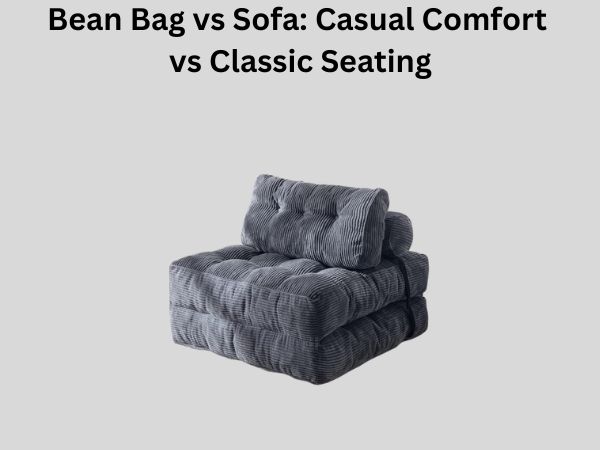
Let me break this down in the simplest way possible. A bean bag is essentially a fabric cover filled with tiny polystyrene beads or shredded foam. When you sink into it, those beads shift and mold around your body, creating a custom-fit seat that adapts to whatever position you take. It’s like sitting on a cloud that’s been trained to know exactly what your body needs.
A traditional sofa, on the other hand, is built on a wooden or metal frame with springs, foam padding, and upholstered fabric stretched over top. It’s engineered for durability and structure, maintaining its shape no matter how many people plop down on it.
The philosophical difference? Bean bags are all about personal, intimate comfort. Sofas are about communal seating and formality. Think of it this way: a bean bag is your best friend, while a sofa is your professional acquaintance. Both have value, but they serve different purposes.
Comfort: The Main Attraction
Bean Bag Comfort: Customized Support
There’s something almost magical about sinking into a quality bean bag. The beads conform to every contour of your body, eliminating pressure points. Your neck gets support, your back gets cradled, and your legs are perfectly positioned. It’s the kind of comfort that makes you lose track of time—suddenly it’s 2 AM and you’ve watched five episodes of your favorite show without realizing it.
The customization factor is huge here. Are you someone who likes to curl up in a ball? The bean bag curves around you. Do you prefer lounging flat? Spread it out. Want to sit upright? It adapts. This flexibility is a massive advantage for people with varying comfort needs throughout the day.
Sofa Comfort: Structured Support
Sofas offer a different kind of comfort. They provide consistent, structured support. You’re not sinking into something that shifts—you’re sitting on a stable platform. For people who prefer firm seating or who need good back support, this can actually be more comfortable than a bean bag.
Sofas also accommodate multiple people comfortably without everyone feeling like they’re rolling into the center. If your family gathers to watch movies together, a sofa keeps everyone in their own space while a bean bag might feel crowded with two people.
Space Considerations: Fitting Into Your Life
Bean Bags in Tight Spaces
Here’s where bean bags shine. They don’t require dedicated floor space in the same way sofas do. You can tuck a bean bag into a corner, nestle it against a wall, or even hang it from the ceiling if you’re feeling adventurous. They’re perfect for small apartments, dorm rooms, or those awkwardly shaped bonus spaces that sofas can’t fit into.
Plus, bean bags are lightweight. Moving them around is easy. Want to rearrange your room? No problem. A sofa? That’s a two-person job at minimum, possibly requiring professional movers if you’re dealing with a sectional.
Sofas for Defined Spaces
Sofas are statement pieces. They anchor a room and define your living area. They need space, sure, but that space becomes intentional. A sofa tells visitors, “This is where we gather.” Bean bags, by contrast, feel more temporary and personal.
If you have a spacious living room and you want to create a formal seating area, a sofa makes sense. It fills the space purposefully and creates visual balance.
Durability: The Long Game
How Long Will Your Bean Bag Last?
Let’s be honest: most bean bags won’t last forever. The fabric can wear and tear, especially with heavy use. The beads or foam inside can compress over time, making your bean bag feel flatter and less comfortable. Most quality bean bags last between three to seven years before they need replacing or refilling.
That said, some high-end bean bags with premium fabrics and better construction can last longer. The key is regular fluffing and occasional refills of the filling material.
Sofa Lifespan and Longevity
A well-made sofa can last 10 to 15 years or longer. Some heirloom-quality pieces last decades. You’re investing in something built to withstand years of use. The frame is solid, the springs are engineered to bounce back, and the structure remains intact.
This is where sofas demonstrate their superiority for long-term value. You’re buying something that your grandkids might sit on someday.
Style and Aesthetic: Setting the Mood
Bean Bags: Casual and Fun
Bean bags send a clear message: “Come relax here. Don’t worry about perfection.” They work wonderfully in casual spaces—game rooms, man caves, teenage bedrooms, college dorms. They’re available in vibrant colors, fun patterns, and unique shapes. They’re statement pieces that scream personality.
If your aesthetic leans toward modern casual or bohemian chic, bean bags fit perfectly. They’re also ideal for spaces designed for kids or younger adults.
Sofas: Timeless and Versatile
Sofas are style chameleons. A mid-century modern sofa, a sleek contemporary sectional, a classic Chesterfield, a farmhouse style couch—sofas adapt to virtually any interior design style. They’re the default choice when you want something that looks intentional and well-designed.
Sofas also photograph better. If you care about how your space looks on Instagram or to dinner guests, a sofa looks more curated than a bean bag.
Price Point: What You’ll Actually Spend
Bean Bag Pricing
This is where bean bags win the affordability award. You can grab a decent bean bag for $50 to $200. Premium options might run $300 to $500. Even the most luxurious bean bags rarely exceed $800.
This makes them perfect for budget-conscious shoppers or anyone not ready to commit big money to a furniture purchase.
Sofa Pricing Reality
Sofas are a significant investment. Entry-level sofas start around $400 to $600, but mid-range options typically cost $1,000 to $2,500. High-quality, designer sofas can easily cost $3,000 to $10,000 or more.
However, remember that you’re potentially buying something that lasts 15 years. Spread that cost over its lifetime, and the per-year investment becomes reasonable.
Maintenance and Cleaning: The Practical Side
Keeping Your Bean Bag Fresh
Bean bags are relatively low-maintenance. Many have removable, washable covers. You can vacuum them regularly and spot-clean spills. The beads inside rarely need attention unless they compress significantly.
However, if your cover tears, the beads escape everywhere—and trust me, those tiny beads get into everything. It’s annoying to clean up.
Sofa Care and Maintenance
Sofas require more attention. Depending on the fabric, you might need special cleaners. Deep cleaning typically requires professional services, especially for stubborn stains. Leather sofas need conditioning. Fabric sofas benefit from regular vacuuming and occasional shampooing.
The upside? When properly maintained, a sofa stays beautiful longer because it’s built to withstand use and cleaning.
Versatility and Functionality: Multiple Uses
What Can You Actually Do With a Bean Bag?
Bean bags are incredibly versatile. They work as a bed, a reading chair, a gaming seat, a meditation spot, or just a place to decompress after a long day. They’re perfect for:
- Reading nooks
- Gaming setups
- Home office breaks
- Meditation spaces
- Guest sleeping (sometimes)
- Kids’ play areas
Their adaptability is unmatched. Wherever you need comfort, a bean bag fits the bill.
Sofa Functionality Beyond Sitting
Many modern sofas offer additional functionality. Sleeper sofas convert into beds. Sectional sofas with storage provide hidden compartments. Recliners give you leg support. Some sofas come with built-in cup holders or USB ports.
If you need your seating furniture to do double duty, look for sofas specifically designed with these features. They’re less adaptable than bean bags, but more intentionally functional.
Health and Posture: Should You Be Concerned?
Bean Bags and Spinal Health
Here’s something worth considering: while bean bags feel amazing, they might not be the best for extended sitting, especially if you have back problems. The deep sinking sensation, while comfortable short-term, can strain your lower back over hours. Chiropractors often recommend against using bean bags as your primary seating.
That said, they’re perfect for short-term lounging and aren’t a problem if you alternate with properly supported seating.
Sofas and Ergonomic Support
Quality sofas with proper cushioning and back support are actually better for your spine during extended sitting. This is why office professionals often prefer structured seating. If you spend hours on your couch daily, a supportive sofa is the healthier choice.
Look for sofas specifically designed with ergonomic principles if health is a concern.
The Real-Life Scenario Test
Situation 1: You Live in a Small Apartment
Bean bag wins. You need flexibility and space-saving furniture. A bean bag adapts to your space without dominating it.
Situation 2: You Have a Family with Multiple Kids
Sofa wins. It accommodates everyone, cleans up more easily, and withstands the chaos of family life better than a bean bag would.
Situation 3: You Want a Reading Nook
Bean bag wins. Nothing beats curling up in a bean bag with a good book.
Situation 4: You Entertain Frequently
Sofa wins. It looks more intentional, accommodates groups better, and creates a gathering space.
Situation 5: You’re Budget-Conscious but Want Comfort
Bean bag wins. You get immediate comfort at a fraction of the cost.
Could You Have Both?
Here’s a thought: why choose? Many people find that the perfect solution is having both. Use your sofa as the anchor piece for your main seating area, then add bean bags to other spaces—bedrooms, home offices, reading nooks. This gives you the structured seating you need plus the casual comfort you crave.
It’s not either-or; it’s both-and.
Conclusion
Choosing between a bean bag and a sofa isn’t about finding the objectively “better” option. It’s about understanding what you actually need from your furniture and matching that to what each option offers.
Bean bags excel at providing customized comfort in flexible spaces at affordable prices. They’re perfect for casual settings, smaller spaces, and anyone who prioritizes immediate comfort. But they won’t last as long as a sofa, and they’re not ideal for long-term structured support or formal entertaining.
Sofas provide durability, style versatility, structured support, and that important “anchor furniture” quality that defines a living space. They’re an investment that pays dividends over years of use. They’re less cozy than a bean bag but more practical for everyday family life.
The real answer? Think about your life. How do you actually use your living spaces? What do you value more—comfort in this moment or lasting value over time? Do you move frequently or are you settling into a space? What does your space actually need?
Once you answer these questions honestly, the choice becomes clear. And remember, this isn’t a permanent decision. Your needs change, and so can your furniture.
Frequently Asked Questions
Are bean bags good for daily sitting and relaxation?
Bean bags are excellent for daily relaxation and short to moderate sitting periods. They provide exceptional comfort for activities like reading, watching TV, or gaming. However, for all-day sitting or if you have back issues, they’re less ideal than a properly supported sofa. Many people use bean bags as supplementary seating rather than their primary furniture piece. The key is not spending 8+ consecutive hours in one daily, as the lack of structured support can lead to posture problems over extended periods.
How often do you need to refill a bean bag?
Most bean bags need refilling every 2 to 3 years, depending on usage intensity and fill material quality. If you use your bean bag heavily, you might notice it becoming flatter and less comfortable within 18 to 24 months. Higher quality bean bags with virgin polystyrene beads last longer than those with recycled materials. Regularly fluffing your bean bag and keeping it in a cool, dry place extends the time between refills. A refill typically costs $20 to $50.
Can a sofa work in a small apartment?
Absolutely, but you need to be strategic. Smaller sofas, loveseats, or apartment-scale sectionals are designed specifically for compact spaces. Measure your room carefully before purchasing. Consider sectionals that fit your room’s layout rather than traditional straight sofas. You can also opt for sofa-bed hybrids that maximize functionality. The key is choosing a sofa scaled appropriately for your space rather than trying to force a full-size sectional into a studio apartment.
What’s the environmental impact of bean bags versus sofas?
Bean bags typically have a shorter lifespan, meaning more frequent replacement and more waste. However, they require fewer materials to produce. Sofas last longer, which means fewer replacements over time, but they use more materials initially. If environmental impact concerns you, look for bean bags made with recycle
![10 Best Accent Chairs With Leather Sofa [2026]](https://hometopaccesories.com/wp-content/uploads/2026/08/10-best-accent-chairs-with-leather-sofa-2026-featured-768x432.jpg)