10 Best Saw For Cutting Up A Sofa [2026]
The best saws for cutting up a sofa are the DEWALT DWE305 Recip Saw, the REXBETI Folding Saw, and the QYQRQF 14″ Hand Saw — chosen for demolition power, frame-cutting control, and long-reach versatility.
Getting the right saw matters because a sofa combines thick upholstery, hardwood framing, and metal springs or staples, and the wrong blade can bind, snag, or wear out fast. Whether you’re breaking down a couch for curbside disposal or cutting it into pieces that fit through a doorway, the right tool makes the job dramatically faster and safer.
In this guide, we’ve narrowed the field to 10 top picks after hands-on comparison across blade type, cutting speed, ease of handling in tight spaces, and overall value. We evaluated each saw on how well it handles both soft fabric layers and dense wood frames, plus comfort and cleanup considerations. Below, you’ll find a full breakdown of every pick — starting with the comparison table.
3 Standout Picks: Overall Demolition, Frame Cutting, and Long-Reach Saw
Start with these 3 standouts. Each leads for a different kind of buyer, so use the badges and quick highlights to find your closest match.

DEWALT DWE305 Recip Saw
- 12-amp motor
- 4-position blade clamp
- Variable speed trigger

REXBETI Folding Saw
- 11-inch SK5 steel blade
- Aggressive 7 TPI teeth
- Folds for safe storage
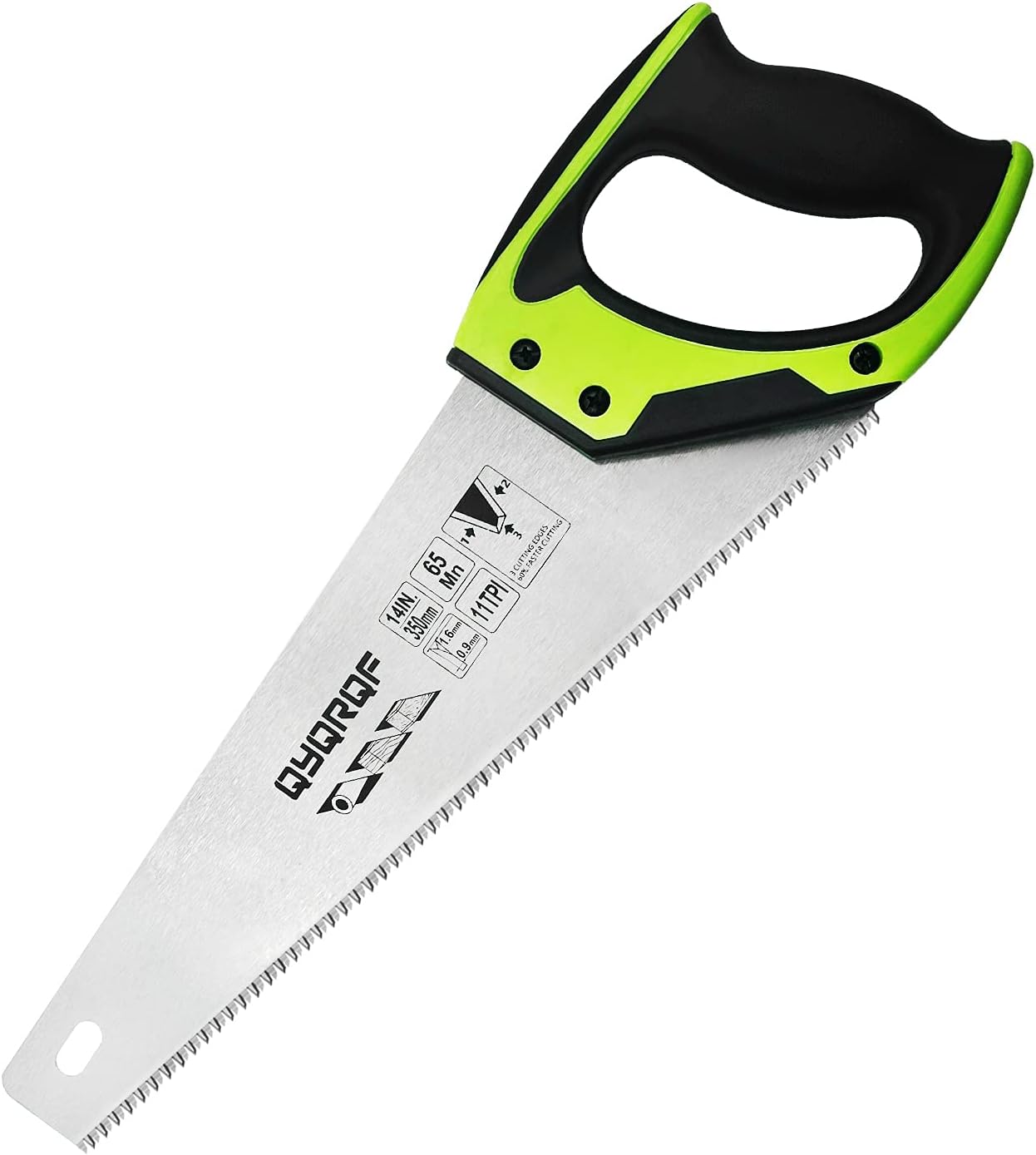
QYQRQF 14″ Hand Saw
- 14-inch hardpoint blade
- Cuts on push and pull
- Ergonomic non-slip grip
10 Models Side by Side: Features, Best Use Cases, and Tradeoffs
The recommendations above are our strongest matches for different priorities. Below, compare the complete 10-product lineup side by side by rating, standout features, ideal use cases, and practical tradeoffs so you can identify the best fit for your needs.
- 12-amp motor
- 4-position blade clamp
- Variable speed trigger
- 11-inch SK5 steel blade
- Aggressive 7 TPI teeth
- Folds for safe storage
- 14-inch hardpoint blade
- Cuts on push and pull
- Ergonomic non-slip grip

- Curved SK5 blade
- 7 TPI razor teeth
- Folds for compact carry

- 8-inch high carbon blade
- Triple-cut razor teeth
- Safety hand guard

- Brushless 160W motor
- Type-C fast charging
- Tool-free blade change
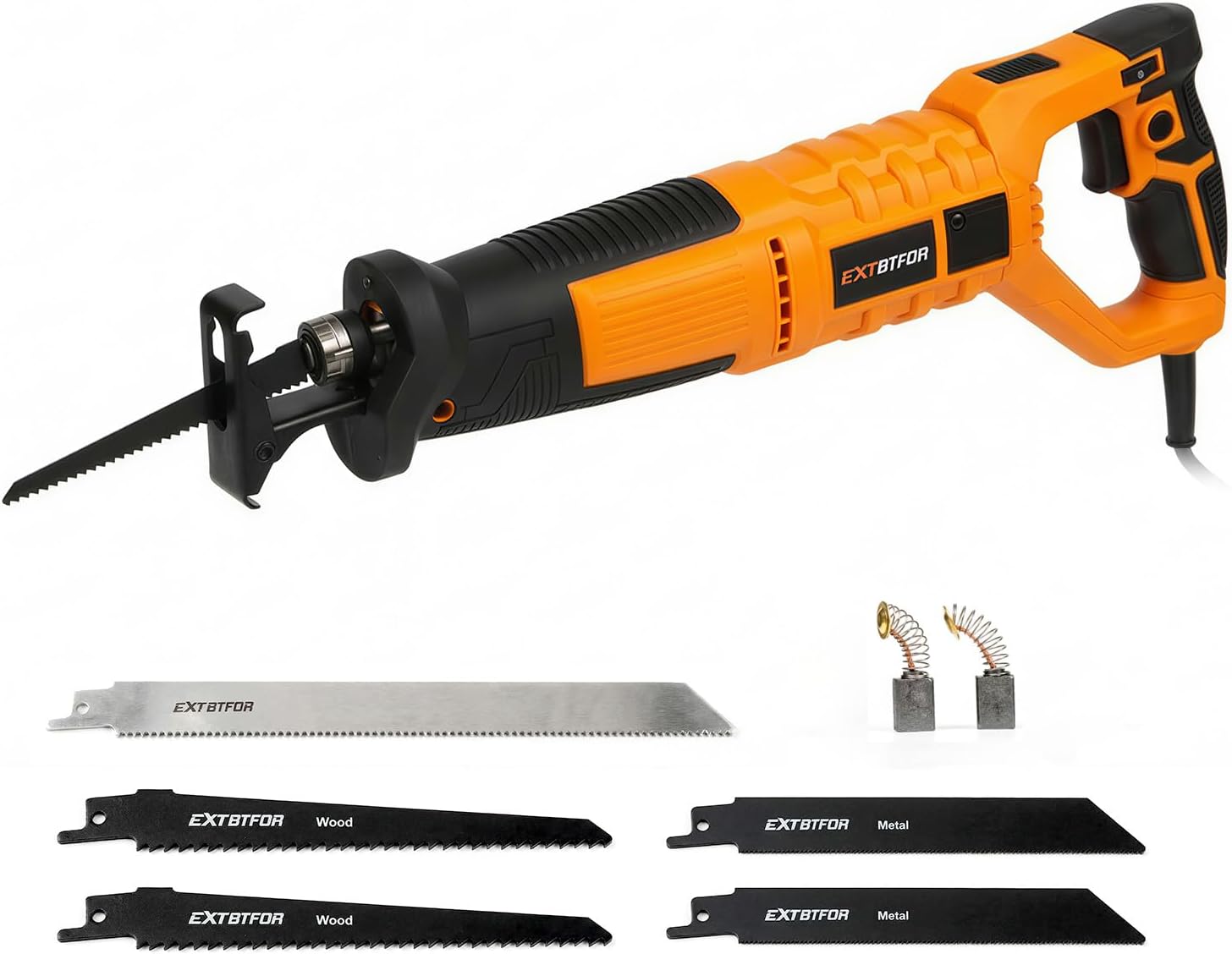
- 850W 7-amp motor
- 0-2800 RPM variable speed
- 5 blades included

- 8 HSS saw blades
- Lockback quick-change
- Cuts drywall, PVC, wood

- Two 4.0Ah batteries
- 8 blades included
- Tool-free blade change

- 8 replaceable blades
- Quick-change lockback handle
- Cuts wood, metal, PVC
10 Models Reviewed in Depth
#1. DEWALT DWE305 Recip Saw
Demolition Power
Flush Cutting
Limited Warranty
For cutting up a sofa, the DEWALT DWE305 is the tool you want. Its 12-amp motor and 1-1/8-inch stroke power through hardwood frame members, thick plywood, and upholstery layers without bogging down, and the 4-position blade clamp lets you cut flush against the floor or wall when extracting a couch. The variable speed trigger lets you start slow through fabric, then open it up.
The honest downsides: it’s corded, so you’ll need an outlet or extension cord, and at 8 pounds your arm will feel longer sessions. Blades are sold separately, so budget for a wood blade and a metal-cutting blade for springs. With a 4.8-star rating across nearly 4,000 reviews and a 3-year warranty, it’s the proven pick — skip it only if you truly need cordless freedom.
Pros
- Powerful 12-amp motor
- Flush-cut blade positions
- Proven 4.8-star reliability
Cons
- Corded only
- Heavier at 8 lbs
- Blades not included
Specifications
#2. REXBETI Folding Saw
Hardened Steel Blade
Fast Wood Cuts
Safe Storage
When you’re breaking down a sofa, the REXBETI’s 11-inch SK5 blade bites deep into frame wood and thick upholstery layers without stalling. The 7 TPI staggered teeth clear chips fast, so long pull strokes through plywood and 2×4 frame members stay smooth. The rubber-coated handle gives you a secure grip even when you’re leaning into a cut, and it folds down to stash in a toolbox.
The honest caveat: this is a wood-focused saw, so expect to work around metal staples and springs rather than through them. It’s also a slower, manual option compared to a reciprocating saw. If you’re cutting up one couch occasionally and want a cheap, reliable hand tool, it’s a great fit — skip it if you need to slice metal framing.
Pros
- Aggressive fast-cutting teeth
- Folds safely for storage
- Comfortable rubber grip
Cons
- Struggles with metal staples
- Manual cutting is slow
- Blade can’t be replaced easily
Specifications
#3. QYQRQF 14″ Hand Saw
Deep Reach Blade
Push and Pull
Heat-Treated Teeth
The 14-inch blade is the standout here — it reaches deep across a sofa’s frame members in a single stroke, which is exactly what you want when cutting up a couch. The hardpoint teeth cut on both push and pull strokes, roughly 50% faster than traditional handsaws, and deep gullets keep chips from clogging as you work through plywood and 2x4s.
The caveat: it’s a rigid straight saw, so tight interior cuts inside the frame are awkward, and like any hand saw it won’t touch metal springs or staples. The 11 TPI finish is smooth but not the fastest for rough demolition. If your teardown involves long, straight cuts through wood framing, this is a great manual choice — pair it with pliers for metal bits.
Pros
- Long 14-inch reach
- Cuts push and pull
- Low-friction coating
Cons
- Awkward in tight spots
- Can’t cut metal
- Fixed blade, no folding
Specifications
#4. Craft911 11″ Folding Saw
Pull-Cut Leverage
Razor Steel
Aggressive Teeth
The Craft911’s curved SK5 blade is genuinely useful for couch teardown — the curve lets you pull the saw toward yourself with more leverage, which helps when slicing through plywood decking and softwood frame rails. The 7 TPI razor teeth cut fast on the pull stroke, and the rubberized TPR handle stays comfortable during longer sessions.
The honest caveat: a curved blade is optimized for pull cuts on wood, so it’s less ideal for straight plunge cuts through thick upholstery sandwiches, and it won’t handle metal springs. It’s also a camping-first design, so there’s no blade-replacement ecosystem. If you want a sharp, aggressive manual saw that feels great in hand, it’s a strong pick — skip it if you need straight, deep demolition cuts.
Pros
- Aggressive razor teeth
- Leverage-friendly curve
- Comfortable TPR grip
Cons
- Curved limits straight cuts
- No replacement blades
- Not for metal
Specifications
#5. Uopyeri 8″ Folding Saw
Cut Safety
Razor Teeth
Secure Blade
The Uopyeri folding saw handles the lighter side of couch teardown well — slicing through plywood panels, particle board, and plastic trim with its triple-cut serrated edge. The safety hand guard and gear-lock keep your fingers away from the blade, which matters when you’re cutting at awkward angles inside a sofa frame. It folds to 9 inches for easy storage.
Be realistic about its limits: an 8-inch blade won’t reach deep into thick frame members, and it’s designed for wood and plastic, not metal springs. You’ll still need another tool for staples and brackets. If your couch is mostly plywood and softwood and you want a safe, compact manual saw, it’s a solid pick — skip it for heavy demolition jobs.
Pros
- Safety guard included
- Secure gear-lock blade
- Compact folding design
Cons
- Short 8-inch reach
- Not for metal parts
- Slower on thick frames
Specifications
#6. Fanttik R11 Pro Saw
Long Motor Life
Fast Charging
Tight-Space Cuts
The Fanttik R11 Pro shines for the fiddly parts of couch teardown — cutting PVC trim, plastic brackets, and thin plywood panels in tight spaces where a full-size recip saw won’t fit. The brushless motor and stepless speed dial give you fine control, the LED display shows battery and speed at a glance, and Type-C charging means you can top it up from any phone charger.
Be clear about the limits: the 3/4-inch max cutting depth means it can’t slice through thick 2×4 frame members in one pass, and the small battery drains on heavy cuts. It’s a precision helper, not a demolition tool. If you want a lightweight cordless saw for detail work and light materials, it’s great — skip it as your only saw for a full couch teardown.
Pros
- Ultra-compact and light
- USB-C convenient charging
- Smooth variable speed
Cons
- Only 3/4-inch depth
- Small battery capacity
- Not for thick frames
Specifications
#7. Extbtfor 7A Reciprocating Saw
Demolition Power
Speed Trigger
Wood and Metal
A reciprocating saw is the right tool for demolishing a couch, and this one’s 850W motor and 1-1/10-inch stroke chew through frame lumber, plywood, and upholstery quickly. The variable speed trigger lets you ease into fabric before ramping up, and the quick-release chuck makes swapping between the 6 TPI wood blades and 24 TPI metal blades simple when you hit springs.
The caveat: it’s a corded budget brand with only 134 reviews, so long-term reliability is a question mark, and the 360-degree handle takes some getting used to. You’ll also want a long extension cord for working away from the wall. If you want maximum cutting power for minimal spend on a one-off couch teardown, it delivers — skip it if you prefer a proven name brand.
Pros
- Powerful 850W motor
- Wood and metal blades
- Quick blade changes
Cons
- Cord limits reach
- Unproven brand
- No case included
Specifications
#8. TOOLAN 8-in-1 Hand Saw
Swap and Cut
Hardened Steel
Blade Compatibility
The TOOLAN is a favorite for odd jobs, and couch teardown is exactly that. Its 8 interchangeable blades cover wood frame members, drywall backing, plastic corners, and — with the right blade — metal brackets. The lockback mechanism accepts both large and small blades, and standard reciprocating-saw blades fit it, so replacements are easy to find anywhere tools are sold.
The honest limitation: it’s a manual pull-saw, so big demolition cuts take elbow grease, and thinner blades flex if you force them. At 2,494 reviews and a #2 handsaw rank, the track record is reassuring, though. If you want a cheap, do-everything hand saw for occasional furniture breakdown, it’s excellent value — skip it if you’re cutting multiple couches and need power-tool speed.
Pros
- Fits standard blades
- Very affordable kit
- Lightweight at 8.5 oz
Cons
- Manual cutting effort
- Thin blades flex
- Handle feels basic
Specifications
#9. TaskStar Cordless Recip Kit
Dual Batteries
Complete Kit
One-Hand Control
The TaskStar kit is genuinely ready out of the box for a couch teardown: two 4.0Ah batteries give you 40-60 minutes of runtime, and the 8 included blades cover wood frames, plastic, and metal springs. At just 2 pounds, you can hold it one-handed at awkward angles inside a sofa, and the built-in LED helps in dim corners under the frame.
The caveat: a 200W motor won’t match a corded 12-amp saw on thick hardwood frames, so expect slower progress on dense material. It’s also a newer brand with 144 reviews, so longevity is unproven — though the 2-year warranty helps. If you’re a beginner wanting a complete cordless kit for occasional demolition, it’s a smart buy — skip it for heavy daily use.
Pros
- Two batteries included
- Only 2 lbs light
- Full accessory kit
Cons
- Modest 200W power
- Newer brand
- Plastic-heavy build
Specifications
#10. Evertools 8-in-1 Saw
Multi-Material Kit
Cuts Springs
Lockback Handle
For sofa teardown, the Evertools kit gives you options: a coarse wood blade for the frame, a 24 TPI hacksaw blade for metal springs and brackets, and blades for PVC and plastic trim. The lockback clamping handle swaps blades in seconds, so you can move from upholstery to frame to spring without grabbing another tool.
The trade-off is that a hand-held clamp saw cuts slower than a dedicated saw, and with only 140 reviews, the long-term durability record is thin. The included work gloves are a nice touch for handling staples. If you want one cheap tool that covers every material in an old couch, this works well — skip it if you have a lot of cutting to do and value speed.
Pros
- Blades for every material
- Fast blade swapping
- Gloves included
Cons
- Slower than power saws
- Few reviews so far
- Clamp can loosen
Specifications
The Right Blade for Breaking Down a Sofa: A Buyer’s Walkthrough
Cutting up a sofa sounds simple until you’re halfway through the frame with a dull blade and a hand cramp. Sofas are a sandwich of hardwood, softwood, staples, fabric, foam, and sometimes metal springs — so the saw you choose (and how you use it) makes the difference between a twenty-minute job and a frustrating afternoon. A little thought before you buy saves a lot of sweat. If your couch is a recliner, our guide to taking a recliner sofa apart shows which sections detach before any cutting is needed.
What Separates a Clean Cut From a Struggle
- Blade type matters more than the saw itself. A demolition or reciprocating blade with coarse teeth chews through wood, staples, and the occasional nail without complaint. Fine-tooth blades meant for trim work will snag on fabric and dull fast.
- Portability and maneuverability. You’ll be cutting at odd angles in tight spaces — between cushions, under armrests. A compact saw, or a hand saw if you prefer going manual, gives you control where a big tool won’t fit.
- Power source. Corded tools deliver steady cutting without battery anxiety; cordless offers freedom to work anywhere, including curbside on pickup day. Match this to where you’ll actually do the work.
- Ease of blade changes. Old couches hide metal fasteners, and hitting one can ruin a blade. A tool that swaps blades quickly keeps the job moving.
- Sticking to your budget. This is a one-off task for most people, so resist overbuying. A modest, capable saw — or even a rental or borrowed tool — handles a single sofa just fine. Spend more only if you’ll reuse the tool for future projects.
- Safety features and handling. Look for comfortable grips, a stable shoe or base, and vibration control. Cutting up furniture means awkward positions; a tool that’s easy to hold reduces slips.
Pitfalls That Burn First-Time Furniture Dismantlers
- Skipping the inspection before cutting. Staple guns, springs, and metal brackets hide inside cushions and frames. Cut slowly and check as you go — one hidden nail can kick back a blade or wreck it.
- Buying a precision saw for a demolition job. Miter saws and fine-finish tools are overkill and awkward here. This is rough work; choose a rough-cut tool.
- Forgetting about disposal logistics. Some trash services require pieces under a certain size — check first so you cut to the right dimensions and don’t have to saw twice.
Pick a rugged, maneuverable saw with the right blade, work patiently, and that sofa will be curbside before you know it.
Cutting Up a Sofa: Which Saw Gets the Job Done?
For most people, the DEWALT DWE305 reciprocating saw is the clear winner — raw power and variable speed make short work of sofa frames, springs, and staples. If you’d rather skip cords and batteries entirely, the 14-inch Pro Hand Saw or the REXBETI folding saw handle the job with old-school reliability, while the Fanttik R11 Pro and TaskStar cordless models are ideal for quick, grab-and-go teardowns. Tight on cash? The 7-Amp reciprocating saw and the 8-in-1 multi-blade hand saws deliver serious value without sacrificing capability.
Whatever your style — power tool or hand saw — there’s a pick here that fits your budget. Scroll up and hit those buttons to check current prices and availability before your sofa becomes firewood.
Final 3 Picks: Overall Demolition, Frame Cutting, and Long-Reach Saw
Ready to decide? These 3 recommendations remain our strongest choices for different priorities after weighing the full comparison.
DEWALT DWE305 Recip Saw
- 12-amp motor
- 4-position blade clamp
- Variable speed trigger
REXBETI Folding Saw
- 11-inch SK5 steel blade
- Aggressive 7 TPI teeth
- Folds for safe storage
QYQRQF 14″ Hand Saw
- 14-inch hardpoint blade
- Cuts on push and pull
- Ergonomic non-slip grip