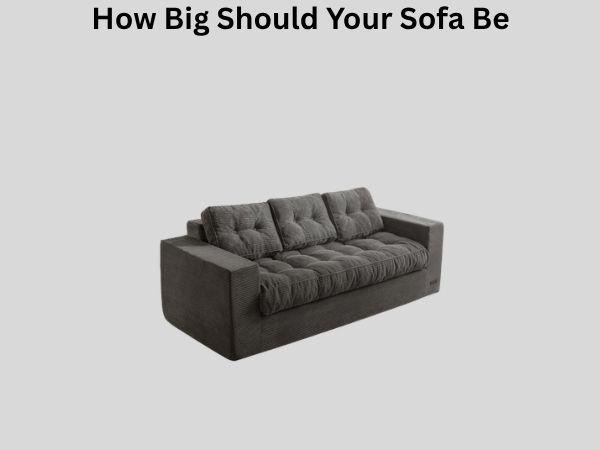
How Big Should Your Sofa Be? 5 Rules for the Right Fit
Let me ask you something: have you ever walked into a furniture store, spotted what looked like the perfect sofa, only to get it home and realize it completely dominates your living room? Or worse, you bought something that felt cramped and uncomfortable for your whole family? Yeah, I’ve been there too. Choosing the right sofa size isn’t just about finding something that looks pretty—it’s about understanding your space, your lifestyle, and what actually works for you.
The truth is, there’s no one-size-fits-all answer when it comes to sofa dimensions. What works beautifully in your friend’s spacious loft might be a complete nightmare in your cozy apartment. That’s why I’m breaking down everything you need to know about selecting the perfect sofa size for your home.
Understanding Your Space: The Foundation of Everything
Before you even think about sofa dimensions, you need to get intimate with your living room. I mean really intimate. Grab a measuring tape and start taking notes. Your space is going to be the ultimate deciding factor in what size sofa actually makes sense.
Measure Your Room Thoroughly
Here’s what I want you to do: measure the length and width of your living room. Don’t just eyeball it—actually use a tape measure. Then, identify where your sofa is going to live. Is it going against the longest wall? Near a window? Between doorways? These details matter tremendously.
Once you’ve got those measurements, write them down. Take photos of your room from different angles. You’ll thank yourself later when you’re trying to visualize how a specific sofa will fit.
Consider Traffic Flow and Movement
Here’s something most people overlook: how people move through your space. Imagine yourself walking from your front door to your kitchen. Does that path go right through your living room? If your sofa is too big, you’ll create a bottleneck that makes your home feel cramped and annoying to navigate.
Think of your sofa as a piece of furniture that should enhance movement, not impede it. You want people to be able to walk comfortably around it without doing an awkward dance or squeezing through tight spaces.
Rule 1: The 60-Percent Rule for Wall Space
Let me introduce you to what I call the 60-percent rule. This is a game-changer for most people trying to figure out sofa sizing.
What This Rule Actually Means
Your sofa should generally occupy about 60 percent of the wall it’s against. Not more, not less—aim for that sweet spot right around 60 percent. Why? Because this proportion creates visual balance in your room while leaving enough space on either side to prevent a cramped feeling.
For example, if you have a wall that’s 15 feet long, your sofa should be roughly 9 feet. If your wall is 12 feet, you’re looking at a sofa around 7 to 8 feet. This simple formula prevents you from buying something either too small (which looks lonely) or too large (which overwhelms the space).
How to Apply This to Your Space
Take that wall measurement and multiply it by 0.6. Write down that number. Now, when you’re shopping for sofas, use that number as your target length. This isn’t an exact science, but it’s a reliable starting point that works for most living rooms.
Keep in mind that this rule applies best to the primary wall where your sofa will sit. If you’re placing your sofa in the middle of a room or in an unusual configuration, you might need to adjust accordingly.
Rule 2: Understanding Depth and Comfort
Length isn’t everything when it comes to sofa sizing. Depth—that’s how far your sofa extends from the wall into the room—plays an equally important role in both comfort and aesthetics.
Standard Depth Measurements Explained
Most sofas come in depths ranging from 28 to 40 inches. Let me break down what these actually mean for you:
- Shallow sofas (28-32 inches): These are sleek and formal-looking. Perfect if you have a smaller space or want that modern, clean aesthetic. They won’t eat up much of your room but might feel a bit snug if you like to sprawl out.
- Medium-depth sofas (32-36 inches): This is the Goldilocks zone for most people. It offers solid comfort without monopolizing your entire living room. It’s what I’d call the sweet spot.
- Deep sofas (36-40 inches): These feel incredibly comfortable and cozy. They’re perfect if you love sinking into your sofa with a good book. Just remember, they’ll dominate your space more than shallower options.
Think About Your Lifestyle
Do you spend your evenings lounging on the sofa with your family? Are you someone who likes to curl up with your feet tucked under you? Or do you use your sofa primarily for entertaining guests and formal sitting? Your answers to these questions should influence whether you go shallow, medium, or deep.
Rule 3: The Arm Height and Back Height Factor
Here’s something people constantly underestimate: arm height and back height matter way more than you might think. They affect not just how your sofa looks in your space, but also how it functions in your daily life.
Why Arm Height Matters
Low arms (8-12 inches) make a sofa feel more open and airy. They’re perfect for contemporary spaces and small rooms because they don’t visually block your sightline. High arms (12-18 inches) create a more enclosed, cozy feeling. They’re great if you like support and that enveloping comfort.
But here’s the thing: if your sofa has high arms and you also have a high back, the entire piece becomes much more imposing in your space. It’ll take up visual weight beyond just its physical dimensions. For smaller rooms, this is something to seriously consider.
Back Height Considerations
Low-back sofas (under 30 inches) feel spacious and modern. High-back sofas (over 30 inches) feel luxurious and contained. If your space has high ceilings and is fairly open, a high-back sofa works beautifully. In a cozier apartment, a lower back might feel less overwhelming.
Rule 4: Seating Capacity Versus Actual Usability
Just because a sofa says it seats five people doesn’t mean five people will be comfortable sitting on it. Let’s talk about what you actually need versus what manufacturers claim.
The Reality of Seat Width
A standard seat cushion is about 20-24 inches wide. So a sofa that’s supposed to seat three people needs to be at least 84 inches wide, and that’s without accounting for the arms. When you add in arm width on both sides, you’re easily looking at a 100-inch minimum for true three-person comfort.
Four-person sofas? They’re typically 120 inches or longer. Five-person sofas can exceed 150 inches easily. Before you get excited about a five-seater, honestly ask yourself: do you actually have space for something that long? Or are you buying something that nobody will want to sit on because it’s too crowded?
Quality Over Quantity
Here’s my honest take: I’d rather have a comfortable three-person sofa that my family actually enjoys using than a huge five-person sectional where nobody sits on the middle cushion because they get squished. Buy based on how many people will actually sit on it simultaneously in your home, not on wishful thinking or entertaining scenarios that happen twice a year.
Rule 5: The Space Around Your Sofa Matters
Your sofa doesn’t exist in a vacuum. What you place around it—your coffee table, TV stand, bookshelves—all contributes to whether your space feels balanced or cluttered.
Coffee Table Proportion
Your coffee table should be roughly two-thirds the length of your sofa. If your sofa is 8 feet long, your coffee table should be about 5 feet long. This creates visual balance. A tiny table in front of a huge sofa looks awkward. A giant table in front of a small sofa overwhelms the seating.
Clearance Space Is Your Friend
You want at least 12-18 inches of clear space between the back of your sofa and the wall (if it’s not built-in), and at least 12-18 inches between your sofa and a coffee table. This breathing room prevents your space from feeling cramped and allows for proper circulation.
Different Sofa Styles and Their Size Implications
Not all sofas are created equal. Different styles have different spatial footprints, and understanding this can guide your decision.
Sectional Sofas: The Space Hogs
Sectionals are basically the SUVs of the sofa world. They take up serious floor space, but they also provide serious seating and flexibility. Before you buy a sectional, measure your space meticulously. These pieces are often difficult to return or exchange because of their size. An L-shaped sectional can easily consume a corner that would comfortably fit a regular sofa and a couple of chairs instead.
Lovesesats: The Underestimated Option
A loveseat is typically 52-72 inches wide. People often dismiss loveseats, but honestly? A loveseat paired with a couple of accent chairs might be the perfect solution for a space where a full-size sofa would be overkill. Plus, you get more flexible seating arrangements.
Sleeper Sofas: The Compact Option
If you need a sofa that doubles as a guest bed, sleeper sofas are your answer. These tend to be more compact than traditional sofas because they need to accommodate the bed mechanism. Just remember: they’re trickier to set up and take down, so factor in practical considerations beyond just size.
Room Configuration and Furniture Layout
How you arrange your entire room affects what size sofa actually works.
The Floating Sofa Approach
Some people place their sofa in the middle of the room rather than against a wall. This works beautifully for large, open spaces. It creates distinct zones and can make a big room feel cozier. If you’re floating your sofa, you need to ensure there’s still adequate space to walk around it comfortably. You’re looking at needing about 2.5-3 feet of space on the sides and back.
Wall-Against Placement
This is the traditional approach and usually the best for smaller spaces. Your sofa against the wall anchors the room and frees up floor space in the center. This configuration helps the room feel less cramped and allows for easier movement.
Ceiling Height and Visual Scale
I know this sounds odd, but your ceiling height genuinely affects whether a sofa looks right in your space.
High Ceilings Equal More Forgiveness
If you have soaring, high ceilings—think 12 feet or more—you can get away with taller, more substantial sofas without them feeling overwhelming. A high-back, deep sofa in a room with 10-foot ceilings looks proportionate. That same sofa in a room with 8-foot ceilings might feel like it’s swallowing the space.
Lower Ceilings Require Strategy
In rooms with standard or lower ceilings, lighter-colored sofas with lower backs and thinner arms make the space feel more open and airy. You’re essentially creating visual space where physical space is limited.
Practical Shopping Tips for Getting the Right Size
Alright, let’s talk about actually shopping for your sofa with all this knowledge in mind.
Create a Template
Before you even step foot in a furniture store, create a full-scale template of your sofa on the floor of your living room using painter’s tape. Seriously—outline exactly where the sofa will be and how much space it’ll take up. Then live with it for a day. Walk around it. See how it feels. This is the most realistic way to visualize the final result.
Take Photos for Reference
When you find a sofa you’re considering, take photos in the store. Note the dimensions, the color, the fabric type. Take multiple photos from different angles. When you’re home later, look at these photos in the context of your space. Does it feel right?
Know Your Return Policy
Some furniture retailers have generous return policies for sofas. Know what you’re dealing with before you buy. Sometimes paying a bit more for a retailer with a good return policy is worth the peace of mind.
Special Considerations for Apartments and Small Spaces
If you’re living in a smaller space, sofa selection becomes even more critical.
The Apartment Dweller’s Dilemma
Apartment living often means navigating tight hallways, narrow doorways, and modest square footage. Before buying any sofa, verify that it can actually fit through your building’s entry. Seriously—nothing is worse than discovering your beautiful new sofa won’t fit through the front door.
Consider modular sofas that come in separate pieces. These are easier to maneuver through tight spaces and offer flexibility in your layout. You can add or remove sections as your life changes.
Multipurpose Furniture Thinking
In tight spaces, every piece of furniture needs to earn its spot. Does your sofa have storage underneath? Can it accommodate a guest bed? Could you pair it with a couple of lightweight chairs that tuck away easily? These questions matter when square footage is precious.
Material and Color: How They Affect Size Perception
This might seem off-topic, but it genuinely matters: what your sofa is made of and what color it is affects how large it appears in your space.
Light Colors and Visual Space
A light-colored sofa (cream, beige, light gray) creates the illusion of more space. Dark colors absorb light and make a sofa feel heavier and more imposing. If your room is on the smaller side, a light-colored sofa actually makes it feel bigger, even if the sofa itself is the exact same size as a dark one.
Fabric Type and Visual Weight
A sleek leather or microfiber sofa feels less bulky than a chunky, overstuffed fabric sofa. If you’re worried about size, sleeker materials can help a sofa feel less visually heavy in your space.
The Future-Proofing Factor
One more thing to consider: your living situation might change. Are you planning to move in the next five years? Will your family grow? These future considerations should influence your sofa choice.
Flexibility for Future Changes
Buying a sofa that works for your space right now is important, but also think about whether it’ll work if you move to a different apartment or house. A modular sofa or a standard rectangular shape works in more spaces than an oddly-shaped sectional.
Conclusion
Choosing the right sofa size isn’t rocket science, but it does require thoughtfulness and


![10 Best Budget Sofa Reddit [2026]](https://hometopaccesories.com/wp-content/uploads/2026/08/10-best-budget-sofa-reddit-2026-featured-768x432.jpg)