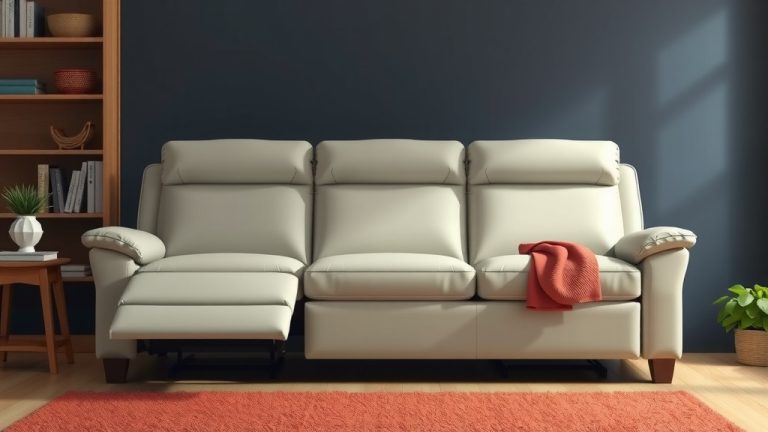
How Big is a Sofa? Standard Dimensions and Sizing Explained
When you’re shopping for a new sofa, have you ever stood in a furniture showroom feeling completely overwhelmed by the sheer variety of sizes available? You’re not alone. Understanding sofa dimensions is crucial because buying the wrong size can turn your living room into an awkward space where your new furniture either dominates the room or gets swallowed up by it.
Let me walk you through everything you need to know about sofa sizes, from the standard measurements to how to pick the perfect fit for your home.
Understanding Sofa Dimensions: The Basics
Think of a sofa like a puzzle piece—it needs to fit perfectly into your living space to create balance and comfort. Every sofa has three main dimensions that matter: length, depth, and height. These measurements determine whether a sofa will be a dream addition to your home or a nightmare that you’re stuck with.
What Do Sofa Measurements Mean?
Let’s break down what each measurement actually represents. The length is how wide the sofa is when you’re looking at it straight on—basically the distance from one armrest to the other. The depth is how far back the sofa extends from the front edge to the back cushions. Finally, the height is measured from the floor to the top of the backrest. Got it? Great, now let’s talk about what these numbers actually look like in practice.
Standard Sofa Sizes: What Manufacturers Use
Here’s something interesting: there’s no universal standard for sofas. Different manufacturers use different measurements, which means a “medium” sofa from one brand might be quite different from another. However, most sofas do fall into recognizable categories that can guide your shopping.
Small Sofas and Loveseats
If you’re working with limited space, a small sofa might be exactly what you need. Small sofas typically range from 72 to 84 inches in length. A loveseat—which is designed for two people—usually measures around 52 to 72 inches wide. The depth on these compact options generally ranges from 28 to 36 inches, and the height sits between 30 to 36 inches.
- Perfect for apartments and studio spaces
- Easier to maneuver through doorways and hallways
- Generally more affordable than larger models
- Ideal for creating cozy seating nooks
Medium Sofas: The Sweet Spot
Most families find their home with a medium-sized sofa. These versatile pieces typically measure between 84 and 102 inches in length. Why is this range so popular? Because it strikes that perfect balance between comfort and practicality. A medium sofa usually has a depth of 36 to 40 inches and a height ranging from 32 to 36 inches.
These sofas comfortably seat three full-sized adults, making them ideal for family living rooms. They’re large enough to feel substantial but not so enormous that they overwhelm a standard-sized room.
Large and Sectional Sofas
Now we’re entering territory that commands attention. Large sofas exceed 102 inches in length and can stretch anywhere from 120 to over 200 inches if you’re looking at sectional configurations. These giants typically have depths of 40 to 45 inches and heights between 34 to 38 inches.
Sectional sofas are like the ultimate comfort investment. They can be L-shaped, U-shaped, or arranged in various configurations. Some even include chaise lounges, which add another 60 to 80 inches to the overall length.
Breaking Down the Details: Height, Depth, and Width
Understanding how each dimension affects your experience is essential. You can’t just look at length and call it a day—the other measurements matter just as much.
Sofa Height and Comfort
Have you ever sat on a sofa where your feet barely touched the floor? That’s a height issue. Standard sofa heights range from 30 to 38 inches, measured from the floor to the top of the cushions (not the backrest). This range works well for most people, but there are variations.
Lower sofas, around 30 to 32 inches, create a modern, minimalist look. They’re often perceived as more luxurious and can make a room feel more spacious. However, shorter people or elderly individuals might find them difficult to get in and out of.
Standard-height sofas at 33 to 36 inches are the most common and practical choice for general use. They’re easier for people of various heights to sit on comfortably.
High-Back vs. Low-Back Sofas
The backrest height is separate from the cushion height. High-back sofas with backrests around 40 inches or taller provide excellent neck and head support. Low-back sofas with backrests under 32 inches create a more open, contemporary feel and make rooms appear larger.
Depth: The Often-Overlooked Measurement
Sofa depth is where many people make mistakes. A shallow sofa with 28 to 32 inches of depth looks elegant and doesn’t eat up floor space, but you might sink back too far or feel uncomfortable if you like to recline. These work wonderfully in narrow spaces or living rooms where you need to maintain traffic flow.
Standard depth sofas measuring 36 to 40 inches are the Goldilocks of the sofa world—just right for most people. You can sit upright comfortably, and there’s enough room to stretch out a bit.
Deep sofas exceeding 40 inches are absolute lounging champions. They’re incredibly comfortable for relaxing and watching movies, but they require a larger room to avoid feeling cramped.
Measuring Your Space: The Critical First Step
Before you even look at sofas online or in a store, you need to measure your room. This is non-negotiable if you want to avoid costly mistakes.
Key Measurements to Take
- Measure the width of doorways and hallways the sofa must pass through
- Calculate the distance from the wall where the sofa will sit to the opposite wall
- Account for other furniture pieces already in the room
- Note the height of windows and any architectural features
- Measure angles if your space has unique wall configurations
The Golden Rule for Room Proportion
Here’s a helpful guideline: your sofa shouldn’t occupy more than two-thirds of the wall length. This leaves space for end tables, plants, or wall décor. If your wall is 15 feet wide, ideally your sofa should be around 10 feet or less. This creates visual balance and makes your room feel intentional rather than cramped.
Different Sofa Styles and Their Typical Dimensions
Various sofa styles come with their own sizing tendencies. Understanding these can help you narrow down your choices.
Modern and Contemporary Sofas
Modern sofas tend to be sleeker, with cleaner lines and often lower profiles. Expect depths around 32 to 40 inches and heights from 30 to 35 inches. These sofas prioritize style and spatial efficiency.
Traditional and Formal Sofas
Classic designs often feature rolled arms, decorative detailing, and more substantial proportions. These typically run deeper at 38 to 44 inches with heights ranging from 34 to 40 inches. They make a bold statement and usually require spacious rooms.
Oversized and Comfort-Focused Sofas
If comfort is your primary concern, oversized sofas are calling your name. These generous pieces commonly measure 110 inches or longer in length with depths of 42 to 48 inches. They’re pure indulgence wrapped in upholstery.
Apartment and Compact Sofas
Designed specifically for small spaces, these efficient sofas range from 60 to 75 inches in length with narrow depths of 26 to 32 inches. Don’t let the small size fool you—many are surprisingly comfortable and surprisingly stylish.
Sectionals: Understanding Complex Dimensions
Sectional sofas deserve special attention because they’re more complex than traditional sofas. A sectional isn’t just one piece—it’s a configuration of multiple pieces working together.
L-Shaped Sectionals
An L-shaped sectional consists of a main sofa section and a chaise or return section meeting at a right angle. The overall footprint depends on how you configure it. If the main section is 90 inches and the chaise is 60 inches, your total L-shaped footprint will be roughly 90 by 60 inches—substantial, but organized.
U-Shaped Sectionals
U-shaped sectionals wrap around, creating cozy conversation areas. These can easily exceed 150 inches in total length when you account for all sides. They’re statement pieces that require dedicated, spacious rooms.
Chaise Lounges
A chaise lounge extension adds roughly 60 to 80 inches to your sectional’s footprint. It’s perfect for lounging with your feet up, but you need to ensure your room can accommodate the extra length.
How to Measure a Sofa at the Store or in Photos
When you’re shopping, knowing what to measure ensures you get accurate information about the piece you’re considering.
Taking Accurate Measurements
Start by measuring the width from the outermost point of one armrest to the outermost point of the other armrest. This gives you the total width of the sofa. Next, measure the depth from the very front of the seat cushion to the very back of the sofa. Finally, measure the height from the floor to the highest point of the backrest.
Don’t forget to ask about seat height specifically—the height from the floor to the top of the seat cushion—as this affects how easily you can sit down and stand up.
Questions to Ask Sales Associates
- What’s the exact seat height, not just the total height?
- How much does the sofa weigh?
- Can the arms be removed to fit through tight doorways?
- What’s the cushion firmness rating?
- Are there different depth options available?
Considering Doorways and Hallways
A sofa that’s perfect for your room is useless if you can’t get it into your room. This is why doorway measurements are absolutely critical.
The Diagonal Measurement Trick
Here’s a practical solution: many sofas can be angled diagonally to fit through doorways and down hallways. Measure the diagonal distance by finding the width and height of your doorway, then calculate: width squared plus height squared, then take the square root. For a standard 36-inch-wide by 80-inch-tall doorway, the diagonal is approximately 87 inches. This means a sofa about 85 inches long could potentially fit diagonally.
When a Sofa Won’t Fit
Some sofas have removable legs or detachable arms that can help during delivery. Always ask about this before assuming a sofa is impossible to deliver. Professional movers are experienced at creative solutions, but knowing your options in advance saves stress and expense.
The Impact of Armrests and Legs on Overall Size
Here’s something many people overlook: armrests and legs affect how much space a sofa actually occupies.
Armrest Considerations
Rolled arms typically add 6 to 8 inches to the overall depth. Track arms are shallower at 3 to 5 inches. Sleek, modern arms might add as little as 2 to 3 inches. If your space is tight, every inch counts, so armrest style should influence your decision.
Leg Height and Floor Space
Sofas with exposed legs create visual lightness because you can see the floor underneath. They typically sit on legs that are 4 to 12 inches tall. Sofas with enclosed bases or skirts that touch the floor make a room feel more formal and traditional but can make cleaning underneath more challenging.
Budget Considerations and Sizing
Here’s the economic reality: larger sofas cost more. But that’s not always the right factor in your decision.
A well-made, properly-sized medium sofa that fits your space perfectly is a better investment than an oversized bargain that overwhelms your room or doesn’t fit through your door. Think long-term comfort and functionality rather than short-term savings.
Custom vs. Standard Sizes
Many furniture makers offer custom sizing options. If you’re willing to wait and invest a bit more, you can get a sofa that’s perfectly proportioned for your exact space. Standard sizes might be cheaper and quicker, but custom options solve those awkward spatial challenges.
Making Your Final Decision
After measuring your space, understanding standard dimensions, and evaluating your lifestyle needs, you’re ready to choose. Here’s a simple checklist:
- Does it fit through my doorways and hallways?
- Does it fit in my room without overwhelming the space?
- Is the seat height comfortable for my household’s average heights?
- Is the depth suitable for my relaxation style?
- Does the style match my home’s aesthetic?
- Does the size match my actual lifestyle and usage?
- Is it within my budget?
Conclusion
Understanding sofa dimensions isn’t just about numbers—it’s about creating a space where you genuinely want to spend time. A small sofa measuring 72 to 84 inches works beautifully in a compact apartment, while a large sectional exceeding 120 inches becomes the centerpiece of a spacious family room. The key is matching the dimensions to your specific space and lifestyle.
Before you make a purchase, take those measurements seriously, consider how you actually use your living room, and think about the visual balance you want to create. A sofa that fits perfectly—both physically and aesthetically—becomes more than just furniture. It becomes the gathering place where
![10 Best Budget L Shape Sofa [2026]](https://hometopaccesories.com/wp-content/uploads/2026/08/10-best-budget-l-shape-sofa-2026-featured-768x432.jpg)



![10 Best Cloud Like Sofa [2026]](https://hometopaccesories.com/wp-content/uploads/2026/09/10-best-cloud-like-sofa-2026-featured-768x432.jpg)