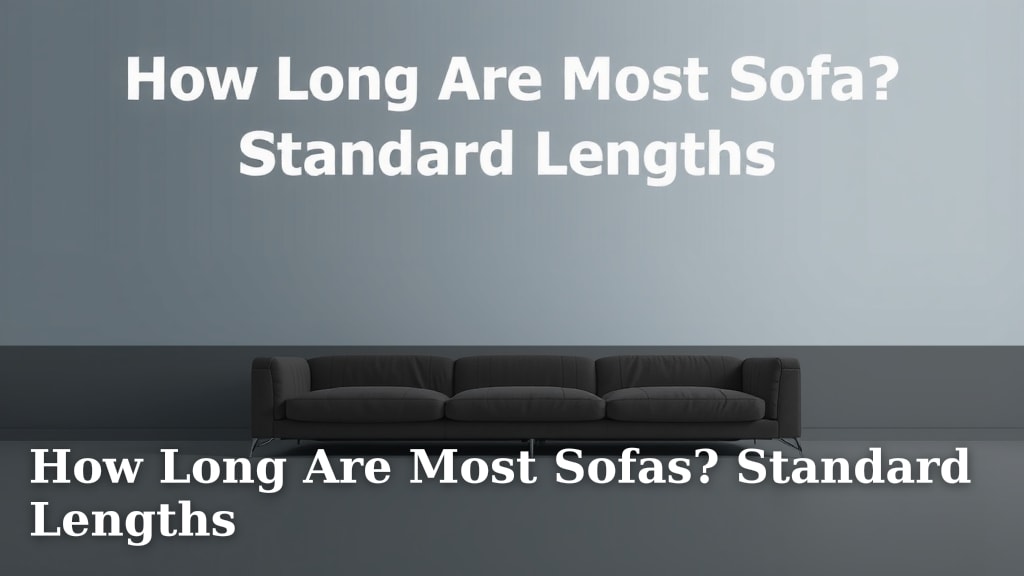
How Long Are Most Sofas? Standard Lengths
Most sofas fall within a standard length range of 70 to 90 inches. This is the most common size you’ll find for a typical three-seater sofa. Many factors can influence the exact length, including the style and design of the sofa. We’ll help you navigate these options.
When shopping for a sofa, understanding standard dimensions is key. While 70-90 inches is the norm, you’ll also see options ranging from smaller loveseats to larger sectional pieces. Keep in mind that **sofa length** isn’t the only measurement to consider; depth and height are also important for fit and comfort. We found that measuring your space first is always a smart move.
- Most three-seater sofas are 70-90 inches long.
- Loveseats are shorter, usually around 50-70 inches.
- Sectionals can be much larger, often exceeding 100 inches.
- Always measure your space before buying.
Let’s break down the typical lengths for different types of sofas so you can find the perfect fit for your living room.
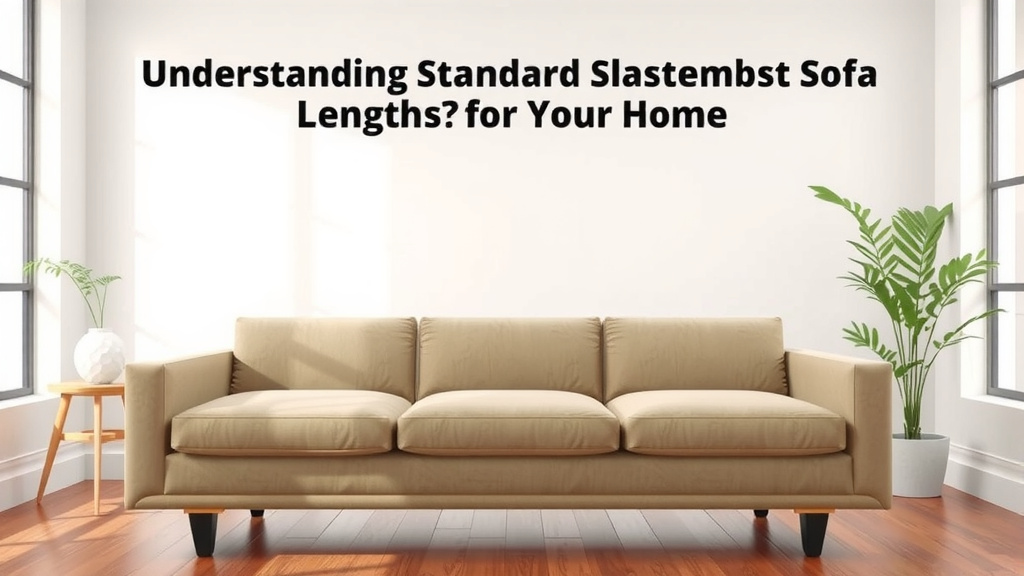
Understanding Standard Sofa Lengths for Your Home
So, how long are most sofas, really? You’re probably curious about the typical dimensions before you start measuring your living room. Most common three-seater sofas usually measure between 70 and 90 inches. This range covers a wide variety of styles and designs, making it a good starting point for your search.
What Exactly is a “Standard” Sofa Length?
When we talk about a “standard” sofa, we’re generally referring to a piece designed to comfortably seat three people. These are the workhorses of living rooms. Their length is measured from the outside of one armrest to the outside of the other armrest. This measurement is key, as it dictates how much floor space the sofa will occupy.
The 70-90 Inch Sweet Spot
Research consistently shows that the majority of these three-seater models fall into the 70- to 90-inch range. Think of it like a universal shoe size; there’s a common size that fits most people. This is a good place to start when you’re thinking about how a sofa will fit into your existing space. It offers enough room for a few people without overwhelming a smaller room.
Beyond the Standard: Loveseats and Compact Options
What if a full-sized sofa feels a bit too much for your area? You’re in luck! Smaller options are readily available. These are perfect for apartments, smaller dens, or even as a companion piece in a larger living room. They provide seating without taking up too much real estate.
Loveseat Dimensions
Loveseats are designed for two people. Their lengths typically range from about 50 to 70 inches. This makes them significantly shorter than a standard sofa. If you’ve ever sat on a loveseat, you know it’s cozy for two but can feel a little snug for three. They are great for creating intimate seating arrangements.
Apartment-Sized Sofas
Some manufacturers offer sofas specifically marketed as “apartment size” or “small space sofas.” These often aim to fit within the shorter end of the standard range or just below it, perhaps around 60 to 75 inches. They might have slimmer arms or a more streamlined design to maximize seating in a compact footprint. It’s all about clever design for smaller areas.
When Bigger is Better: Larger Sofas and Sectionals
On the flip side, sometimes you need more seating. Maybe you have a large family, love to entertain, or just enjoy sprawling out. In these cases, larger sofas and sectionals come into play. Their lengths can vary dramatically, often exceeding the typical range. They are statement pieces that can define a room.
Oversized Sofas
Some sofas are built with extra width, sometimes referred to as “oversized” or “generous.” These can easily extend beyond 90 inches, sometimes reaching 100 inches or more. They often feature deeper seats and plush cushions, offering a more luxurious lounging experience. Think of them as the roomy SUVs of the sofa world.
The Mighty Sectional
Sectionals are where sofa lengths can truly skyrocket. Because they are modular pieces joined together, their total length can be quite extensive. A typical L-shaped sectional, for instance, can easily measure 100 inches on one side and 120 inches on the other, or even much larger. U-shaped sectionals can be even more expansive. Their configurations are adaptable, but their sheer size is their defining characteristic.
Factors Influencing Sofa Length
It’s not just about the number of seats. Several design elements can affect the overall length of a sofa. Understanding these can help you better interpret the dimensions you see on product tags. It’s like understanding why one car might look longer than another, even if they have similar engine sizes.
Arm Style Matters
The style of the armrests plays a significant role. A sofa with wide, rolled arms will naturally be longer than a sofa of the same seating width that features slim, track arms. We found that slim or armless designs can shave off several inches from the total length. Always check the overall dimensions, not just the seat width.
Legs and Base Design
While usually a smaller factor, the way a sofa is constructed can also impact length. A sofa with a chunky, solid base might appear shorter than one on slender, tall legs, even if the internal seating space is similar. Manufacturers design these elements to contribute to the sofa’s aesthetic appeal.
A Quick Comparison Table
To make things super clear, here’s a handy table showing typical length ranges. Remember, these are general guidelines, and individual pieces can vary. Always double-check the product specifications for the exact measurements.
| Sofa Type | Typical Length Range (inches) | Best For |
|---|---|---|
| Loveseat | 50 – 70 | Cozy seating for two, small spaces |
| Standard 3-Seater Sofa | 70 – 90 | Most living rooms, family seating |
| Oversized Sofa | 90+ (often 90-100+) | Large rooms, deep lounging |
| Sectional (total length) | 100+ (highly variable) | Large gatherings, maximizing seating, defining spaces |
Your Sofa Shopping Checklist
Before you fall in love with a sofa online or in-store, make sure it’s the right fit. Here’s a quick checklist to help you:
- Measure your room’s available space accurately.
- Note doorways and hallways for delivery access.
- Consider the sofa’s depth and height, not just length.
- Think about how many people you need to seat regularly.
- Visualize the sofa in your room to ensure proper scale.
Conclusion
You’ve learned that most three-seater sofas fall between 70 and 90 inches, but sizes vary greatly for loveseats, oversized sofas, and sectionals. Remember, arm style and design can also impact the overall length. Don’t just look at the numbers; visualize how a sofa will fit in your home. Measure your space carefully, consider doorways for delivery, and think about your seating needs. Your next step is to grab your tape measure and head to the store or start browsing online with your new knowledge!
Frequently Asked Questions
Can I find a sofa shorter than 70 inches?
Yes, absolutely! For smaller spaces or a more intimate feel, you can look at loveseats, which typically range from 50 to 70 inches. Apartment-sized sofas are also often found in the 60-75 inch range, designed with compact living in mind.
How do I measure my sofa space accurately?
Use a tape measure to get the maximum length and width of the area where you plan to place the sofa. Also, measure doorways, hallways, and stairwells to ensure the sofa can actually be delivered to your room. Don’t forget to account for any other furniture or walkways.
Are sofa lengths measured with or without the arms?
Sofa length is always measured from the outermost point of one armrest to the outermost point of the other armrest. This overall dimension is what determines how much floor space the sofa will occupy in your room. Seat width is a separate measurement.
What makes an “oversized” sofa longer than a standard one?
Oversized sofas are often designed for a more luxurious lounging experience. They might have deeper seats, plusher cushions, and wider armrests, all contributing to an overall length that frequently exceeds 90 inches, sometimes reaching 100 inches or more.
How can slim arms affect the sofa length?
Slim or track arms take up less space than bulky, rolled, or pillow-top arms. This means a sofa with slim arms can be several inches shorter overall than another sofa with the exact same seating width but much wider arms. Always check the total dimensions listed.
![10 Best Conditioner For Leather Sofa [2026]](https://hometopaccesories.com/wp-content/uploads/2026/09/10-best-conditioner-for-leather-sofa-2026-featured-768x432.jpg)
![10 Best Back Support Cushion For Sofa [2026]](https://hometopaccesories.com/wp-content/uploads/2026/08/10-best-back-support-cushion-for-sofa-2026-featured-768x432.jpg)