
What’s a Normal Sofa Length? Your Buying Guide
A normal sofa length typically falls between 70 to 90 inches. This is a good starting point for most living rooms. However, the “normal” size can vary depending on the style and your specific needs. We found that sectionals can be much larger, sometimes exceeding 100 inches.
When we talk about sofa length, we’re usually referring to the outside arm-to-arm measurement. It’s helpful to consider this measurement alongside your room’s layout. You’ll want to ensure there’s enough space for comfortable movement. We found that a smaller sofa might be just 50 inches, while larger ones can reach up to 100 inches or more.
- Sofa length usually ranges from 70 to 90 inches.
- Sectionals are often much longer.
- Measure your space carefully before buying.
- Consider traffic flow around the sofa.
- Your personal style impacts the ideal size.
Let’s dive into the different lengths and what might be the perfect fit for your home.
Understanding Standard Sofa Dimensions
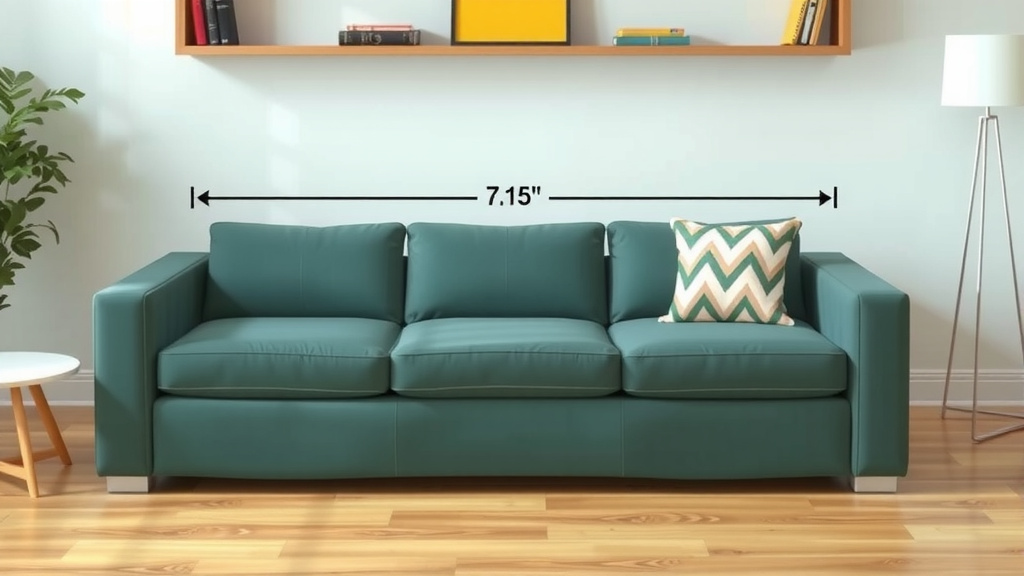
You’re probably wondering, “Just how long is a normal sofa?” It’s a super common question! Most sofas we see in homes and showrooms measure between 70 to 90 inches wide. This range is a great starting point for understanding sofa sizes. It covers a lot of the popular styles you’ll find. We found that this measurement is the most important for fitting your space.
Think of this 70-90 inch range as the sweet spot for many living rooms. It’s wide enough to seat three people comfortably. But it’s not so massive that it overwhelms a smaller space. We found that this size works well for families and those who enjoy entertaining guests.
Common Sofa Lengths and What They Mean
When we talk about sofa length, we’re generally referring to the measurement from one outside arm to the other. It’s like measuring from your left pinky finger to your right pinky finger when your arms are resting on the armrests. This is the overall width of the sofa. It helps you determine if the sofa will physically fit into your room.
We’ve seen that sofas can actually vary quite a bit. Smaller loveseats might only be around 50 inches long. These are perfect for cozy nooks or smaller apartments. On the other end, very large sofas can stretch to 100 inches or even more. These are often part of sectional sets.
What is a Loveseat?
A loveseat is essentially a small sofa. It’s designed for two people. We found that loveseats typically range from 40 to 70 inches in length. They are a fantastic choice when space is limited. You might consider a loveseat for a bedroom or a smaller den area.
What is a Standard Three-Seater Sofa?
This is what most people picture when they think of a “sofa.” The standard three-seater sofa falls right into that 70 to 90-inch sweet spot we mentioned. This is the most popular sofa size for a reason. It offers ample seating without being too bulky for average rooms. We found this size balances comfort and space efficiency well.
Beyond the Standard: Sectionals and Oversized Sofas
Now, if you have a larger living room or a big family, you might be looking at something bigger. Sectional sofas are a whole different ballgame! They are made up of multiple pieces. This means their total length can be much, much longer. We found that sectionals can easily exceed 100 inches and go up to 150 inches or more.
A sectional offers flexible seating arrangements. You can configure them to fit L-shaped corners or long, linear walls. Because of their modular nature, their “length” is less of a single number and more about how you piece them together. Always measure the space where each section will go!
| Sofa Type | Typical Length Range (Inches) | Ideal For |
|---|---|---|
| Loveseat | 40 – 70 | Small spaces, apartments, bedrooms |
| Standard Three-Seater | 70 – 90 | Average living rooms, families, small gatherings |
| Large Sofa | 90 – 100+ | Larger living rooms, frequent entertainers |
| Sectional Sofa | 100 – 150+ (customizable) | Large rooms, open-plan living, maximum seating |
Factors That Influence Sofa Length
It’s not just about seating capacity. The style of the sofa plays a big role too. Sofas with track arms or slim profiles might be shorter overall. But they can still offer the same seating space as a slightly longer sofa with bulky rolled arms. We found that arm design is a key factor in overall dimensions.
Consider the depth of the sofa as well. A deep sofa feels more luxurious and inviting for lounging. However, it can take up more floor space. Measure your room’s depth carefully. You want to ensure there’s still plenty of room to walk around comfortably. Many design guides suggest leaving at least 30-36 inches for walkways (National Association of Home Builders).
Arm Style Matters
Rolled arms are classic and can add several inches to the total width. Track arms, which are straight and often thinner, contribute less to the overall length. English arms are a bit wider than track arms but usually slimmer than rolled arms. We found that knowing your preferred arm style helps narrow down your options.
Legs and Base Design
Does the sofa sit on a solid skirted base or on legs? A sofa on legs can sometimes appear to take up less visual space. The legs themselves can add a few inches to the sofa’s overall height and sometimes a little to the width if they protrude. We found that these small details can impact the perceived size.
How to Measure Your Space for the Right Sofa Size
The best way to figure out what length is “normal” for your home is to measure! Grab a tape measure and a piece of paper. First, decide where you envision the sofa going. Measure the available wall space. This gives you your maximum possible width.
Next, think about traffic flow. How will people walk through the room? You need clear pathways. We found that leaving at least 3 feet for major walkways is a good rule of thumb. Don’t forget to account for other furniture, like coffee tables or end tables.
Mapping Out Your Layout
Use painter’s tape on the floor to outline the dimensions of potential sofas. This visual guide is incredibly helpful. It lets you see how a 75-inch sofa versus an 85-inch sofa would feel in the room. We found that this simple trick prevents costly mistakes.
Consider the Room’s Purpose
Is this a formal living room for entertaining? Or is it a cozy family room for movie nights? The function of the room will guide your choice. For a family room, you might want a slightly deeper and wider sofa for maximum comfort. For a formal space, a more traditionally sized sofa might fit the aesthetic better. We found that balancing function and form is key.
Quick Checklist for Choosing Your Sofa Length
Ready to find the perfect fit? Keep these points in mind:
- Measure your room’s available wall space.
- Plan for at least 3 feet of walkway space.
- Consider the depth and arm style of the sofa.
- Visualize the size with painter’s tape on the floor.
- Think about how you’ll use the room most often.
- Don’t forget to measure doorways and hallways for delivery!
Conclusion
You’ve learned that a normal sofa length typically hovers between 70 and 90 inches. This range works well for most average-sized living rooms. Remember, “normal” is flexible! Loveseats offer cozy seating around 40-70 inches. For larger spaces, sectionals can easily go beyond 100 inches. The best sofa length for you depends on your room’s dimensions and how you use the space. Take your measurements, consider traffic flow, and visualize the layout. Now you’re ready to confidently choose the perfect sofa size for your home.
Frequently Asked Questions
What’s the smallest sofa size?
The smallest sofas are typically loveseats. We found they usually range from about 40 to 70 inches in length. These are ideal for smaller apartments, bedrooms, or cozy nooks where a larger sofa wouldn’t fit.
Can a sofa be too long for a room?
Yes, a sofa can definitely be too long. If it overwhelms the room or blocks walkways, it’s too big. We recommend leaving at least 3 feet for main pathways. Always measure your available wall space and visualize the sofa’s footprint.
How do I know if a sofa is too big for my living room?
A sofa is too big if it makes the room feel cramped, hinders movement, or dominates the space. You should be able to walk around it comfortably. Using painter’s tape to map out potential sofa dimensions on your floor can help you avoid this issue.
Does sofa depth affect its overall length?
Sofa depth doesn’t directly affect its overall length (width). However, a deeper sofa can take up more floor space. When measuring, focus on the arm-to-arm measurement for length. Also, ensure you have adequate room depth for comfortable passage.
What if my sofa needs to fit through a narrow doorway?
This is a common concern! You need to measure the width of your doorways, hallways, and any stairwells. Some sofas have removable legs or cushions that can help. We found that checking delivery paths is just as important as measuring your room.


![10 Piece Sectional Sofa [2026]](https://hometopaccesories.com/wp-content/uploads/2026/08/10-piece-sectional-sofa-2026-featured-1-768x432.jpg)

![10 Best Colors For Sofa Sets [2026]](https://hometopaccesories.com/wp-content/uploads/2026/09/10-best-colors-for-sofa-sets-2026-featured-768x432.jpg)