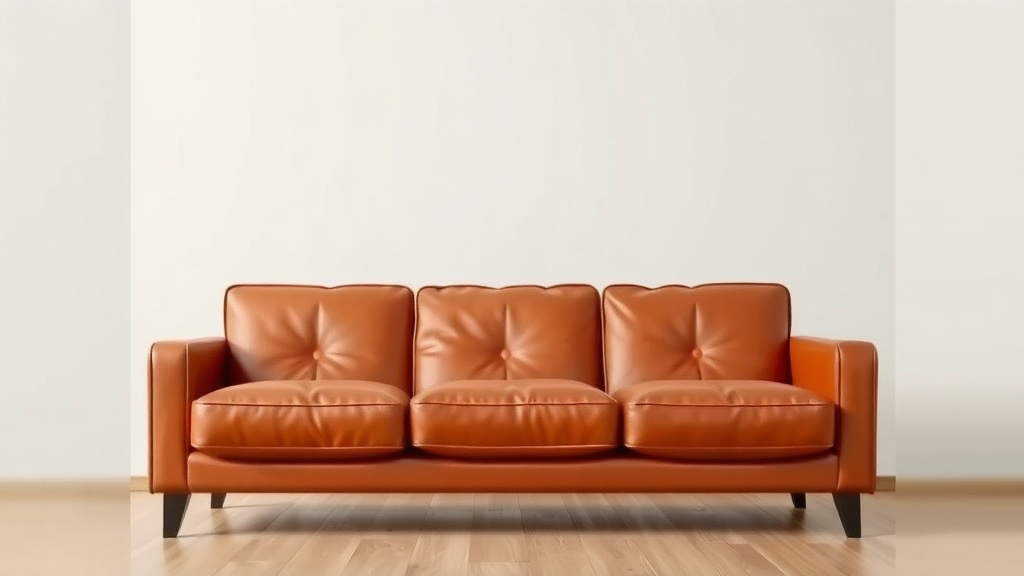
How to Buy a Good Leather Sofa: A Practical Buyer’s Guide
Buying a good leather sofa comes down to checking three things: the leather grade, the frame construction, and the cushion quality. Get those right, and you’ll end up with a couch that lasts 15 years or more instead of one that peels by year three. Skip them, and you’re basically buying expensive furniture-shaped disappointment.
Here’s the problem: not all “leather” is real leather. Many stores sell bonded leather, which is basically leather dust glued to fabric, and it flakes faster than a croissant. We researched what experts and reviewers say, and the differences in leather types, grades, and construction matter far more than the brand name on the tag.
Quick cheat sheet before we dive in:
- Full-grain and top-grain leather are your best bets. Bonded leather is best avoided. Our top-grain leather lifespan guide breaks down what to expect from that grade over the years.
- Look for a hardwood frame joined with screws or dowels, not staples.
- Check the stitching, seams, and cushions in person whenever you can.
- Expect to pay more upfront, since quality leather is an investment.
- Ask about warranties and care before you swipe that card.
Below, we break down exactly how to shop for a leather sofa step by step, so you can buy with confidence instead of second-guessing yourself in the showroom.
Finding the Right Leather for Your Sofa
Start with the leather type. It’s the single biggest factor in how long your sofa will last. We found that most furniture falls into four categories, and only two of them are worth your money.
Think of it like buying a steak. You wouldn’t pay ribeye prices for a mystery meat, right? Same rule applies here.
The Four Main Leather Types
Here’s the breakdown, from best to worst:
| Leather Type | What It Is | How It Holds Up | Price Range |
|---|---|---|---|
| Full-grain | The whole hide, untouched | Improves with age, 20+ years | Highest |
| Top-grain | Sanded smooth, still strong | Very durable, 15+ years | High |
| Genuine leather | Lower layer of the hide | Decent but weaker, 5-10 years | Mid |
| Bonded leather | Scraps glued to fabric backing | Peels and flakes fast | Low |
Many experts say bonded leather is the biggest trap in furniture shopping. It sounds legit because it contains some real leather, but it often starts peeling within a few years (Consumer Reports has flagged this issue repeatedly).
Aniline vs. Pigmented Leather
Once you know the type, look at the finish. These terms confuse almost everyone, so here’s the simple version:
- Aniline leather is dyed all the way through with no protective coating. It feels soft and shows natural marks. Beautiful, but it scratches easily.
- Pigmented (or protected) leather has a light coating that resists stains and fading. Slightly stiffer, much more forgiving.
- Semi-aniline splits the difference. A little coating, a lot of softness.
For most households, we recommend semi-aniline or pigmented top-grain. If you have kids or pets, protected leather will save you a lot of stress. If you live alone and love character marks, aniline is a joy.
Simple Tests to Spot Real Leather
The Smell Test
Real leather smells earthy and rich. Bonded leather smells like chemicals and vinyl. Your nose knows.
The Touch Test
Press the surface. Real leather wrinkles and creases like your own skin. Fake stuff stays flat or feels plasticky.
The Edge Test
Look at the raw edge of a cushion or underside. Bonded leather shows a fabric backing. Genuine hides look fibrous and rough.
Checking the Frame and Build Quality
A gorgeous hide on a junk frame is a bad deal. The leather might last 20 years while the frame gives out in five. We found that frame construction matters as much as the leather itself.
What a Good Frame Looks Like
Kiln-dried hardwood is the gold standard. The kiln-drying process removes moisture, so the wood won’t warp or crack over time. Ask the salesperson directly. If they can’t answer, walk away.
Joints should be screwed, doweled, or corner-blocked. Staples alone mean the sofa was built fast and cheap. One furniture craftsman we read put it perfectly: staples are a shortcut, not a method.
The Sit Test
Don’t be shy in the showroom. Lift the front corner a few inches. A solid frame won’t twist or creak. Then sit down like you would at home, feet up, maybe a little dramatic flop. Listen for squeaks.
Suspension matters too. Look for eight-way hand-tied springs or high-quality sinuous springs. Webbing-only suspension tends to sag within a few years.
Understanding Cushions and Comfort
Cushions decide whether you’ll actually enjoy your sofa day to day. Most quality sofas use one of two fills:
- High-density foam: supportive, holds its shape, firmer feel.
- Feather or down-wrapped foam: softer, plusher, needs regular fluffing.
Neither is wrong. But cheap low-density foam compresses quickly, leaving you with sad, pancake-flat cushions by year two. Ask about the foam density rating; anything around 1.8 or higher is a good sign.
Also check the cushion cores are removable. Zip-off, replaceable cushion covers make cleaning and eventual repair far easier.
Leather Sofa Shopping Checklist
Before you buy, run through this list. We keep it short so you can literally pull it up on your phone in the store:
- Confirm it’s full-grain or top-grain leather, not bonded.
- Verify a kiln-dried hardwood frame with screwed or doweled joints.
- Lift a corner and sit-test for creaks or wobbles.
- Check seams for tight, even double stitching.
- Ask the foam density and spring type.
- Review the warranty terms before paying.
What a Good Leather Sofa Should Cost
Honest answer? Quality costs money. A true top-grain sofa from a reputable maker usually starts around $1,500 to $2,500. Full-grain pieces often run higher. Sub-$1,000 “leather” sofas are almost always bonded or blended, no matter what the tag claims.
Here’s the math that makes it easier. A $2,000 sofa lasting 15 years costs about $11 per month. A $600 bonded leather sofa replaced every three years costs about the same, with far more hassle. Buy once, cry once.
Sales timing helps. Many retailers run deep discounts around Presidents’ Day, Memorial Day, and Black Friday. Floor models can also drop 30-50%, and minor wear is often barely visible.
Warranties, Care, and Questions to Ask
A confident maker stands behind their work. Look for a frame and spring warranty of 10 years or more. Be careful with “limited lifetime” language, though. Read what it actually covers, because sometimes it only covers the frame, not the leather or cushions.
Leather needs light maintenance. Dust it weekly, keep it out of direct sunlight, and condition it a couple of times a year. Overly harsh cleaners can dry the hide, so stick to products made for leather. Many care guides, including ones from the Leather Research Laboratory’s industry resources, recommend gentle conditioning over aggressive cleaning.
And ask these five questions before you sign anything:
- What exact type and grade of leather is this?
- Where was the hide sourced and tanned?
- What is the frame made of and how is it joined?
- What does the warranty actually cover?
- Can I get a fabric or leather sample to take home?
That last one matters more than people think. Leather looks different under your living room lights than under showroom spotlights. Take the swatch home, tape it to the wall, and live with it for a few days. Your future self will thank you.
Conclusion
Buying a good leather sofa doesn’t have to feel overwhelming. Stick to full-grain or top-grain leather, insist on a kiln-dried hardwood frame, and check the cushion foam before you commit. Skip bonded leather entirely, even when the price looks tempting. We found that shoppers who ask a few pointed questions in the showroom end up far happier than those who buy on looks alone. Take your time, bring your checklist, and grab a swatch to test at home. Your next step is simple: pick two or three sofas that pass the tests, sit on them this weekend, and compare. Do that, and you’ll bring home a sofa you’ll love for decades.
Frequently Asked Questions
Is a leather sofa good with pets?
It can be, if you pick the right leather. Pigmented or protected leather resists scratches and stains better than soft aniline hides. Claw snags can still happen, so keep nails trimmed and consider a throw blanket over your pet’s favorite spot.
Does leather furniture get hot in summer and cold in winter?
A little, yes. Leather matches the room temperature, so it can feel cool when you first sit down and warm up quickly. Most people stop noticing within minutes, and in hot climates, breathable top-grain leather actually stays more comfortable than vinyl or bonded materials.
How do I fix a scratch on a leather sofa?
For minor surface scratches, gently rub the area with a clean finger or a damp cloth; natural oils often blend it back in. Deeper marks can be treated with a leather conditioner or repair filler matched to your hide color. Always test any product on a hidden spot first.
Can I clean a leather sofa with household products?
We recommend against it. Cleaners with alcohol, bleach, or ammonia can dry out and crack the finish over time. Stick to a slightly damp cloth for weekly dusting and a leather-specific conditioner two or three times a year to keep the hide supple.
Is it better to buy a leather sofa online or in a store?
If you can, visit a showroom first. The smell, touch, and sit tests are hard to replicate through a screen. If you buy online, order a leather swatch beforehand and check the return policy carefully, since quality retailers usually offer trial periods or easy returns.