How to Calculate Yardage for Sofa Upholstery: Easy Guide
The easiest way to calculate yardage for sofa upholstery is to measure each cushion and section, add the width of the fabric into the math, and divide the total inches by 36. Most standard sofas need between 12 and 18 yards of fabric. Your exact number depends on the sofa’s size, the cushions, and the pattern you pick.
Why does this matter so much? Because ordering too little fabric can leave you with a mismatched dye lot, and ordering too much just wastes money. We researched the methods upholsterers actually use and found that careful measuring beats guessing every time. Fabric width, repeats in a pattern, and even piping all change your final number.
Here’s the quick version before we get into the details:
- Measure the width, length, and height of every cushion and every section of the sofa.
- Add extra for seams, piping, and pattern repeats — most pros add 10 to 20 percent.
- Divide your total inches by 36 to convert them into yards.
- Standard sofas usually need 12 to 18 yards; sectionals can need 25 or more.
- When in doubt, buy a little extra rather than a little less.
Below, we walk you through exactly how to measure your sofa and turn those numbers into the right yardage — step by step, no math degree required.
Finding Yardage for Your Sofa: A Step-by-Step Guide
The fastest path to the right number is simple: measure every piece, add a safety margin, then divide by 36. That’s the whole formula. The rest is just doing it carefully so you don’t end up three yards short on a Sunday afternoon.
We found that most mistakes happen before any math starts. People measure the sofa, not the upholstery pieces. Those aren’t the same thing. You’re covering cushions, panels, skirts, and arms — each one needs its own numbers.
What You’ll Need Before You Start
Gather a few basic tools first. This job takes ten minutes with the right gear and an hour without it.
- A flexible tape measure — the kind tailors use, not a metal one.
- Paper and a pencil for sketching each cushion and panel.
- A calculator (your phone works fine).
- Your fabric’s width, which is usually 54 inches for upholstery.
- The pattern repeat length, if you’re using a printed fabric.
Measure Each Cushion First
Start with the seat cushions because they’re the hungriest for fabric. Measure the top, bottom, and all four sides of each one. Write it all down. Yes, even the sides.
Here’s an example. A standard seat cushion measures about 24 inches wide by 30 inches deep by 6 inches tall. Top and bottom together need roughly 60 by 30 inches of fabric. The four sides add another 108 by 6 inches. That’s one cushion. Now count yours.
Back cushions work the same way. Measure them exactly like you measured the seats. Don’t guess — a two-inch error on five cushions becomes a ten-inch problem fast.
Measure the Sofa Body Next
Now the fixed parts. You’ll measure several separate panels on the sofa frame itself.
- The inside back: width times height.
- The outside back: same math, slightly bigger usually.
- Each arm: inside face, outside face, and top.
- The front rail below the cushions.
- The deck, which is the platform under the seat cushions.
Sketch each panel and label it. Many experts say a labeled sketch prevents more measuring mistakes than anything else. It’s like a treasure map, except X marks where your money goes.
Add Width-of-Fabric Cuts to Your Math
Here’s where yardage really gets decided. Fabric comes off the roll in a fixed width, usually 54 inches. You can’t rotate pieces like tiles in a bathroom. Every piece must cut in one direction.
So you’re not just adding areas. You’re asking: how many pieces fit across the width? A 30-inch-deep cushion panel fits once across 54-inch fabric. Two narrow arm panels might fit side by side. Each row uses a “cut length” off the roll.
Add up your cut lengths in inches. That total, divided by 36, gives you raw yardage. This method is the one professional upholsterers use, and it beats flat-area math every time.
Don’t Forget the Extras
Plain fabric math is only the beginning. Real projects add seams, piping, and pattern repeats. Skip these and you’ll be back at the fabric store explaining yourself to a stranger.
Piping and Welting
Piping is the little corded trim on cushion edges. It’s charming. It’s also hungry. Piping can add one to two yards on a standard sofa, since it wraps every cushion edge.
Pattern Repeats
Stripes, florals, and plaids need matching from cushion to cushion. Each cut must line up with the last one. Add the full repeat length to every cut that touches another. A 12-inch repeat on ten cuts adds serious yardage.
Many upholstery guides suggest adding 10 to 20 percent extra for patterned fabric. Solids usually need less. When we compared methods for this guide, pros consistently said patterned projects are where budgets blow up.
Seams and Hems
Every seam eats half an inch on each side. Center zippered cushions need flaps and overlapping panels. These small amounts pile up like laundry. Budget for them.
Yardage Chart by Sofa Size
Want a shortcut before doing all that math? This table shows common ranges. Treat them as starting points, not promises. Your sofa may be a rebel.
| Sofa Type | Solid Fabric | Patterned Fabric |
|---|---|---|
| Love seat | 8–12 yards | 11–15 yards |
| Standard sofa | 12–16 yards | 15–20 yards |
| Large sofa | 15–18 yards | 18–23 yards |
| Sectional | 22–30 yards | 28–40 yards |
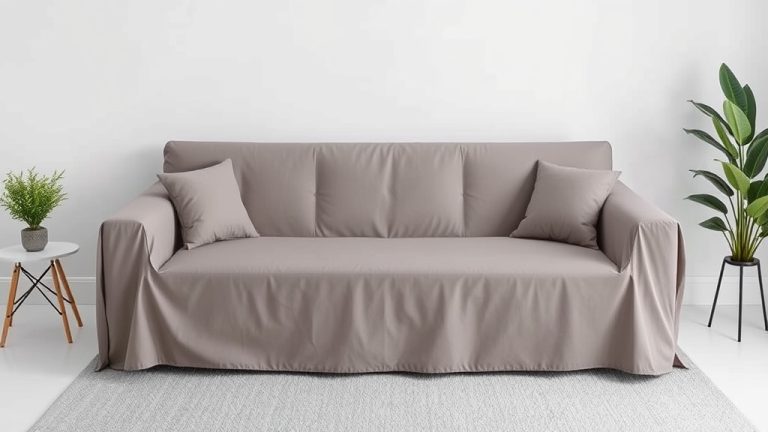
| Slipcover style | 10–14 yards | 13–18 yards |
Your Pre-Purchase Checklist
Before you click “buy,” run through this quick list. It takes two minutes and saves real money.
- Sketch every panel and label it with measurements.
- Confirm your fabric width — 54 inches is common, but not universal.
- Note the pattern repeat and add it to every matching cut.
- Add 10 to 20 percent for seams, piping, and oops-moments.
- Round up to the next whole yard, never down.
- Buy all fabric from the same dye lot in one order.
What If Your Sofa Is Odd-Shaped?
Curved arms, tufted backs, and attached skirts break the neat-panel system. Here’s the honest answer: measure generously and round up. For a curved arm, measure around the curve as if it were flat. Add a few inches.
Tufting is the biggest hog. Buttons pull fabric into dips, which needs extra material between points. Many experts suggest adding 25 percent or more for heavy tufted pieces.
Still unsure? Drape a cheap bedsheet over the section you’re worried about. Cut it, and you’ll see roughly how much fabric the area demands. Low-tech, weirdly accurate.
Common Measuring Mistakes to Avoid
We found a few repeat offenders in nearly every guide we reviewed.
- Measuring the sofa’s outside size only. That tells you nothing about fabric pieces.
- Forgetting the deck under the cushions. It’s hidden, so people skip it.
- Ignoring fabric width and doing pure area math.
- Skipping the repeat on patterned fabric.
- Ordering exactly the calculated amount with zero margin.
One last thought. Fabric shrinkage after cleaning runs a small percentage on natural fibers, and dye lots can vary between batches. A spare yard costs about the price of a pizza dinner. A missing yard costs a full re-order — and possibly your weekend.
Conclusion
Figuring out sofa yardage comes down to three habits: measure every piece, count how cuts fit across the fabric width, and round up. Sketch each panel, add 10 to 20 percent for piping, seams, and pattern repeats, then divide your total inches by 36. Most sofas land somewhere between 12 and 18 yards, and odd shapes or tufting push that number higher.
Our research kept pointing to the same truth: careful measuring beats any quick formula. So grab your tape measure, sketch those panels, and write down every number before you order. That ten minutes of prep is what separates a smooth project from a dye-lot disaster.
Frequently Asked Questions
How much extra fabric should I buy in case I make a mistake?
Most upholsterers we found recommend keeping at least one extra yard beyond your calculated total. That cushion covers a miscut, a torn seam, or a repair years down the road. If your fabric is patterned, bump that buffer to two yards so you can match a repeat after any error.
Can I use 45-inch fabric for my sofa instead of 54-inch?
You can, but plan for noticeably more yardage. Narrower fabric fits fewer pieces across each cut, which means more rows and more length off the roll. Run your cut-count math with the actual width before you buy, and expect your total to climb by several yards.
Does fabric direction or nap change how much I need?
Yes. Velvet, chenille, and corduroy have a nap, so every piece must be cut running the same direction or the shading will look off. That means you can’t flip and nest pieces to save fabric, and your yardage may rise even on a solid color.
Should I calculate yardage myself or let the upholstery shop do it?
Do your own math first, even if a professional confirms it later. Having your measurements and panel sketch ready makes quotes faster and helps you spot inflated estimates. When the shop’s number differs from yours by a lot, ask them to explain which pieces they measured differently.
How do I calculate yardage for just re-covering the seat cushions only?
Measure the top, bottom, and all four sides of each cushion, then figure how many cushion panels fit across your fabric width. Add your cut lengths together, divide by 36, and include extra for zippers and piping. Most seat-cushion-only projects use four to eight yards depending on cushion size.