
How to Change a Sofa Cover at Home in Easy Steps
The easiest way to change a sofa cover at home is to remove the cushions, unzip or unfasten the existing cover, and pull it off section by section, starting from one arm and working across. Then slip the new cover over the frame the same way, smooth it out, and tuck it into place. Most slipcovers take about 15 to 30 minutes once you know the trick. Our step-by-step guide to putting on a sofa cover walks through each fitting stage in even more detail.
Maybe your sofa cover is stained, torn, or just plain outdated. Whatever the reason, you don’t need a professional or fancy tools to swap it out. We researched the most common methods and found that fitted slipcovers, stretch covers, and custom-made covers each come with their own simple steps. Pick the right one, and your living room can look brand new this weekend.
Here’s the quick version before we get into the details:
- Identify your sofa type first, because loose-back cushions and tight-back frames need different covers.
- Measure everything, including width, depth, arm height, and cushion size, before you buy.
- Remove the old cover by unzipping, untying, or simply pulling it off, depending on the style.
- Fit the new cover starting from the top or one arm, then tuck and smooth as you go.
- Secure the edges with ties, foam tucks, or grippers so the cover stays put when you sit.
Ready to give your sofa a fresh look without spending a fortune? Below, we break down exactly how to change a sofa cover at home, step by step, so you can get it done today.
Changing Your Sofa Cover the Easy Way
Swapping a sofa cover comes down to three moves: strip the old cover, drape the new one, then tuck and smooth. That’s it. If you’ve ever put a fitted sheet on a mattress, you already have the basic muscle memory.
Before you start, clear the area around your sofa. Give yourself room to walk around it. And maybe put on some music, because wrestling a slipcover solo with total silence is a special kind of gloomy.
Know Your Sofa Type First
Not all sofas wear covers the same way. We found that most confusion happens when people buy a cover that doesn’t match their frame style.
Loose-Back Cushion Sofas
These have back pillows you can lift off. They’re the easiest to cover, because you can slip each cushion into its own sleeve. Think of it like dressing five small guests instead of one very large one.
Tight-Back Sofas
Here, the backrest is sewn into the frame. You’ll need a one-piece slipcover that drapes over the whole sofa. These take more tucking, but they still work well. Many experts suggest choosing a cover with elastic edges for a snugger fit.
Recliners and Sectionals
Moving parts make these tricky. Look for covers labeled for reclining furniture, with split panels that let the footrest open. A regular slipcover will fight you every time you lean back.
Measuring Before You Buy
Measure twice, buy once. Grab a tape measure and write down these numbers:
- Width across the widest point, arms included.
- Depth from front edge to the back of the seat.
- Height from the floor to the top of the backrest.
- Arm height and arm width.
- Cushion dimensions, one by one.
Compare your numbers to the size chart on the cover’s package. When you’re between sizes, size up. Stretchy fabric forgives a little extra; it never forgives too little.
Choosing the Right Cover Style
Here’s a quick comparison to help you pick:
| Style | Best For | Fit | Effort |
|---|---|---|---|
| Stretch cover | Tight-back sofas | Snug, smooth | Low |
| Fitted slipcover | Standard frames | Tailored | Medium |
| Throw-style cover | Quick makeovers | Loose, casual | Very low |
| Custom-made | Odd shapes, recliners | Near perfect | None (but costs more) |
We found that stretch covers are the most forgiving for beginners. Fitted slipcovers look the sharpest but need patient tucking.
Removing the Old Cover Without a Fight
Start by removing every cushion and setting them aside. Then find the attachment points: zippers, Velcro, ties, or nothing at all.
If It Zips or Ties
Unzip or untie everything first, then pull the fabric off section by section. Start at one arm and work across. Don’t yank; slow peeling protects seams and keeps the cover reusable.
If It’s Sewn On
Some upholstery covers are stitched to the frame, especially on cheap flat-pack sofas. Check under the frame for staples or screws. If it’s truly sewn, you may need to cover over it instead of removing it. A throw-style cover or a slightly larger stretch cover can hide the old one completely.
Fitting the New Cover, Step by Step
This is the part everyone dreads, but it’s honestly the fastest step. Here’s the order we found works best:
- Find the label or tag. That usually marks the back of the cover.
- Drape the cover over the backrest, label side down.
- Pull each arm section down over the arms like sleeves.
- Stretch or pull the front skirt down to the floor.
- Work the fabric into the gap between the backrest and seat. A foam tuck grip or even a pool noodle slice helps hold it in place.
- Dress each cushion in its own sleeve, then set them back in place.
Smooth as you go. Don’t wait until the end, or you’ll be chasing wrinkles like they owe you money.
Getting That Perfect, Store-Bought Look
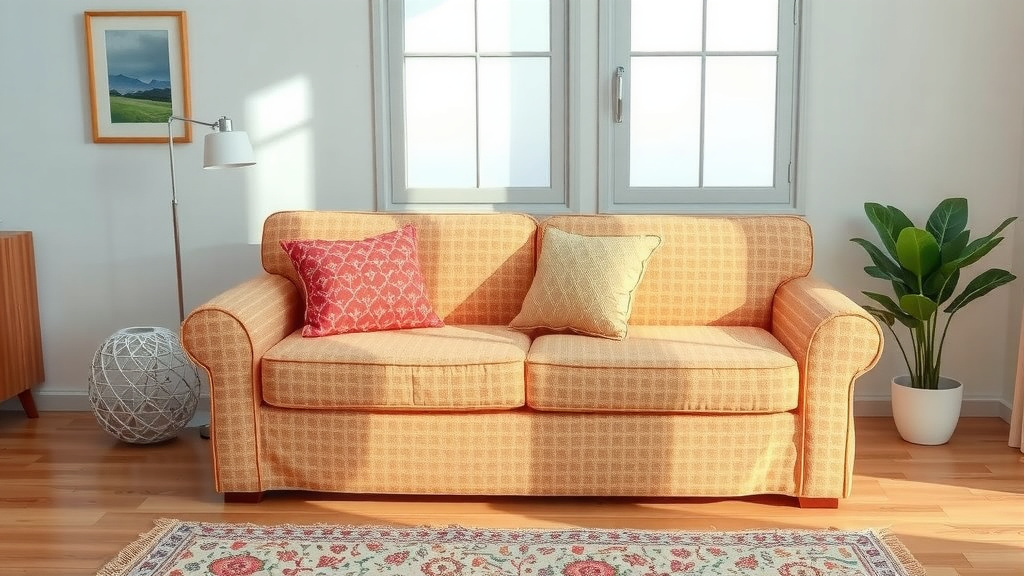
The difference between “homemade” and “high-end” is all in the tucking. Push the fabric firmly into every crease, especially where the seat meets the arms. Many pros recommend tucking tools, but a spatula wrapped in a soft cloth works just as well.
Securing the Edges
Most covers come with ties underneath. Knot them to the frame legs if you can. For extra security, non-slip gripper pads between the cover and cushions stop sliding. Some people use twisted foam strips in the crevices, and we found this trick shows up in nearly every upholstery guide for a reason. It works.
Dealing with Wrinkles and Pet Hair
Stretch fabrics relax after a day or two of sitting, so light wrinkles often resolve themselves. For stubborn creases, check the care tag. Many cotton-poly covers can handle a low-heat iron or a quick spin in the dryer with a damp towel. For pet hair, a slightly damp rubber glove beats most lint rollers.
Washing and Caring for Your New Cover
Washability is the whole point of a slipcover, so protect it. Read the tag first. Most covers are machine washable in cold water, but air drying prevents shrinking. The CDC’s home cleaning guidance generally recommends regular washing of soft furnishings that get frequent contact, especially in homes with kids or pets. For cycles, water temperature, and drying, our full guide to washing sofa covers covers every care step.
Wash your cover every one to three months, or sooner after spills. Keep the tag with care instructions somewhere you’ll find it. Tape it under the sofa if you must. We won’t judge.
Common Mistakes to Avoid
Avoid these and you’ll save yourself a redo:
- Buying based on sofa style name alone instead of actual measurements.
- Skipping the pre-wash, which can cause shrinkage surprises later.
- Forgetting to remove the cushions before draping.
- Pulling too hard and popping seams on a tight fit.
- Ignoring the label orientation, then wondering why the “back” is on the floor.
Quick Pre-Start Checklist
Run through this before you begin, and the whole job goes smoother:
- Measurements written down and matched to the cover size.
- Room cleared and cushions off the sofa.
- Old cover fully unzipped or untied.
- Tucking tool or spatula within reach.
- Ties, grippers, or foam strips ready.
- Care instructions located and noted.
Conclusion
Changing a sofa cover at home really is a beginner-friendly project. Match the cover to your sofa type, measure carefully, and take your time with the tucking. That’s the whole formula. We found that most people who struggle skipped one of these steps, usually the measuring part. Don’t be that person with a slightly too-small stretch cover riding up on the arms. With your checklist in hand and a spatula wrapped in a cloth, you’ve got everything you need. So clear the room, put on that playlist, and give your sofa the makeover it deserves today.
Frequently Asked Questions
How much does it cost to change a sofa cover at home?
Most ready-made stretch covers run between $30 and $80, depending on size and fabric. Fitted slipcovers usually cost a bit more, and custom covers can exceed $200. Doing it yourself means you’re only paying for the cover, not labor.
Can I put a slipcover on a leather sofa?
You can, but smooth leather lets covers slide around more than fabric does. We found that non-slip gripper pads or foam tuck strips make a big difference on leather frames. Look for covers with elastic edges for the best hold.
Should I wash my new cover before putting it on?
Yes, if the care tag allows it. Pre-washing removes any factory odors and gets any initial shrinkage out of the way. Just skip the dryer unless the tag says it’s safe, since heat is the main cause of shrunken covers.
Why does my slipcover keep coming untucked?
Usually it’s one of two things: the cover is too loose, or the crevices aren’t packed tightly enough. Push foam strips or rolled towels firmly into the gaps between cushions and arms. That friction keeps everything in place through daily use.
Can one person change a sofa cover alone?
Definitely, for most standard sofas. Stretch covers are the easiest solo job because the fabric hugs the frame as you work. For oversized sectionals, a second pair of hands helps with the large back panel, but it’s not required for a typical three-seat sofa.