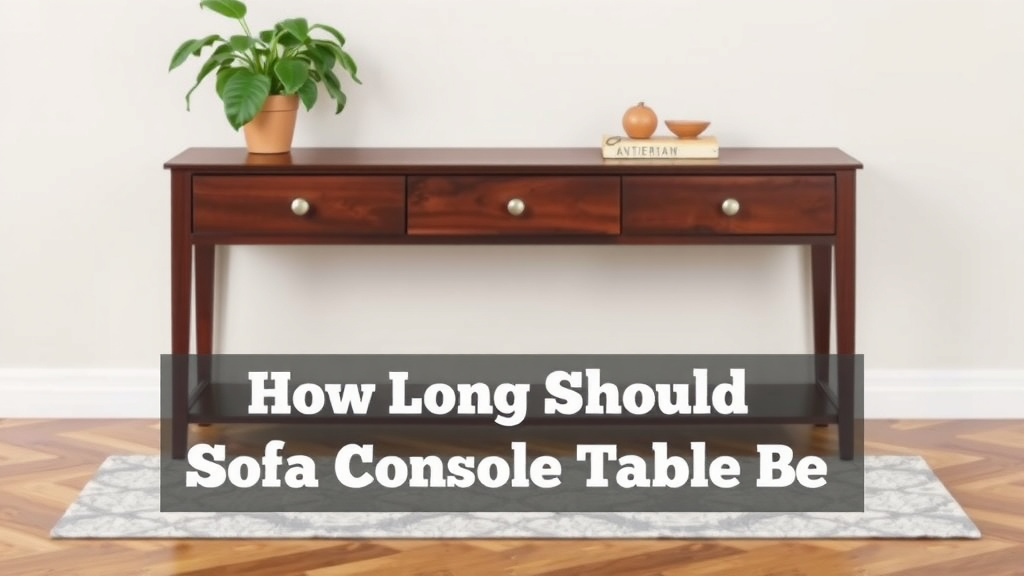
How Long Should Your Sofa Console Table Be
A sofa console table should generally be about two-thirds the length of your sofa. For example, if your sofa is 80 inches long, aim for a console table around 53 inches. This creates a balanced and proportional look in your living space without overwhelming the furniture. Getting this right makes a big difference!
Choosing the right length ensures your console table enhances your room’s layout. Too long, and it can make the sofa feel crowded. Too short, and it might look a bit lost. We found that many designers agree this two-thirds rule is a great starting point for achieving harmony. It’s a simple guideline that works in most situations.
- Aim for a table that’s 2/3 the length of your sofa.
- A 53-inch table works well for an 80-inch sofa.
- This ratio creates a balanced aesthetic.
- Avoid tables that are too long or too short.
- Proper sizing makes your living room look more cohesive.
Let’s dive into how to measure your space and choose the perfect length for your sofa console table.
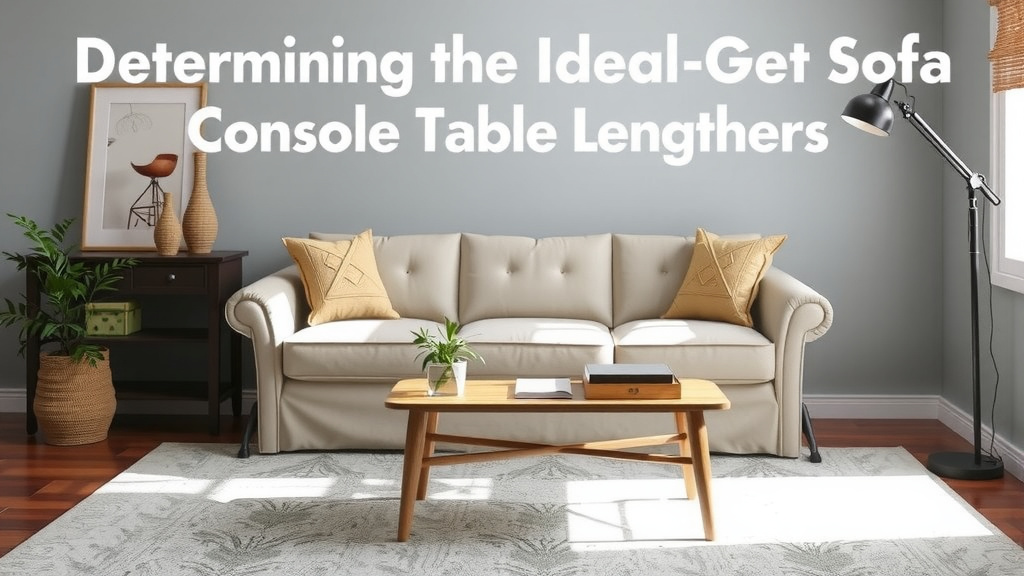
Determining the Ideal Sofa Console Table Length
So, you’ve got your sofa, and you’re dreaming of that perfect console table behind it. But what’s the magic number for its length? We found that the most common and aesthetically pleasing guideline is to match the table’s length to about two-thirds of your sofa’s length.
Think of it like a well-tailored suit. You want everything to fit just right, not too baggy, not too tight. This proportion creates a visual balance that makes your living room feel intentionally designed and harmonious. It’s a simple rule that works wonders for most living room setups.
Why the Two-Thirds Rule Works So Well
Why this specific ratio? It boils down to visual weight and proportion. A console table that’s too short can look like it’s floating aimlessly, disconnected from the sofa. On the flip side, a table that’s the same length or longer than your sofa can make the entire seating area feel cramped and unbalanced. The two-thirds approach ensures the table complements, rather than competes with, your sofa’s presence.
We’ve seen countless living rooms, and this rule is consistently a winner. It allows for a little breathing room on either side of the console table, preventing it from looking like a clunky extension of the sofa. This subtle spacing is key to a relaxed and inviting atmosphere.
Understanding Sofa and Table Measurements
Before you grab a tape measure, let’s get clear on what you’re measuring. For your sofa, you’ll want to measure the total length from armrest to armrest. This is the full width of your seating piece. Don’t measure just the seating cushions; get the full external dimension.
For the console table, you’ll measure its total width from one end to the other. This includes any decorative edges or legs that extend outward. Knowing these exact numbers will make the math much simpler and ensure you pick the right size.
Calculating Your Ideal Table Size
Let’s put the two-thirds rule into practice. Imagine your sofa measures 90 inches from end to end. To find your ideal console table length, you’ll divide 90 by 3 and then multiply by 2. That’s (90 / 3) * 2 = 30 * 2 = 60 inches.
So, for a 90-inch sofa, a 60-inch console table would be a fantastic fit. If your sofa is 72 inches long, the calculation would be (72 / 3) * 2 = 24 * 2 = 48 inches. A 48-inch table would work beautifully.
When to Deviate from the Two-Thirds Rule
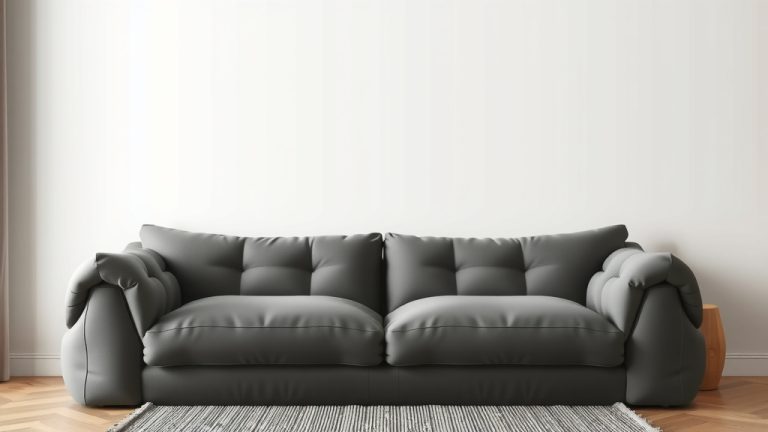
While the two-thirds rule is a solid starting point, it’s not set in stone. Sometimes, your space or your specific furniture might call for a slight adjustment. If your sofa has very large, chunky arms, you might opt for a slightly shorter table to avoid it looking overwhelmed. Conversely, if your sofa has a very streamlined, minimalist design, you might go for a table that’s a bit closer to the sofa’s full length.
We also see situations where designers intentionally break this rule for a specific look. For example, a very long, narrow sofa might benefit from a console table that extends almost its full length, creating a unified, dramatic effect. However, for most homes aiming for a classic, balanced look, the two-thirds guideline is your best friend.
Considering Room Layout and Functionality
The length of your console table isn’t just about looking good; it’s also about how your room functions. Where will the table be placed? Is it purely decorative, or do you need space for lamps, books, or even a charging station?
Sofa Placement Matters
Is your sofa floating in the middle of the room, or is it against a wall? If your sofa is the centerpiece of a large open space, the console table behind it acts as a visual anchor. A table that’s too short might not effectively define that seating zone. In these open-plan scenarios, you might lean towards a slightly longer table, perhaps even closer to the sofa’s full length, to create a more substantial presence.
If your sofa is tucked against a wall, the console table serves as a functional and decorative surface. Here, the two-thirds rule usually holds strong, providing ample surface area without making the wall seem crowded.
Table Depth and Height Considerations
Beyond length, don’t forget depth and height! A console table shouldn’t jut out too far into your walkway. Generally, 14 to 18 inches deep is a good range for most spaces. This keeps it from becoming a tripping hazard.
As for height, console tables typically range from 28 to 32 inches. They should sit roughly at the same height as the top of your sofa’s back cushions, or slightly lower. This creates a visually pleasing line and makes it easy to reach items placed on the table.
Common Pitfalls to Avoid When Choosing Table Length
Even with guidelines, it’s easy to make a misstep. Let’s look at some common mistakes we see so you can steer clear of them.
The “Too Short” Syndrome
This is where the table looks lost. Imagine a long, plush sofa, and then a tiny, narrow table behind it. It just doesn’t feel right. It’s like wearing a huge hat with a tiny scarf; the proportions are off. This often happens when people pick a table that fits a specific spot on a wall, rather than considering the sofa’s dimensions.
The “Too Long” Problem
On the flip side, a table that’s as long as, or longer than, your sofa can make the whole arrangement feel heavy. It can visually push the sofa against the wall, even if it’s not physically touching it. This can also make accessing the sides of the sofa difficult, which isn’t ideal for flow.
Ignoring Scale with Other Furniture
Your console table shouldn’t exist in a vacuum. Consider the scale of other furniture in the room. If you have large, overstuffed chairs, a very petite console table might look out of place. Likewise, a massive table might dwarf smaller pieces.
Many interior designers suggest considering the overall “visual weight” of your room. A room with larger furniture pieces can handle a slightly larger console table. For rooms with more delicate furniture, a more proportionally scaled table will look best (Apartment Therapy).
Quick Checklist for Your Perfect Console Table Length
Here’s a quick rundown to ensure you’re on the right track:
- Measure your sofa’s total length (armrest to armrest).
- Calculate two-thirds of your sofa’s length for a starting point.
- Consider your room’s layout and sofa placement.
- Think about the table’s depth and height.
- Ensure the table’s scale matches other furniture.
- Trust your eye – does it look balanced and proportionate?
When to Seek Expert Opinion or Custom Solutions
If you’re wrestling with unusual room dimensions, a uniquely shaped sofa, or just can’t seem to get the proportions right, don’t be afraid to seek professional advice. Interior designers have a keen eye for scale and balance that can be invaluable.
For those truly unique situations, a custom-made console table might be the perfect solution. This allows you to specify the exact length, depth, and height to fit your space perfectly. While it can be more expensive, it guarantees a flawless fit for your specific needs.
Conclusion
You’ve learned that the magic number for your sofa console table length is typically about two-thirds of your sofa’s length. This guideline creates a harmonious balance, making your living room feel intentionally designed. Remember to measure both your sofa and your potential table accurately. While the two-thirds rule is a fantastic starting point, don’t be afraid to adjust based on your room’s layout, sofa style, and other furniture. Your goal is a space that feels both beautiful and functional.
Now, take out that tape measure and see what length will bring your living room together perfectly!
Frequently Asked Questions
What if my sofa has very large, bulky arms?
If your sofa’s arms are extra wide, you might find a table that’s exactly two-thirds of the total length looks a bit swallowed. In this case, consider opting for a slightly shorter console table. This prevents the table from looking overwhelmed and maintains better visual proportion.
Can I use a console table that’s the same length as my sofa?
Generally, we advise against this. A console table that matches or exceeds your sofa’s length can make your seating area feel cramped and unbalanced. It can visually push the sofa against the wall, creating an awkward, heavy look. Sticking closer to the two-thirds rule usually offers a more pleasing aesthetic.
What if my sofa is very short, like a loveseat?
The two-thirds rule still applies! For a shorter sofa, like a 60-inch loveseat, you’d aim for a table around 40 inches (60 / 3 * 2 = 40). It’s all about maintaining that proportional relationship. Even smaller pieces benefit from a balanced console table.
Does the console table’s depth affect the length I should choose?
While depth and length are separate, they work together for overall balance. A very deep console table might make a room feel smaller, so you might opt for a slightly shorter length to compensate. Ensure the depth doesn’t impede foot traffic, typically 14-18 inches is recommended.
What if I have an L-shaped sectional sofa?
For sectionals, measuring the longest continuous side and applying the two-thirds rule can work as a starting point. However, sectionals are complex. You might need to consider how the table visually breaks up or connects different parts of the sectional. Sometimes, a slightly shorter table or even two smaller tables might be a better fit.

![10 Best Brand Of Chesterfield Sofa [2026]](https://hometopaccesories.com/wp-content/uploads/2026/08/10-best-brand-of-chesterfield-sofa-2026-featured-768x432.jpg)