How to Build a Sofa Bed: A Step-by-Step DIY Guide
The easiest way to build a sofa bed is to construct a simple wooden frame, add a hinged backrest that folds flat, and place a standard mattress inside. With basic tools, a few sheets of plywood, and a decent set of hinges, most people can finish one over a weekend. Yes, it really is a two-day project. If you want the broader version without the bed mechanism, our step-by-step sofa guide walks through a standard couch build.
Before you cut any wood, you will want to settle on a size and style. Some sofa beds fold out from the seat, while others flip down like a futon. We researched dozens of DIY plans and found that the folding seat design is the most beginner-friendly. Many experts say a standard twin or full mattress works best because bedding is easy to find.
Here is the quick version before we get into the details:
- Choose your mattress size first, then build the frame to match.
- Use 2x4s and plywood for a sturdy, affordable frame.
- Install piano hinges so the backrest folds down flat.
- Sand every edge so nobody catches a splinter mid-nap.
- Add cushions and a slipcover to hide the hardware.
Below, we walk through every step, from picking your materials to that first satisfying test nap. Grab your tape measure, and let’s get building.
Building a Sofa Bed Step by Step
The fastest path is this: build a base box from 2x4s, add a plywood deck, then attach a folding backrest with piano hinges. We found that most first-time builders can finish the frame in one day and the finishing touches the next. Think of it like building a big wooden sandwich, mattress in the middle.
Tools and Materials You Will Need
Nothing fancy here. Most of this lives in a normal garage or costs under a hundred bucks at the hardware store.
- 6 to 8 straight 2×4 boards, 8 feet long
- One 3/4-inch plywood sheet (4×8 feet)
- One 48-inch piano hinge with screws
- Wood screws: 2.5-inch and 1.25-inch
- Wood glue and wood filler
- Sandpaper (120 and 220 grit)
For tools, you need a drill, circular saw, tape measure, level, and stud finder. If you hate sawing, most lumber yards will cut your plywood for free or a few dollars per cut. We highly recommend taking them up on that.
Safety Gear Before You Cut Anything
Sawdust in the lungs and a blade in the thumb are both bad weekends. Wear safety glasses and a dust mask every time the saw runs. The CDC recommends proper eye and respiratory protection for any woodworking project that creates airborne dust. Add earplugs if your saw is the scream-y kind, like most are.
Choosing the Right Mattress Size
Twin and full mattresses are the sweet spot. A twin gives you more walking room in a small apartment, while a full seats two people comfortably. Many sleep researchers suggest a mattress at least 6 inches thick for healthy support during sleep (NIH). Thinner futon-style pads work, but your guests will feel every slat.
Measure your room before you decide. A full mattress is 54 by 75 inches, and your frame adds a few inches on every side. That wall you planned to slide it against might suddenly be very busy. Our guide to how long sofas run in feet helps you map the footprint before you commit to a mattress size.
Twin vs. Full for Small Spaces
| Feature | Twin | Full |
|---|---|---|
| Mattress size | 38″ x 75″ | 54″ x 75″ |
| Sleeps | 1 adult | 2 adults (snug) |
| Best for | Studios, kids’ rooms | Guest rooms, living rooms |
| Build difficulty | Easier to move | Heavier frame |
Cutting Your Boards the Smart Way
Measure twice, cut once. It is a cliché because it is true. Write your cut list on scrap cardboard first, then transfer each mark to the wood.
For a twin-size build, you will cut four base rails, four legs, and two deck supports from your 2x4s. The plywood gets cut to match the mattress footprint exactly. Label every piece with a pencil, because after ten cuts, they all start looking like long-lost siblings.
Assembling the Base Frame
Start by building a rectangle from your rails. Glue every joint, then drive two screws through each connection. Add corner brackets inside the box for extra strength. Many woodworkers suggest pre-drilling screw holes near board ends so the wood does not split (Fine Homebuilding experts commonly note this).
Attach the legs at each corner, checking level as you go. A wobbly frame today is a squeaky sofa tomorrow. Fix it now, thank yourself later.
Adding the Plywood Deck
Screw the plywood onto the base every 8 inches around the edges. Countersink the screws so the heads sit below the surface. This deck is what your mattress rests on, so it should feel like a solid floor, not a trampoline.
Building the Folding Backrest
The backrest is just a second plywood panel framed with 2x4s, hinged to the deck. It stands up like a sofa back by day and folds flat to become part of the bed at night. This is the moment the project stops being a bench and starts being a sofa bed.
Mount the piano hinge along the top rear edge of the deck. Piano hinges distribute weight along the full length, which is why they outlast three cheap butt hinges every time. Screw it in slowly and check that the backrest folds flat without catching.
Setting the Right Backrest Angle
We found that a slight lean of about 5 to 10 degrees feels far more comfortable than a perfectly vertical back. Prop the backrest open and slide a wedge support underneath before final tightening. Ergonomics researchers generally agree that a small recline reduces strain on the lower back during long sitting sessions (NIH).
Sanding, Filling, and Finishing
Sand every surface, starting with 120 grit and finishing with 220. Round over any sharp corner, because shins are precious. Fill your screw holes with wood filler and sand it flush once it dries.
Wipe the dust off with a damp cloth, then apply paint, stain, or a clear coat. Two thin coats beat one thick one. Let it dry fully before the mattress goes on, unless you enjoy the smell of polyurethane on your pillowcase.
Pre-Finishing Checklist
- All edges sanded smooth and corners rounded
- Screw holes filled and flush
- Hinge screws tight, backrest folds flat
- Frame sits level with no rocking
- Mattress fits snug with less than 1 inch of gap
- Finish fully dry before use
Adding Cushions and a Slipcover
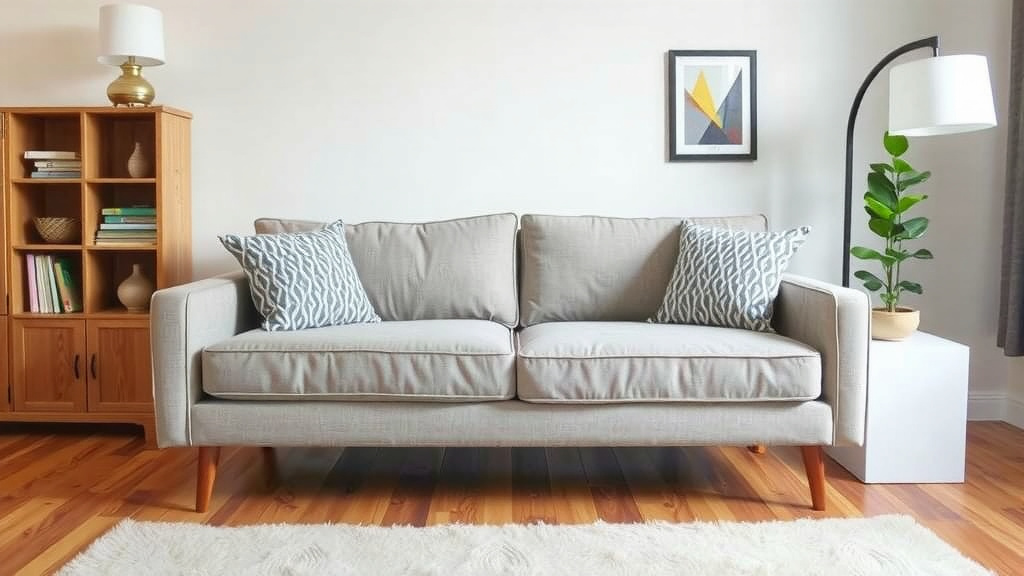
This is where the “sofa” part gets its good looks. Two or three firm seat cushions plus throw pillows hide the plywood and the hinge line. A fitted slipcover over the whole backrest makes it look store-bought instead of garage-built.
Many upholstery guides recommend zip-on covers because you can actually wash them (Mayo Clinic notes regular washing helps reduce dust mites and allergens in bedding). That is a polite way of saying your dog will sit on this before your guests do.
Testing Your New Sofa Bed
Fold it down. Fold it up. Do it five times. If the hinge sticks or the frame creaks, tighten and re-check now, not when your in-laws are already lying on it. Sit gently first, then commit to the full flop test.
Spend one full night on it if you can. Your back will tell you instantly if the mattress or deck needs a tweak. Then enjoy the smug feeling every DIYer earns: you built that, with your own hands, over one very satisfying weekend.
Conclusion
You came in wondering if a sofa bed was too ambitious for a weekend. Now you know it is just a box, a deck, and one very smart piano hinge. Pick your mattress size, make your cuts carefully, and let the glue do its job. Sand it soft, finish it clean, and dress it up with cushions that fool everyone. We researched plenty of plans, and the folding-backrest design keeps proving itself for first-timers. Your next step is simple: grab your tape measure, write out that cut list, and head to the lumber yard this week. Your guests, and your back, will thank you.
Frequently Asked Questions
How much does it cost to build a DIY sofa bed?
Most builds land between $150 and $300, depending on your mattress choice. The frame itself usually runs $60 to $100 in lumber and hardware. If you already own a drill and saw, you are halfway there.
Can I build a sofa bed without a circular saw?
Yes, you can. Ask the lumber yard or big-box store to make your cuts when you buy the wood. A hand saw works for the 2x4s if you do not mind the workout.
How strong is a homemade sofa bed frame?
A well-glued 2×4 frame with corner brackets easily handles two adults sitting and one adult sleeping. The weak points are usually the hinge screws, so check them after the first few weeks. Tighten anything that loosens and it will last for years.
What kind of wood is best for a sofa bed?
Standard kiln-dried pine 2x4s are the go-to because they are cheap, straight, and easy to work with. Avoid pressure-treated lumber indoors, since the chemicals are not meant for living spaces. Poplar or birch plywood gives you a cleaner edge for visible surfaces.
Can a sofa bed be disassembled if I move?
Absolutely, if you plan for it. Use screws instead of nails and skip the glue on the leg connections. You will sacrifice a little rigidity, but the frame will break down into flat pieces that fit through any doorway.