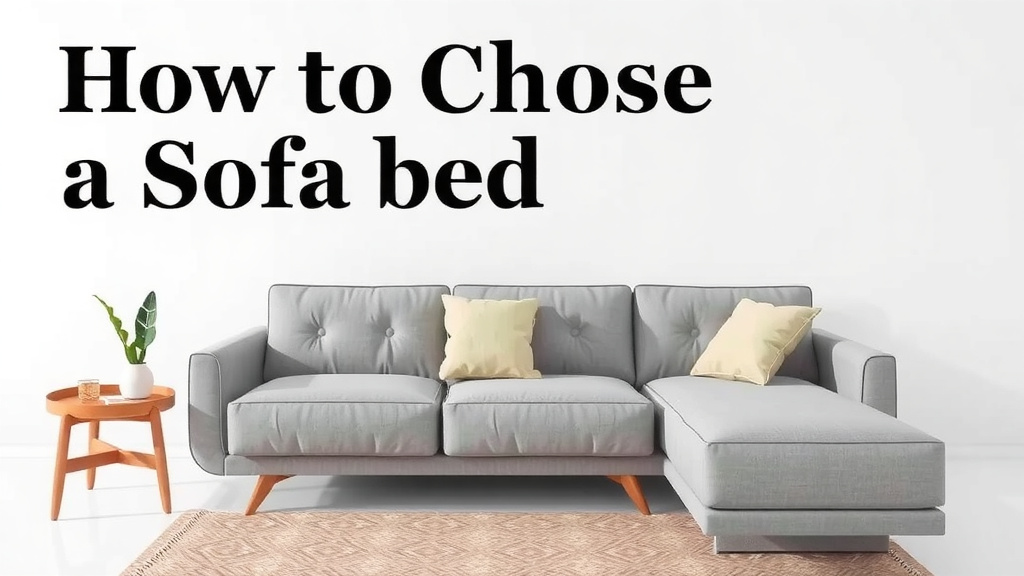
How to Choose a Sofa Bed: A Practical Buyer’s Guide
Choosing a sofa bed comes down to three things: measuring your space, knowing how often guests will actually sleep on it, and picking the right mattress type for comfort. Get those three right, and you’ll end up with a couch that works hard by day and sleeps well by night.
Here’s the thing—sofa beds have come a long way. Today’s models range from comfy pull-out couches to sleek futons and even sectional sleepers with memory foam. We researched the most common buyer mistakes, and the biggest one is skipping the measurements. Nothing stings like a sofa that won’t fit through your door (we’ve heard that story more than once).
- Measure everything—your room, your doorways, and the opened bed.
- Match the mattress to how often it’ll be slept on.
- Test the mechanism—a smooth pull-out saves your back.
- Pick a frame built to handle daily folding and unfolding.
- Set a budget that balances comfort with durability.
Below, we walk you through each step in plain English, so you can shop with confidence and find a sofa bed your guests will actually thank you for.
Finding the Right Sofa Bed for Your Home
The right sofa bed fits your room, opens smoothly, and gives your guests a decent night’s sleep. Start with measurements, then work through mattress type, mechanism, and frame quality. We’ll walk you through each step below.
Measure Your Space First (Trust Us on This)
Grab a tape measure before you shop. Measure the wall where the sofa will sit, leaving a few inches of breathing room on each side. Then measure the bed size when it’s fully opened.
Here’s the part people forget: measure your doorways, hallways, and stairwells. A sofa bed is heavier and bulkier than a regular couch because of the metal frame inside. Many delivery teams won’t remove doors or hoist furniture over balconies, so know your path before you buy.
Clearance Matters Too
When the bed pulls out, you need space to walk around it. Aim for at least 2 feet of clearance at the foot of the bed. If you’re tight on room, consider a futon or a loveseat sleeper instead of a full pull-out. Our roundup of alternatives to sleeper sofas covers folding beds and chair beds for tight rooms.
Match the Mattress to How Often It Gets Used
How often will someone actually sleep on this thing? Once a year? Every weekend? The answer decides your mattress.
- Occasional use (a few nights a year): A standard innerspring or foam pad works fine.
- Regular use (weekly or monthly guests): Memory foam or gel foam holds up better and sleeps cooler.
- Every-night use: Look for an air-over-coil or high-density foam design, or consider a sleep sofa with a real mattress.
Side sleepers tend to feel the bars through thin mattresses more than back sleepers do. If your guests are side sleepers, spend the extra money on foam (NIH sleep research shows pressure points can disrupt sleep quality, which tracks with what reviewers report).
Comfort Upgrades Worth Considering
A mattress topper can rescue an average sleeper. Many people also swap in an aftermarket memory foam pad. Just check the folded depth so the mechanism still closes.
Test the Opening Mechanism
Pull the bed out in the store. Yes, really. If it takes two people and a prayer to open, imagine doing it at midnight when your guest arrives tired.
We found that the smoothest mechanisms use a single pull-tag system that lifts and unfolds in one motion. Older-style bar pulls require more muscle and often catch on rugs. Ask the salesperson to demonstrate it twice. If the floor model sticks or squeaks, walk away.
Where the Bed Lands
Check how far the mattress sits from the ground. A bed that sits low to the floor is harder to get in and out of, especially for older guests or anyone with knee or back issues (Cleveland Clinic notes that low surfaces increase strain when standing up).
Frame and Build Quality
The frame takes a beating every time you fold and unfold. Kiln-dried hardwood frames last the longest. Steel mechanisms welded at the joints beat bolted ones over time.
Lift one corner of the sofa in the showroom. If the whole thing flexes and twists like a wet noodle, that’s a red flag. A solid frame should feel planted.
Cushions and Fabric Choices
High-resilience foam cushions keep their shape after years of double duty. For fabric, think about your real life:
- Pets or kids? Go with a tight-weave or performance fabric that wipes clean.
- Light-colored room? Consider a removable, washable cover.
- Heavy daily use? Leather or faux leather hides spills and stains.
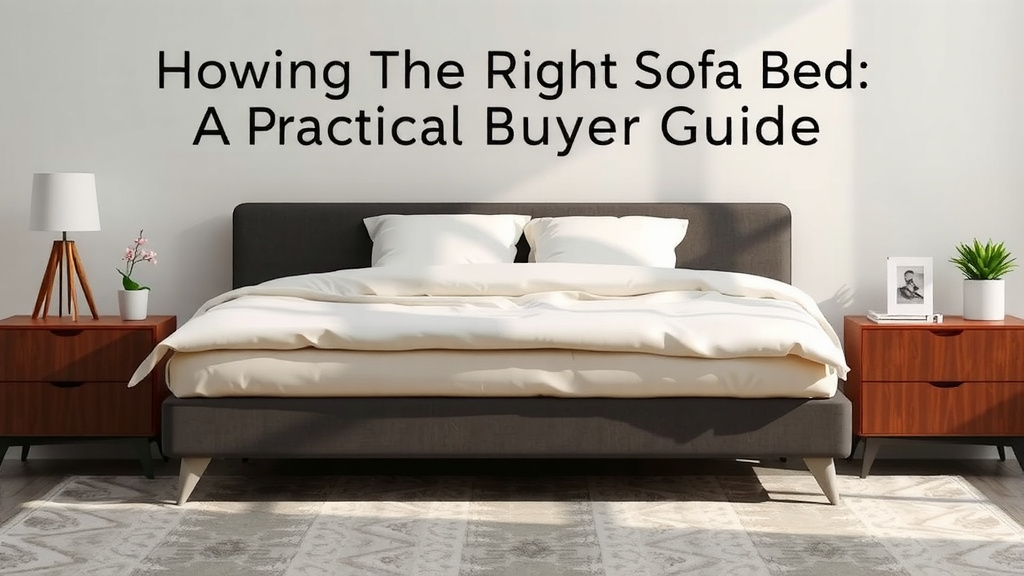
Pick the Right Size for Your Guests
Sofa beds come in standard mattress sizes, and each one sleeps differently.
| Size | Sleeps | Best For |
|---|---|---|
| Twin / chair bed | 1 adult | Small apartments, solo guests |
| Full | 1–2 adults (cozy) | Couples who don’t mind snuggling |
| Queen | 2 adults | Most guest situations |
| Sectional sleeper | 2+ adults | Big rooms, family visits |
Quick rule: a queen sleeper needs roughly 7 by 5 feet of open floor when the bed is out. Sketch it out on paper with painter’s tape on the floor if you’re unsure. It sounds silly; it works.
Set a Realistic Budget
Decent sofa beds start around $500 and climb past $3,000 for premium models. Here’s a simple way to think about it: the more nights it sleeps someone per month, the more you should spend on the mattress and mechanism.
Under $800, expect innerspring mattresses and basic frames. Between $800 and $1,500, you’ll find memory foam options and smoother pull-outs. Above that, you’re paying for durable frames, better fabrics, and sleeper designs that feel like real beds.
Don’t forget a warranty. Look for at least a few years on the frame and mechanism. A one-year warranty on a folding mechanism is a company hedging its bets.
Delivery and Assembly Fees
Budget an extra $100 to $300 for white-glove delivery and room placement. Some retailers include it; many don’t. Ask before you click “buy,” not after.
Your Pre-Purchase Checklist
Before you hand over your card, run through this quick list:
- Measured the room, opened bed size, and every doorway on the delivery path.
- Matched the mattress type to how often guests will sleep over.
- Pulled the mechanism open and closed at least twice in person (or read recent buyer reviews).
- Checked the frame for solid wood or welded steel.
- Confirmed the mattress height works for your guests’ comfort.
- Compared warranties and factored in delivery fees.
Common Mistakes to Sidestep
We found that most unhappy sofa bed owners made one of three mistakes. First, they bought for looks and forgot the bed. Second, they skipped the door measurement and paid restocking fees. Third, they bought cheap, then upgraded a year later—paying twice.
Avoid all three and you’re ahead of the game. Take your time, measure twice, and test everything you can in person. Your spine (and your guests) will thank you.
Conclusion
Choosing a sofa bed doesn’t have to feel overwhelming. Measure your room and every doorway first. Match the mattress to how often your guests will actually sleep over. Test the mechanism, check the frame, and set a budget that reflects real nightly use. We found that buyers who follow this order rarely regret their purchase. Those who skip the measuring tape? Not so much. Your future self will thank you every time a guest gets a good night’s sleep on your couch. Ready to shop? Grab that tape measure and sketch out your space today—then take this checklist with you to the showroom.
Frequently Asked Questions
Can a sofa bed be comfortable enough for everyday sleeping?
Yes, but only if you buy the right one. Look for high-density foam or air-over-coil mattresses and a sturdy frame rated for daily use. We found that budget models are fine for guests but tend to wear out fast under nightly folding and unfolding.
Do sofa bed mattresses need special sheets?
Most use standard mattress sizes, so regular sheets usually fit. That said, sofa bed mattresses often run a bit thinner than regular ones, so deep-pocket sheets may fit loosely. Check your mattress depth before buying sheets, and consider sheets with elastic straps for a snug fit.
How long should a good sofa bed last?
A quality sofa bed should last 7 to 10 years with normal use. Frames with kiln-dried hardwood and welded steel mechanisms sit at the higher end of that range. If you sleep on it every night, expect to replace the mattress sooner than the frame.
Is a futon a good alternative to a pull-out sofa bed?
Futons work well in small spaces and cost less up front. They fold flat without a hidden mattress, so there’s no mechanism to break. The tradeoff is comfort—most futons sit lower to the ground and offer less cushioning than a true sleeper sofa.
Can I return a sofa bed if it doesn’t fit my room?
It depends on the retailer, and restocking fees are common. Many stores charge 10 to 30 percent for returns on large furniture, and some won’t accept opened or assembled items at all. Always read the return policy before buying, and double-check your measurements so you never need to.