How High Should a Side Table Be Next to a Sofa?
For your side table to be just right next to your sofa, aim for it to be roughly the same height as your sofa’s armrest. This sweet spot ensures convenient access to your drinks or remotes without awkward reaching. The ideal side table height is typically between 20-26 inches, but your sofa’s specific dimensions are the best guide.
Getting the height wrong can make your living space feel a bit off. Too tall, and it looks bulky. Too short, and it’s just not practical. We found that matching it to your sofa’s armrest is the easiest way to achieve a balanced and functional layout. This simple guideline makes a big difference in your room’s overall comfort and aesthetic.
- Side tables should ideally match your sofa’s armrest height for convenience.
- Typical height range is 20-26 inches, but sofa arm height is the key.
- A well-proportioned side table enhances both function and style.
- Consider armrest height for drinks, lamps, and decorative items.
Let’s walk through exactly how to figure out the perfect side table height for your cozy corner.
Finding the Right Side Table Height for Your Sofa
So, you’ve got your perfect sofa, and now you’re thinking about that little table that will sit beside it. You want it to be just right – not too high, not too low. We’ve all been there, reaching awkwardly for a drink or feeling like the table is just… out of place. Let’s figure out exactly how high your side table should be to make your living space both comfy and stylish.
The Golden Rule: Armrest Alignment
The easiest and most effective way to get the height right is to match your side table to your sofa’s armrest. Think of it as a perfect pair! When your table’s top surface is level with your sofa’s arm, everything just flows. You can easily set down a drink, a book, or your phone without a second thought. It creates a seamless transition between your seating and your surfaces.
Why Armrest Height Matters So Much
Why is this the go-to recommendation? Well, your sofa’s armrest is designed for your comfort. It’s the natural resting place for your arm. When a side table aligns with this, it becomes an extension of that comfort. You don’t have to crane your neck or stretch too far. This ergonomic principle makes the table truly functional.
A Simple Measurement Trick
Here’s how you do it: simply measure the height of your sofa’s armrest from the floor. Use a tape measure. Stand your side table next to the sofa and see where its top falls in relation to the armrest. If it’s pretty close, you’re golden! A little bit higher or lower is usually okay, but matching it is the sweet spot.
What If My Sofa Has Different Armrest Heights?
This is a common situation! Many sofas have arms that curve or slope. In these cases, we recommend measuring to the highest point of the armrest where you might naturally place an item. If your armrest has a wide, flat top, that’s your measurement point. If it slopes down, aim for the middle or slightly higher part of the slope. The goal is still a convenient surface.
Handling Widely Varying Arm Styles
Some sofa designs are quite dramatic with their armrests. If your armrest is very thin and tall, or very low and rolled, you might need to use your best judgment. Many designers will still aim for a table that is within an inch or two of the main armrest height. You can also consider the overall aesthetic of the sofa.
Typical Side Table Heights: What to Expect
While armrest height is king, it’s helpful to know the standard ranges for side tables. Most side tables designed for living room use fall between 20 and 26 inches tall. This range generally accommodates average sofa heights. If you’re buying a new table and can’t measure against your sofa yet, looking within this range is a safe bet.
Understanding Standard Furniture Dimensions
Furniture manufacturers create pieces with typical room layouts in mind. The 20-26 inch range accounts for a variety of sofa styles. A table in this range often works well for holding a table lamp, a stack of magazines, or your favorite mug. It’s a **versatile height** that suits many needs.
| Table Type | Typical Height Range (inches) | Best For |
|---|---|---|
| Standard Side Table | 20-26 | General use next to sofas and chairs |
| End Table (often taller) | 22-28 | Can work with slightly higher sofas or for lamps |
| C-Table (slides under sofa) | 24-26 | Convenient for immediate use, extra surface |
When to Consider Taller or Shorter Tables
What if your sofa is unusually low or high? For a very low-slung, modern sofa, you might opt for a table on the shorter end of the spectrum, perhaps 18-20 inches. Conversely, if you have a grand, high-backed sofa, a table closer to 26-28 inches might be more appropriate. Always measure your sofa’s armrest first to avoid guesswork. This ensures the table feels like a **natural extension** of your furniture.
Beyond Height: Other Factors for Perfect Placement
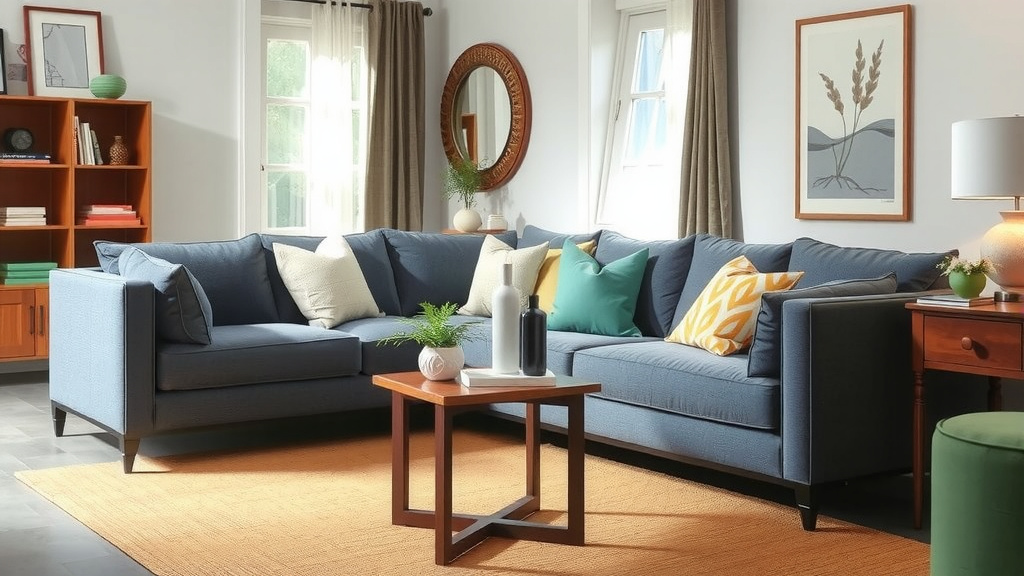
While height is crucial, don’t forget other elements! The width and depth of your side table matter too. A massive table can overwhelm a small sofa, while a tiny one might look lost next to a large sectional. Think about the scale and proportion relative to your sofa and the overall room.
Proximity and Accessibility
How close should the table be? Generally, you want it within arm’s reach of someone sitting on the sofa. This means it shouldn’t be so far away that you have to lean out precariously to grab your drink. Usually, a gap of 1-3 inches between the sofa and the table is comfortable. This keeps everything handy and prevents stubbed toes!
Functionality: What Will You Use It For?
Consider what you’ll be doing with the table. Is it primarily for holding a mug and a remote? Or do you plan to place a large table lamp on it? If a lamp is involved, you’ll want the table height to be such that the lamp’s shade isn’t blocking your view or creating harsh light. Many interior designers suggest the lamp shade should be roughly at eye level when seated (National Association of Lighting).
Your Side Table Height Checklist
Ready to nail that perfect side table height? Here’s a quick rundown to make sure you get it right:
- Measure your sofa’s armrest height.
- Aim for the side table’s top to be at or slightly below this measurement.
- Check if the table fits comfortably next to your sofa without being too close or too far.
- Consider the width and depth of the table in relation to your sofa.
- Think about what you’ll place on the table (drinks, lamps, decor).
- Ensure the height allows for easy access and doesn’t obstruct views.
Conclusion
Finding the perfect side table height is all about creating a harmonious and functional space. By using your sofa’s armrest as your primary guide, you ensure effortless convenience for drinks, remotes, and more. Remember, the goal is a surface that feels like a natural extension of your seating, not an awkward addition. Measure your sofa, consider the typical height ranges, and trust your eye for balance. You’re now equipped to choose a side table that truly enhances both the comfort and the style of your living room.
Frequently Asked Questions
What if my sofa has very low armrests?
If your sofa has exceptionally low armrests, aim for a side table that is just a bit taller. You want the table’s top to be accessible without feeling like you’re reaching down too far. A table around 18-20 inches might work well in this scenario.
Can I use a side table that’s slightly taller than my sofa’s armrest?
Yes, a slightly taller table can work, especially if you plan to place a table lamp on it. The key is that the lamp shade should ideally fall around eye level when you’re seated. Avoid tables that are dramatically higher than the armrest.
How close should the side table be to the sofa?
You want your side table to be within easy arm’s reach. A gap of about 1 to 3 inches between the sofa and the table is usually ideal. This prevents awkward stretching and keeps your essentials handy.
Does the type of sofa arm (e.g., rolled vs. square) affect the height?
It can. For rolled or sloped arms, measure to the highest comfortable point where you’d set an item. For square arms, measure to the top surface. The principle remains to match the functional height for accessibility.
What if I have a sectional sofa with different arm heights?
For sectionals, consider the arm height of the specific seating area where the side table will be placed. If it’s in a corner or at the end of a chaise, measure the armrest closest to where you’ll sit. You might need different tables for different sections.

![10 Best Brand Of Chesterfield Sofa [2026]](https://hometopaccesories.com/wp-content/uploads/2026/08/10-best-brand-of-chesterfield-sofa-2026-featured-768x432.jpg)