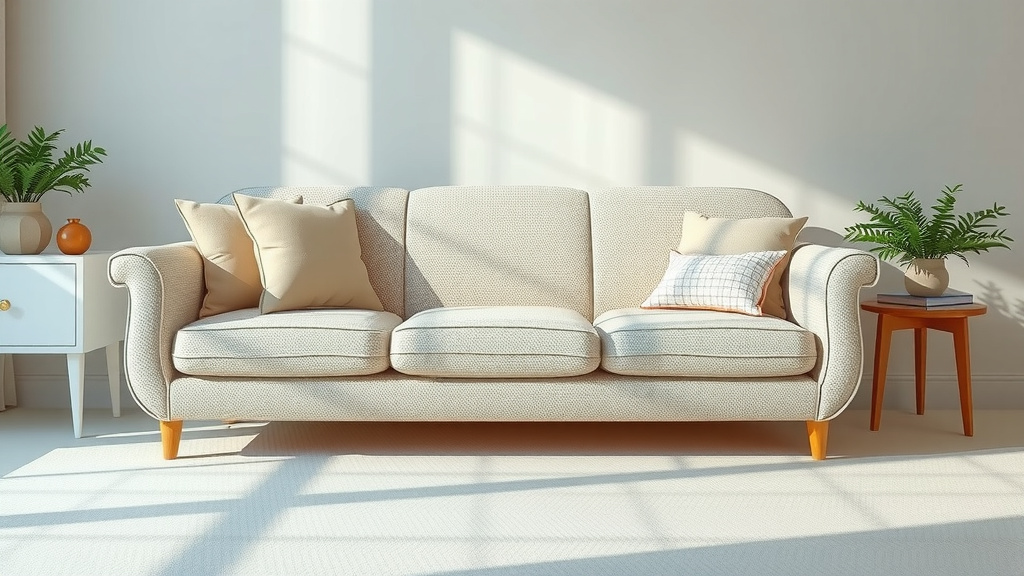
How Much Fabric for a Sofa: A Buyer’s Guide
Figuring out how much fabric you need for a sofa can feel tricky, but generally, you’ll need between 5 to 15 yards for a standard-sized sofa. This range accounts for different sofa styles, fabric widths, and any pattern matching you might need. Getting the right amount prevents costly trips to the store for just a little more fabric.
The exact amount really depends on your specific sofa’s dimensions and the width of the fabric you choose. Larger sectionals or sofas with intricate details like skirts or many cushions will use more material. You also need to consider if your fabric has a pattern that needs careful alignment, which can sometimes require a bit of extra yardage.
- Yardage varies by sofa size and style.
- Fabric width is a major factor.
- Pattern matching can increase fabric needs.
- Always measure your sofa carefully.
- Buying a little extra is better than running short.
Let’s break down the factors that go into calculating your fabric needs so you can confidently start your project.
Calculating Your Sofa Fabric Needs: A Practical Guide
So, you’re ready to give your sofa a fresh new look? That’s exciting! The biggest hurdle often isn’t the sewing itself, but figuring out how much fabric you’ll need. It’s like baking – too little flour, and your cookies won’t come together. Too much, and you’ve got leftovers you might not use.
Getting this measurement right is key to a successful upholstery project. We’ve found that most standard sofas fall into a 5 to 15 yard range. This covers a lot of ground, but we’ll break down exactly why that range exists and how you can pinpoint your specific needs.
Understanding Fabric Width: Your First Measurement Clue
The width of your fabric is a super important starting point. Fabrics come in different widths, typically ranging from 45 inches to 54 inches, and sometimes even wider. This measurement tells you how much usable fabric you get across its roll.
Standard Fabric Widths
Most upholstery fabrics are sold in widths of around 54 inches. This is a common standard that designers and manufacturers use. If your chosen fabric is 54 inches wide, you’ll generally need less yardage compared to a narrower fabric.
Narrower Fabrics (e.g., 45 inches)
If you fall in love with a fabric that’s only 45 inches wide, you’ll likely need to purchase more yardage. This is because you’ll have more seams and potentially more waste when cutting larger pieces for your sofa. Think about laying out your sofa pieces on the fabric; a narrower width means more passes or piecing together smaller sections.
Wider Fabrics (e.g., 60+ inches)
Excitingly, some fabrics come in wider rolls, sometimes 60 inches or even more! These can be a real lifesaver, especially for larger pieces like sofa backs or long seats. Wider fabrics often mean fewer seams and less fabric waste, potentially saving you money and making your project quicker.
Sofa Dimensions: Measuring Your Project
Now, let’s talk about the star of the show: your sofa! You can’t estimate fabric without knowing the size of the piece you’re covering. Grab your measuring tape and get ready.
The Key Measurements You Need
You’ll want to measure:
- Length: The total length of the sofa, including arms.
- Depth: From the front edge to the back.
- Height: From the floor to the top of the back cushions.
- Arm Height and Width: Don’t forget these details!
- Cushion Dimensions: Measure each seat cushion and back cushion separately.
We found that many online guides suggest creating a “flat pattern” of your sofa. This means imagining unfolding your sofa into flat pieces. You then measure the dimensions of these flat pieces and add a little extra for seams and curves.
Estimating Yardage with Measurements
A general rule of thumb we’ve seen is to measure the longest length of your sofa, multiply it by the width, and do this for all major pieces. Then, add up these areas and divide by the square inches in a yard (which is 1296 sq inches: 36 inches x 36 inches).
However, a simpler approach many DIYers use is based on the sofa’s overall size:
- Small Loveseat (under 60 inches): Typically needs 4-6 yards.
- Standard Sofa (60-84 inches): Usually requires 7-10 yards.
- Large Sofa or Sectional: Can demand 10-15 yards or more.
These are rough estimates. Always measure your specific sofa to get a more accurate number.
Considering Sofa Style and Details
The shape and design of your sofa play a big role. A sleek, modern sofa might be more straightforward than one with lots of extra features.
Simple vs. Detailed Designs
A sofa with clean lines and few curves will use less fabric. Think of a simple boxy shape. Now, imagine a sofa with a skirt that goes all the way around, or very puffy, rounded arms. These details require extra fabric to cover all those contours and folds.
The Impact of Skirts and Piping
Sofas with decorative skirts will need significant additional yardage to go around the entire base. Piping, which is that decorative cording often found along seams, also uses up fabric. You’ll need extra strips to create the piping itself.
Multiple Cushions and Layers
Do you have a sofa with many throw pillows or large, plush seat and back cushions? Each of these needs to be covered, and they can add up quickly. If your sofa has removable cushion covers, remember you’ll be making at least two sides for each cushion, plus any welting or piping.
Pattern Matching: The Fabric Gobbler
This is where things can get tricky and often require more fabric than you initially thought. If your fabric has a bold pattern, you’ll need to make sure it flows correctly across all the different sections of your sofa.
Understanding Pattern Repeat
Fabric patterns have a “repeat,” which is the distance before the pattern starts over. A large, complex pattern with a big repeat will almost always require more fabric. You need to align the pattern from one piece to the next so it looks continuous and intentional.
How to Account for Pattern Repeat
Many upholstery experts recommend adding an extra 10-20% to your total yardage if you’re working with a patterned fabric. You’ll need to strategically lay out your pattern pieces to match them up, which often means cutting them from different parts of the fabric roll than you might otherwise.
For example, if your pattern repeat is 18 inches, and you have a large sofa back piece, you’ll need to ensure that the pattern lines up perfectly with the pieces on either side. This often means wasting some fabric to achieve the visual continuity.
Putting It All Together: A Quick Checklist
Before you head to the fabric store, do this quick check:
- Measure Your Sofa: Get all the dimensions right.
- Note Fabric Width: Check the width of your chosen material.
- Consider Your Sofa Style: Skirts? Curves? Lots of cushions?
- Factor in Pattern Repeat: If it has a pattern, be prepared for more yardage.
- Add a Little Extra: Better safe than sorry! A yard or two extra can save headaches.
- Consult a Pro (if unsure): Many fabric stores offer measuring advice.
A Simple Calculation Example
Let’s say you have a standard sofa that’s 80 inches long, 35 inches deep, and 30 inches tall, with two seat cushions and two back cushions. Your fabric is 54 inches wide and has a 12-inch pattern repeat.
Estimating for a Standard Sofa
For a sofa this size, we might start with a baseline estimate of around 8 yards, based on the general guidelines. However, since it has multiple cushions and a pattern, we need to adjust.
Adjusting for Details and Patterns
The pattern repeat means we should add about 10-20%. Let’s take 15% of 8 yards (which is about 1.2 yards). So, we’re now looking at roughly 9.2 yards. Add a bit more for good measure, and aiming for 10 yards would likely be a safe bet for this example. This covers the main pieces, plus the cushions and allows for pattern matching.
When in Doubt, Buy a Little Extra
Running out of fabric halfway through your project is a common frustration. It’s always better to have a little left over than to be a yard short. Extra fabric can be used for matching throw pillows, a small ottoman, or even for future repairs. We’ve found that most people are happier having a bit too much than not enough!
Conclusion
Calculating the right amount of fabric for your sofa project is definitely manageable! You’ve learned that fabric width, your sofa’s specific dimensions, its style details like skirts, and whether you’re matching a pattern all play a part. We found that a standard sofa typically needs 5 to 15 yards, but these factors help you narrow it down. Don’t stress too much if you end up with a little extra; it’s always better to have it than to run short!
Your next step is to grab your tape measure, assess your sofa and your chosen fabric, and add a buffer for safety. You’ve got this!
Frequently Asked Questions
What if my sofa has a lot of curves and padding?
Sofas with rounded arms, tufting, or a very plush, sink-in style will definitely require more fabric. You’ll need extra material to smoothly cover those extra contours and folds. We recommend adding at least an extra yard or two beyond your basic measurements for these softer, more organic shapes.
How do I know if I need extra fabric for my sofa’s pattern?
You’ll need extra fabric if your pattern has a large “repeat” or if you want a specific part of the pattern to be centered on a prominent area, like the sofa back. For most patterned fabrics, we found adding 10-20% more yardage is a good rule of thumb to ensure good alignment and avoid running short.
Can I use upholstery fabric that’s a different width than recommended?
Yes, you absolutely can! However, using a narrower fabric (like 45 inches) will mean you need to buy more yardage and potentially piece more sections together. Wider fabrics (60+ inches) are fantastic because they often require less yardage and result in fewer seams.
Is it better to buy fabric online or in a store for accurate measuring?
Buying fabric in a store allows you to see and feel the material, and staff can often offer personalized advice on yardage based on the fabric’s width and your project. Online shopping is convenient, but always double-check the listed fabric width and any pattern repeat information.
What should I do if I’m still unsure about how much fabric to buy?
If you’re feeling uncertain after measuring, err on the side of caution and buy a bit extra. Most fabric stores are happy to offer guidance, and some even have online calculators. Having a little leftover fabric can be useful for making matching pillows or for future small repairs.
![10 Best Brand Sofa Reviews [2026]](https://hometopaccesories.com/wp-content/uploads/2026/08/10-best-brand-sofa-reviews-2026-featured-768x432.jpg)

![10 Best Buy Recliner Sofa [2026]](https://hometopaccesories.com/wp-content/uploads/2026/08/10-best-buy-recliner-sofa-2026-featured-768x432.jpg)