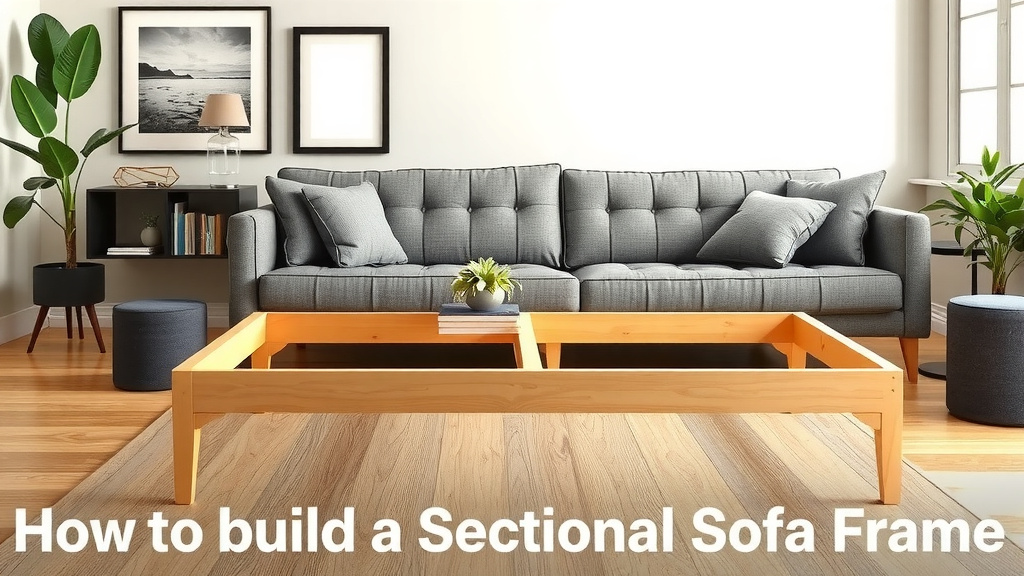
How to Build a Sectional Sofa Frame: Step-by-Step Guide
The easiest way to build a sectional sofa frame is to construct each seat section separately as a sturdy wooden box, then bolt them together in your desired L-shape or U-shape. You’ll need plywood, 2×4 lumber, wood screws, and basic tools like a drill and saw.
We researched how DIYers and furniture makers approach this project, and we found that most builds take a weekend or two. The key is getting your measurements right before you cut anything. Many experts say the frame matters more than the cushions, since a wobbly base will ruin even the plushest seat.
- Sketch your layout and take exact room measurements first.
- Build each seat section as its own sturdy wooden box.
- Use 2x4s for the frame and plywood for the deck.
- Reinforce corners with screws and wood glue.
- Bolt sections together so you can rearrange later.
Ready to stop paying furniture-store prices? Let’s walk through exactly how this works, step by step, so you can build a frame that lasts for years. If you want the broader picture, our guide to building a sofa from scratch covers the whole process step by step.
Building a Sectional Sofa Frame the Right Way
The best approach is to build independent seat boxes, then connect them with bolts. Why? Because if you glue one giant frame together, you can never move it again. Ever tried fitting a fully assembled L-shaped sectional through a hallway? We haven’t either, because it’s impossible.
Think of each section like a Lego brick. Strong on its own, but friendly with its neighbors.
Gather Your Materials and Tools
Here’s your shopping list before you touch a saw:
- 2×4 lumber for the frame rails and legs
- 3/4-inch plywood for the seat deck and back panel
- Wood screws (2.5-inch and 1.25-inch)
- Wood glue for every joint
- Carriage bolts, washers, and nuts to join sections
- Pocket hole jig, drill, circular saw, and measuring tape
One tip we found repeated across DIY builds: buy 10% extra lumber. Cuts go wrong. Wood warps. Life happens.
Measure Your Space and Sketch the Layout
Measure your room twice. Then measure a third time, because your future self will thank you. Mark the walls with painter’s tape to visualize the footprint before cutting a single board.
Most DIY sectionals use seat heights between 15 and 18 inches, with depth between 34 and 40 inches. We found that ergonomic guidance on seated posture supports a seat height that keeps your feet flat on the floor and knees near 90 degrees (NIH). Beyond seat height, our guide to choosing the ideal sofa seat depth explains how depth affects comfort for your body type.
Standard Sectional Dimensions to Aim For
| Section | Width | Depth | Height |
|---|---|---|---|
| Main seat unit | 32–36 in | 36–40 in | 15–18 in (seat) |
| Corner unit | 36–40 in | 36–40 in | 15–18 in (seat) |
| Chaise extension | 30–34 in | 55–65 in | 15–18 in (seat) |
| Armrests | 6–8 in wide | Full depth | 9–11 in above seat |
Constructing Each Seat Box Step by Step
Build every section using the same method. Repetition is your friend here. Once you’ve built one box, the rest go faster.
Cut the Frame Rails
Cut your 2x4s for the front rail, back rail, and two side rails of each box. Use your circular saw with a straightedge guide for clean, square cuts. A sloppy cut now means a wobbly couch later.
Drill pocket holes at each end of the front and back rails. These let you join corners from the inside, so no ugly screws show.
Assemble the Box
Apply wood glue to every joint, then drive screws through the pocket holes. Glue plus screws makes joints roughly twice as resistant to racking compared with screws alone, according to general woodworking guidance we found from university extension resources.
Attach the Plywood Deck
Cut plywood to fit the top of the box, leaving a slight overhang if you want. Screw it down every 6 inches along the rails. This deck is what your cushions sit on, so it needs zero flex. If you can press down and feel movement, add a center support rail.
Adding Legs, Arms, and Corner Support
Legs matter more than people think. Use 4×4 legs or pre-made furniture legs rated for at least 300 pounds each. A three-seat sectional can hold several humans and a dog, so overbuild it.
For armrests, attach a vertical 2×4 box frame to the sides of the end sections. Cap it with plywood, and round the top edge with sandpaper so nobody snags a sleeve.
Corners need extra love. Add a diagonal corner brace inside each box where two rails meet. Many experts say corner reinforcement is the single best spot to spend extra effort.
Connecting the Sections Together
Time to make your boxes into a family. Line sections up flush, clamp them, then drill through the side rail of one section into the next. Insert carriage bolts with washers and nuts, then tighten.
This method gives you the best of both worlds. The sectional looks like one piece, but you can unbolt it and rearrange into a different shape anytime. Moving day? No cursing required.
Sanding, Checking, and Final Prep for Cushions
Before cushions arrive, do a full inspection. Sit on every section. Rock side to side. Push hard on corners. Anything that creaks now will creak forever, so fix it while the frame is bare.
- Sand all sharp edges with 120-grit sandpaper
- Fill visible screw holes with wood filler if you care about looks
- Check every section sits level on the floor
- Confirm bolted joints are tight but not stripping
- Add felt pads under each leg to protect floors
- Wipe down all dust before adding foam or cushions
A quick note on cushion fit: order or cut foam about 1 inch larger than the deck on each side, so it fills the seat fully. High-density foam (rated 2.0 pounds or more per cubic foot) holds shape far longer, which we found echoed across upholstery guides.
Common Mistakes to Avoid
We found a few recurring oops-moments across DIY builds, so you can skip them entirely:
- Skipping the sketch — freehand builds waste lumber fast
- Using 1x lumber instead of 2x4s for rails — it flexes under weight
- Gluing everything without screws — joints fail when glue dries out
- Forgetting a center support on seats wider than 36 inches
- Bolting sections too tightly against uneven floors, causing wobble
One more honest note: take breaks. Rushing a frame on Sunday evening at 9 p.m. is how people end up with a sofa that leans. And nobody wants a leaning sectional — that’s less furniture, more funhouse.
Safety Tips While Building
Power tools don’t forgive, so slow down. Wear safety glasses whenever cutting, and keep hearing protection nearby for long saw sessions. The CDC lists proper eye and ear protection as basic injury prevention for DIY and workshop work (CDC).
Also, work in a ventilated space when staining or sealing, and keep kids and pets out of the cutting zone. Your couch will take a week. A trip to the ER takes longer.
Conclusion
Building your own sectional sofa frame comes down to a few smart habits: build each seat as its own box, measure before you cut, and bolt sections together so you can rearrange later. Overbuild the corners and legs, use glue with every screw, and give the frame a good shake test before the cushions go on. We found that most DIYers finish this project in a weekend or two, and the result often outlasts store-bought furniture. Now grab your tape measure, sketch your layout, and cut your first board. Your future weekend naps will thank you.
Frequently Asked Questions
How much does it cost to build a DIY sectional sofa frame?
Most builds land between $150 and $400 for lumber, plywood, screws, and hardware, depending on size. Compare that to the $2,000-plus price tags at furniture stores, and the math gets pretty convincing. Cushions and upholstery are extra if you go that route.
What type of wood is best for a sofa frame?
Kiln-dried pine 2x4s work well for most DIY frames and keep costs low. If you want extra strength, hardwood like oak or maple holds up longer but costs more and is harder to cut. The key is picking straight boards without big knots or warping.
Can I build a sectional sofa frame without a pocket hole jig?
Yes, you can. Drill pilot holes and drive screws at an angle through the rails, or use metal corner brackets on the inside of each joint. It takes a bit more measuring, but the frame will be just as solid.
How do I keep my DIY sectional from wobbling on uneven floors?
Add adjustable furniture leg levelers or stick felt-and-plastic shims under the low legs. Check each section with a level after it’s in its final spot. Shimming after placement beats tightening bolts against an uneven floor and stressing the joints.
Is it cheaper to build or buy a sectional sofa?
Building usually costs less upfront, especially if you already own the tools. You also get custom sizing that stores can’t match. The trade-off is your time, so it’s cheapest when you enjoy the build itself.