How to Carry a Sofa Alone: Safe Moving Tips That Work
The easiest way to carry a sofa alone is to use furniture sliders or a shoulder harness to slide and guide it, rather than lifting it outright. Slide it onto a blanket, pull it across smooth floors, and use your body weight to steer it through doorways. Moving a two-person couch solo is possible — you just need a few tricks.
Sounds a little wild, right? But we found that most solo movers rely on simple tools like moving straps, sliders, and a dolly to get the job done. Many experts also say preparation matters more than muscle — clearing your path and measuring doorways saves you from the classic “sofa stuck in the hallway” moment.
TL;DR — How to carry a sofa alone:
- Measure your sofa and all doorways before you move anything.
- Clear a wide, obstacle-free path from start to finish.
- Use furniture sliders or a blanket to slide it across floors.
- Try a shoulder strap or harness for lifting stairs and corners.
- Know when to stop and call for help (your back will thank you).
Below, we break down exactly how to move your sofa by yourself, step by step — no second pair of hands required.
Moving a Sofa by Yourself the Smart Way
Your best bet is to slide first, lift second. Sliding a sofa with sliders or a blanket takes almost no muscle, while lifting puts real strain on your spine. Many experts recommend pushing or pulling heavy furniture whenever you can, and saving true lifts for stairs and tight corners (OSHA).
Gather the Right Tools Before You Touch the Couch
Half of a solo sofa move is gear. We found that most people succeed or fail based on what they prepared, not how strong they are. Here’s your shopping list:
- Furniture sliders — flat discs that glide on wood or carpet
- A shoulder harness or lifting strap — shifts weight to your legs and shoulders
- A utility dolly — essential for long driveways or porches
- Two thick blankets — cheap, effective, and you already own them
- Packing tape — keeps drawers, cushions, and blankets secure
Spend Now or Improvise Later?
A basic slider and strap kit costs about the same as a pizza dinner. If you’ll move more than once, buy it. If this is a one-time thing, a blanket taped under each corner works nearly as well. The tools don’t need to be fancy — they need to reduce friction and spread the weight.
Measure Everything (Yes, Everything)
Grab a tape measure before you push anything. Measure the sofa’s width, depth, and height — then measure every doorway, hallway, and stairwell it must pass through. Remember to compare diagonal dimensions too, since you’ll often tilt the sofa to fit.
Nothing stings like getting a couch halfway down a hallway only to find it’s two inches too wide. We found that most “stuck sofa” disasters trace back to one skipped measurement.
Sliding Your Sofa Across the Floor
Sliding is the safest solo method, full stop. Your legs and core stay fresh, and the sofa does most of the work — you’re just the steering wheel.
The Blanket Method
Tip the sofa gently onto its side, then slide a thick blanket under it, so the fabric sits beneath the frame. Lower it back down, grab the blanket’s edge, and pull. The sofa glides like a sled on grass.
Keep the pull low to the ground. If you pull from a standing lean-back position, you’re lifting with your back — exactly what you want to avoid.
Using Furniture Sliders Properly
Lift one end just enough to slip a slider under each leg or corner. Then push from the sofa’s side, not the front. Pushing from the side lets you walk forward and keeps your spine neutral.
On carpet, use plastic sliders with a textured bottom. On hardwood or tile, use felt-backed ones so you don’t scratch your floors.
Lifting and Carrying a Sofa Solo (Safely)
Sometimes you have no choice — stairs, a porch step, a tight turn. When you must lift, technique matters more than strength.
Body Mechanics That Protect Your Back
Health guidance on safe lifting is pretty consistent: keep the load close, bend your knees, and keep your back straight (NIOSH, Mayo Clinic). For a couch, that translates to a few habits:
- Squat down and grip the frame, never the cushions or fabric skirt.
- Keep the sofa tight against your body as you stand.
- Drive up with your legs, exhaling as you rise.
- Never twist while holding weight — move your feet instead.
- Take breaks before you feel shaky, not after.
Back injuries are one of the most common reasons working adults miss days on the job, and one awkward lift can do it (NIH). Think of your spine like a stack of poker chips — keep the stack straight and it holds plenty of weight.
Shoulder Straps and Harnesses: Worth It?
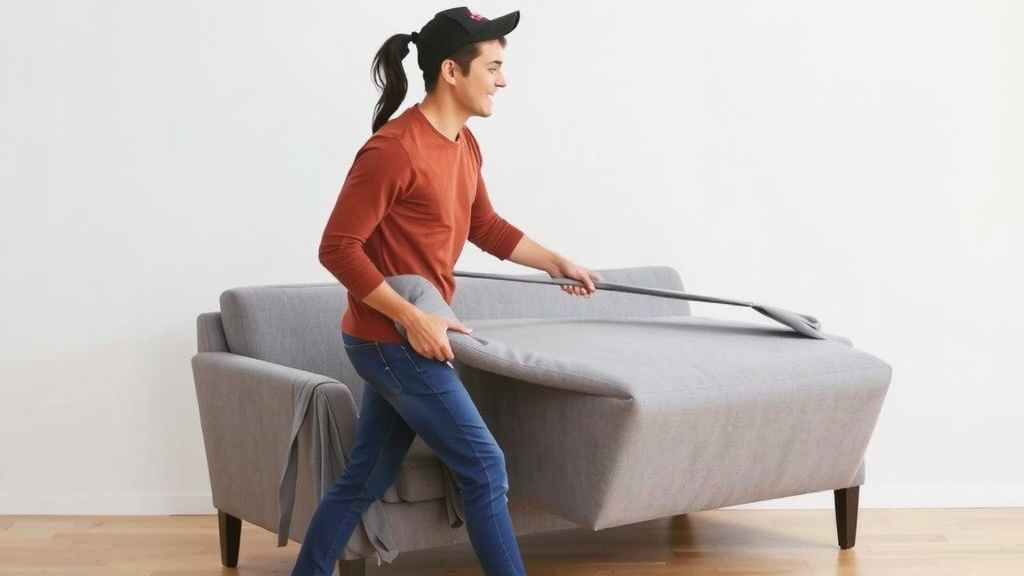
In a word, yes. A shoulder harness turns your whole body into a forklift. The strap holds the sofa against your torso, freeing your hands and pushing the load onto your legs and core instead of your arms.
We found that solo movers who used harnesses reported far less strain than those who hugged the sofa raw. Adjust the straps so the couch rides at hip height — too high and it blocks your view; too low and it drags.
Stairs, Corners, and Other Trouble Spots
Stairs alone? Lift from the bottom step, pivot, and walk backward one step at a time, keeping the sofa angled upward. The bottom of the couch acts as a skid plate, protecting both the frame and the steps.
| Obstacle | Best Solo Tactic | Watch Out For |
|---|---|---|
| Straight hallway | Blanket or sliders, push from the side | Rugs and cords underfoot |
| Standard doorway | Tilt sofa vertical or rotate 45 degrees | Door handles and trim |
| Stairs (going down) | Feet-first angle, walk backward slowly | Losing grip mid-step |
| Tight corner | Pivot on one end like a compass needle | Scraping walls |
| Long driveway | Utility dolly, strapped tight | Cracked pavement and curbs |
One more trick for corners: stand the sofa on its end so it’s vertical. Vertical is almost always narrower than horizontal, and it buys you the inches you need.
Know When to Tap Out
Here’s the honest part. Some sofas weigh 100 pounds or more, and a sectional can weigh three times that. If you feel a sharp pinch in your back, or the sofa starts tilting toward you, stop. Set it down, breathe, and reassess.
Calling a friend, a neighbor, or a two-hour moving service isn’t failure. It’s math: one hour of help costs less than one pulled muscle costs you in lost sleep, work, and patience.
Your Solo Sofa Move: The Pre-Move Checklist
Run through this list before you push a single inch:
- Measure the sofa and every doorway on the route.
- Clear the entire path — rugs, cords, shoes, pets.
- Gather sliders, blankets, straps, and tape.
- Secure cushions and any drawers with tape.
- Protect corners of the sofa with towels if squeezing through tight spots.
- Scout where the sofa will land, so you’re not shuffling it twice.
Sixty seconds of checking beats an afternoon of stubborn shoving. Now go get that couch where it belongs.
Conclusion
Moving a sofa alone sounds impossible until you break it down. Slide before you lift, measure every doorway, and let tools like sliders, blankets, and a shoulder harness do the heavy work. Protect your back with smart body mechanics, and know when a quick pivot or a vertical stand will save you inches. We found that the movers who succeed aren’t the strongest — they’re the most prepared. So grab your tape measure, clear your path, and set out your gear tonight. Your couch will be in its new spot by tomorrow, and your back will still be talking to you.
Frequently Asked Questions
Can one person really move a couch by themselves?
Yes, most standard sofas can be moved solo with the right tools and technique. Sliders, blankets, and a shoulder harness let you slide or guide the couch instead of deadlifting it. The exceptions are oversized sectionals and solid-wood pieces, which often genuinely need a second person. Facing an oversized sectional? Our guide to measuring a corner sofa helps you plan each piece.
How heavy is a typical sofa?
Most standard three-seat sofas weigh between 80 and 150 pounds, depending on the frame and cushions. Loveseats usually land closer to 60 to 100 pounds, while large sectionals can top 300. Check the manufacturer’s tag or product listing if you can — knowing the weight helps you plan.
Is it better to push or pull a heavy sofa?
Pushing is usually safer because you can use your body weight and keep your back straight. Pulling tends to pull your shoulders back and strain your lower back, especially if you lean away from the load. If you must pull, stay low and keep the force close to your hips.
Will furniture sliders damage my hardwood floors?
Not if you pick the right type. Use felt-backed sliders on hardwood, tile, and laminate, and save the hard plastic ones for carpet. We found that felt sliders glide smoothly and leave no scratches when the floor is free of grit, so give it a quick sweep first.
Should I remove the sofa legs before moving it?
If the legs unscrew easily, taking them off can make a real difference. Shorter legs lower the couch’s profile, help it clear door frames, and reduce wobble on stairs. Just keep the hardware in a labeled bag so reassembly takes minutes instead of an hour. If your couch is a recliner, our guide to taking a recliner sofa apart shows which sections detach.