How to Choose a Rug Size for a Sectional Sofa: Simple Guide
The best rug for a sectional sofa is one that’s large enough to fit under at least the front legs of every seat. For most sectionals, that means a 9×12 or 10×14 rug placed so it extends evenly on all sides. Get the size right first, then pick the color and material.
Why does size matter so much? Because a rug that’s too small makes even a big, comfy sectional feel cramped and floaty. Many interior designers we found say the rug should anchor the whole seating area, tying your sofa, coffee table, and accents together. And honestly, when we researched this topic, we found that sizing mistakes are the number one rug regret people have.
TL;DR:
- Go big — a 9×12 rug works under most standard sectionals.
- Keep at least the front legs of the sectional on the rug.
- Leave 8–12 inches of bare floor around the rug’s edges.
- Choose low-pile or durable materials in high-traffic rooms.
- Pick colors and patterns that balance your sectional, not compete with it.
Below, we break down everything you need to know about choosing a rug for your sectional, step by step. Let’s find one you’ll love for years.
Picking a Rug for Your Sectional the Right Way
The right way is simple: measure first, buy second. Your sectional is the biggest piece of furniture in the room, so the rug has to work around it, not the other way around. We found that people who measure before shopping almost never regret their rug.
Start by noting the footprint of your sectional, including the chaise. Then add the space you want the rug to cover. That number becomes your target rug size, and it saves you from a very expensive guess. Not sure where to start with the tape? Our guide to how to measure your sectional’s width breaks it down step by step.
Getting the Rug Size Right for Your Sectional
Size is the decision that matters most. A rug that’s too small looks like a bath mat that wandered into the living room. Too big, and it touches the walls on every side with no breathing room.
Many experts say the rug should extend at least 12 inches past each side of the sectional’s front edge. We found that most standard L-shaped sectionals need a 9×12 rug to pull this off comfortably.
Rug Sizes That Work With Common Sectionals
Here’s a quick cheat sheet based on typical sectional dimensions. Use it as a starting point, then confirm with your tape measure.
| Sectional Size | Best Rug Size | Placement Style |
|---|---|---|
| Compact (under 100 inches wide) | 8×10 | Front legs on rug |
| Standard L-shape | 9×12 | Front legs on rug |
| Large U-shape | 10×14 | All legs on rug |
| Open-concept zone | 10×14 | All legs on rug |
Front Legs On vs. All Legs On
Both approaches work. Putting just the front legs on the rug is the budget-friendly route because you can use a smaller rug. It also leaves more visible flooring, which is great if you just splurged on hardwood.
Putting all four legs on the rug feels more grounded and luxurious. The trade-off? You need a bigger rug, which costs more. Many designers we found lean toward this look in larger, open rooms.
Measuring Your Space Before You Shop
Grab a tape measure and a painter’s tape. Outline the rug’s exact size on your floor before you buy anything. It feels a little silly, but it prevents 90% of sizing regrets on the spot.
Leave 8 to 12 inches of bare floor between the rug and your walls. Any closer, and the room looks tight. Also check door swings — a rug under a door is a fast track to frustration.
Choosing the Best Rug Material and Pile Height
Sectionals see heavy use, so your rug needs to keep up. Low-pile wool, wool blends, and durable synthetics like polypropylene are the top picks we found for under-section duty. High-pile shag looks cozy but collects crumbs and fights your vacuum.
Why low pile? Because a plush rug under furniture legs can cause wobbling and uneven wear. Flatweave and low-pile options keep everything level. If anyone in your home has allergies or asthma, low-pile rugs also trap less dust, which many guidelines consider easier to keep clean (Mayo Clinic).
Material Options Compared
- Wool: Soft, long-lasting, and naturally stain-resistant, but pricey.
- Polypropylene: Budget-friendly, stain-proof, and great for homes with kids or pets.
- Cotton flatweave: Lightweight, washable, and easy to move when vacuuming.
- Jute: Textured and affordable, but rough underfoot and harder to clean.
- Blends: A middle ground — softer than synthetics, cheaper than pure wool.
Matching Rug Color and Pattern to Your Sectional
Your sectional and your rug are dance partners. One should lead. If your sofa is a bold color or big pattern, go neutral or subtly textured with the rug. If your sectional is a quiet gray or beige, the rug can bring the personality.
Dark rugs hide stains but can make a small room feel heavier. Light rugs brighten a space but show every spill. Patterned rugs are the sneaky-smart middle ground — they disguise daily wear while still adding style.
Color Pairing Tips That Actually Work
Try the 60-30-10 idea. Let your sectional and walls cover about 60% of the room’s color story, add a secondary tone through curtains or chairs, and let the rug deliver that final 10% pop. It keeps everything coordinated without feeling staged.
How to Place a Rug Under an L-Shaped Sectional
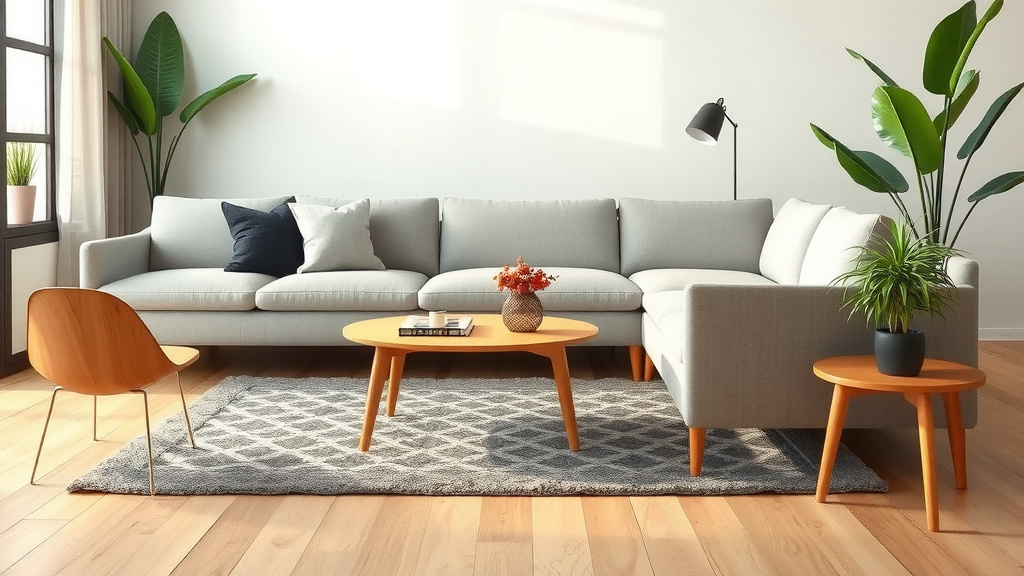
The trick with an L-shape is centering the rug on your seating zone, not on the sofa itself. Align the rug with your coffee table so it sits in the middle of the conversation area. The sectional frames it on two sides, which looks intentional and balanced.
If your sectional has a chaise, let the rug extend evenly under the main sofa and just past the chaise’s front edge. We found that pulling the rug too far one direction makes the whole room feel lopsided.
Rug Pad: The Small Buy That Makes a Big Difference
A rug pad is the accessory nobody talks about and everybody needs. It stops sliding, protects your floors, reduces wear, and adds a bit of cushion underfoot. Many experts consider a felt-rubber pad the best all-around choice for hard flooring.
Buy a pad slightly smaller than the rug — about an inch short on each side — so it doesn’t peek out. Skipping it to save $40 is a false economy. Trust us on this one.
Common Mistakes to Avoid When Rug Shopping
Most rug regrets fall into a handful of predictable traps. We found that avoiding these puts you ahead of the pack:
- Buying a rug that’s too small because it looked fine in the store.
- Skipping the tape measure and eyeballing the size.
- Choosing high-pile shag under heavy furniture.
- Ignoring the rug pad entirely.
- Picking a rug that matches the sectional too perfectly — the room goes flat.
Quick Rug Shopping Checklist for Sectional Owners
Before you hit checkout, run through this list. If you can check every box, you’re ready:
- Measured the sectional, including the chaise, with a tape measure.
- Taped out the rug size on the floor to confirm the fit.
- Confirmed front legs (or all legs) of the sectional land on the rug.
- Left 8–12 inches of bare floor between the rug and walls.
- Chose a low-pile, durable material that fits your household.
- Added a properly sized rug pad to your cart.
Conclusion
Choosing a rug for your sectional doesn’t have to feel overwhelming. It really comes down to a few smart moves: measure your space first, pick a rug large enough to ground the whole seating area, and choose a low-pile material that can handle daily life. Add a rug pad, balance your colors, and you’ve got a setup that looks like a designer planned it.
We found that the people who love their rugs the most are the ones who taped out the size before buying. So grab that painter’s tape tonight, outline your ideal rug on the floor, and shop with confidence. Your sectional deserves a proper foundation.
Frequently Asked Questions
Should a rug go under a sectional or in front of it?
Under, at least partially. We found that rugs placed fully in front of a sectional tend to look disconnected and floaty. At minimum, the front legs of every seat should rest on the rug so the whole seating area feels anchored together.
Can I use a round rug with a sectional sofa?
You can, but it takes a larger-than-usual round rug to work — usually 8 feet or more in diameter. Round rugs soften the hard angles of an L-shaped sectional, which some designers love in smaller rooms. Just make sure the rug still reaches under the front legs of every seat.
What shape rug works best with an L-shaped sectional?
Rectangular rugs are the safest and most popular choice because they mirror the angles of the room. Some people successfully use oversized square rugs in symmetrical layouts. If you go rectangular, orient it toward your coffee table and seating zone, not the sofa itself.
How much should I spend on a rug for a sectional?
It depends on your household and how long you want it to last. We found that quality synthetic rugs often run a few hundred dollars, while wool options in large sizes can climb well past $1,000. If you have kids or pets, a durable, affordable polypropylene rug is a smart place to start.
Does a dark or light rug look better under a sectional?
Both can work — it depends on your room and lifestyle. Dark rugs hide wear but can weigh down a smaller space, while light rugs open things up but show spills. A mid-tone or patterned rug is often the easiest win for busy households.
Can I layer a smaller rug over a large one under my sectional?
Yes, layering is a popular styling trick. Start with a large, low-cost neutral base rug — like jute or a flatweave — that fits your sectional, then add a smaller patterned rug on top for personality. Just use a good rug pad between them to prevent slipping and bunching.