How to Choose a Recliner Sofa That Fits Your Home Perfectly
Choosing a recliner sofa comes down to four things: measure your space, pick the right reclining mechanism, test the seat comfort, and choose a fabric that fits your lifestyle. Get these right, and you’ll have a sofa you’ll love sinking into for years. Get them wrong, and you might end up with a bulky couch that blocks your hallway.
Here’s the thing most people learn the hard way: recliner sofas need much more room than regular couches. The footrest extends forward, and many models need space behind them to fully recline. We researched dozens of buyer guides, and poor measurements are the number one reason people regret their purchase.
- Measure your room, including wall clearance for full recline.
- Choose between manual, power, or wall-hugger reclining styles.
- Test seat depth, cushion firmness, and lumbar support.
- Pick stain-resistant fabric if you have kids or pets.
- Set a realistic budget, including delivery and warranty costs.
Below, we break down everything you need to know to pick the perfect recliner sofa, step by step, so you can shop with total confidence.
Picking the Right Recliner Sofa for Your Home
The best recliner sofa is the one that fits your room first and your style second. Start with measurements, then narrow down by mechanism, comfort, and fabric. We found that shoppers who follow this order rarely regret their purchase.
Step 1: Measure Everything (Twice)
Grab a tape measure before you fall in love with anything. Measure the wall where the sofa will sit, the walking paths around it, and your front door. Many people forget the door, and that’s how a beautiful sofa ends up returned at great expense.
Clearance for Full Recline
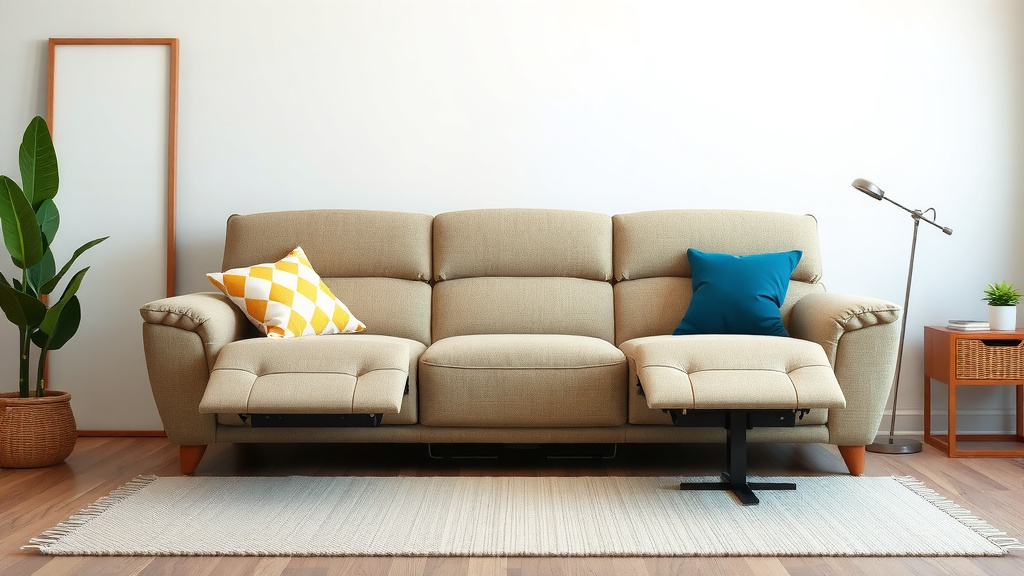
Traditional recliners need several inches of space behind the sofa to fully recline. Check the product specifications for the exact “recline clearance” figure. Wall-hugger models need as little as a few inches, which makes them perfect for smaller rooms.
Also measure the footrest extension. When fully reclined, your sofa might stretch two feet further into the room. Nobody wants to trip over a footrest at midnight.
Don’t Forget Doorways and Stairs
Measure door widths, hallway turns, and staircases on the delivery path. If your route is tight, look for sofas sold in pieces that assemble inside your home. We found this one detail saves a surprising number of headaches. If a piece does make it through the door, our guide shows how to take a recliner sofa apart for easier moves later.
Step 2: Choose Your Reclining Mechanism
Your three main options are manual, power, and wall-hugger designs. Each has trade-offs in price, convenience, and placement. Here’s a quick comparison:
| Type | Best For | Wall Clearance | Price Range |
|---|---|---|---|
| Manual (lever or push-back) | Budget shoppers, simple tastes | 6–12 inches | Lowest |
| Power (electric motor) | Anyone with mobility issues | 6–12 inches | Mid to high |
| Wall-hugger | Small rooms and tight spaces | 3–5 inches | Low to mid |
Manual Recliners
You pull a lever or lean back to recline. They’re affordable and never need an outlet. The downside? Adjusting to your perfect angle takes a bit of body English.
Power Recliners
Press a button and the chair does the work. Many experts say power recliners are worth it for older adults or anyone with joint pain, since they reduce strain when getting up (NIH). Just remember they need a nearby outlet, and motors can fail after the warranty ends.
Step 3: Test the Seat Comfort
Comfort is personal, so sit before you buy whenever possible. A sofa that feels plush in a showroom can feel too soft after an hour at home. Wear comfortable clothes and give each option a full ten minutes, not ten seconds.
Seat Depth and Height
Your feet should rest flat on the floor when seated, with knees at about hip level. If you’re taller, look for deeper seats. Shorter in the legs? Shallower seats keep your feet from dangling like a kid’s at the doctor’s office.
Support and Firmness
Good lumbar support matters, especially if you’ll nap in it. Many guidelines suggest medium-firm cushioning for proper spine alignment (Cleveland Clinic). Too soft, and your lower back sinks. Too firm, and you’ll fidget through the movie.
Step 4: Pick a Fabric That Fits Your Life
Be honest about your household. Kids, pets, and snack nights all leave their mark. We found that matching fabric to lifestyle prevents the most common buyer’s remorse.
- Microfiber: Stain-resistant and easy to clean. Great for families.
- Leather: Durable and wipes clean, but scratches from pet claws.
- Faux leather: Budget-friendly, though it can crack over time.
- Fabric with performance coating: Repels spills and pet hair.
Step 5: Think About Size and Seating Style
Recliner sofas come as two-seaters, three-seaters, and modular sectionals. Some seats recline while others stay fixed. If you host often, a mix gives flexibility for everyone.
Consider cup holders, USB ports, and storage consoles too. They’re fun extras, but each one adds width. Ask yourself whether you’ll actually use them or just pay for them.
Step 6: Set a Realistic Budget
Entry-level recliner sofas start around $800, while premium power models can climb past $3,000. Don’t forget delivery fees, extended warranties, and possible assembly costs. Build a 10–15% buffer into your budget so surprises don’t sting.
Check the warranty carefully. Frames should carry at least a multi-year guarantee, and power mechanisms deserve their own coverage. Ask what’s actually covered before you sign.
Step 7: Check Weight Capacity and Durability
Reclining mechanisms are rated for weight, often between 250 and 350 pounds per seat. Exceeding the limit wears out motors and springs fast. Many manufacturers publish this in the specs, so look it up.
Kiln-dried hardwood frames last longer than particleboard. High-density foam holds its shape better than cheap padding. Small details now mean years of comfort later.
Step 8: Read Reviews the Smart Way
Look for patterns, not single complaints. If ten people mention a squeaky motor, believe them. Reviews from buyers who’ve owned the sofa for a year are worth more than first impressions.
Your Pre-Purchase Checklist
Before you click “buy,” run through this quick list:
- Measured the room, doorways, and recline clearance.
- Chosen manual, power, or wall-hugger based on your space.
- Tested seat depth, firmness, and lumbar support.
- Picked a fabric that handles your household’s messes.
- Confirmed weight capacity and frame construction.
- Budgeted for delivery, warranty, and taxes.
One last tip: keep your receipt and register the warranty the day it arrives. Future you will be grateful, especially if that footrest stops folding on day 366.

Conclusion
A great recliner sofa isn’t about finding the fanciest model on the floor. It’s about matching the sofa to your room, your body, and your daily life. Measure twice, pick the mechanism that fits your space, sit in it longer than feels awkward, and choose a fabric you can actually live with. We found that shoppers who slow down at each step end up far happier than those who grab the first deal they see. When your checklist is complete, head to a showroom with your measurements in hand and give your top pick a real test sit. Your future movie nights will thank you.
Frequently Asked Questions
How long should a recliner sofa last?
A well-built recliner sofa with a hardwood frame should last 7 to 15 years with regular use. Power mechanisms and motors often wear out before the frame does, so check what the warranty covers. If a seller only offers a one-year warranty, that’s a red flag.
Can you place a recliner sofa against a wall?
Only if it’s a wall-hugger design, which needs just a few inches of clearance to fully recline. Traditional recliners need 6 to 12 inches behind them, so pushing one flat against a wall will limit the recline. Always check the manufacturer’s clearance spec before you buy.
Do power recliners work during a power outage?
Most battery backup options exist, but not every model includes one out of the box. If the power goes out and there’s no backup, the sofa stays in whatever position it was in. If that worries you, look for models with a built-in battery pack or a manual release lever.
Is leather or fabric better for a recliner sofa?
Leather wins on easy cleanup and durability, while fabric wins on comfort and warmth. If you have pets with claws, fabric or microfiber usually holds up better than leather. For households with frequent spills, performance-treated fabric or leather both make smart picks.
Can a recliner sofa be repaired if the mechanism breaks?
In many cases, yes. Springs, handles, and even power motors are often replaceable, and manufacturers sell replacement parts. Before buying, ask the brand whether parts and repair services are available, since some budget brands make repairs nearly impossible.