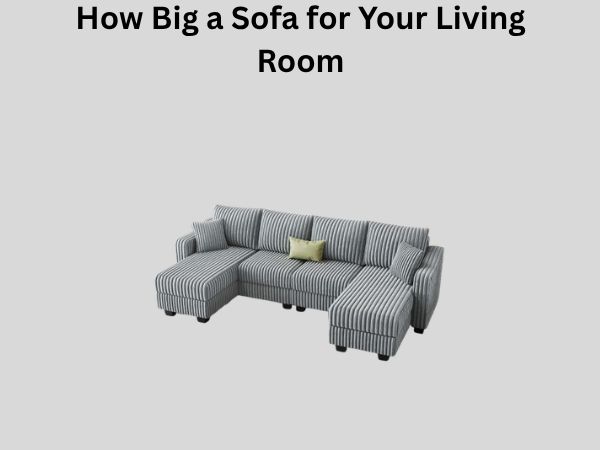
How Big a Sofa for Your Living Room? Finding the Perfect Match
When it comes to furnishing your living room, few decisions matter as much as choosing the right sofa. Think of your sofa as the anchor of the entire space—get it wrong, and everything else feels off balance. But here’s the thing: figuring out the ideal sofa size isn’t just about picking the biggest one you can fit through the door. It’s about understanding your room, your lifestyle, and what actually works for you.
I’ve seen countless people make this mistake. They fall in love with a beautiful sectional in a showroom, bring it home, and suddenly their living room feels cramped and uncomfortable. Or worse, they buy something too small and end up with a space that looks empty and unwelcoming. The good news? With the right approach, you can nail this decision on your first try.
Understanding Your Living Room Dimensions
Before you even think about sofa shopping, you need to know your space inside and out. Grab a measuring tape and do this properly—don’t just eyeball it. I know it sounds tedious, but trust me, those five minutes will save you from hours of regret later.
Measuring Wall Length
Start by measuring the wall where you plan to place your sofa. This is your primary constraint. Write down the exact length, and then subtract about 12 inches on each side if you want some breathing room. This gives you a comfortable buffer between the sofa and any adjacent walls or furniture pieces.
Accounting for Traffic Flow
Next, think about how people move through your living room. Is there a clear pathway from the entrance to other parts of your home? You’ll want to leave at least 18 inches of walking space in front of your sofa. This prevents your living room from feeling like a maze and keeps things functional.
Measuring the Doorways
Here’s something people often overlook: can your sofa actually get into the room? Measure your doorways, hallways, and any tight corners the delivery folks will need to navigate. A beautiful sofa sitting in your garage because it won’t fit through the front door isn’t much good to anyone.
Standard Sofa Sizes Explained
Sofas come in surprisingly different sizes, and understanding the standard options helps you make an informed choice.
Small Sofas and Loveseats
Small sofas typically range from 60 to 72 inches wide. These are your best friend if you have a cozy apartment, a modest living room, or a space that doubles as something else, like a home office. They’re also perfect for studio apartments where every square inch counts. The trade-off? You’re probably limited to seating three people comfortably, sometimes four if people are willing to snuggle.
When to Choose a Loveseat
A loveseat usually measures between 52 and 60 inches wide and seats two people. I’d recommend this if you’re shopping for a smaller bedroom, a reading nook, or as a complementary piece alongside a larger sofa.
Medium Sofas
The sweet spot for most living rooms falls in the 72 to 84-inch range. This is what I’d call a standard three-seater, and it’s the Goldilocks of sofa sizes—not too big, not too small, just right for the majority of homes. You can fit three people comfortably without anyone feeling squeezed.
Large and Oversized Sofas
Once you get above 84 inches, you’re entering large territory. These sofas can stretch from 84 to 100 inches or even longer. They’re showstoppers in spacious living rooms and work beautifully if you have a family, frequently entertain guests, or simply want that luxurious sprawl factor. Just make sure your room can handle it.
The Relationship Between Room Size and Sofa Proportions
Here’s where it gets interesting. There’s actually a mathematical relationship between your room’s overall dimensions and the sofa that works best in it.
Small Living Rooms
In a room under 150 square feet, stick with sofas under 72 inches. These compact spaces need proportional furniture that doesn’t dominate the room. You want your sofa to be a prominent feature, sure, but not the only thing people notice when they walk in.
Medium Living Rooms
For rooms between 150 and 250 square feet, a 72 to 85-inch sofa usually works beautifully. This is your standard, comfortable range where you get excellent functionality without overwhelming the space.
Large Living Rooms
In spacious living rooms exceeding 250 square feet, you have the freedom to go bigger. In fact, a smaller sofa might look lost in such a large space. Consider a sofa between 85 and 100 inches, or even think about sectionals or multiple seating pieces to fill the space appropriately.
Sectionals: A Different Category Altogether
Sectionals deserve their own conversation because they operate under different rules. These L-shaped or U-shaped pieces can be game-changers, but they require careful planning.
Understanding Sectional Measurements
When shopping for a sectional, you’re dealing with two measurements: the width of each arm. An L-shaped sectional with a 100-inch sofa and an 85-inch chaise occupies way more space than a traditional 100-inch sofa would. You need to visualize how it occupies your corner and whether that arrangement actually serves your space.
The Advantage of Sectionals
Sectionals maximize seating in a contained footprint, which is why they’re so popular. They’re fantastic for large families, entertainment-focused households, or anyone who loves having plenty of places to sit. They also define a space beautifully and can make a large room feel more intentional and organized.
Considering Your Lifestyle and Daily Use
Here’s something that matters just as much as your room’s dimensions: how are you actually going to use this sofa?
Families with Children
If you have kids, you probably want something substantial and durable. A larger sofa gives everyone space and prevents that crowded feeling during movie nights. You’ll also want to think about fabric choice—anything dark and forgiving beats light colors when you’re dealing with spilled juice boxes and muddy footprints.
Pet Owners
Do you have a dog that sprawls across the furniture like it owns the place? Then you might need to go bigger than you initially thought. Pets take up surprising amounts of space, and you’ll want enough room for both humans and furry friends to be comfortable.
Frequent Entertainers
If you’re someone who regularly hosts movie marathons or game nights, seating capacity becomes crucial. A larger sofa or a sectional ensures everyone can gather comfortably without having to sit on the floor.
Single Dwellers or Couples
If it’s just you or you and a partner, you have more flexibility. You might prefer a smaller, more intimate sofa, or you might want a large one where you can truly sprawl out during a lazy Sunday afternoon. This is about personal preference, not necessity.
Depth Matters Just as Much as Width
People focus so much on how wide a sofa is that they sometimes forget about depth, and that’s a mistake.
Shallow Sofas
Sofas with a depth of 30 to 32 inches are considered shallow. They look sleek and modern, don’t take up much floor space, and work well in rooms where you need to maximize open space. The downside? You can’t really lounge on them. They’re more “proper sitting” sofas.
Standard Depth Sofas
Most sofas have a depth of 34 to 38 inches. This is the comfortable middle ground where you can sit properly, lean back, and maybe even curl up a bit. For most people, this is the sweet spot.
Deep Sofas
Sofas measuring 40 inches or deeper are incredibly comfortable for lounging. You can sink in, kick your feet up, and really relax. The trade-off is that they command more floor space and might make it harder to reach across and grab something from the other side.
The Visual Weight of Different Sofa Styles
Two sofas of the same width can look completely different in a room depending on their style.
Low-Profile Sofas
Modern, low-profile sofas with clean lines and minimal legs make a space feel more open and airy. Even if they’re the same width as a traditional sofa, they look less bulky and heavy in a room.
Traditional Sofas
Upholstered sofas with rolled arms and lots of cushions feel more substantial and formal. They command attention and define a space more dramatically than modern pieces.
Choosing Based on Room Aesthetics
If your living room is small and you want it to feel spacious, a sleek, low-profile sofa works better than a heavily upholstered traditional piece, even if they’re technically the same size. The visual perception matters as much as the actual dimensions.
Accounting for Other Furniture Pieces
Your sofa doesn’t exist in isolation. You need to think about how it interacts with coffee tables, side tables, TV stands, and other pieces.
Coffee Table Placement
Ideally, your coffee table should sit about 14 to 18 inches in front of your sofa. If you choose a sofa that’s too deep, you might push the coffee table too far away, creating an awkward distance between where you’re sitting and where your drinks are.
Side Tables and End Tables
If you’re placing side tables at either end of your sofa, make sure they’re proportional to the sofa’s size. A tiny sofa with massive end tables looks ridiculous, and vice versa.
Scale and Balance in Your Living Room
Think of your living room as a balanced composition. The sofa is usually the largest element, but everything else needs to work in harmony.
Proportion Rules
Your sofa shouldn’t take up more than about two-thirds of the wall it’s on. If it does, the room will feel cramped. Similarly, it should be roughly proportional to the room’s overall size—not so small it looks lonely, not so large it dominates everything.
Creating Visual Interest
A sofa that’s slightly smaller than the maximum you could fit sometimes creates a better overall balance. It leaves room for other design elements—side tables, artwork, plants, or accent chairs—that make a living room feel complete rather than sofa-centric.
Testing Before You Buy
This might sound obvious, but actually sit on sofas before committing to one. No amount of online research replaces the feeling of actually sitting on the piece.
Visiting Showrooms
Go to furniture stores and spend time on different sofas. Sit back. Lie down. Test the armrest height. See if the seat depth actually works for how you’ll use it. Bring a family member or friend whose proportions are similar to yours—if they’re comfortable, you probably will be too.
Measuring in the Showroom
While you’re there, confirm the measurements. A sofa listed as 78 inches might have arms that extend a couple more inches beyond that, affecting how it fits in your space.
Delivery and Installation Considerations
Once you’ve chosen your sofa, the adventure isn’t over. You need to make sure it can actually enter your home.
Planning the Route
Before delivery day, walk through your home and think about the path the delivery team will take. Are there tight corners? Low doorways? Narrow staircases? Some sofas come modular or with removable legs specifically to help with tight spaces.
Communication with Delivery
Talk to the furniture store about your home’s layout. Experienced delivery teams know tricks for maneuvering large pieces into tricky spaces. They might suggest removing legs, tilting the sofa at angles, or taking alternate routes through your home.
Budget Considerations and Sizing
Generally, larger sofas cost more than smaller ones, but that’s not always true. High-quality smaller sofas sometimes cost as much as basic larger ones. Know your budget before you start shopping, as this will automatically limit your options and help you focus on appropriate sizes.
Conclusion
Finding the perfect sofa size for your living room isn’t rocket science, but it does require thoughtful consideration. Start by measuring your space accurately—your walls, doorways, and traffic patterns. Understand the standard sizes available and how they might work in your particular living room. Think about how you actually use your space and what your lifestyle demands. Consider the depth, style, and visual weight of different options, not just their width. Make sure your chosen sofa plays nicely with your other furniture and doesn’t overwhelm or underwhelm your room’s overall composition.
Take your time with this decision. Sit on sofas before buying them. Confirm measurements and delivery logistics. Remember that a slightly smaller sofa that fits perfectly and serves your needs is infinitely better than a beautiful sofa that makes your living room feel cramped or awkward. Your sofa should be a place where you love to spend time—with family, friends, or just yourself on a quiet afternoon. Get the size right, and you’ll be enjoying that investment for years to come.
Frequently Asked Questions
What is the ideal sofa width for a standard living room?
For most living rooms, a sofa between 72 and 85 inches wide works beautifully. This is your standard three-seater that fits comfortably without overwhelming the space. However, the ideal width depends on your specific room dimensions, so measure your wall first. A good rule of thumb is to leave about 12 inches of space on each side of the sofa if possible.
Can I fit a sectional in a small living room?
Yes, but carefully. Sectionals can work in small spaces if you choose a compact L-shaped design with modest dimensions. The key is understanding that a sectional’s footprint extends in two directions, so it might actually take up more total space than a traditional sofa would. Measure your corner space thoroughly and consider whether a standard sofa might actually serve you better.
How do I know if a sofa will fit through my doorway?
Measure the height and width of your doorway, as well as the doorframe’s diagonal measurement. Compare these to the sofa’s dimensions. Some sofas have removable legs or come modular, which helps with tight spaces. When in doubt, ask the furniture store about alternative delivery methods or whether the piece can be disassembled slightly for installation.
Should I prioritize sofa width or depth?
Both matter, but they serve different purposes. Width determines how many people can sit, while depth determines comfort and functionality. A standard sofa depth of 34 to 38 inches is ideal for most people, as it allows proper sitting and some lounging. If your space

![10 Best Convertible Sofa Sleeper [2026]](https://hometopaccesories.com/wp-content/uploads/2026/09/10-best-convertible-sofa-sleeper-2026-featured-768x432.jpg)