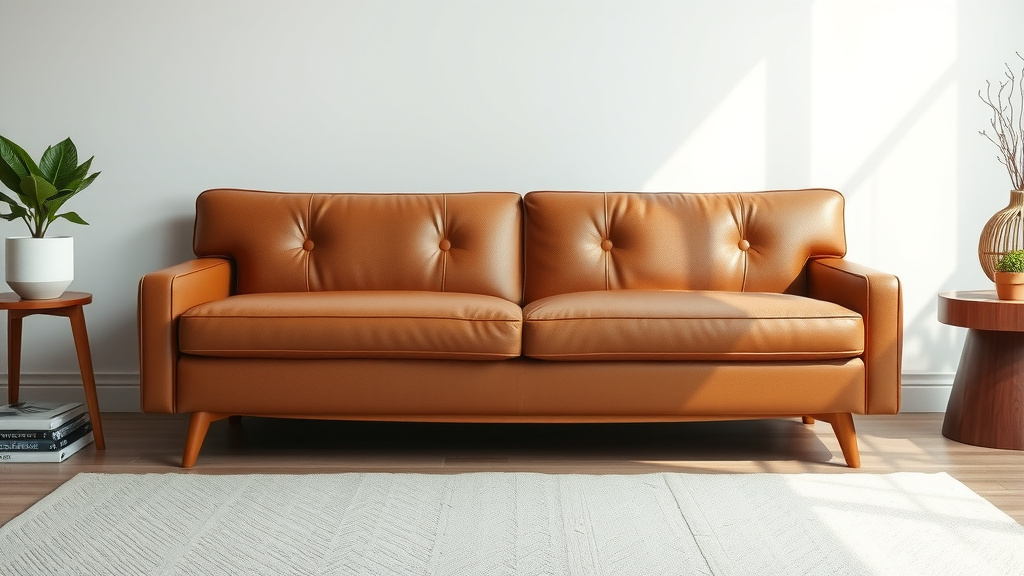
How Many Square Feet of Leather for a Sofa
You’re probably wondering, “How many square feet of leather do I need for a sofa? To get a better idea of sofa dimensions, check out this guide on how long is a sofa.” For most standard sofas, you’ll likely need somewhere between 35 to 60 square feet of leather. This range can shift based on the sofa’s design and size, but it gives you a good starting point for your calculations.
Figuring out the exact amount can feel a bit like a puzzle. Factors like the sofa’s arm style, cushion count, and whether it’s a sleek modern design or a more plush, traditional piece all play a role. We found that understanding these details helps prevent both under- and over-buying.
TL;DR:
- Most sofas need 35-60 sq ft of leather.
- Sofa design (arms, cushions) matters a lot.
- Measure your specific sofa for accuracy.
- Account for waste during cutting.
- Ask your supplier for exact needs.
Let’s break down how to get the most accurate number for your specific sofa project so you can buy with confidence.
So, you’re ready to tackle your leather sofa project, but the big question remains: how much leather do you actually need? It’s a common hurdle many DIYers and designers face. You don’t want to end up with a pile of expensive scraps, nor do you want to run short and have an unfinished piece. Let’s figure this out together.
Calculating Your Leather Sofa’s Square Footage Needs
Determining the precise amount of leather for your sofa is more art than exact science. However, we’ve found that understanding a few key factors will get you very close. Most standard three-seater sofas typically require between 35 to 60 square feet of leather. This is a widely accepted range in the upholstery world. It’s a good starting point for your estimations.
Understanding the Variables: What Affects Leather Quantity?
Several design elements directly influence how much leather you’ll need. Think of it like building with LEGOs; the more pieces and different shapes you use, the more you’ll need overall. We’ve noticed that sofas with lots of curves or separate pieces tend to use more material.
Arm Style Matters
The shape and size of your sofa’s arms are a major factor. Rolled arms, for example, often require more leather than sleeker, track arms. This is because they have a larger surface area and more complex curves to cover. We found that generously stuffed rolled arms can eat up an extra 5-10 square feet alone.
Cushion Configuration
The number and type of cushions also play a role. A sofa with multiple seat cushions and back cushions will naturally need more leather than one with a single, large cushion. Also, consider whether your cushions are double-welted (piped), as this adds to the material needed for the piping. Many experts agree that tufted cushions also increase the overall leather requirement due to the need for extra material to create the folds.
Sofa Size and Shape
This might seem obvious, but a larger sofa simply requires more material. A compact loveseat will need significantly less leather than an expansive sectional. Beyond just length and width, think about depth. A deeper sofa means more surface to cover for the back and seating areas. We’ve found that every extra inch of depth can add up.
Design Details and Embellishments
Are you envisioning a sofa with decorative seams, button tufting, or intricate paneling? These details often require extra leather. Cutting these elements precisely can lead to more waste. We observed that complex patterns or decorative stitching patterns can increase the leather needed by as much as 10-15%.
Practical Ways to Estimate Your Leather Needs
While we’ve given you a general range, the best way to know for sure is to measure your specific sofa. This hands-on approach minimizes guesswork. Think of it like planning a road trip; you wouldn’t just guess how much gas you need. You’d look at the mileage.
Measuring Your Existing Sofa (or Template)
If you’re recovering an existing sofa, grab your measuring tape. Measure each individual panel of the sofa that will be covered in leather. Be sure to include the sides, front, back, arms, and cushions. Add a buffer for seams and potential mistakes. Many sources recommend adding at least 10-20% to your total measurement for this buffer.
If you don’t have an existing sofa, you can often find patterns or templates online for common sofa styles. You can also create your own pattern by using paper or thin fabric to trace the shapes of the sofa components you intend to cover. This is a more involved process but yields the most accurate results. We found that using a full-scale template is a foolproof method.
Consulting with Your Leather Supplier
Don’t hesitate to ask your leather supplier for help. They work with leather every day and have a wealth of knowledge. Reputable suppliers often have charts or can help you calculate the yardage needed based on the dimensions of your project. They understand the hide sizes and shapes, which is critical. We’ve found that their expertise can save you both time and money.
When you talk to them, be ready to provide the dimensions of your sofa and any specific design features. Mentioning the type of leather you plan to use can also be helpful, as hide sizes can vary slightly. They can also advise on the best way to cut your pattern pieces to minimize waste, which is a huge cost saver.
Why Accurate Measurement Prevents Costly Mistakes
Underestimating your leather needs can be a real headache. You might end up with a beautifully upholstered sofa missing just one crucial piece. This could mean ordering more leather later, which might not match perfectly in color or texture. Leather dyes can vary slightly between batches.
On the flip side, overbuying means you’re left with a significant amount of expensive leather scraps. While some small projects can use these, large pieces are often hard to repurpose. We’ve learned that careful planning is key to avoiding both scenarios. It’s about striking the right balance.
Key Takeaways for Your Leather Calculation Checklist
To help you keep track, here’s a quick checklist for your leather sofa project:
- Measure twice, cut once: Always double-check your dimensions.
- Factor in the arms: Rolled or plush arms use more material.
- Consider cushion details: Tufting and piping add to the need.
- Account for waste: Add at least 10-20% for cuts and errors.
- Talk to your supplier: They are your best resource for exact quantities.
- Visualize your cuts: Think about how the pattern will lay on the hide.

Conclusion
Calculating the right amount of leather for your sofa is definitely achievable. You’ve learned that a standard sofa often needs 35 to 60 square feet. Remember, the sofa’s design elements like arm style and cushion type are key factors. Always measure your specific sofa components carefully. Don’t forget to add extra for waste and potential mistakes during cutting.
By understanding these variables and consulting with your supplier, you can confidently purchase the correct amount of leather. This careful planning ensures your project stays on budget and avoids frustrating shortages or excess materials. You’re now well-equipped to tackle your leather sofa project with precision and peace of mind!
Frequently Asked Questions
How much leather do I need for a sectional sofa?
Sectional sofas vary greatly in size. You’ll generally need more leather than a standard sofa, often ranging from 60 to over 100 square feet. We recommend measuring each section individually and adding those measurements together.
Does the type of leather affect how much I need?
Yes, the type of leather can influence the quantity. Full hides come in different sizes and shapes. If you’re using smaller, more uniform pieces, you might need slightly more to account for layout. Your supplier can advise on hide sizes for the specific leather you choose.
What if my sofa has a very simple, modern design?
Sleeker, modern designs with track arms and fewer cushions typically require less leather. You might fall on the lower end of the 35-60 square feet range. Simpler designs often have less waste during cutting, too.
How much extra leather should I buy for mistakes?
It’s wise to purchase at least 10-20% extra leather for waste and unforeseen issues. This buffer helps cover accidental cuts, pattern adjustments, or if a piece of hide has a flaw you can’t use. This is a common recommendation from upholstery professionals we’ve seen.
Can I use different leather colors on one sofa?
You can certainly use different colors, but be mindful of how you’ll need to cut each one. If you have multiple colors, calculate the square footage required for each color separately. Ensure you still account for waste on each color you use.
![10 Best Costco Leather Sofa [2026]](https://hometopaccesories.com/wp-content/uploads/2026/09/10-best-costco-leather-sofa-2026-featured-768x432.jpg)
![10 Best Beige Sectional Sofa [2026]](https://hometopaccesories.com/wp-content/uploads/2026/08/10-best-beige-sectional-sofa-2026-featured-768x432.jpg)