How to Change a Leather Sofa to Fabric: Step-by-Step Guide
The easiest way to change a leather sofa to fabric is to reupholster it with fabric slipcovers or professional upholstery work. You can also use fitted fabric covers that slip right over your existing sofa. Either way, you get that soft, cozy fabric look without buying new furniture.
Now, you might be wondering if it’s worth the effort. We researched this topic and found that many homeowners choose fabric covers to hide wear, change their style, or make their sofa more pet and kid friendly. Leather looks sleek, but fabric feels warmer and comes in way more colors and patterns. The good news? You don’t need to be a pro to pull this off.
- You can cover a leather sofa with slipcovers or full reupholstery.
- Slipcovers are the cheaper, easier option for most people.
- Reupholstery costs more but gives a permanent, tailored finish.
- Fabric covers can make your sofa cozier and easier to maintain.
- Proper prep helps the new fabric stay smooth and in place.
Below, we break down everything you need to know about changing your leather sofa to fabric, step by step. Let’s dive in!
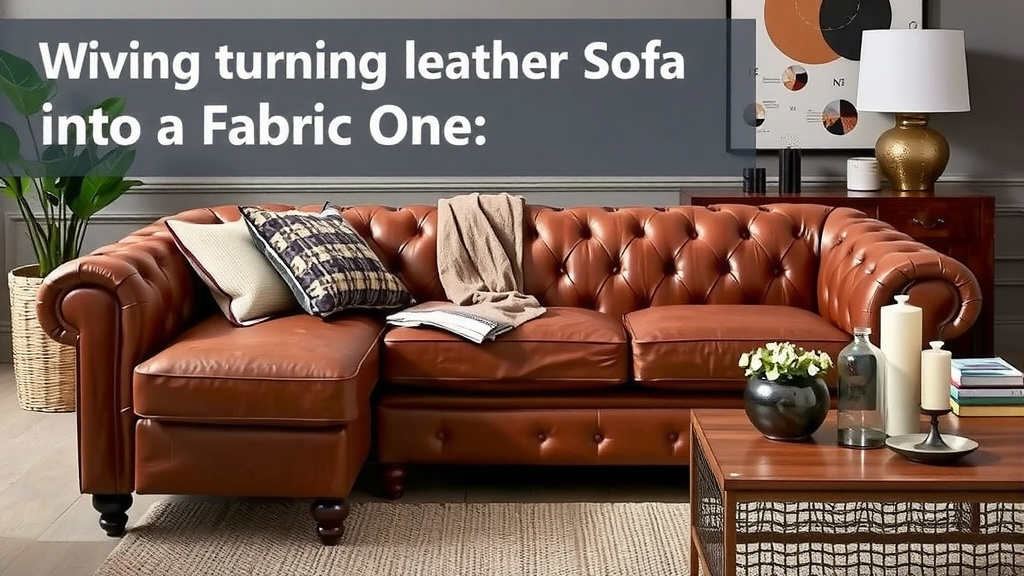
Turning Your Leather Sofa Into a Fabric One: Your Main Options
You have three realistic paths: slip over a fitted slipcover, reupholster with new fabric, or layer fabric throws and cushions for a quick fix. Each one differs in cost, effort, and how “permanent” the change feels. We researched all three so you can pick with confidence.
Think of it like dressing up. A slipcover is a jacket you can take off. Reupholstery is a tailored suit, stitched just for your sofa. Throws are the fun scarf you toss on when guests come over.
Option 1: Fabric Slipcovers
Slipcovers are the budget-friendly favorite. You buy a cover sized to your sofa, stretch it over the leather, and tuck it in place. Many are machine washable, which parents and pet owners love.
The catch? Leather is slick, so fabric tends to slide around. We found that non-slip backing or foam grippers under the cover help a lot.
Pros and Cons at a Glance
| Option | Cost Range | Effort | Look |
|---|---|---|---|
| Slipcover | $50–$300 | Low | Good, slightly loose fit |
| Reupholstery | $800–$2,500+ | High (pro job) | Tailored, permanent |
| Throws and cushions | $30–$150 | Very low | Casual, layered |
Option 2: Full Reupholstery
Reupholstery means stripping the leather off and stapling new fabric directly to the frame. It’s a professional job for most people. The result looks factory-fresh and fits like a glove.
It costs more, so it makes the most sense when your sofa has good bones. A solid hardwood frame is worth dressing up again. A wobbly, cheaply made one usually isn’t.
Option 3: Layered Fabric Looks
Not ready to commit? Drape a large fabric throw over the seat and back, then add textured cushions. It softens the leather look instantly. We found this works well for renters who can’t make permanent changes.
How Much Does It Cost to Switch a Leather Sofa to Fabric?
Most homeowners spend between $50 and $300 on a quality slipcover, or $800 to $2,500 on professional reupholstery, depending on sofa size and fabric choice. Labor drives the reupholstery price, not just the material.
- Slipcover: $50–$300, plus $10–$20 for grippers or foam inserts.
- Reupholstery: $800–$2,500+, often 50% labor and 50% fabric.
- Upholstery fabric: $20–$80 per yard for most cotton blends.
- DIY reupholstery supplies: staple gun, fabric, batting, around $100–$200.
Here’s a gut check: if the reupholstery quote creeps toward a new sofa’s price, buying new may win. We found that many pros suggest this rule of thumb too.
Should You DIY or Hire a Professional?
Go DIY for slipcovers. Go pro for reupholstery. That’s the short answer, and it saves most people both money and headaches.
Slipcovering takes an afternoon and zero special skills. Reupholstering takes staple removers, patience, and an eye for fabric tension. One wrong pull and your cushions look lumpy, like a bad haircut you can’t undo.
Many experts say DIY reupholstery works best on simple, boxy sofas with straight cushions. Curved arms, tufting, or attached cushions? Call a pro.
How to Prep Your Leather Sofa for New Fabric
Good prep is what keeps fabric smooth and snug instead of slipping and wrinkling. Leather’s slick surface is the enemy, so you’ll need to add a little grip first.
Step-by-Step Prep Checklist
- Vacuum the entire sofa, including crevices, to remove dust and crumbs.
- Wipe leather with a damp cloth and let it dry fully.
- Add a non-slip rug pad or rubber gripper mat between leather and fabric.
- Tuck thin foam noodles into slipcover seams for a crisp, tailored edge.
- Snap on the cover while the sofa is pulled away from the wall. Our step-by-step guide to putting on a sofa cover walks through the fitting process in detail.
- Smooth from the center outward, like making a bed, to push out wrinkles.
Skip the prep and you’ll be re-tucking your cover every single time someone sits down. Trust us, that gets old fast.
Which Fabrics Work Best Over or Instead of Leather?
Tight-weave, durable fabrics win here. We found that performance fabrics and heavy cotton blends hold up best against daily sitting, pets, and spills.
- Cotton duck: sturdy, affordable, and easy to wash.
- Canvas: thick and grippy, great for slipcovers.
- Microfiber: soft, stain-resistant, and pet friendly.
- Polyester blends: fade-resistant and budget friendly.
- Linen blends: breezy look, though they wrinkle more.
Wondering about color? Lighter fabrics brighten a room but show stains. Mid-tones and patterns forgive real life a lot better.
Making Your Fabric Sofa Comfortable and Kid-Proof
Fabric feels warmer in winter and less sticky in summer than leather. That’s a real comfort upgrade, especially for families. Many homeowners switch for this exact reason.
If allergies are a concern, note that fabric can hold dust and dander more than leather. Regular vacuuming helps. Guidelines from the Asthma and Allergy Foundation of America recommend washing removable covers often to keep allergens down. Washable slipcovers make this easy.
Choose covers you can toss in the wash, and life with kids gets noticeably simpler. Juice spills become a laundry problem, not a furniture crisis.
Common Mistakes to Avoid When Covering Leather
Most problems come from skipping prep or buying the wrong size. Here’s what we found goes wrong most often:
- Buying a slipcover without measuring your sofa first.
- Skip the non-slip layer, and the cover slides everywhere.
- Choosing thin fabric that shows every wrinkle and bump.
- Forgetting to measure cushion depth, not just width and length.
- Trying full DIY reupholstery on a complex, curved sofa.
Measure twice, order once. Your future self will thank you.
How to Keep Your New Fabric Sofa Looking Great
Care is simple but consistent. Vacuum weekly, wash covers monthly, and blot spills fast instead of rubbing them. Flip and rotate cushions so they wear evenly.
For stains, blot with a clean cloth and mild soap, then air dry. The EPA notes that keeping furniture clean and dry also helps prevent mold and indoor moisture problems, especially in humid climates.
One last tip: keep a spare slipcover on hand. When one’s in the wash, the other keeps your sofa looking sharp. It’s the furniture equivalent of a backup phone charger, and you’ll never regret having it.
Conclusion
Changing your leather sofa to fabric is easier than most people think. A washed slipcover gives you an affordable, weekend-afternoon fix, while professional reupholstery delivers a tailored, permanent look for sofas with good frames. Whichever route you pick, success comes down to two things: prep the slick leather surface with grippers, and choose a durable, tight-weave fabric that fits your real life. We found that families who pick washable covers end up happiest long term. So grab your measuring tape, check your sofa’s dimensions tonight, and order that fabric this week. Your cozier, comfier living room is one delivery away.
Frequently Asked Questions
Can I put a fabric slipcover directly on leather without it sliding off?
Yes, but add grip first. Place a non-slip rug pad or rubber gripper mat between the leather and the fabric, then tuck foam noodles into the cover’s seams. Without that barrier, expect to re-straighten the cover after every movie night.
Will fabric over leather trap heat or make my sofa sweat?
Not usually. Breathable fabrics like cotton duck and linen blends actually feel cooler in summer than bare leather, which gets sticky. The bigger issue is slippage, not heat, so focus on grip rather than ventilation.
Is it cheaper to reupholster or just buy a new fabric sofa?
Compare quotes honestly. If reupholstery costs more than half the price of a comparable new sofa, buying new often wins. Reupholstery makes financial sense when you own a high-quality frame you can’t find in stores anymore.
What slipcover size do I need for a standard leather sofa?
Measure the sofa’s width, height, arm width, and cushion depth before ordering. Most standard sofas between 72 and 96 inches wide fit one-piece covers labeled for sofa or XL sofa. Always check the specific size chart, since brands vary.
Does covering leather damage the sofa underneath?
No. Slipcovers sit on top and leave the leather untouched, which actually protects it from sun, spills, and scratches. If you ever miss the leather look, you can pull the cover off and your original sofa is still in good shape underneath.