How to Choose Rug Size for a Sectional Sofa: A Simple Guide
Choosing the right rug size for a sectional sofa comes down to one simple rule: the rug should extend at least 12 to 24 inches beyond the edges of your sectional on all sides. For most sectionals, that means an 8×10 or 9×12 rug works best. Too small, and your big cozy couch will look like it’s swallowing the rug whole.
We researched dozens of interior design guides and found that most living room layout mistakes come down to rug proportions. The right rug anchors your seating area, ties your furniture together, and even makes a small room feel bigger. The wrong one? It can make an expensive sectional look like an afterthought.
Here’s the quick rundown:
- Measure your sectional first, then add 12–24 inches on each side.
- An 8×10 rug fits most medium sectionals; go 9×12 for larger L-shapes.
- At minimum, the front legs of your sectional should sit on the rug.
- Leave 12–18 inches of bare floor between the rug and your walls.
- Always tape out the rug size on your floor before you buy.
Below, we walk through everything you need to know about picking the perfect rug size for your sectional, step by step. Grab a tape measure, and let’s get started.
Picking the Perfect Rug Size for Your Sectional
Start with one number: the width of your sectional. That measurement drives everything else. Once you know it, choosing the right rug becomes almost math-free.
Here’s the honest truth we found in our research: most people buy rugs that are too small. It’s the single most common living room mistake. A tiny rug under a big sectional looks like a postage stamp on a dining table.
Think of your rug as the stage and your sectional as the lead actor. The stage should never be smaller than the actor.
Measure Your Sectional the Right Way
Before you shop, grab a tape measure and a notepad. You’ll want three numbers.
- Total width of the sectional, end to end.
- Total depth, from the front edge to the back of the sofa.
- Distance from the sectional to the nearest wall.
Write these down. Many designers recommend photographing your layout too, since memory has a funny way of rounding numbers in your favor.
Add Breathing Room on Every Side
Once you have your numbers, add 12 to 24 inches on each exposed side of the sectional. This creates a visual border that frames your seating area instead of crowding it.
Why does this matter? Because the rug’s job is to zone your space. It tells your eye, “this is where we gather.” Without that border, the whole room can feel like one big undefined blob.
Standard Rug Sizes That Work With Sectionals
Most sectionals fall into one of three size buckets. Here’s a quick cheat sheet based on common interior design guidance.
| Sectional Size | Recommended Rug | Look You Get |
|---|---|---|
| Small (under 8 ft wide) | 6×9 | Cozy and compact |
| Medium (8–10 ft wide) | 8×10 | Balanced and classic |
| Large or U-shaped (10+ ft) | 9×12 or bigger | Open and grounded |
When you’re stuck between two sizes, size up. We found that designers almost universally say the same thing: bigger is safer than smaller.
The L-Shape Problem
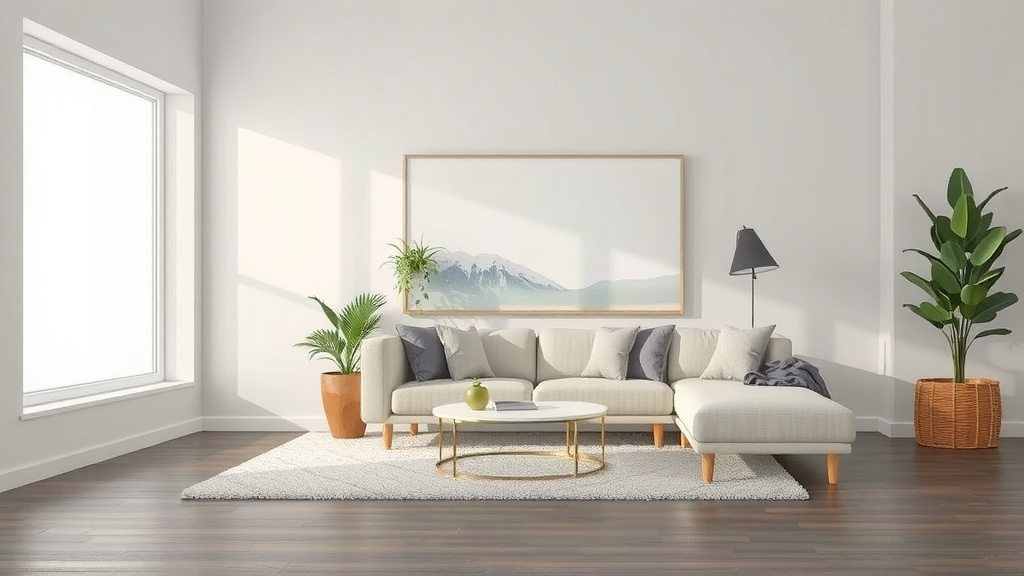
L-shaped sectionals are tricky because they cover two walls of your space. Don’t just match the rug to the longest side. Our guide to measuring a corner sofa walks through getting accurate dimensions for both arms of an L-shaped piece.
Instead, measure both arms of the “L” and pick a rug that extends past both. Often that means a 9×12 or even a 10×14 for larger U-shaped setups. It costs more, yes. But it saves you from that awkward “rug too small” look that no throw pillow can fix.
What About Round Rugs?
Round rugs can work, but only with smaller sectionals. A 6-foot round might sit nicely in front of a compact two-piece sectional.
For anything larger, skip the circle. A round rug under a big L-shaped couch fights the room’s natural lines, like wearing a bow tie with a t-shirt.
Front Legs On, All Legs Off, or All Legs On?
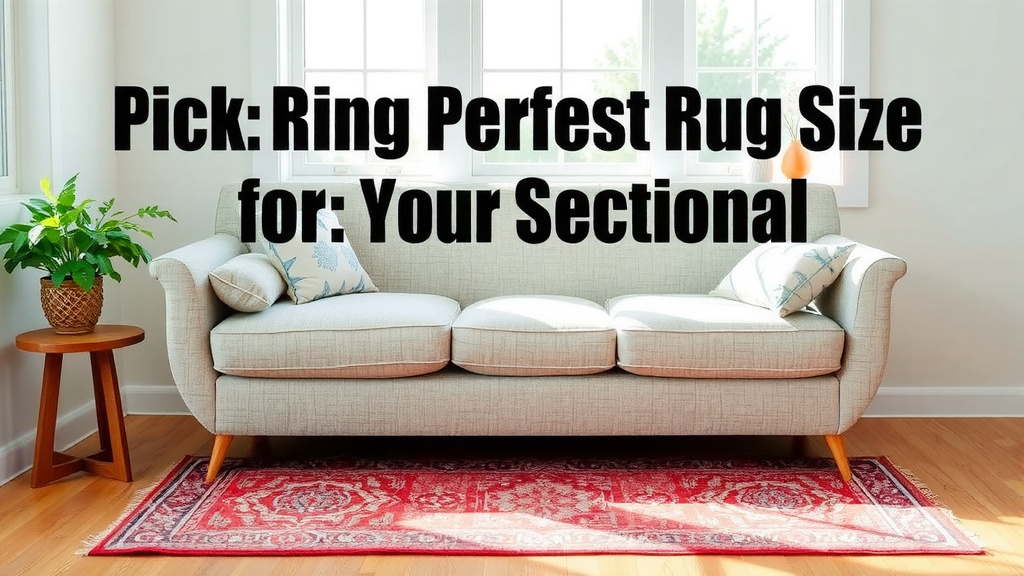
You’ve probably heard this debate. Here’s the direct answer: with a sectional, aim for all legs on the rug if your room allows it.
Why? Sectionals are heavy and wide. Placing just the front legs on the rug creates a visual half-measure. Many experts say furniture feels “anchored” only when it fully sits on the rug or clearly off it.
When the All-Legs-On Rule Fails
Sometimes your room is just too small for everything to fit on the rug. That’s okay.
In tighter spaces, front-legs-only is the accepted minimum. The back edge of the sectional can rest on bare floor without ruining the look. Just never, ever float a sectional completely off the rug. That’s the design equivalent of socks with sandals.
Leave Space Between the Rug and Your Walls
Aim for 12 to 18 inches of visible floor between the rug’s edge and your walls. In very large rooms, you can stretch this to 24 inches.
This border of bare floor does two things. First, it makes the room feel larger. Second, it keeps the rug from looking like wall-to-wall carpeting that you regretted installing.
Watch Out for Doors and Walkways
Check that your rug won’t block door swings or trip up foot traffic. A rug that bunches under a door every morning gets old fast.
Walk the room’s natural paths. If people cut corners across your rug’s edge daily, consider a low-pile rug or a slightly different placement. Safety matters here too, since loose rug edges are a real trip hazard, especially for older adults and kids, according to home safety guidance from the CDC.
Test Before You Buy: The Tape Trick
Here’s our favorite budget-friendly tip. Use painter’s tape to outline your chosen rug size right on the floor.
Live with the tape outline for a day or two. Walk around it. Place a chair on it. You’ll instantly know if the size feels right, and you haven’t spent a dime.
Your Pre-Purchase Checklist
- Measured the sectional’s full width and depth.
- Added 12–24 inches of rug on every exposed side.
- Confirmed at least the front legs sit on the rug.
- Left 12–18 inches between rug edge and walls.
- Checked doors, walkways, and traffic paths.
- Taped out the size and lived with it for 24 hours.
Check every box and you’re ready to buy with confidence. No returns, no regrets, no rug that your sectional eats for breakfast.
Rug Size Mistakes to Avoid With Sectionals
Even smart shoppers slip up. We found these three mistakes come up again and again in design forums and expert guides.
Mistake One: Shopping by Price, Not Size
It’s tempting to grab the 5×8 that’s on sale. But a too-small rug is money wasted, no matter how cheap it was. Budget for the size you actually need, even if that means waiting a month or two.
Mistake Two: Ignoring Rug Thickness
Thickness affects how furniture sits. A thick, plush rug under heavy sectional feet can make the couch rock or wobble. If your floors are uneven, a low-pile rug with a quality pad keeps everything level and steady.
Mistake Three: Forgetting the Coffee Table
Your rug should ideally fit the coffee table and accent chairs too, not just the sofa. Many designers suggest all seating-area furniture sits on or touches the rug. Otherwise the pieces look like they’re drifting on separate islands.
Conclusion
Choosing the right rug for your sectional doesn’t have to feel like a guessing game. You’ve learned to measure first, add 12–24 inches of breathing room, and size up when you’re stuck between two options. You know that all legs on the rug looks best, that bare floor around the edges keeps your room feeling open, and that a quick painter’s tape test can save you from an expensive mistake. The math is simple, but the payoff is big: a living room that feels pulled together and intentional. Now grab that tape measure, mark out your rug size, and shop with total confidence. Your sectional will thank you.
Frequently Asked Questions
Should a rug go under a sectional at all, or just in front of it?
Always go under at least part of it. A rug floating entirely in front of your sectional creates a visual disconnect that makes the room feel chopped up. Even if your space is tight, slide the rug so the front legs rest on it.
Can I put an 8×10 rug under a large L-shaped sectional?
You can, but it will likely look undersized. Most large L-shaped sectionals need a 9×12 or 10×14 to extend past both arms of the “L.” If the rug only covers part of the sofa, the whole setup feels unbalanced.
How do I choose a rug for an open-concept living room with a sectional?
Use the rug to define your seating zone rather than trying to cover the whole space. Make sure it’s large enough for all the furniture in that zone to touch it, and keep a clear border between the rug’s edge and walkways. This helps each area of your open floor plan feel like its own room.
What size rug pad do I need under a rug with a sectional?
Buy a pad that’s about one inch smaller than your rug on every side. Sectionals are heavy, so a quality pad prevents slipping, bunching, and premature wear. It also protects bare floors from dents in the rug’s backing.
Is it better to buy a bigger rug online and return it, or tape out the size first?
Tape it out first. Large rugs can be expensive and awkward to return, and some retailers charge return shipping on oversized items. Spending 15 minutes with painter’s tape costs you nothing and tells you exactly how the size will feel in your room.