Bench Seat vs Multi-Seat Sofa: Which Style Should You Choose?
When you’re standing in a furniture showroom or scrolling through online catalogs, you’ve probably encountered that classic dilemma: should you go with a bench seat or a multi-seat sofa? It’s not just about picking something that looks nice in your living room—it’s about understanding how each option fits into your lifestyle, your space, and your family’s needs. Think of it like choosing between a sedan and an SUV; both get you where you need to go, but they offer different experiences along the way.
In this comprehensive guide, we’re going to explore every angle of this furniture debate. We’ll break down what makes bench seats unique, what multi-seat sofas bring to the table, and most importantly, help you figure out which one is actually right for you.
Understanding Bench Seats: A Modern Twist on Classic Design
Let’s start by getting clear on what we mean by a bench seat. A bench seat is a long, typically upholstered piece of furniture without a backrest or with a very low backrest. It’s the kind of seating you’d find at a traditional dining table, though modern versions have become much more versatile and sophisticated. The beauty of a bench seat lies in its simplicity and flexibility.
What Exactly Is a Bench Seat?
A bench seat is essentially a linear, often minimalist seating solution. It can accommodate multiple people sitting side by side, much like a bench you’d find in a park, but it’s designed for indoor living spaces and comes in a wide range of styles and materials. Some bench seats have arms, some don’t. Some are upholstered in luxurious fabrics, while others feature sleek wooden frames.
What makes bench seats particularly interesting is their versatility. They don’t demand to be the focal point of your room. Instead, they play nicely with other furniture and can slip into various design schemes without demanding attention.
The Appeal of Minimalism in Bench Seating
One of the biggest reasons people are drawn to bench seats is their clean, uncluttered aesthetic. If you’re someone who appreciates the “less is more” philosophy, a bench seat might speak to your design sensibilities. They work beautifully in Scandinavian-inspired spaces, modern minimalist homes, and even eclectic bohemian interiors.
The lack of a high backrest creates an open, airy feeling. Imagine looking across your room and instead of seeing a hulking sofa, you see clean lines that let your eye travel freely through the space. This psychological effect of openness can make even smaller rooms feel larger.
The Multi-Seat Sofa: Traditional Comfort Meets Function
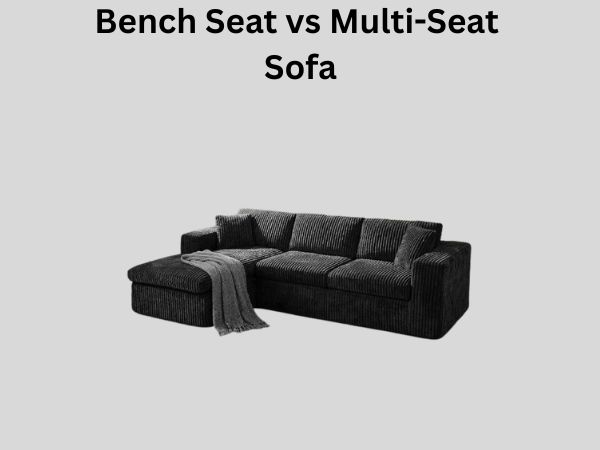
Now let’s turn our attention to the multi-seat sofa. This is the traditional couch most of us grew up with—the furniture centerpiece that anchors a living room and invites you to sink into comfort. A multi-seat sofa typically features a high backrest, armrests on both sides, and cushioning designed for extended lounging.
What Defines a Multi-Seat Sofa?
A multi-seat sofa is designed as a complete seating statement. It’s built with comfort and support in mind, featuring a frame, cushions, and backing that work together to create an experience. Most multi-seat sofas can seat three to four people comfortably, and they come in countless configurations—sectionals, loveseats paired together, or standard three-person models.
The defining characteristic is that sense of being enveloped. When you sit on a multi-seat sofa, you’re not just sitting; you’re nestled into comfort. There’s a backrest supporting your spine, armrests cradling your arms, and often enough depth that you can lean back and relax properly.
The Comfort Factor That Matters
Let’s be honest—there’s a reason sofas have been a staple in homes for generations. They’re comfortable, they’re welcoming, and they deliver exactly what their name promises: a place to sit in genuine comfort for extended periods. If you’re someone who likes to collapse after a long day, cuddle up for movie marathons, or take afternoon naps, a multi-seat sofa is practically made for you.
The cushioning in a quality sofa provides support without feeling rigid. You can adjust your position, tuck your legs underneath you, or sprawl out in ways that a bench seat simply doesn’t accommodate as easily.
Space Considerations: Making Your Room Work
Room Size and Layout Impact
This is where practical reality meets personal preference. How much space do you actually have? A multi-seat sofa typically requires more square footage than a bench seat. A standard three-seat sofa might measure 84 inches wide, while a bench seat could be 60 inches or less.
If you’re working with a compact apartment or a cozy living room, a bench seat might be your best friend. It doesn’t demand as much real estate, and it won’t make your space feel cramped. On the flip side, if you have a spacious living room with high ceilings and room to breathe, a substantial multi-seat sofa can enhance the space rather than overwhelm it.
Measuring Before You Buy
Here’s something I cannot stress enough: measure your space before making any purchase. Take into account not just the width of the furniture, but also how it will affect traffic flow through your room. Can you walk comfortably around a large sofa? Will a bench seat against the wall leave enough space for daily movement?
Consider these measurements:
- The width of your wall or designated seating area
- The distance from your furniture to the opposite wall
- How far furniture needs to be from doorways or windows
- Space needed for additional pieces like coffee tables or side tables
Style and Aesthetic Differences
Design Versatility of Bench Seats
Bench seats are chameleons in the furniture world. They adapt to whatever design direction you’re heading. A simple wooden bench seat works beautifully in a farmhouse setting. The same basic style in a different fabric becomes the perfect modern minimalist accent. Upholstered bench seats fit seamlessly into contemporary spaces, while tufted versions can channel mid-century modern vibes.
Because they lack prominent armrests and backrests, bench seats don’t impose a strong stylistic statement. They’re background players that let your other design elements shine.
The Statement-Making Power of Sofas
Multi-seat sofas, by contrast, are often the star of the show. They anchor a room’s style. A luxurious leather sofa exudes sophistication. A gray linen sofa reads as contemporary elegance. A colorful patterned sofa becomes the visual focal point that everything else coordinates around.
This can be a positive or a negative depending on your preferences. If you love having a statement piece that defines your space, a sofa is perfect. If you prefer a more subtle, evolving aesthetic that you can change as trends shift, a bench seat offers more flexibility.
Comfort and Lounging: How Each Performs
Lounging Capabilities Compared
Let’s talk about what it actually feels like to use these pieces. A bench seat is designed for sitting upright. You can sit for a while, chat with friends, or enjoy a meal. But if you want to recline, put your feet up, or get truly comfortable for hours, a bench seat presents challenges.
A multi-seat sofa, conversely, is your lounging partner. You can kick back, stretch out, rest your head on the armrest, or lean against the cushions. Many people can actually lie down on a sofa if they need to. It’s the difference between a chair and a bed—both have their purpose, but they serve different needs.
Seating Capacity and Comfort Balance
Here’s an interesting paradox: while a bench seat might technically fit three or four people, that doesn’t mean everyone will be comfortable. A multi-seat sofa, designed for comfort, usually provides better seating experience for the number of people it can accommodate.
Think about it this way. You could squeeze five people onto a bench seat, but they’d be shoulder-to-shoulder with no armrests separating them. The same five people on a larger sectional would have breathing room and individual comfort zones.
Maintenance and Durability: What Stands the Test of Time
Cleaning and Care for Bench Seats
One advantage of bench seats, particularly those with minimal upholstery or wooden frames, is ease of maintenance. There are fewer crevices where crumbs can hide. Spills are easier to spot and address. If you have pets or children, a simple bench seat might actually be easier to keep clean than a sofa with multiple cushions and corners.
For upholstered bench seats, vacuuming and spot cleaning work well. There’s less fabric to deal with than a sofa, which means less surface area to stain or wear.
Sofa Maintenance Challenges and Solutions
Multi-seat sofas require more dedicated maintenance. The cushions need regular fluffing. The crevices between cushions collect debris. Pet hair accumulates in the fabric. Stains are more noticeable on larger surface areas.
That said, quality sofas are built to withstand this wear. High-end sofas often come with removable, washable cushion covers specifically designed to manage regular use. Investing in a quality sofa often means investing in longevity—a well-made sofa can last 10-15 years or more with proper care.
Durability and Construction Quality
The durability of either piece depends more on construction quality than style. A well-made bench seat with solid wood frame and quality upholstery will outlast a poorly constructed sofa. Conversely, a cheaply made bench seat might not hold up better than a quality sofa.
Look for:
- Solid hardwood frames (not plywood or particle board)
- Eight-way hand-tied springs in sofas for better support
- High-density foam cushioning
- Quality fabric or leather with good wear ratings
- Secure stitching and reinforced seams
Budget Considerations and Cost Analysis
Price Points for Bench Seats
Bench seats generally fall into a lower price range than comparable sofas. A decent quality upholstered bench seat might run you anywhere from $300 to $800, depending on materials and brand. This makes bench seats attractive for budget-conscious shoppers or those furnishing a space without breaking the bank.
Even high-end designer bench seats typically cost less than high-end multi-seat sofas because they use less material and have simpler construction.
Multi-Seat Sofa Investment
A quality multi-seat sofa is a larger investment. You’re looking at a range from $800 to $3,000 for a decent mid-range sofa, with luxury sofas easily exceeding $5,000. This higher cost reflects the additional materials, complex cushion construction, and engineering required.
However, consider this a long-term investment. If you’re going to spend several hours daily on your sofa for the next decade, the cost-per-use becomes more reasonable.
Calculating True Value
Don’t just look at sticker price. Consider your actual use. How many hours per week will you spend on this furniture? How long do you plan to keep it? What’s the replacement cost if it doesn’t last as long as you hoped? When you factor in these variables, the “cheaper” option might actually be more expensive in the long run.
Lifestyle and Household Needs
Families with Young Children
If you have young kids, spills are inevitable. Bench seats might actually be preferable because they’re easier to clean and less likely to trap food in crevices. However, sofas provide better containment when kids are jumping around—the armrests and backrest prevent tumbles.
Pet Owners: Making the Right Choice
Pet owners face unique challenges. Dogs and cats love sofas because they’re comfortable and cozy. That same comfort is a maintenance nightmare—hair, odors, and potential accidents.
For pet owners, a bench seat might be the smarter choice simply because it’s easier to keep clean. There’s nowhere for fur to accumulate, and you can wash a bench seat cover more easily than a full sofa cover.
Entertainment and Social Gatherings
Do you regularly host people over? Love movie nights with groups of friends? A multi-seat sofa, possibly combined with other seating, provides the comfort and capacity for entertaining. A bench seat works if you’re supplementing it with other chairs, but it’s not ideal as your primary entertaining furniture.
The Hybrid Solution: Combining Both Options
Using Bench Seats and Sofas Together
Here’s a thought: why choose? Many designers and homeowners are discovering that pairing a bench seat with a sofa or using multiple seating styles creates visual interest and functional versatility.
You might have a multi-seat sofa as your primary seating and a bench seat on an opposite wall, creating a balanced layout. Or you could use a bench seat in your entryway and a sofa in your main living area.
Creating Flexible Seating Arrangements
By combining options, you get the comfort benefits of sofas with the flexibility and spatial efficiency of bench seats. You’re not locked into one style or function. This approach works particularly well in open-concept living spaces where you need to define different functional zones.
Trends and Modern Considerations
Current Furniture Design Trends
Today’s furniture market is fascinating because both bench seats and multi-seat sofas are experiencing renewed popularity, but in different contexts. Minimalism and sustainable living have boosted bench seat popularity as people seek simpler, less furniture-heavy spaces. Simultaneously, comfort-focused design and the rise of “hygge” culture have made people crave cozy sofas more than ever.
Neither style is truly “out of trend.” Instead, the trend is choosing what genuinely serves your life.
Sustainability and Eco-Conscious Choices
If environmental impact matters to you, bench seats generally use fewer materials and resources to produce. They’re lighter, more transportable, and create less waste. Some people who care deeply about sustainability prefer bench seats for this reason.
That said, quality matters more than style. A well-made sofa that lasts 15 years is more sustainable than a cheap bench seat you’ll replace in 3 years.
Making Your Final Decision: A Practical Framework
Questions to Ask Yourself
Before you decide, answer these questions honestly:
- How much space do I actually have available?
- How many hours per day will I spend sitting on this furniture?
- Do I value lounge-ability or design minimalism more?
- What’s my budget ceiling?
- What style direction am I going with my home?
- Do I have pets or young children to consider?
- How important is ease of cleaning and maintenance?
- Do I plan to stay in this space for years or am I anticipating a move?
- What does comfort actually mean to me?


![10 Inch Sofa [2026]](https://hometopaccesories.com/wp-content/uploads/2026/08/10-inch-sofa-2026-featured-1-768x432.jpg)