How to Buff a Leather Sofa: Easy Steps to Restore Its Shine
The easiest way to buff a leather sofa is to apply a small amount of leather conditioner, let it soak in for a few minutes, then buff the surface with a clean microfiber cloth in gentle circular motions. This restores shine and keeps the leather soft. You only need two things: a good conditioner and a soft cloth.
Here’s the thing, though. Buffing alone won’t fix everything. If your sofa is cracked, faded, or sticky, you may need to clean it first or use a leather repair filler before buffing. We researched what leather care experts recommend, and we found that regular buffing every few months can extend your sofa’s life by years. Not bad for ten minutes of work, right?
TL;DR:
- Buff your leather sofa with conditioner and a microfiber cloth in circular motions.
- Clean the surface first so you don’t rub dirt deeper into the leather.
- Buff every 2 to 3 months to keep the leather soft and shiny.
- Never use furniture polish, olive oil, or harsh chemicals on leather.
- Test any product on a hidden spot before using it on the whole sofa.
Below, we break down everything you need to know about buffing a leather sofa, step by step. Grab your cloth, and let’s make that sofa look brand new again.
Buffing Your Leather Sofa the Right Way
Buffing your leather sofa comes down to three moves: apply conditioner, wait a few minutes, then rub gently in circles with a clean microfiber cloth. Do that, and the surface glows again. Most people overthink it, but it honestly takes less time than making dinner.
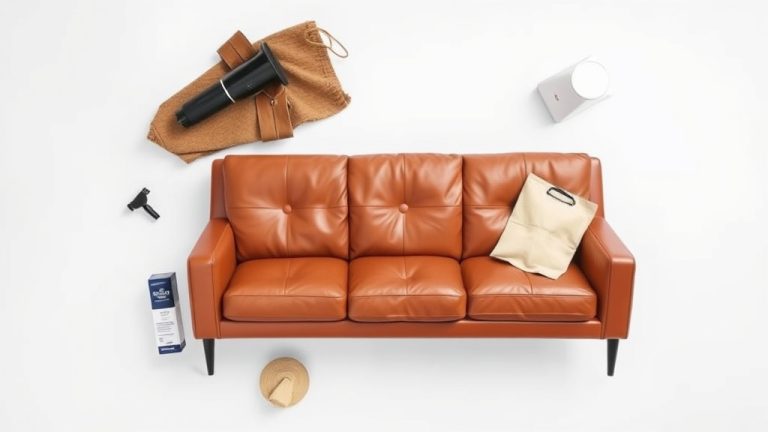
What You’ll Need Before You Start
Good news. You probably own most of this already. We found that the simplest toolkit works best, so skip the fancy stuff until you actually need it.
- A pH-balanced leather conditioner (never all-purpose lotion)
- Two or three clean microfiber cloths
- A vacuum with a soft brush attachment
- A slightly damp cloth for wiping
- A bowl of warm water and mild soap, just in case
Why Buffing Matters for Leather
Leather is skin. Just like your own skin, it dries out, gets flaky, and looks tired when nobody moisturizes it. Research published through the National Library of Medicine shows that leather loses moisture and natural oils over time, which leads to stiffness and cracking.
Buffing pushes conditioner into the surface and then polishes the top layer. Think of it like waxing a car. The product nourishes underneath, and the rubbing motion brings back the shine on top. Skip it for a year, and your sofa starts looking like an old baseball glove.
Getting Your Sofa Ready to Buff
Here’s where most people rush and pay for it later. Buffing a dirty sofa just rubs dust deeper into the pores. Prep takes ten extra minutes and saves you a headache.
Clean First, Buff Second
Start by vacuuming the whole sofa, including the crevices where crumbs hide. Crumbs in the seams feel like little rocks under your cloth, and they can scratch the leather while you work.
Next, wipe the surface with a cloth dampened in warm water. If there’s grime that won’t budge, mix a drop of mild soap into the water. Many care guides recommend gentle, pH-neutral cleaners because harsh soaps strip the leather’s oils and make drying worse.
Then wait. Leather should be completely dry before you apply anything. Conditioner traps moisture, and trapping moisture inside leather leads to stains. Give it an hour, or walk the dog and come back.
The Hidden-Spot Test
Never skip this step. Dab a small amount of conditioner on a hidden area, like the back lower corner or under a cushion. Wait 20 minutes and check it.
You’re looking for three things: no dark spots, no sticky residue, and no color change. If the spot looks normal, you’re clear to continue. If it darkens or feels greasy, that product isn’t right for your leather, and you just saved your whole sofa.
Step-by-Step: Buffing Your Leather Sofa
Now the fun part. Put on some music, because this is honestly kind of relaxing once you get a rhythm going.
Apply the Conditioner
Scoop a small dab of conditioner onto a microfiber cloth. Work it into the leather using gentle circular motions, one section at a time. A cushion-sized area is a good chunk to handle before moving on.
Let it sit for five to ten minutes so it can soak in. You’ll see the dull spots start to fade as the leather drinks it up.
How Much Product Is Enough
Less than you think. A thin, even layer is the goal. If the leather looks wet or slimy, you’ve used too much, and the excess will just sit there feeling tacky. Wipe off any puddled product with a dry corner of your cloth.
Buff It to a Shine
Once the conditioner has soaked in, take a fresh, dry cloth and buff the surface in small circles. Use light pressure. You’re polishing, not scrubbing a pot.
You’ll notice the shine building as you go. Flip to a clean side of the cloth often, because a cloth loaded with product just smears product around instead of polishing it.
How Often Should You Buff Your Sofa?
Most experts suggest conditioning and buffing every two to three months. But your home changes the schedule. Sunlight, dry air, and heavy use all speed up drying. Mayo Clinic recommends keeping indoor humidity between 30 and 50 percent, and leather behaves better in that same range. Our broader guide to caring for a leather sofa covers the whole routine, from dusting to conditioning.
| Your Situation | How Often to Buff |
|---|---|
| Sofa gets daily use, kids or pets around | Every 4 to 6 weeks |
| Normal adult household use | Every 2 to 3 months |
| Guest room or lightly used sofa | Every 4 to 6 months |
| Sofa sits in direct sunlight | Every 4 to 6 weeks |
Not sure? Do the quick squeeze test. Press gently on the leather. If it feels stiff, dry, or squeaks, it’s asking for conditioner. If it still feels supple, you’ve got time.
Mistakes to Avoid When Buffing Leather
We found the same warning over and over in care guides: the wrong product causes more damage than no product at all. Some of these mistakes seem harmless. They’re not.
- Never use furniture polish or pledge-style sprays. Silicones build up and block the leather from breathing.
- Skip the olive oil trick. It feels moisturizing at first, then turns rancid and sticky.
- Avoid baby wipes. Many contain chemicals that dry or discolor leather.
- Don’t soak the cloth. Water stains leather when it sits.
- Say no to magic erasers. They work like ultra-fine sandpaper. Your leather will not forgive you.
- Don’t buff cracked areas hard. Pressure won’t fix a crack. It usually deepens it.
When Buffing Isn’t Enough
Sometimes buffing feels like putting a bandage on a broken arm. If your sofa has deep cracks, peeling, or color loss, conditioner alone won’t bring it back.
For small cracks, a leather repair filler works well. You spread it into the crack, let it dry, lightly sand it smooth, then color-match it. After that, buffing keeps the repaired area blended with the rest of the sofa.
For peeling or large torn sections, honestly, call a professional. Leather repair pros have tools and dyes that a home kit can’t match. It costs more upfront, but it’s cheaper than replacing a whole sofa.
And if your leather just looks worn but has no damage? That’s the perfect candidate for a regular buffing routine. Keep it up every couple of months, and you may get years more life out of a sofa you already love.
Conclusion
Buffing your leather sofa is one of those small chores that pays off big. Clean the surface, run the hidden-spot test, work in a thin layer of pH-balanced conditioner, then polish with a dry microfiber cloth in soft circles. Skip the furniture polish and olive oil hacks, because they cause more harm than good. Stick to a schedule that fits your household, and your sofa stays soft and shiny for years. We found that consistency matters more than any fancy product. So grab your cloth, check the calendar, and give your sofa the ten minutes of care it’s been waiting for.
Frequently Asked Questions
Can I buff a leather sofa with just a dry cloth?
A dry cloth alone will remove dust and give a faint polish, but it won’t restore moisture or lasting shine. Without conditioner underneath, the leather keeps drying out. We found that buffing works best when it follows a thin layer of product, not just friction.
Why does my leather sofa look sticky after buffing?
Sticky usually means too much conditioner or a product that didn’t soak in fully. Wipe the area with a barely damp cloth, then buff again with a clean, dry microfiber cloth. Next time, use a smaller dab and let it absorb for the full five to ten minutes.
Can I use coconut oil or lotion to buff leather?
We’d steer you away from both. Oils and lotions aren’t made for leather, so they can turn rancid, darken the color, or leave a greasy film. A pH-balanced leather conditioner costs about the same and won’t put your sofa at risk.
Is buffing safe for all types of leather, including faux leather?
Real leather loves conditioner, but faux leather is a different material. Synthetic leather doesn’t absorb conditioner the same way, and some products can damage its coating. Check your sofa’s care tag first, and always run the hidden-spot test before treating the whole piece.
Should I buff new leather furniture right away?
Most new sofas have already been treated at the factory, so there’s no rush. Wait a few months, then start your regular routine. If your home is dry or sunny, an early conditioning session won’t hurt, as long as the product passes the spot test.