How to Clean Urine Off a Sofa: A Step-by-Step Guide
The easiest way to clean urine from a sofa is to blot the spot with paper towels, then treat it with a mix of white vinegar and water, and finish with baking soda to pull out lingering odor. Work from the outside of the stain toward the center so you don’t spread it. Speed matters, so act as soon as you find the mess.
Whether it’s a potty-training toddler, a senior dog, or a cat with opinions, we’ve all been there. The good news? You don’t need fancy cleaners or a professional service. We researched the best methods and found that simple household ingredients usually do the trick. The key is treating the stain fast and neutralizing the odor, not just masking it. Many experts say lingering smell happens when urine sinks into the cushion filling, so soaking up moisture early makes all the difference.
- Blot first — never rub, or you’ll push urine deeper into the cushions.
- Vinegar and water break down the urine and kill odor at the source.
- Baking soda absorbs leftover moisture and smell.
- Enzyme cleaners work best for tough, set-in stains.
- Always check your sofa’s care tag before using any liquid.
Below, we break down exactly how to get urine out of your sofa, step by step — for fresh accidents, old stains, and everything in between. Let’s get your couch smelling normal again.
Getting Urine Out of Your Sofa: What Works
The method that works best depends on one thing: how fresh the accident is. Fresh urine sits near the surface, so blotting and a vinegar rinse usually handles it. Old, dried urine has soaked into the cushion core, and that’s where an enzyme cleaner earns its keep. We found that matching the treatment to the mess saves you a lot of scrubbing.
Before you spray anything, flip a cushion and check the care tag. Those little letters matter more than you’d think.
Decode Your Sofa’s Care Tag First
Most sofas carry a code that tells you what cleaners are safe. Here’s the quick translation:
- W — Water-based cleaners are fine. You’re good to go with vinegar solutions.
- S — Solvent only. Skip water and use a dry-cleaning solvent in a ventilated room.
- WS — Either works. Lucky you.
- X — Vacuum only. No liquids. Call a professional for anything serious.
No tag? Test your cleaning mix on a hidden spot, like the back or underside, and let it dry. If the fabric looks fine after an hour, proceed with confidence.
Cleaning Fresh Urine: Step by Step
Speed is your best friend here. The longer urine sits, the deeper it travels into foam and padding. Many experts say that acting within the first few minutes can mean the difference between a quick fix and a lingering smell (Mayo Clinic).
Step 1: Blot, Don’t Scrub
Grab paper towels or a clean cloth and press down firmly. Work from the outside of the stain toward the center. Think of it like herding the moisture back out instead of stomping it deeper. Keep switching to dry sections of towel until barely any dampness transfers.
Step 2: Apply Your Vinegar Solution
Mix one part white vinegar with two parts cool water in a spray bottle. Lightly mist the stain — don’t soak it. Let it sit for 10 to 15 minutes, then blot again. The vinegar neutralizes the ammonia in urine, which is what causes that sharp smell.
Step 3: Add Baking Soda
Sprinkle a generous layer of baking soda over the damp area and leave it overnight. It works like a sponge for moisture and odor. Vacuum it up the next morning with an upholstery attachment. If you’re dealing with a big accident, a wet/dry vacuum pulls moisture out of cushions much faster than towels alone.
Removing Old, Set-In Urine Stains
Old stains need a different weapon: enzymatic cleaners. These products contain enzymes that break down the proteins and uric acid crystals in dried urine. Regular cleaners can’t touch those crystals, which is why the smell keeps coming back on humid days. We found that pet-specific enzyme cleaners, widely recommended by veterinarians, tend to work best.
Soak the stained area thoroughly — the cleaner needs to reach as deep as the urine did. Cover it with a damp cloth and let it sit for 24 hours, then blot and air dry. Patience pays off here. Rushing this step means leftover crystals, and leftover crystals mean leftover stink.
Special Situations That Need Extra Care
Not all accidents are created equal. A few scenarios call for adjusted tactics.
Pet Urine vs. Human Urine
Pet urine — especially from intact male cats — is stronger and stickier than most human accidents. The hormone content makes the odor harder to remove. For cat pee, enzyme cleaners aren’t optional; they’re the whole plan. Human accidents, like a child’s nighttime leak, usually respond well to the vinegar-and-baking-soda method alone.
Mattress-Style Cushions and Memory Foam
If urine soaked through to the cushion core, surface cleaning won’t cut it. Unzip the cover if you can. Treat the foam with enzyme cleaner in a well-ventilated space, then let it dry for a full day or two. Foam holds moisture like a kitchen sponge, and trapped moisture breeds mildew. The CDC notes that damp indoor materials can support mold growth within 24 to 48 hours, so thorough drying matters for your health, not just your nose.
Common Mistakes to Avoid
A few well-meaning moves can make things worse. Steer clear of these:
- Rubbing instead of blotting — it spreads the stain and grinds it deeper.
- Using hot water — heat can set the odor and stain into the fibers.
- Ammonia-based cleaners — ammonia smells like urine to pets, which can invite repeat offenses.
- Over-wetting the cushion — too much liquid pushes urine into the foam below.
- Skipping the smell test — sniff the spot after drying. If odor remains, treat it again before it dries into place.
When to Call a Professional
Sometimes the honest answer is that DIY has limits. If urine reached the frame or internal padding, or if the smell persists after two enzyme treatments, a professional upholstery cleaner has extraction equipment you can’t replicate at home. Expect costs to vary by size and fabric, but it’s often cheaper than replacing a good sofa. And if the cushion insert itself is saturated and sour after cleaning, replacing that insert is often the simplest fix.
Quick Reference: Your Sofa Cleanup Checklist
Pin this list for next time — because with kids or pets, there’s usually a next time:
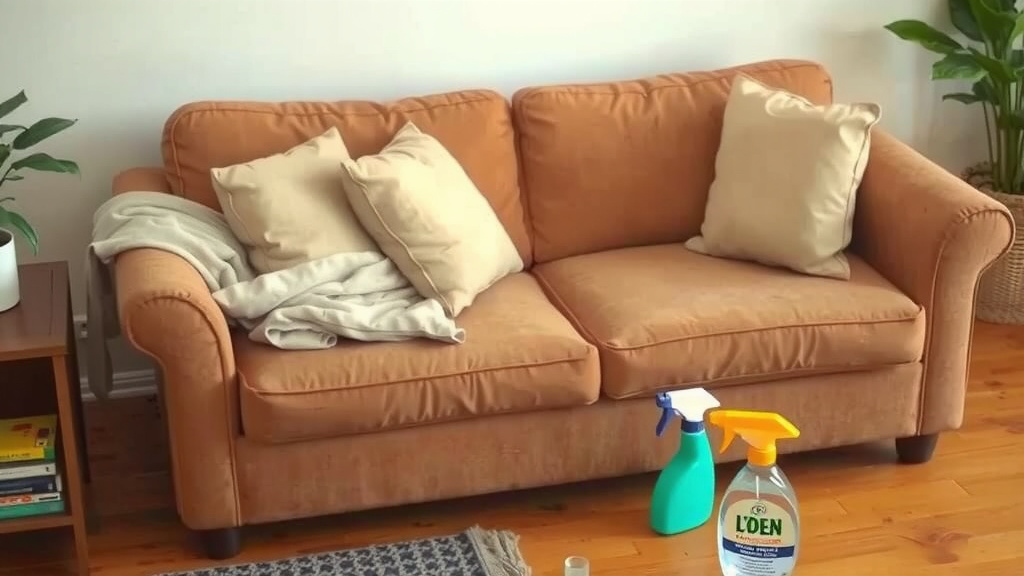
- Check the care tag and spot-test any cleaner in a hidden area.
- Blot immediately with dry towels, working inward from the stain’s edge.
- Spray vinegar solution, wait 10-15 minutes, blot again.
- Apply enzyme cleaner for old stains or pet accidents.
- Finish with baking soda, let it sit overnight, then vacuum.
- Confirm it’s fully dry before anyone sits back down.
Preventing Future Accidents and Protecting Your Sofa
An ounce of prevention really is worth a pound of baking soda. A washable sofa cover or waterproof furniture pad gives you a removable barrier — far easier than cleaning foam. For pets, regular bathroom routines and litter box maintenance cut down on accidents dramatically. And for potty-training little ones, waterproof cushion protectors are a small investment that pays for itself the first week.
Keep a spray bottle of your vinegar mix and a stash of enzyme cleaner under the sink. When accidents happen, you’ll handle them in minutes instead of dreading them all day. Your sofa — and your nose — will thank you.
Conclusion
Getting urine out of your sofa doesn’t require a hazmat suit or a trip to the furniture store. The formula is simple: blot fast, neutralize with vinegar, absorb with baking soda, and bring in an enzyme cleaner when the stain is old or the offender has four legs. We found that most failures come from rushing the drying or skipping the care tag check. A little patience — especially with foam cushions — makes the difference between a couch that smells clean and one that whispers its secrets on humid days. So grab your spray bottle, check that tag, and give your sofa the rescue it’s waiting for. You’ve got this.
Frequently Asked Questions
How long does it take a sofa to dry after cleaning urine?
Surface cleaning usually dries in 4 to 8 hours. If urine reached the foam core, expect 24 to 48 hours of drying time. Speed things up with a fan pointed at the spot or by sitting cushions on their edges in a ventilated room.
Can I use hydrogen peroxide on a urine-stained couch?
Yes, but with caution. A 3% solution can help lift odor from light-colored fabrics. Always spot-test first — peroxide can bleach darker upholstery. Never mix it with vinegar in the same bottle.
Why does my couch still smell after cleaning?
That lingering smell usually means uric acid crystals are still in the cushion, and they reactivate with humidity. Regular cleaners can’t break them down. A thorough enzyme treatment that soaks as deep as the urine did is your best fix.
Is it safe to use a steam cleaner on urine stains?
We recommend skipping it. Heat sets both the stain and the odor into fibers, and steam can push moisture deeper into foam. Stick to blotting and liquid treatments, then air dry completely.
Can urine ruin a couch permanently?
Not usually, but it can. If urine soaks into the frame or internal padding and sits for weeks, odors and bacteria can become nearly impossible to remove. That’s when professional cleaning or replacing a cushion insert makes more sense than repeated scrubbing.